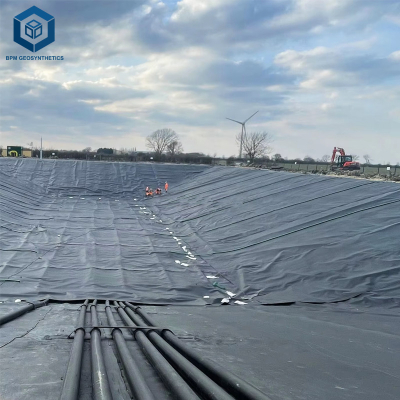
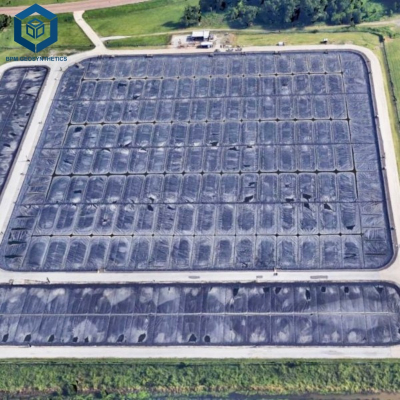
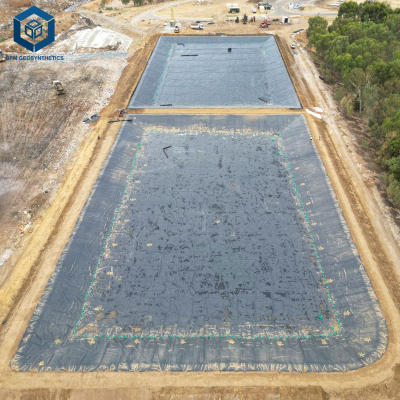
The 7 Best HDPE Geomembrane 60 Mil Reviewed
In the world of environmental containment and civil engineering, the HDPE geomembrane 60 mil stands as a benchmark for robust, reliable protection. But what exactly is it, and why is it so widely specified for critical infrastructure projects? This review breaks down the fundamentals of 60 mil HDPE liner and evaluates the top global suppliers, with a special focus on BPM Geosynthetics.
1. What is a HDPE Geomembrane 60 Mil?
A 60-mil HDPE (High-Density Polyethylene) geomembrane is a synthetic liner with a thickness of 60 thousandths of an inch, equivalent to approximately 1.5 millimeters. It is manufactured from high-grade polyethylene resin, typically composed of about 97.5% polyethylene, 2.5% carbon black for UV protection, and trace antioxidants.
This specific thickness strikes an ideal balance between durability and flexibility. 60 mil hdpe geomembrane offers superior puncture and tear resistance compared to thinner liners, making it capable of withstanding heavy loads and sharp subgrade materials.
At the same time, it remains flexible enough for efficient installation across varied terrains. Its key properties include exceptionally low permeability (as low as ≤1×10⁻¹¹ cm/s), outstanding chemical resistance, and a design life that can exceed 50 years in buried applications.
2. Applications of HDPE Geomembrane 60 Mil
The robust nature of the 60 mil HDPE liner makes it the material of choice for the most demanding containment projects across various industries:
2.1 Landfills and Waste Containment
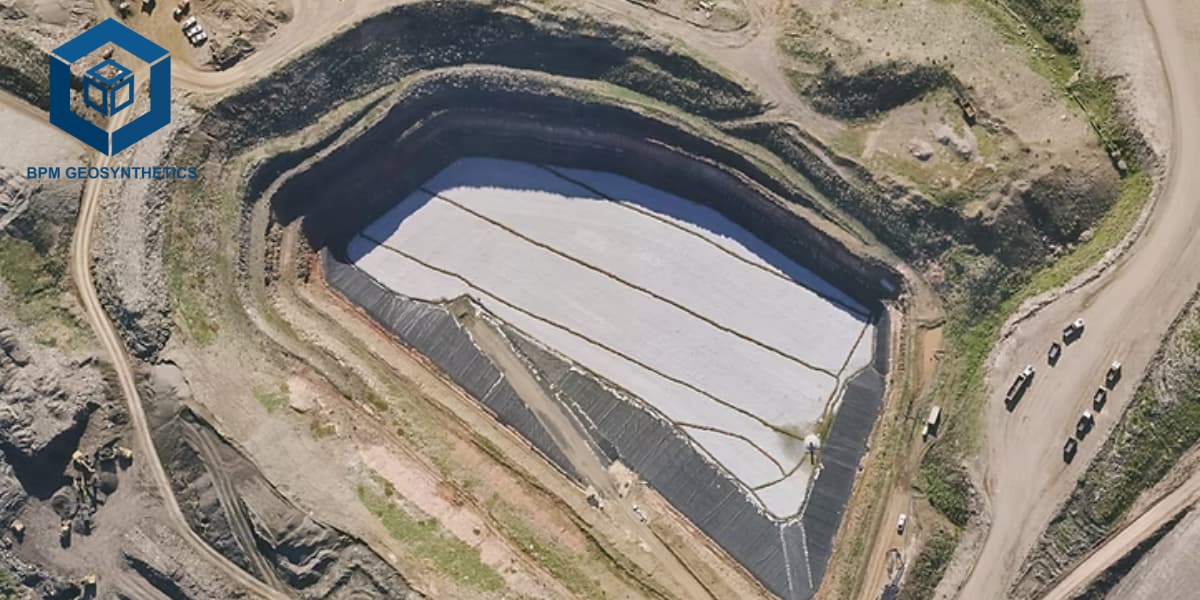
As its largest application sector, 60-mil HDPE geomembranes serve as critical primary and secondary liners, as well as final capping systems for municipal solid waste (MSW) and industrial waste facilities. The hdpe membrane material acts as an impermeable barrier that prevents toxic leachate and hazardous runoff from migrating into underlying soil aquifers and groundwater supplies.
2.2 Mining Operations
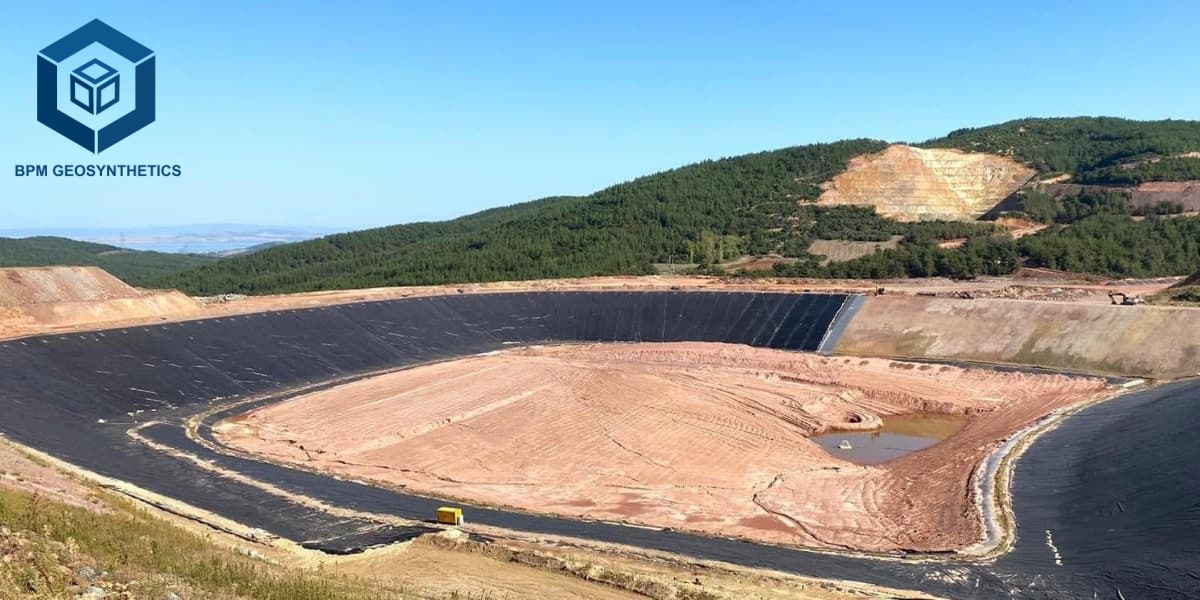
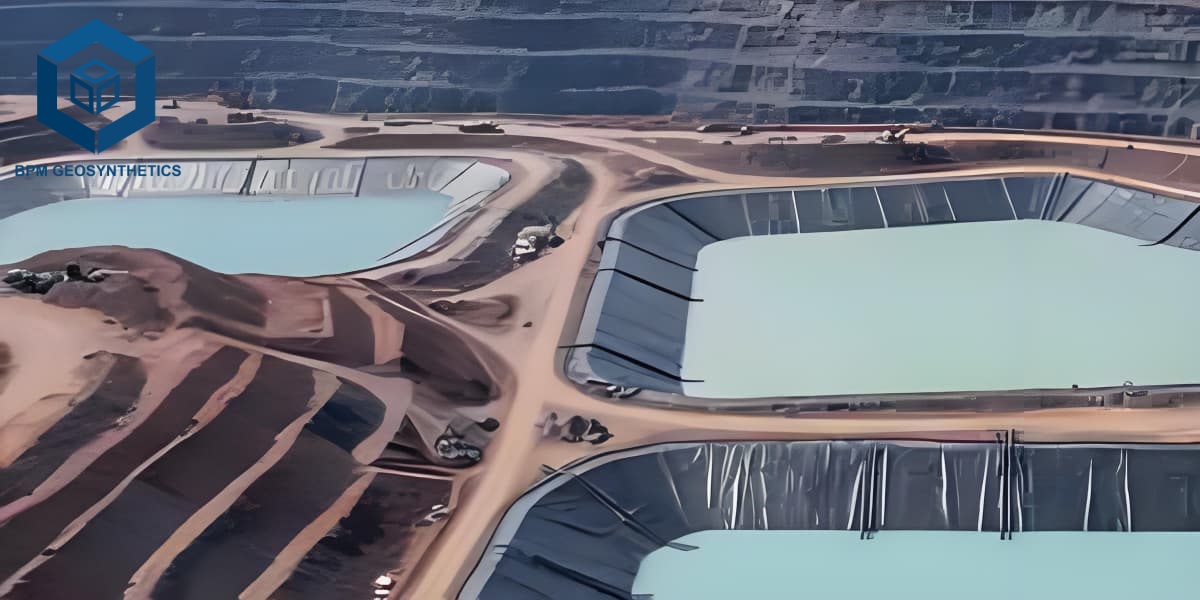
In harsh mining environments, 60-mil hdpe geomembrana is heavily relied upon to line heap leach pads, tailings impoundments, process solution ponds, and evaporation basins. Its high tensile strength and superior chemical resistance allow it to continuously contain aggressive chemicals, acidic solutions, heavy metals, and toxic processing byproducts without degrading or puncturing.
2.3 Water Management and Infrastructure
To mitigate critical water loss through seepage, 60-mil high density polyethylene geomembrane is extensively used in large-scale water conservation projects, including raw water reservoirs, irrigation canals, stormwater retention basins, and artificial lakes. The thick liner provides long-term UV resistance and durability against soil movement, ensuring efficient water storage and conveyance in agricultural and municipal infrastructure.
2.4 Aquaculture
In commercial fish and shrimp farming, 60-mil geomembrana in hdpe line aquaculture ponds to improve overall water quality and operational control. The smooth, non-toxic surface prevents soil contaminants from leaching into the water, blocks disease transmission from native pathogens in the soil, controls erosion along pond embankments, and significantly simplifies drain-down cleaning and fish harvesting.
2.5 Wastewater Treatment and Containment
Industrial facilities and municipal plants utilize 60-mil hdpe geo membrane to seal municipal wastewater lagoons, industrial effluent basins, sludge drying beds, and agricultural waste storage pits. Its excellent resistance to organic matter, biological degradation, and high-concentration industrial chemicals ensures that treated or untreated wastewater is safely contained, meeting strict environmental compliance standards.
3. Review of Top Global HDPE Geomembrane 60 Mil Suppliers
The global market for HDPE geomembranes is dominated by established players, each with distinct strengths. This review evaluates five leading manufacturers based on technical performance, reliability, and cost-effectiveness.
3.1 Solmax
Solmax is a global giant, formed in part through its acquisition of GSE Environmental, giving it immense scale and experience. Its 60 mil liners, particularly those using bimodal HDPE resins, are renowned for superior environmental stress crack resistance (ESCR).
This makes them excellent for aggressive chemical environments and high-risk, long-duration projects. The main drawback is their premium pricing, which can be a barrier for budget-constrained projects.
3.2 Agru America
Agru is often considered the gold standard for quality. Their proprietary flat-die extrusion process results in exceptional thickness uniformity and a very low seam defect rate
Their geomembrane sheet is NSF-61 certified for potable water applications and are favored when maximum longevity and minimal leakage risk are non-negotiable. This high-performance product comes at a premium cost.
3.3 NAUE GmbH & Co.
A major German manufacturer, NAUE is a key player in the European market with its well-regarded "Carbofol" line of geomembranes. They are known for high-quality materials that consistently meet strict GRI-GM13 standards, making them a reliable choice for a wide range of containment projects.
3.4 GSE Environmental
Now integrated with Solmax, GSE’s products have decades of proven performance, particularly in North American landfills. Their hdpe geomembrane liner is known for balanced mechanical properties and reliable seam performance, backed by one of the longest continuous track records in the industry.
3.5 Atarfil
A prominent Spanish manufacturer, Atarfil is recognized as a strong global competitor. Their 1.5mm HDPE liner offer good mechanical performance and represent a solid option, often positioned as a cost-effective alternative to top-tier brands without significantly compromising on quality.
3.6 BPM Geosynthetics
The Best Project Material Co., Ltd. (BPM Geosynthetics), established in 2007, has rapidly become a leading global supplier, particularly competitive for international projects. The review of BPM’s 60-mil (1.5 mm) liners reveals several quantifiable strengths:
3.6.1 Performance:
BPM Geosynthetics’s smooth HDPE liners consistently meet or exceed GRI-GM13 standards. Their 1.5mm liner typically achieves tensile strength of 25–38 kN/m and puncture resistance of 480–640+ N, matching the performance of its premium competitors.
3.6.2 Quality Assurance:
BPM Geosynthetics uses high-grade virgin resin and features advanced manufacturing capabilities, with wide rolls (up to 7m) that can reduce field seams by 20–40%. This reduces installation cost and potential leak points.
3.6.3 Value Proposition:
BPM Geosynthetics’s primary advantage lies in its value for money. It offers factory-direct, competitive pricing, positioning itself as a cost-effective alternative to Western manufacturers while maintaining strict quality control through ISO and third-party certifications like SGS and Intertek.
4. HDPE Geomembrane 60 Mil Suppliers Summary Table
Supplier | Key Strength | Performance | Cost |
Solmax | World-class ESCR, global footprint | Highest premium | High |
Agru | Superior uniformity, low seam defects | Highest premium | High |
NAUE | Reliable GRI-GM13 compliance | High | Medium-High |
GSE | Unmatched long-term landfill track record | High | Medium-High |
Atarfil | Good balance of quality and cost | Good | Medium |
BPM Geosynthetics | Excellent value and weld consistency | High | Medium/Low |
5. HDPE Geomembrane 60 Mil Installation, Seaming & Quality Control
The performance of an HDPE geomembrane system depends as much on field installation as it does on raw material quality. Even the highest-grade 60-mil liner will fail if field seams are compromised. Implementing rigorous quality control, standardized seaming practices, and optimal material dimensions is essential to achieving a long-term, leak-free containment system.
5.1 Subgrade Preparation and Unrolling
Before deployment, the supporting subgrade must be smooth, thoroughly compacted, and free of sharp stones, roots, debris, or standing water. Unrolling the 60-mil liner requires controlled heavy machinery equipped with spreader bars to prevent drag damage and wrinkling. Installers must also account for thermal expansion and contraction by laying the sheets with sufficient slack (typically 1–3%) to prevent bridge-stressing during cold temperature drops.
5.2 Field Welding Techniques
Two primary thermal welding methods are used to join 60-mil HDPE geomembranes:
5.2.1 Hot-Wedge Welding (Primary Seam Welding):
Used for long, straight, continuous field overlaps. A dual-wedge welder uses heated elements and drive rollers to melt adjacent sheet edges, pressing them together to form a double-track weld separated by an enclosed hollow air channel.
5.2.2 Extrusion Welding (Detailing & Repair Welding):
Used for perimeter connections, pipe penetrations, sump structures, corners, and patch repairs. A portable extruder dispenses a bead of molten HDPE resin along pre-grinded geomembrane edges to bond them together where wedge welders cannot operate.
5.3 Non-Destructive Quality Testing
To verify seam integrity across the entire project area without compromising the liner, two non-destructive field testing methods are mandated:
5.3.1 Air Pressure Testing (For Hot-Wedge Welds):
Both ends of the hollow air channel between the double-track weld are sealed. The channel is pressurized with air (typically 25–30 psi) for a specified dwell time (e.g., 5 minutes). A sustained pressure reading confirms zero seam leakage along the entire weld length.
5.3.2 Vacuum Box Testing (For Extrusion Welds):
A liquid soap solution is applied to the single-track weld, and a transparent vacuum chamber is placed over the area. When a vacuum is drawn (typically 3–5 psi), any pinholes or incomplete bonds are immediately revealed by visual bubble formation.
5.4 Roll Width Advantage:
BPM Geosynthetics's 10-Meter Capability
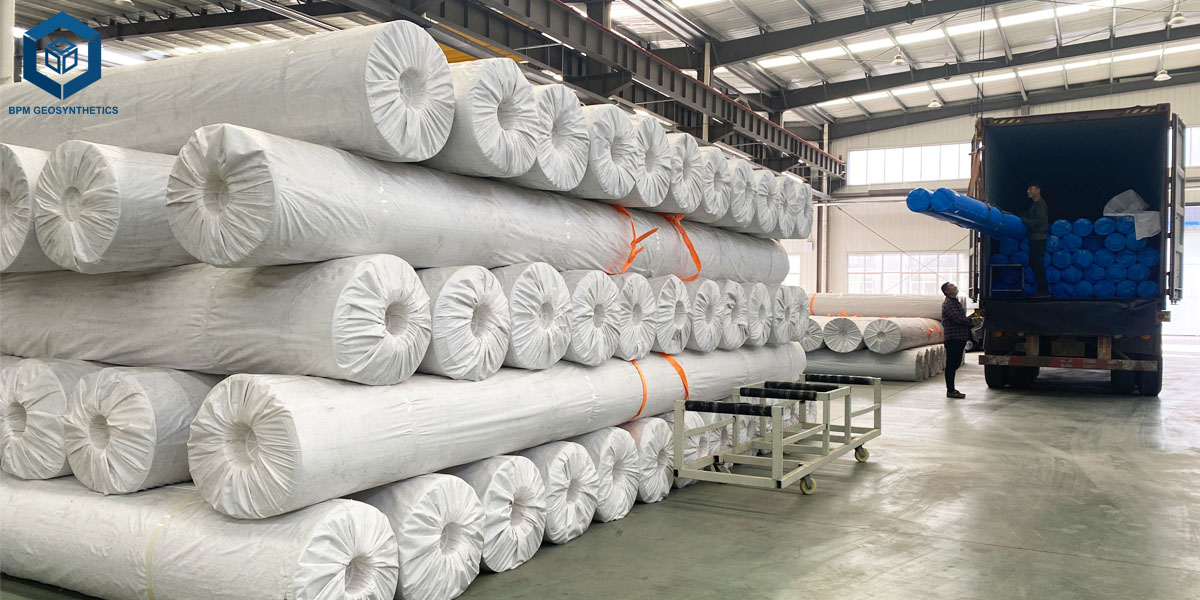
A critical factor in minimizing field installation risk is reducing the total length of field seams. BPM Geosynthetics manufactures 60-mil HDPE geomembranes in extra-wide roll options of up to 10 meters.
Compared to standard 5-meter or 5.8-meter rolls, utilizing 10-meter wide rolls provides significant operational benefits:
5.4.1 20% to 40% Reduction in Field Seams:
Fewer overlapping joints significantly decrease the total risk area for potential field installation leaks.
5.4.2 Lower Labor & Deployment Costs:
Faster layout and reduced welding time directly translate into lower overall labor, fuel, and installation overhead.
5.4.3 Accelerated Project Timelines:
Engineering projects can achieve faster sign-offs and faster commissioning schedules.
Conclusion
Choosing the right HDPE geomembrane 60 mil is critical for the success and longevity of any containment project. Manufacturers like Agru and Solmax represent the pinnacle of performance and reliability at a premium price. Brands like NAUE and GSE offer proven, high-quality solutions with decades of field history.
The Best Project Material Co., Ltd. (BPM Geosynthetics) emerges as a compelling choice. It successfully bridges the gap between high performance and cost-efficiency. With strong technical specifications that meet international GRI-GM13 standards and a commitment to quality backed by third-party certifications, BPM offers a value proposition that is hard to ignore. Its production advantages, such as wide rolls that reduce seaming, further enhance its appeal for large-scale projects. For engineers and procurement specialists seeking a reliable, budget-conscious solution without compromising quality, BPM Geosynthetics stands out as a top-tier option in the 60 mil HDPE geomembrane market.