PVC Liner vs HDPE Liner: Which Is Better? Engineering Guide
What is PVC Liner vs HDPE Liner Which Is Better?
PVC liner vs HDPE liner which is better is a critical engineering question for specifying geomembranes for environmental containment, water storage, and industrial applications. For civil engineers, EPC contractors, and procurement managers, the answer depends on application-specific requirements: chemical exposure, UV radiation, installation conditions, design life, and budget. PVC (Polyvinyl Chloride) liners offer excellent flexibility (easier installation over irregular subgrades), higher puncture resistance per unit thickness, and lower initial cost, but have shorter service life (15–25 years) and lower chemical resistance to hydrocarbons and solvents. HDPE (High-Density Polyethylene) liners provide superior chemical resistance, longer service life (50–100+ years), and higher UV stability, but are stiffer (harder to conform to subgrade), require more skilled welding, and have higher upfront cost. This guide provides engineering analysis of PVC liner vs HDPE liner which is better across mechanical properties, durability, installation, and lifecycle cost for landfill liners, mining heap leach pads, pond liners, and secondary containment.
Technical Specifications: PVC Liner vs HDPE Liner
The table below compares critical engineering parameters per GRI GM13 (HDPE) and GRI GM18 (PVC).
| Parameter | HDPE (GRI GM13) | PVC (GRI GM18) | Engineering Importance |
|---|---|---|---|
| Density (ASTM D1505 / D792) | 0.940 – 0.960 g/cm³ | 1.20 – 1.35 g/cm³ | PVC is denser; HDPE is lighter for same thickness. |
| Flexibility / Modulus | 800 – 1,200 MPa (stiff) | 10 – 100 MPa (flexible) | PVC is 10–100x more flexible — easier over irregular subgrades. Key factor in PVC liner vs HDPE liner which is better for uneven surfaces. |
| Tensile Strength (ASTM D6693 / D882) | ≥ 27 kN/m (yield) | ≥ 15 kN/m | HDPE has higher tensile strength for load-bearing applications. |
| Elongation at Break | ≥ 700% | ≥ 300% | HDPE more ductile; PVC less elongation but still adequate. |
| Puncture Resistance (ASTM D4833 / D751) | Good (320 N for 1.5 mm) | Better (higher per thickness due to flexibility) | PVC absorbs point loads better despite lower tensile strength. |
| Chemical Resistance | Excellent (pH 2–12, hydrocarbons) | Good (pH 4–10, avoid hydrocarbons/solvents) | HDPE superior for aggressive chemicals — decisive factor for many applications. |
| UV Resistance (with additives) | Excellent (2–3% carbon black) | Good (requires UV stabilizers, but degrades faster) | HDPE lasts longer in exposed applications; PVC requires protection or shorter exposure. |
| Service Life (exposed / buried) | 50 – 100+ years | 15 – 25 years | HDPE significantly longer lifespan — critical for permanent containment. |
| Installation Complexity | Medium (thermal welding, stiff) | Low (chemical welding, flexible) | PVC easier to install, especially on slopes and irregular subgrade. |
| Cost (material + installation) | Medium-High (€30–60/m² installed) | Low-Medium (€20–40/m² installed) | PVC generally lower upfront cost. |
Material Structure and Composition: PVC vs HDPE
Molecular structure differences drive all performance variations between these two materials.
| Property | HDPE | PVC | Engineering Impact |
|---|---|---|---|
| Polymer Type | Polyethylene (semicrystalline) | Polyvinyl Chloride (amorphous) | Amorphous PVC has no crystallinity → inherently flexible. |
| Plasticizers | None | Yes (phthalate or non-phthalate, 10–30%) | PVC requires plasticizers for flexibility; plasticizer migration over time causes embrittlement — a key difference in PVC liner vs HDPE liner which is better for long-term applications. |
| Carbon Black / UV Stabilizers | 2–3% carbon black | UV stabilizers, pigments | HDPE UV protection is permanent; PVC stabilizers deplete over time. |
| Density | 0.94–0.96 g/cm³ | 1.20–1.35 g/cm³ | PVC heavier — shipping cost higher per m² at same thickness. |
| Crystallinity | 65–75% | 0% (amorphous) | Crystalline HDPE has higher chemical resistance but lower flexibility. |
Manufacturing Process: PVC vs HDPE Liner Production
Raw material compounding: HDPE blends resin, carbon black (2–3%), antioxidants. PVC blends resin, plasticizers (10–30%), UV stabilizers, pigments.
Extrusion: HDPE uses flat die extrusion (200–220°C). PVC uses calendering or flat die (160–180°C — lower temperature).
Calendering / cooling: HDPE requires water cooling; PVC air-cooled or water bath.
Surface treatment (texturing): Both can be textured. PVC texturing easier due to flexibility.
Quality inspection: HDPE tested per GRI GM13; PVC per GRI GM18 (thickness, tensile, tear, puncture, low-temperature brittleness).
Packaging: Both wrapped in UV-protective film; PVC more sensitive to UV during storage.
Performance Comparison: PVC Liner vs HDPE Liner vs. Other Materials
| Material | Flexibility | Chemical Resistance | UV Resistance | Lifespan (years) | Cost (€/m² installed) | Typical Applications |
|---|---|---|---|---|---|---|
| HDPE | Low (stiff) | Excellent | Excellent | 50–100+ | 30–60 | Landfills, mining, chemical containment, long-term ponds |
| PVC | High (flexible) | Good (avoid hydrocarbons) | Good (with stabilizers) | 15–25 | 20–40 | Canal liners, decorative ponds, temporary containment, floating covers |
| LLDPE | Medium-High | Good | Excellent | 30–50 | 35–55 | Slopes, landfill caps, flexible applications requiring chemical resistance |
| EPDM | Very High | Fair | Good | 20–30 | 40–70 | Decorative ponds, roofing, potable water (with certification) |
Industrial Applications: When to Use PVC vs HDPE Liner
Landfill bottom liners (municipal solid waste): HDPE required. Chemical resistance, long lifespan, puncture resistance. PVC not permitted per EPA/GRI.
Landfill final covers: HDPE or LLDPE. PVC sometimes used for temporary covers but not permanent.
Mining heap leach pads (acidic leachate): HDPE required. PVC degrades in acid/hydrocarbon environments.
Pond liners (potable water, aquaculture, decorative): PVC acceptable for non-chemical water; HDPE for larger, longer-life applications. For decorative ponds, PVC is often preferred due to lower cost and easier installation.
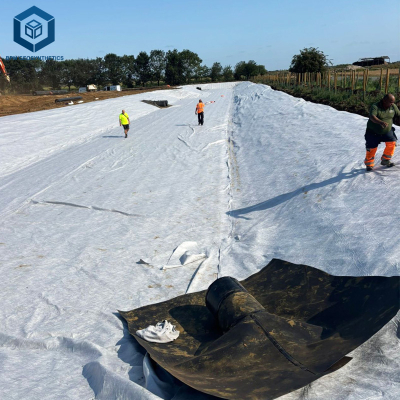
Canal liners (irrigation): PVC common (flexibility, lower cost). HDPE used for larger canals requiring longer life.
Secondary containment (tank farms, chemical plants): HDPE required for chemical containment. PVC only for non-aggressive liquids.
Floating covers (potable water reservoirs): Both used. PVC lighter, easier to fabricate; HDPE more durable but heavier.
Common Industry Problems: PVC Liner vs HDPE Liner Failures
Problem 1: PVC embrittlement after 15 years (plasticizer migration)
Root cause: Plasticizers leach out of PVC over time, especially in warm or chemical environments. Liner becomes stiff, cracks under stress.
Engineering solution: For applications requiring > 20-year design life, specify HDPE. This is the most important factor in PVC liner vs HDPE liner which is better for long-term projects.
Problem 2: HDPE difficult to install on steep slopes or irregular subgrade
Root cause: HDPE stiffness creates wrinkles, requires careful placement. Field seams more demanding.
Solution: For slopes > 3H:1V or uneven subgrade, consider PVC (flexible) or LLDPE (compromise).
Problem 3: PVC chemical attack in hydrocarbon spill
Root cause: PVC swells and loses strength when exposed to hydrocarbons (diesel, gasoline, solvents).
Solution: For any risk of hydrocarbon exposure, specify HDPE. PVC not suitable for fuel storage or industrial chemical containment.
Problem 4: HDPE stress cracking at wrinkles
Root cause: HDPE has lower inherent stress crack resistance than PVC (PVC doesn't stress crack — fails by plasticizer loss).
Solution: Proper installation to minimize wrinkles. For applications with unavoidable wrinkles, consider LLDPE or PVC.
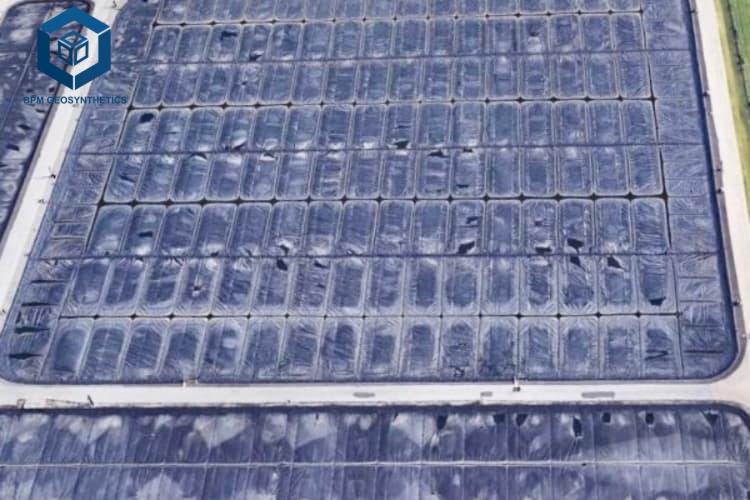
Risk Factors and Prevention Strategies for PVC vs HDPE Selection
Risk: Specifying PVC for long-term landfill liner: PVC lifespan 15–25 years vs. landfill design life 50+ years. Mitigation: Always specify HDPE for permanent containment.
Risk: Specifying HDPE for decorative pond on irregular subgrade: HDPE stiff, difficult to conform; installation cost high. Mitigation: Use PVC for small, decorative, or irregular-shaped ponds.
Risk: PVC UV degradation in exposed application: PVC degrades faster than HDPE under UV, even with stabilizers. Mitigation: Cover PVC within 30 days of installation or specify HDPE for exposed applications.
Risk: HDPE seam failure due to operator error: HDPE welding requires skilled operators and temperature control. PVC chemical welding more forgiving. Mitigation: Require certified HDPE welding operators and destructive seam testing.
Procurement Guide: How to Choose Between PVC and HDPE Liner
Follow this 8-step checklist for B2B purchasing decisions.
Define design life: > 20 years → HDPE. < 20 years → PVC may be acceptable.
Assess chemical exposure: Hydrocarbons, solvents, strong acids/bases (pH < 4 or > 10) → HDPE. Mild chemicals, water → PVC acceptable.
Evaluate UV exposure: Permanent exposed application → HDPE. Temporary or covered → PVC may be acceptable.
Analyze subgrade and geometry: Irregular subgrade, steep slopes, complex shapes → PVC (flexible) or LLDPE. Flat, stable subgrade → HDPE.
Calculate lifecycle cost: HDPE higher upfront but longer life. For 30+ year projects, HDPE has lower lifecycle cost despite higher initial investment.
Verify regulatory requirements: Landfills, hazardous waste → HDPE mandated. Potable water → check NSF/ANSI 61 certification (both available).
Order samples and perform site-specific testing: Test both materials on representative subgrade and with site liquids.
Review supplier qualifications: Ensure supplier provides GRI GM13 (HDPE) or GRI GM18 (PVC) certification and test reports.
Engineering Case Study: PVC Liner vs HDPE Liner for Irrigation Canal
Project type: 15 km irrigation canal in agricultural region.
Location: Northern India.
Project size: 120,000 m².
Requirements: Water containment only (no chemicals), 20-year design life, irregular canal subgrade, exposed to sunlight.
PVC liner vs HDPE liner which is better analysis: PVC offers flexibility (conforms to irregular canal shape), lower material cost, easier installation. HDPE offers longer life (50+ years) but higher cost and more difficult installation on irregular subgrade.
Decision: Selected 0.75 mm PVC with UV stabilizers. Lower upfront cost (€22/m² vs. €35/m² for HDPE). Design life 20 years matches project requirement.
Results after 10 years: No failures. PVC remains flexible; UV stabilizers effective. Project satisfied. Lesson: For 20-year, non-chemical water containment, PVC can be the better choice over HDPE.
Frequently Asked Questions: PVC Liner vs HDPE Liner Which Is Better
Q1: Which lasts longer — PVC or HDPE liner?
HDPE lasts significantly longer: 50–100+ years vs. 15–25 years for PVC. This is the most important factor in PVC liner vs HDPE liner which is better for permanent containment.
Q2: Is PVC or HDPE more flexible?
PVC is much more flexible (modulus 10–100 MPa vs. 800–1,200 MPa for HDPE). PVC conforms to irregular subgrades easily; HDPE is stiff.
Q3: Which has better chemical resistance?
HDPE. PVC degrades in hydrocarbons, solvents, and strong acids/bases. For chemical containment, HDPE is required.
Q4: Which is cheaper — PVC or HDPE liner?
PVC typically has lower upfront cost (€20–40/m² installed vs. €30–60/m² for HDPE). However, HDPE has lower lifecycle cost for long-term projects.
Q5: Can PVC liner be used in landfill applications?
No. EPA and GRI standards require HDPE or LLDPE for landfill liners. PVC not permitted due to shorter lifespan and potential plasticizer migration.
Q6: Which is easier to install?
PVC is easier — more flexible, lighter, and uses chemical welding (solvent) which is more forgiving than HDPE thermal welding. HDPE requires skilled operators and temperature control.
Q7: Does PVC degrade in sunlight?
PVC degrades faster than HDPE under UV. With UV stabilizers, PVC can last 10–20 years exposed. HDPE with carbon black lasts 50+ years exposed.
Q8: What is plasticizer migration in PVC?
Plasticizers leach out of PVC over time, especially in warm or chemical environments. This causes the liner to become stiff and brittle. HDPE has no plasticizers — no aging mechanism.
Q9: Can both materials be welded?
Yes. HDPE uses thermal fusion (hot wedge or extrusion). PVC uses chemical (solvent) welding or dielectric (RF) welding. Different equipment and techniques.
Q10: How do I decide between PVC and HDPE for my project?
Use HDPE for: long design life (> 25 years), chemical exposure, landfill, mining, permanent containment. Use PVC for: short-to-medium design life (10–25 years), water only, irregular subgrade, decorative ponds, budget-sensitive projects. Consult GRI GM13 (HDPE) and GRI GM18 (PVC) standards.
Request Technical Support or Quotation for PVC or HDPE Liner
For project-specific material selection, chemical compatibility testing, or bulk procurement, our technical team is available.
Request a quotation – Provide thickness, area, application type, chemical exposure, and design life.
Request engineering samples – Receive both PVC and HDPE samples with tensile, puncture, and chemical resistance test reports.
Download technical specifications – GRI GM13 (HDPE) and GRI GM18 (PVC) compliance guides, selection flowchart, and chemical compatibility database.
Contact technical support – Material selection consulting, installation method guidance, and failure analysis for PVC or HDPE liners.
About the Author
This guide was written by Dipl.-Ing. Hendrik Voss, a materials engineer with 19 years of experience in geomembrane systems. He has consulted on over 500 PVC liner vs HDPE liner selection projects across Europe, North America, South America, Asia, and Africa, specializing in chemical compatibility testing, lifecycle cost analysis, and failure investigation for landfill, mining, water, and industrial containment applications. His work is referenced in GRI and ASTM D35 committee discussions on geomembrane material standards.