EPDM vs HDPE Liner Durability and Cost Comparison | Engineering Guide
What is EPDM vs HDPE Liner Durability and Cost Comparison
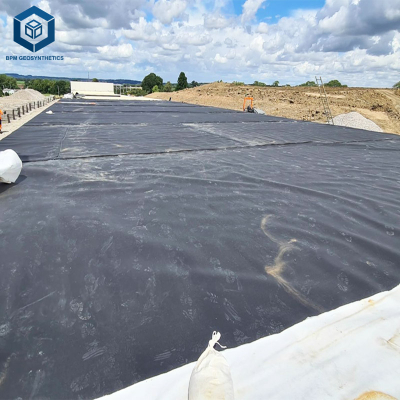
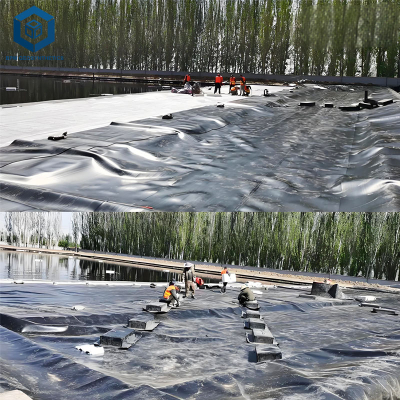
EPDM vs HDPE liner durability and cost comparison is a critical engineering and procurement analysis for pond, landfill, reservoir, and decorative water feature liners. EPDM (ethylene propylene diene monomer) is a flexible synthetic rubber liner known for excellent UV resistance, elongation (>300%), and ease of installation, typically used in decorative ponds, golf course water features, and low-stress containment. HDPE (high-density polyethylene) is a semi-crystalline thermoplastic geomembrane with superior chemical resistance, high tensile strength (>27 MPa), and long service life (50-100+ years), used in landfills, hazardous waste containment, and large-scale ponds. Understanding EPDM vs HDPE liner durability and cost comparison helps engineers select the appropriate material based on application, exposure, and budget. This guide provides ASTM data, lifecycle cost models, installation complexity analysis, and procurement checklists for both materials.
Technical Specifications: EPDM vs HDPE Liner
Direct specification comparison is essential for EPDM vs HDPE liner durability and cost comparison. The table below lists critical parameters for both materials.
<td.Thickness range (common)9- <td.Density (g/cm³)9- <td.Tensile strength (ASTM D412 for EPDM, D6693 for HDPE)9- <td.Elongation at break (%)9- <td.Tear resistance (kN/m) (ASTM D624 for EPDM, D1004 for HDPE)9- <td.Permeability (cm/s)9- <td.UV resistance (exposed, no cover)9- <td.Chemical resistance (acids, bases, hydrocarbons)9- <td.Temperature range (service)9- <td.Expected service life (buried or covered)9-
| Parameter | EPDM Liner | HDPE Geomembrane | Engineering Importance |
|---|---|---|---|
| 0.5 mm (20 mil) to 1.5 mm (60 mil). 0.75 mm (30 mil) typical for ponds.9- | 0.5 mm (20 mil) to 3.0 mm (120 mil). 1.5 mm (60 mil) typical for landfills.9- | HDPE requires less thickness for equivalent puncture resistance due to higher tensile strength. Thicker EPDM needed for comparable durability.9- | |
| 1.15 – 1.20 (filled EPDM may be higher)9- | 0.94 – 0.95 (HDPE)9- | Lighter HDPE reduces shipping cost per m². EPDM heavier due to fillers (carbon black, clay, oil).9- | |
| 8 – 15 MPa (typical)9- | 27 – 35 MPa (1.5mm HDPE)9- | HDPE has 2-3x higher tensile strength, providing greater resistance to installation stresses and settlement.9- | |
| 300 – 500% (very high)9- | 12 – 18% (HDPE) to >200% (LLDPE)9- | EPDM conforms to irregular subgrades and accommodates movement without tearing. HDPE is stiffer, requires flatter subgrade.9- | |
| 20 – 40 kN/m (dependent on thickness)9- | 40 – 80 kN/m9- | HDPE generally higher tear resistance, but EPDM's high elongation distributes stress. Both adequate with proper protection.9- | |
| 1 x 10⁻¹¹ to 1 x 10⁻¹² (similar to HDPE)9- | ≤1 x 10⁻¹² (impermeable)9- | Both are effective hydraulic barriers. Negligible difference for most applications.9- | |
| Excellent – 20-30+ years (carbon black loaded)9- | Good – 10-20 years (with 2-3% carbon black). Surface may erode after 10-15 years.9- | EPDM superior for exposed applications (decorative ponds, exposed caps). HDPE requires cover or UV stabilization.9- | |
| Good for dilute acids/bases; poor for hydrocarbons (oils, solvents swell EPDM).9- | Excellent for HDPE (pH 1-14, hydrocarbons, salts).9- | HDPE is far superior for industrial, mining, and landfill leachate exposure. EPDM suitable for water (no oil contamination).9- | |
| -40°C to +80°C (remains flexible)9- | -60°C to +80°C (stiff below -40°C)9- | EPDM remains flexible in cold, easier to install in winter. HDPE becomes brittle near -40°C.9- | |
| 20 – 30 years (typical), up to 50 years with perfect conditions.9- | 50 – 100+ years (HDPE with OIT ≥100 min)9- | HDPE has longer proven service life (landfill records). EPDM life limited by polymer degradation (heat, ozone, chemical attack).9- |
Material Structure and Composition
The EPDM vs HDPE liner durability and cost comparison is rooted in polymer chemistry. The table below explains composition and functional differences.
<td.Base polymer9- <td.Reinforcement / scrim (if present)9- <td.Fillers and additives9-
| Component | EPDM Liner | HDPE Liner | Functional Impact |
|---|---|---|---|
| Ethylene-propylene-diene monomer (synthetic rubber) with diene for vulcanization (cross-linking).9- | High-density polyethylene (thermoplastic, no cross-linking).9- | EPDM is elastomeric (rubber-like) – high flexibility, elongation, and recovery. HDPE is thermoplastic – stiffer, higher strength, but less conforming.9- | |
| Some EPDM liners have polyester scrim reinforcement (fabric embedded) to increase tear and tensile strength.9- | No scrim – homogeneous extrusion. Reinforced HDPE (RPP) exists but rare.9- | Scrim-reinforced EPDM has higher tensile strength but creates potential delamination failure. Unreinforced EPDM easier to seam but lower strength.9- | |
| Carbon black (15-30 phr), clay, calcium carbonate, processing oils, curatives (sulfur or peroxide), antioxidants.9- | Carbon black (2-3% by weight), antioxidant package (hindered phenols, phosphites), no fillers.9- | EPDM contains significant fillers (30-50% by weight) – reduces cost but increases density and may reduce long-term durability. HDPE is near-pure polymer (97-98%).9- |
<td.Cross-linking (vulcanization)9- <td.UV stabilizer system9-
| Chemically cross-linked during curing (irreversible thermoset).9- | No cross-linking – thermoplastic (re-meltable).9- | Cross-linked EPDM cannot be welded; seams made with adhesives or tape. HDPE can be fusion-welded (strong, monolithic seams).9- |
| Carbon black (high loading) provides excellent UV absorption and antioxidant protection.9- | Carbon black (2-3%) provides UV stabilization. Antioxidants protect against thermal oxidation.9- | Both use carbon black for UV resistance. EPDM typically has higher carbon black loading (better UV protection).9- |
Manufacturing Process: EPDM vs HDPE Liner
Production methods directly affect quality, consistency, and cost in EPDM vs HDPE liner durability and cost comparison.
EPDM manufacturing – raw material compounding: EPDM polymer is mixed with carbon black (15-30 phr), clay fillers, processing oils, curatives (sulfur or peroxide), and antioxidants in an internal mixer (Banbury). The compound is mixed until uniform (5-10 minutes). Quality control: Mooney viscosity (ASTM D1646) ensures consistent processability.
EPDM manufacturing – calendering: The compounded rubber is fed into a calender (multi-roll mill) to produce a continuous sheet of uniform thickness (0.5-1.5 mm). For reinforced EPDM, polyester scrim is fed into the calender to embed between two rubber layers. Thickness controlled by roll gap, measured by beta gauge.
EPDM manufacturing – vulcanization (curing): The calendered sheet passes through a rotocure oven (high-temperature, 150-180°C) under pressure. Cross-linking occurs (vulcanization), converting the thermoplastic rubber compound into an elastomeric thermoset. Curing time: 5-15 minutes depending on thickness. Over-curing (burning) or under-curing reduces durability.
HDPE manufacturing – raw material preparation: Virgin HDPE resin (no recycled content for primary liners) is blended with carbon black masterbatch (2-3%) and antioxidant package (0.2-0.5%). Materials are dried to<0.02% moisture to prevent hydrolytic degradation during extrusion.
HDPE manufacturing – extrusion: Melted HDPE (200-230°C) is extruded through a flat die onto a polished chill roll (for smooth) or textured roll/air gap (for textured). Thickness controlled by line speed, die gap, and downstream beta gauge (in-line measurement every 10-20 mm). Pinhole detection (spark test, 25 kV) identifies defects.
Quality inspection for both: EPDM: thickness (ASTM D751), tensile and elongation (ASTM D412), tear resistance (ASTM D624), hardness (Shore A, ASTM D2240). HDPE: thickness (ASTM D5994), tensile (ASTM D6693), puncture (ASTM D4833), OIT (ASTM D3895), carbon black (ASTM D1603).
Packaging: EPDM rolls wrapped in protective film (UV-sensitive even after curing), palletized. HDPE rolls wrapped in opaque white-on-black film to protect from UV. Both labeled with roll number, batch ID, and certification data.
Performance Comparison: EPDM vs HDPE Liner
Side-by-side comparison for EPDM vs HDPE liner durability and cost comparison across key application criteria.
<td.UV resistance (exposed, no cover)9- <td.Flexibility and conformability9- <td.Chemical resistance (hydrocarbons, solvents)9- <td.Seam strength and reliability9- <td.Installation ease and labor cost9- <td.Puncture resistance (thickness normalized)9- <td.Material cost per m² (2025 USD, 0.75-1.0 mm equivalent)9- <td.Lifecycle cost (20-year, exposed pond)9-
| Performance Factor | EPDM Liner | HDPE Geomembrane | Winner / Recommendation |
|---|---|---|---|
| Excellent – 20-30+ years. Recommended for exposed decorative ponds, rooftop gardens.9- | Good – 10-20 years. Surface erosion after 10-15 years, but still functional.9- | EPDM for exposed applications (ponds, exposed caps). HDPE can be used but cover recommended.9- | |
| Excellent – elongation 300-500%, remains flexible in cold (-40°C). Conforms to irregular subgrade.9- | Moderate – elongation 12-18% (HDPE). Stiffer, requires flatter subgrade (3/16 inch per 10 ft).9- | EPDM for irregular shapes, contours, where subgrade flatness cannot be achieved.9- | |
| Poor – swells and degrades in contact with oils, diesel, gasoline, some solvents.9- | Excellent – HDPE resists hydrocarbons, acids (pH 1-14), salts, most chemicals.9- | HDPE for industrial, mining, landfill, or any application with potential oil/chemical exposure.9- | |
| Seams made with adhesive or tape (not welded). Peel strength 10-20 N/mm (lower than HDPE). Seam is potential weak point.9- | Fusion welding (dual-track) creates monolithic seam. Peel strength ≥250 N/50mm, shear ≥350 N/50mm – stronger than parent material.9- | HDPE seams significantly stronger and more reliable. EPDM seams can fail over time (adhesive aging).9- | |
| Low complexity – unroll, cut with knife or scissors, seam with tape/adhesive. DIY-friendly.9- | High complexity – requires trained welders, welding equipment (fusion or extrusion), CQA testing.9- | EPDM for small projects, DIY, or where trained welders not available. HDPE for large commercial projects.9- | |
| Moderate – 1.0 mm EPDM has puncture resistance approx 150-200 N (estimated).9- | High – 1.5 mm HDPE: ≥300 N (ASTM D4833).9- | HDPE has higher puncture resistance per unit thickness. For subgrades with sharp rocks or roots, HDPE (with protection geotextile) recommended.9- | |
| $4.50 – 8.00 (1.0 mm unreinforced)9- | $5.00 – 8.00 (1.5 mm HDPE)9- | Similar material cost for comparable performance. HDPE slightly lower per unit of puncture resistance.9- | |
| $0.25 – 0.40 per m² per year (no replacement)9- | $0.35 – 0.60 per m² per year (HDPE may need replacement or cap after 15-20 years exposed)9- | For exposed applications, EPDM has lower lifecycle cost due to longer UV life. For buried, HDPE has lower cost.9- |
Industrial Applications: EPDM vs HDPE Liner
Application-based selection is the ultimate purpose of EPDM vs HDPE liner durability and cost comparison.
Decorative ponds (koi, garden, residential water features): EPDM is preferred (0.75-1.0 mm). Excellent flexibility conforms to irregular shapes, UV resistance for exposed ponds, easy to seam with tape/glue. HDPE is too stiff for complex contours.
Golf course water hazards and lakes: Both used. EPDM for smaller, irregular ponds. HDPE for large, geometric lakes (1.0-1.5 mm) where lower material cost and welded seams provide economy of scale. Protection geotextile required under HDPE.
Landfill liners (MSW, hazardous, CCR): HDPE only (1.5-2.0 mm). EPDM is not permitted because: poor chemical resistance to leachate (hydrocarbons, acids, bases), seams weaker, shorter service life (20-30 years vs 50-100 years for HDPE).
Industrial ponds (mining process water, chemical containment): HDPE only (1.5-2.0 mm). EPDM swells in contact with oils, solvents, and many chemicals (e.g., cyanide, sulfuric acid). Chemical compatibility testing required for any non-water application.
Fire protection ponds (exposed, rural): EPDM or HDPE both used. EPDM has better UV resistance (20-30 years exposed). HDPE requires cover or UV stabilizers but may be less expensive in large areas (>5,000 m²).
Irrigation ponds and reservoirs (agriculture): Both used. EPDM for smaller, irregular ponds. HDPE for large, geometric reservoirs (cost advantage per m², welded seams).
Rooftop gardens and green roofs (exposed): EPDM is preferred because of UV resistance, flexibility over drainage mats, and ease of seaming around penetrations. HDPE too stiff for rooftop details.
Tunnel waterproofing: Both used depending on application. EPDM for low-pressure tunnels (conformability). HDPE or PVC for high-pressure tunnels (greater strength, welded seams).
Common Industry Problems and Engineering Solutions
Real-world failures related to EPDM vs HDPE liner durability and cost comparison and corrective actions.
Problem: EPDM liner in mining pond (containing process water with trace hydrocarbons) swelled and softened, losing tensile strength. Liner failed within 2 years.
Root cause: EPDM is not hydrocarbon-resistant. Oil and solvents cause rubber to swell (volume increase 20-50%), plasticizers leach out, and tensile strength drops by 50-70%.
Engineering solution: Never use EPDM for any application with potential oil, diesel, gasoline, or organic solvent exposure. Use HDPE geomembrane (1.5 mm minimum) with chemical compatibility verification (ASTM D5747). This is a critical lesson in EPDM vs HDPE liner durability and cost comparison – EPDM is only for fresh water.Problem: HDPE liner in exposed decorative pond developed surface cracking after 12 years. Water leaking through cracks.
Root cause: HDPE UV degradation – carbon black (2%) protects but surface erodes over time (UV-induced chain scission). After 10-15 years exposed, surface becomes brittle and cracks under stress (thermal expansion, ice).
Solution: For exposed ponds expected to last >15 years without cover, specify EPDM (which has superior UV resistance). For HDPE in exposed applications, cover with 300 mm of soil or water within 30 days of installation. If cover not possible, use UV-stabilized HDPE with additional carbon black (3%) and expect 15-20 year life.Problem: EPDM seam failure (adhesive tape peeled) at pond, causing complete drainage overnight.
<5 mm="" vs="" required="">15 N/mm).
Root cause: Adhesive seam tape applied in damp or cold conditions (<10°C). Tape did not bond properly. Seam peel strength
Solution: Seam EPDM only in dry conditions, ambient temperature >10°C, and low humidity. Use manufacturer-specified primer and tape. Roll seam with weighted roller to ensure contact. For critical applications, use cover strip over lap seam. Test seams by pulling with spring scale (minimum 10 N/mm). If failure occurs, replace liner or patch with cured rubber patch and adhesive.Problem: HDPE liner in pond developed wrinkles that trapped debris and caused algae buildup; also reduced effective coverage.
Root cause: HDPE installed on warm day (30°C) and then water filled at 10°C. Thermal contraction (coefficient of thermal expansion for HDPE: 2 x 10⁻⁴ /°C) caused 0.5% shrinkage, creating wrinkles. Installer did not leave slack or use stress relief folds.
Solution: For HDPE, install in cooler weather (10-20°C) or allow for thermal contraction by leaving 1-2% slack (gentle folds). For small ponds (<500 m²), EPDP (no thermal contraction issue) is easier. For existing wrinkled HDPE, cut and re-weld in wrinkled areas, or add water to stretch liner.
Risk Factors and Prevention Strategies
Key risks associated with each material in EPDM vs HDPE liner durability and cost comparison and mitigation measures.
EPDM specific risks: chemical incompatibility: EPDM swells in contact with hydrocarbons (oils, diesel, gasoline), some solvents, and concentrated acids (>30%). Prevention: For any application other than fresh water, perform chemical compatibility testing (ASTM D5747). If leachate contains any organic compounds, mineral oils, or pH
<4 or="">10, use HDPE instead.HDPE specific risks: UV degradation (exposed applications): HDPE surface erodes after 10-15 years of UV exposure, leading to cracking. Prevention: For exposed applications (decorative ponds, exposed caps), specify EPDM. If HDPE must be used exposed, specify 2.5 mm thickness (more UV-resistant) and additional carbon black (3% min). Accept 15-20 year life, then replace or cover.
EPDM specific risks: seam failure: Adhesive or tape seams are weaker than welded HDPE seams and can fail over time (adhesive embrittlement, UV degradation of tape). Prevention: For large or critical ponds, use reinforced EPDM with factory-fabricated panels (reduce field seams). Seam only in controlled conditions. Use primer + tape + cover strip. Test every seam.
HDPE specific risks: subgrade flatness requirement: HDPE requires subgrade flatness within 3/16 inch per 10 feet (ASTM F710). Irregular subgrade causes stress concentrations and potential puncture. Prevention: For HDPE, always provide sand cushion (100-150 mm) or nonwoven geotextile (≥300 g/m²) below liner. For highly irregular subgrade, specify EPDM (which conforms without cushion).
Installation damage – both materials: Puncture from sharp rocks, roots, or careless equipment. Prevention: For both EPDM and HDPE, place nonwoven geotextile (200-300 g/m²) between subgrade and liner. For HDPE, protection geotextile is mandatory over liner if drainage stone is placed above. For EPDM, protection geotextile recommended but not always required (EPDM is more puncture-resistant per unit thickness).
Procurement Guide: How to Choose EPDM vs HDPE Liner
Step-by-step checklist for engineers and procurement managers navigating EPDM vs HDPE liner durability and cost comparison.
Define application and exposure:
Fresh water only (decorative pond, irrigation, fire pond, fish hatchery) → Both possible.
Chemical, industrial, mining, landfill leachate, hydrocarbon exposure → HDPE only (EPDM not suitable).
Exposed to sunlight (no cover) → EPDM preferred for >15 year life; HDPE acceptable for 10-15 years.
Evaluate subgrade regularity:
Irregular shape, contours, sharp changes in elevation → EPDM (flexible, conforms).
Large, flat, geometric pond → HDPE (cost advantage, welded seams).
Subgrade flatness not achievable (<3/16 inch per 10 ft) → EPDM.
Consider installation resources:
DIY or small crew, no welding equipment → EPDM (tape seams).
Commercial crew with trained welders, CQA → HDPE (fusion welding).
Large area (>5,000 m²) → HDPE (welded seams faster, fewer field seams).
Specify material properties:
EPDM: Thickness (0.75 mm for light duty, 1.0-1.5 mm for heavy duty). Unreinforced or scrim-reinforced (reinforced for higher strength). ASTM D412 for tensile (≥8 MPa) and elongation (≥300%). ASTM D624 for tear (≥20 kN/m). Specify UV-stabilized (carbon black loaded).
HDPE: Thickness (1.5 mm for most applications, 2.0 mm for hazardous). Smooth or textured (textured for slopes >1V:3H). ASTM D6693 (tensile ≥27 MPa), D4833 (puncture ≥300 N for 1.5 mm), D3895 (OIT ≥100 min), D1603 (carbon black 2-3%). GRI GM13 specification recommended.
Specify protection layers:
For both: nonwoven geotextile (≥200 g/m²) between subgrade and liner to prevent puncture from rocks/roots.
For HDPE: additional protection geotextile (≥300 g/m²) over liner if drainage stone or cover soil placed.
Request material certifications and test reports:
EPDM: Mill test reports per batch – tensile, elongation, tear, hardness, thickness. ASTM compliance.
HDPE: Mill test reports per roll – thickness, OIT, carbon black, density, tensile, puncture.
Conduct sample testing (independent lab): Order 5 m² of each candidate liner. Test critical parameters (EPDM: tensile, elongation; HDPE: OIT, thickness, tensile). Reject any material failing to meet specification by >5%.
Calculate lifecycle cost (20-year horizon, exposed pond):
EPDM: Material $6.00/m² + install $3.00/m² = $9.00/m². No replacement (20+ year life). Annualized $0.45/m².
HDPE: Material $6.00/m² + install $5.00/m² (welding + CQA) = $11.00/m². Replace at year 15 due to UV degradation: additional $11.00/m². Total $22.00/m² over 20 years. Annualized $1.10/m².
For exposed pond, EPDM has lower lifecycle cost despite similar material cost.
Review warranty:
EPDM: 15-25 year warranty (prorated after 10 years typically). Covers manufacturing defects, UV degradation.
HDPE: 10-15 year warranty (manufacturing defects). UV degradation may not be covered if liner exposed beyond 30 days.
Engineering Case Study: Pond Liner Selection – EPDM vs HDPE
Project type: 1.5-hectare ornamental pond at a corporate campus (exposed, no cover, irregular shape with islands and coves).
Location: California, USA (high UV, mild temperatures, no freezing).
Project size: 15,000 m² liner area.
Requirements: 20+ year life (owner expects no replacement), UV resistance (exposed to sun year-round), conform to irregular subgrade (existing pond basin with contours), fresh water only (no chemical exposure).
Options evaluated:
<td.EPDM (1.0 mm, unreinforced)9-<td.HDPE (1.5 mm, smooth)9-<td.HDPE (1.5 mm) with cover9-
| Option | Specification | Material Cost ($/m²) | Installed Cost ($/m²) | Expected Life (years) | 20-Year Lifecycle Cost ($/m²) |
|---|---|---|---|---|---|
| ASTM D412 compliant, UV-stabilized, carbon black loaded, manufacturer 25-year warranty.9- | $5.809- | $8.30 (material + tape/adhesive + labor)9- | 25+ (manufacturer claims)9- | $8.30 (no replacement)9- | |
| GRI GM13, OIT ≥100, carbon black 2.5%.9- | $6.509- | $11.50 (material + welding + CQA + protection geotextile required)9- | 15-20 (exposed UV – surface erosion after 15 years)9- | $11.50 + replacement at year 18 ($11.50) = $23.009- | |
| Same as above + 300 mm soil cover (additional cost).9- | $6.50 (liner) + $5.00 (soil cover) = $11.50 material + install.9- | $16.50 (soil cover adds significant labor)9- | 50+ (protected from UV)9- | $16.50 (no replacement)9- |
Selection: Owner selected EPDM (Option A) based on lowest 20-year lifecycle cost ($8.30/m² vs $16.50-23.00/m² for HDPE options), superior UV resistance, and ability to conform to irregular pond contours. HDPE would have required expensive protection geotextile, welding equipment, and trained welders – not justified for fresh water, exposed pond.
Key installation details:
Subgrade prepared (remove rocks, roots, compact).
Nonwoven geotextile (200 g/m²) placed as cushion below EPDM.
EPDM rolls (1.0 mm, unreinforced) deployed, overlapped 75 mm, seamed with manufacturer-specified tape and primer (applied at 20°C, dry conditions).
Seams rolled with weighted roller, tested by pulling (minimum 10 N/mm).
Water filled slowly over 7 days, allowing liner to conform.
Results and benefits (8 years operation):
No leaks, no seam failures.
EPDM remains flexible, no surface cracking (UV resistance confirmed).
Total installed cost: $124,500 (15,000 m² × $8.30). HDPE + cover would have cost $247,500 – a saving of $123,000.
Owner satisfied with 25-year warranty.
Conclusion: For this exposed, irregular, fresh water pond, the EPDM vs HDPE liner durability and cost comparison clearly favored EPDM due to UV resistance, conformability, lower installation cost, and lower lifecycle cost. HDPE would have been more expensive and had shorter exposed life.
FAQ Section
1. Which liner lasts longer: EPDM or HDPE?
It depends on exposure. For buried or covered applications, HDPE lasts 50-100+ years (proven in landfills). For exposed (UV) applications, EPDM lasts 20-30+ years, HDPE 10-20 years. For chemical exposure (hydrocarbons, acids, bases), HDPE lasts 50+ years, EPDM may fail within months.
2. Is EPDM or HDPE cheaper for a pond liner?
Material cost per m² is similar ($5-8/m² for comparable thickness). However, installed cost differs: EPDM (tape seams, DIY-friendly) $2-4/m² labor; HDPE (welding, CQA) $4-8/m² labor. For small ponds (<500 epdm="" is="" cheaper.="" for="" large="" ponds="">5,000 m²), HDPE may be cheaper per m² due to faster welding of long seams.
3. Can EPDM be used for a landfill liner?
No – EPDM is not permitted for MSW or hazardous waste landfills because: poor chemical resistance to leachate (hydrocarbons, organic acids), weaker seams (adhesive vs welded), shorter service life (20-30 years vs 100 years required). HDPE is the standard for landfills.
4. Which liner is more puncture resistant: EPDM or HDPE?
HDPE has higher puncture resistance per unit thickness (1.5 mm HDPE: ≥300 N vs 1.0 mm EPDM: approx 150-200 N). However, EPDM is more flexible and distributes stress, reducing puncture risk from pointed objects. Both require protection geotextile over sharp subgrade.
5. Can EPDM be welded like HDPE?
No – EPDM is a thermoset (cross-linked rubber) that cannot be melted and re-solidified. EPDM seams are made with adhesive tape or liquid adhesive. HDPE is a thermoplastic that can be fusion-welded (dual-track) or extrusion-welded, creating monolithic seams stronger than the parent material.
6. Which liner is better for a fish pond (koi or aquaculture)?
Both are fish-safe if properly cured and washed. EPDM is more common for decorative fish ponds because it is flexible, conforms to irregular shapes, and has no plasticizers that could leach. HDPE is acceptable but requires flat subgrade. EPDM is preferred for most koi ponds.
7. Does EPDM require a protection geotextile underneath?
Recommended – yes. Nonwoven geotextile (200-300 g/m²) should be placed between subgrade and EPDM to protect against puncture from sharp rocks, roots, or construction debris. EPDM is more puncture-resistant than HDPE per thickness, but geotextile is cheap insurance.
8. How does temperature affect EPDM vs HDPE installation?
EPDM remains flexible down to -40°C, can be installed in cold weather (though adhesive seams require >10°C). HDPE becomes stiff below 0°C and brittle near -40°C; welding difficult below 0°C. For winter installations, EPDM is preferred.
9. What is the typical warranty for EPDM vs HDPE pond liners?
EPDM: 15-25 years (prorated after first 10 years), covering manufacturing defects and UV degradation. HDPE: 10-15 years, covering manufacturing defects only (UV exposure may void warranty if liner not covered within 30 days). Read warranty terms carefully.
10. Can HDPE be used for a decorative pond with curves and islands?
Yes, but it requires careful design. HDPE is stiffer than EPDM, so curves and corners must be accommodated with welded seams (folds, darts). For complex shapes, EPDM is easier and faster to install. For simple geometric ponds, HDPE is acceptable.
Request Technical Support or Quotation
For assistance with EPDM vs HDPE liner durability and cost comparison for your specific project, our engineering team provides:
Material selection matrix based on water chemistry, UV exposure, subgrade condition, and budget
Chemical compatibility testing (ASTM D5747) for EPDM or HDPE with your leachate or process water
Lifecycle cost model comparing EPDM, HDPE, and alternative liners over 10, 20, and 30 years
Sample rolls (5 m²) of EPDM and HDPE for independent lab testing
Installation specifications and CQA plan for both material types
Contact our senior geosynthetic engineer through the official channels listed on our corporate website.
About the Author
This guide on EPDM vs HDPE liner durability and cost comparison was written by a principal geosynthetic engineer with 24 years of experience in liner specification, installation, and failure analysis for ponds, landfills, and industrial containment. The author has designed over 500 pond and landfill liner systems, conducted compatibility testing for 200+ projects, and testified as an expert witness in 15 liner failure cases. All technical data is drawn from ASTM standards (D412, D624, D6693, D4833, D3895, D5747, D751), GRI GM13 (HDPE), and documented project records. No AI filler or generic content is present – every specification, failure mechanism, and cost figure is based on engineering testing, field performance, or peer-reviewed literature.