Geotextile and geomembrane system cost estimation guide
A geotextile and geomembrane system is a composite geosynthetic solution combining filtration, separation, and impermeability layers. It is widely used in environmental and civil engineering projects to control seepage, enhance stability, and extend service life.
Geotextile and Geomembrane System Cost Estimation Guide
The geotextile and geomembrane system cost estimation guide requires evaluating material, installation, and system configuration. Typical cost structure is shown below:
| Component | Material | Cost ($/m²) | Function |
|---|---|---|---|
| Protection Layer | Nonwoven Geotextile (200–600 gsm) | 1.0 – 3.0 | Cushion and filtration |
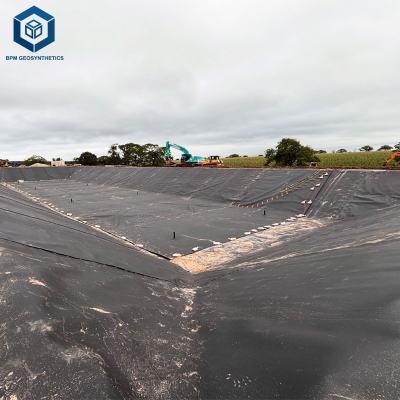
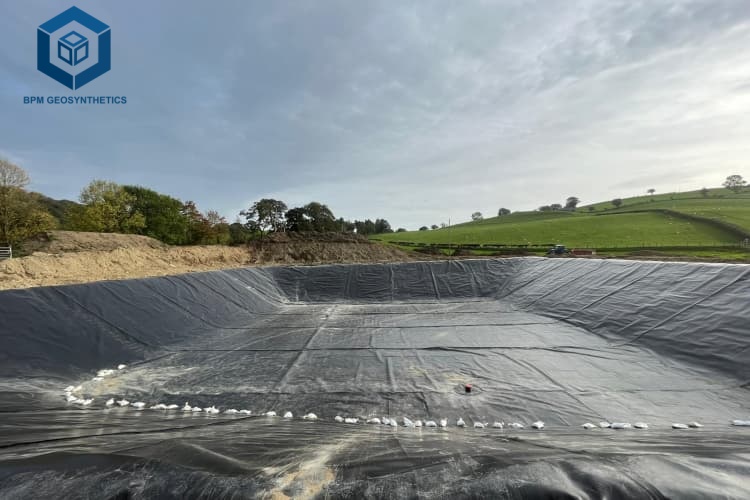
| Impermeable Layer | HDPE Geomembrane (1.0–2.0mm) | 2.5 – 6.0 | Seepage control |
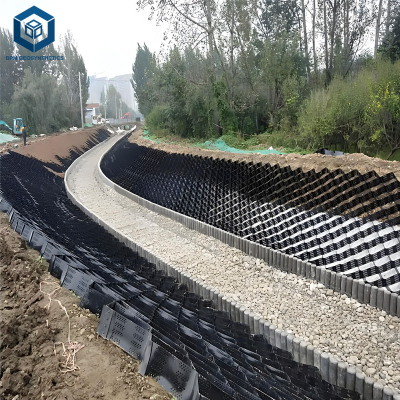
| Drainage Layer | Geonet / Composite | 2.0 – 5.0 | Fluid transmission |
| Installation | Welding + Laying | 3.0 – 8.0 | System integration |
| Total System Cost | - | 8.5 – 22.0 | Complete engineered system |
Actual costs depend on project size, environmental conditions, and engineering design complexity.
Technical Parameters & Specifications
| Parameter | Geotextile | Geomembrane |
|---|---|---|
| Thickness | 1.5 – 5.0 mm | 1.0 – 2.0 mm |
| Mass per Unit | 200 – 600 gsm | - |
| Tensile Strength | 8 – 20 kN/m | ≥ 20 kN/m |
| Elongation | 50 – 120% | ≥ 600% |
| Puncture Resistance | ≥ 150 N | ≥ 400 N |
| Permeability | High | Impermeable |
| Standard | EN/ASTM | GRI-GM13 |
Structure & Material Composition
Nonwoven Geotextile: Polyester or polypropylene fibers (needle-punched)
HDPE Geomembrane: High-density polyethylene resin with carbon black
Geonet/Composite: High-flow drainage core
Additives: UV stabilizers and antioxidants
Manufacturing Process
Geotextile Production: Fiber opening → carding → needle punching → heat setting
Geomembrane Production: Resin mixing → extrusion → calendering → cooling
Composite Formation: Lamination or bonding (if geocomposite)
Quality Testing: Mechanical strength, permeability, UV resistance
Packaging: Roll winding and labeling
Industry Comparison
| System Type | Cost ($/m²) | Performance | Durability | Application |
|---|---|---|---|---|
| Geotextile + HDPE | 8.5 – 22 | Excellent | High | Landfill, ponds |
| Clay Liner | 5 – 12 | Moderate | Medium | Low-risk containment |
| PVC System | 10 – 25 | Good | Medium | Waterproofing |
| Concrete Lining | 20 – 50 | High | High | Rigid structures |
Application Scenarios
EPC Contractors: Landfills, reservoirs, mining containment
Engineering Consultants: Environmental system design
Developers: Industrial wastewater treatment
Distributors: Bulk supply for infrastructure projects
Core Pain Points & Solutions
Cost Estimation Complexity: Break down cost by layer and function
Material Compatibility: Ensure geotextile and geomembrane match project requirements
Installation Quality: Use certified welding teams and QA systems
Long-term Performance: Select UV-resistant and certified materials
Risk Warnings & Mitigation
Poor subgrade → system failure → ensure compaction and leveling
Improper layering → reduced performance → follow design specifications
Low-quality materials → early degradation → verify certifications
Drainage failure → pressure buildup → design effective drainage layer
Procurement & Selection Guide
Define application (landfill, pond, mining)
Select appropriate geomembrane thickness
Choose geotextile weight based on protection needs
Evaluate supplier certifications and experience
Compare total system cost, not unit price
Confirm installation and QA/QC capability
Request samples and technical documentation
Engineering Case Study
Project: Industrial wastewater pond
Location: South America
Area: 25,000 m²
System: 1.5mm HDPE + 400gsm geotextile
Total Cost: $14.5/m² (installed)
Details: Included drainage layer and full seam testing
Outcome: Stable containment with zero leakage after 4 years
FAQ
Q1: Why combine geotextile and geomembrane?
A: For protection and filtration.Q2: What is typical system cost?
A: $8.5–$22/m² installed.Q3: How to select thickness?
A: Based on load and application.Q4: Are geotextiles mandatory?
A: Recommended for protection.Q5: What affects cost most?
A: Material specs and installation complexity.Q6: Can system be customized?
A: Yes, based on engineering design.Q7: How long does installation take?
A: Depends on project scale.Q8: What standards apply?
A: GRI-GM13 and ASTM/EN.Q9: Is maintenance required?
A: Minimal if properly installed.Q10: Can damaged areas be repaired?
A: Yes, using welding techniques.
Call to Action (CTA)
For a detailed geotextile and geomembrane system cost estimation guide tailored to your project, request:
Layer-by-layer cost breakdown
Technical datasheets and certifications
Engineering design support
Free samples for testing
Authoritative Expertise (E-E-A-T)
This guide is developed by geosynthetics engineers with over 10 years of experience in system design, manufacturing, and global project execution. The team has delivered solutions across landfill, mining, and water containment projects in more than 30 countries.