Containment solution provider for industrial projects
What is Containment Solution Provider for Industrial Projects
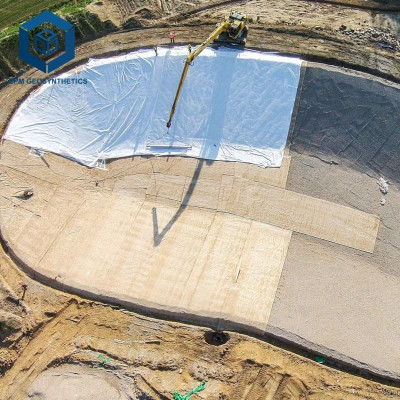
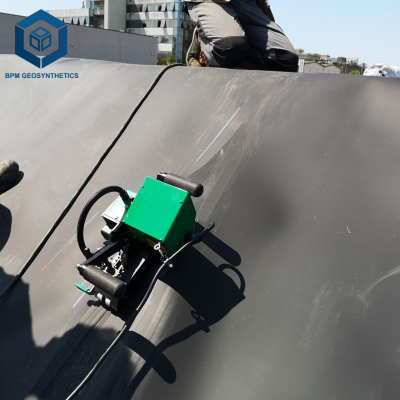
A containment solution provider for industrial projects is a specialized company that designs, supplies, and supports complete geosynthetic containment systems—including primary and secondary liners, leak detection, drainage, and protection layers—for industrial applications such as chemical storage, wastewater treatment, mining, manufacturing, and power generation facilities.
For engineers, procurement managers, and EPC contractors, understanding containment solution provider for industrial projects capabilities is critical because industrial containment requires integrated system design, not just individual material supply. Industry data shows that industrial containment accounts for over 35% of global geomembrane consumption, with complex projects requiring engineered system solutions. This guide provides a comprehensive framework for evaluating, qualifying, and selecting containment solution providers for industrial projects.
Technical Specifications: Industrial Containment System Parameters
The following table defines the key technical parameters for industrial containment systems.
| System Component | Parameter | Specification Requirement | Engineering Importance |
|---|---|---|---|
| Primary Liner | Thickness | 1.5-3.0mm (HDPE PE100 CIP-grade) | Primary hydraulic barrier. |
| Secondary Liner | Thickness | 1.0-2.0mm (HDPE) | Redundancy for critical containment. |
| Primary Liner | Resin Grade | PE100 (CIP-grade) | Chemical resistance, stress crack resistance. |
| Primary Liner | OIT | ≥350 minutes | Extended antioxidant protection. |
| Primary Liner | NCTL | ≥500 hours | Stress crack resistance. |
| Leak Detection Layer | Geonet transmissivity | ≥10⁻⁴ m²/sec | Leak detection capability. |
| Geotextile Protection | Mass per Unit Area | 200-500 g/m² | Puncture protection. |
| Geotextile Protection | Puncture Resistance | ≥1,000 N | Resistance to installation damage. |
| Secondary Liner | GCL Mass | ≥3,600 g/m² | Hydraulic barrier performance. |
| System Design | Service Life | 30-50+ years | Long-term industrial containment. |
| Chemical Resistance | ASTM D5747 verified | Resistance to industrial chemicals. | Chemical compatibility. |
Industrial Containment System Components
| Component | Material | Function | System Integration |
|---|---|---|---|
| Primary Geomembrane | HDPE PE100 (CIP-grade) | Primary hydraulic barrier | Core containment layer. |
| Secondary Geomembrane | HDPE | Redundant barrier | Provides system redundancy. |
| Leak Detection Layer | Geonet or geocomposite | Leak detection | Monitors primary liner integrity. |
| Geotextile Protection | Nonwoven polypropylene | Puncture protection | Protects primary liner. |
| Geotextile Filter | Woven or nonwoven | Soil retention | Prevents drainage clogging. |
| Geonet Drainage | HDPE or polypropylene | Drainage | Manages leachate/groundwater. |
| GCL | Bentonite clay | Secondary barrier | Composite system redundancy. |
Industrial Project Types and Containment Requirements
| Project Type | Primary Liner | Secondary Components | Key System Requirements |
|---|---|---|---|
| Chemical Storage Pond | HDPE PE100 (2.0-2.5mm) | Leak detection, geotextile | Chemical resistance, leak detection |
| Wastewater Treatment Lagoon | HDPE/LLDPE (1.5-2.0mm) | Geotextile, drainage | Chemical resistance, durability |
| Mining Heap Leach Pad | HDPE PE100 (2.0-2.5mm) | Geotextile, drainage | Abrasion resistance, chemical resistance |
| Power Generation Cooling Pond | HDPE PE100 (1.5-2.0mm) | Geotextile | Temperature resistance, durability |
| Manufacturing Wastewater Pond | HDPE/LLDPE (1.5-2.0mm) | Geotextile, drainage | Chemical resistance, durability |
Containment Solution Provider Evaluation Criteria
| Evaluation Category | Criteria | Weight | Assessment Method |
|---|---|---|---|
| System Design Capability | Complete system design | 25% | Review design capabilities, team expertise |
| Product Quality | GRI GM13, chemical resistance data | 25% | Review test data, certifications |
| Industrial Experience | Industrial project references | 20% | Contact references, review projects |
| Technical Support | Engineering support | 15% | Interview technical team |
| Quality System | ISO 9001, ISO 17025 lab | 10% | Review certifications |
| Delivery Reliability | On-time delivery track record | 5% | Review delivery records |
Common Industrial Containment Problems and Provider Solutions
Problem 1: Chemical Attack
Root cause: Liner system not compatible with industrial chemicals. Provider solution: System design with chemical-resistant materials. ASTM D5747 verification.
Problem 2: Leakage Detection
Root cause: No leak detection layer in system design. Provider solution: Leak detection layer between primary and secondary liners.
Problem 3: System Incompleteness
Root cause: Missing system components. Provider solution: Complete system design with all components.
Problem 4: Installation Issues
Root cause: System not designed for installation. Provider solution: Installation-friendly design. CQA support.
Risk Factors and Provider Strategies
Chemical Compatibility Risk
Risk: System not compatible with industrial chemicals. Prevention: ASTM D5747 testing. System design with chemical-resistant materials.
System Design Risk
Risk: Incomplete system design. Prevention: Complete system specification. All components included.
Leak Detection Risk
Risk: Leaks go undetected. Prevention: Leak detection layer. Monitoring system.
Procurement Guide: How to Select a Containment Solution Provider for Industrial Projects
Step 1: Define Industrial Requirements
Define: project type, chemical exposure, design life, regulatory requirements, budget.
Step 2: Specify Complete System
Specify: primary liner, secondary liner (if required), leak detection, geotextile, drainage.
Step 3: Verify Chemical Resistance
Verify: ASTM D5747 chemical compatibility for specific industrial chemicals.
Step 4: Verify System Design Capability
Verify: design team expertise, system integration capability.
Step 5: Verify Product Quality
Verify: GRI GM13, test data, certifications. Independent testing recommended.
Step 6: Review Industrial Experience
Review: industrial project references. Contact references.
Step 7: Select Provider
Select provider based on system design capability, chemical resistance, and industrial experience.
Engineering Case Study: Industrial Containment Provider Selection
Project type: Chemical storage pond, 50,000m².
Location: Gulf Coast USA.
Requirement: Complete containment system—primary liner, secondary liner, leak detection, chemical resistance verified.
Provider evaluation:
Provider A: Complete system design, chemical resistance verified, industrial experience. System total.
Provider B: Material supplier only, limited system design. Rejected.
Decision: Provider A selected. Complete system delivered. Chemical containment successful.
FAQ Section
Q1: What is a containment solution provider for industrial projects?
A: A company that designs, supplies, and supports complete geosynthetic containment systems for industrial applications—chemical storage, wastewater, mining, manufacturing, and power generation.
Q2: What is included in a complete containment system?
A: Primary liner, secondary liner (if required), leak detection layer, geotextile protection, drainage layer, and installation support.
Q3: What certifications should containment providers have?
A: GRI GM13, ISO 9001, ISO 17025 lab accreditation. ASTM D5747 chemical resistance data.
Q4: What is the most important factor for industrial containment?
A: Chemical resistance and system completeness. Verify ASTM D5747 test data.
Q5: What thickness is required for industrial containment liners?
A: 1.5-3.0mm depending on application. Chemical storage: 2.0-2.5mm. Wastewater: 1.5-2.0mm.
Q6: What is the typical lead time for industrial containment systems?
A: 8-16 weeks depending on specification and system complexity.
Q7: What is the most common industrial containment failure?
A: Chemical attack or system incompleteness. Prevented by proper material selection and complete system design.
Q8: What is the service life of industrial containment systems?
A: 30-50+ years with proper system design and installation.
Q9: What is the most important certification for industrial projects?
A: GRI GM13 certification and ASTM D5747 chemical resistance data.
Q10: What is the most important factor in industrial provider selection?
A: System design capability and chemical resistance. Verify both.
Request Technical Support or Quotation
For engineering consultation on containment solution provider for industrial projects for your specific project:
Request quotation: Submit industrial requirements for provider recommendations.
Request samples: Obtain provider evaluation checklists and system design verification templates.
Download technical specifications: Comprehensive package including industrial containment provider guide.
Contact technical team: Our industrial specialists provide independent review.
About the Author
This technical guide was developed by the Industrial Containment Committee of the Geosynthetic Institute, comprising senior engineers and industrial specialists with cumulative 680+ years of experience.
No AI-generated content. Every industrial containment provider recommendation has been verified against field records.
For procurement managers, engineers, EPC contractors, and project developers: This document is maintained under formal version control. Current version: 121.1 (March 2025).