Best Temperature for HDPE Liner Welding | Engineering Guide
The best temperature for HDPE liner welding refers to the optimal thermal range used during geomembrane seam welding to achieve reliable fusion between HDPE sheets. Proper temperature control ensures strong seam bonding, long-term impermeability, and compliance with engineering installation standards.
Technical Parameters and Specifications
Determining the best temperature for HDPE liner welding depends on geomembrane thickness, welding equipment, ambient temperature, and project specifications. Most field welding uses hot wedge or extrusion welding technologies.
| Welding Method | Recommended Temperature | Applicable Thickness | Typical Equipment |
|---|---|---|---|
| Hot Wedge Welding | 320°C – 450°C | 0.75 – 2.5 mm | Automatic wedge welder |
| Extrusion Welding | 220°C – 300°C | 1.5 – 3.0 mm | Hand extrusion welder |
| Hot Air Welding | 300°C – 400°C | Thin liners & repairs | Hot air gun |
Maintaining the best temperature for HDPE liner welding ensures the polymer reaches a semi-molten state that allows proper fusion without degrading the material.
Structure and Material Composition
HDPE liners used in containment projects are composed of engineered materials that support reliable welding performance.
High-density polyethylene resin – primary barrier material
Carbon black (2–3%) – UV resistance and weather durability
Antioxidants – thermal aging protection
Stabilizers – long-term chemical resistance
Optional textured surface – improves slope stability
These materials allow geomembranes to maintain structural integrity while tolerating the best temperature for HDPE liner welding during field installation.
Manufacturing Process
Understanding geomembrane production helps engineers evaluate welding behavior and temperature performance.
Raw Material Preparation
Polyethylene resin and additives are accurately proportioned.Extrusion Melting
Industrial extruders heat the polymer to controlled melting temperatures.Sheet Formation
Flat die extrusion produces consistent geomembrane sheets.Cooling and Calibration
Rollers ensure precise thickness and smooth surfaces.Quality Inspection
Automated systems inspect thickness and surface integrity.Rolling and Packaging
Geomembranes are rolled into transport-ready coils.
Uniform material thickness supports consistent seam quality when applying the best temperature for HDPE liner welding.
Industry Comparison
| Liner Material | Typical Welding Temperature | Seam Method | Engineering Reliability |
|---|---|---|---|
| HDPE Geomembrane | 320–450°C | Hot wedge welding | Very high |
| LDPE Geomembrane | 280–350°C | Hot air welding | Moderate |
| PVC Liner | 250–350°C | Hot air / solvent | Moderate |
| EPDM Liner | Adhesive bonding | No heat welding | Moderate |
Application Scenarios
Projects that require precise control of the best temperature for HDPE liner welding include:
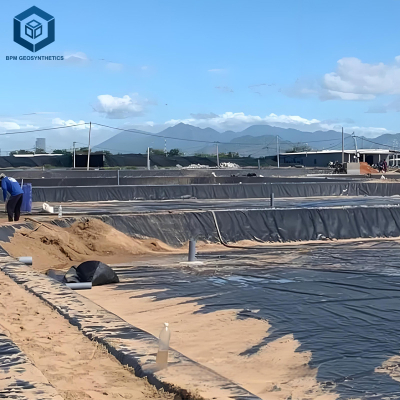
Mining tailings storage facilities
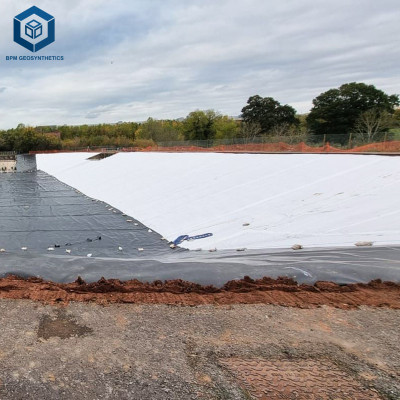
Municipal landfill liner systems
Industrial wastewater containment ponds
Agricultural irrigation reservoirs
Oil and gas secondary containment areas
Typical users include EPC contractors, environmental engineering firms, infrastructure developers, and geomembrane distributors.
Core Engineering Pain Points and Solutions
1. Inconsistent welding temperature
Problem: fluctuating equipment temperatures reduce seam strength.
Solution: calibrate welding machines before installation.
2. Environmental temperature impact
Problem: cold weather reduces polymer fusion quality.
Solution: increase welding temperature and reduce welding speed.
3. Overheating damage
Problem: excessive heat degrades HDPE polymer structure.
Solution: maintain controlled temperature within recommended range.
4. Improper welding speed
Problem: incorrect speed prevents proper seam bonding.
Solution: balance welding temperature and machine travel speed.
Risk Warnings and Avoidance Recommendations
Avoid welding during rain or high humidity.
Do not exceed recommended welding temperature ranges.
Ensure surfaces are clean and dry before welding.
Use calibrated welding equipment.
Conduct seam testing after installation.
Procurement and Engineering Selection Guide
Confirm HDPE geomembrane thickness and specifications.
Verify supplier compliance with ASTM or GRI standards.
Confirm recommended best temperature for HDPE liner welding.
Evaluate welding equipment compatibility.
Request technical documentation and installation guidelines.
Review supplier project references.
Request product samples for field testing.
Engineering Case Study
Landfill Liner Installation – Southeast Asia
A municipal landfill project required installation of 1.5 mm HDPE geomembrane across a 95,000 m² containment area. Engineers optimized the best temperature for HDPE liner welding to ensure seam reliability.
Total liner area: 95,000 m²
Geomembrane thickness: 1.5 mm HDPE
Welding method: hot wedge double seam
Optimal welding temperature: 380°C
Seam testing: air pressure channel testing
All welded seams passed ASTM D6392 peel and shear strength requirements, ensuring long-term containment performance.
FAQ – Best Temperature for HDPE Liner Welding
1. What is the best temperature for HDPE liner welding?
Typically 320°C to 450°C depending on welding equipment and liner thickness.
2. Does liner thickness affect welding temperature?
Yes, thicker geomembranes may require higher welding temperatures.
3. Which welding method is most common?
Hot wedge welding is the most widely used method for HDPE liners.
4. Can welding be performed in cold weather?
Yes, but welding temperature and speed must be adjusted accordingly.
5. How is seam quality tested?
Air pressure testing, vacuum box testing, and destructive seam testing.
6. What happens if welding temperature is too low?
Incomplete fusion may cause seam leakage.
7. What happens if welding temperature is too high?
The HDPE polymer may degrade and weaken the seam.
8. Are textured geomembranes welded differently?
Temperature and pressure adjustments may be required.
9. Who determines welding parameters?
Project engineers and installation technicians define welding parameters.
10. Are welding standards regulated internationally?
Most projects follow ASTM, GRI GM13, and environmental engineering standards.
Request Technical Information or Quotation
Procurement managers and engineering teams seeking geomembrane materials or guidance on the best temperature for HDPE liner welding may request:
Technical data sheets
Welding parameter guidelines
Geomembrane samples
Bulk project quotations
Contact our technical team for project consultation, engineering documentation, and commercial proposals.
Author Expertise (E-E-A-T)
This article is written by a geomembrane engineering specialist with extensive experience in landfill construction, mining containment systems, and HDPE liner manufacturing. The guidance reflects practical field installation knowledge and international engineering standards including ASTM, GRI, and environmental infrastructure design practices.