Geomembrane overlap width standard requirement
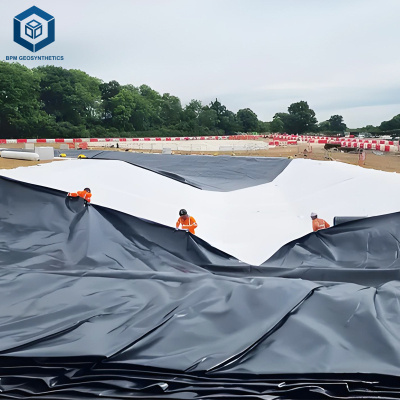
The geomembrane overlap width standard requirement refers to the specified seam overlap distance between adjacent geomembrane sheets during installation to ensure reliable welding, structural integrity, and long-term impermeability in engineering containment systems such as landfills, mining facilities, and water reservoirs.
Technical Parameters and Standard Specifications
In engineering applications, the geomembrane overlap width standard requirement is determined by geomembrane thickness, welding method, site conditions, and project specifications. International standards such as ASTM and GRI provide guidance widely used by EPC contractors.
| Geomembrane Thickness | Recommended Overlap Width | Welding Method | Applicable Standard |
|---|---|---|---|
| 0.5 mm – 0.75 mm | 80 – 100 mm | Hot wedge welding | GRI GM13 |
| 1.0 mm – 1.5 mm | 100 – 150 mm | Hot wedge / extrusion | ASTM D6392 |
| 2.0 mm | 150 mm minimum | Hot wedge double seam | EPA landfill guideline |
| 3.0 mm | 150 – 200 mm | Extrusion welding | Mining specifications |
Proper adherence to the geomembrane overlap width standard requirement is critical to ensure seam strength, leak prevention, and compliance with project inspection procedures.
Structure and Material Composition
Typical geomembrane liners used in projects consist of the following structural components:
High-density polyethylene (HDPE) resin – primary impermeable polymer
Carbon black (2–3%) – UV resistance and durability
Antioxidants – long-term thermal stability
Stabilizers – chemical and environmental protection
Surface texture (optional) – improves slope friction
These materials enable geomembranes to maintain structural integrity while meeting strict geomembrane overlap width standard requirement during field welding.
Manufacturing Process
Understanding manufacturing helps engineers assess seam performance related to overlap requirements.
Raw material batching
High-quality polyethylene resin and additives are mixed according to formulation.Extrusion melting
Materials are melted using large industrial extruders.Flat die or blown film extrusion
The molten polymer is formed into geomembrane sheets.Cooling and calibration
Rollers ensure thickness uniformity and surface quality.Surface inspection
Automatic sensors detect defects.Rolling and packaging
Geomembranes are rolled in large industrial coils for transportation.
Consistent thickness control is essential for maintaining correct geomembrane overlap width standard requirement during welding.
Industry Comparison
| Material Type | Typical Overlap Width | Welding Method | Engineering Reliability |
|---|---|---|---|
| HDPE Geomembrane | 100–150 mm | Hot wedge / extrusion | Very high |
| LDPE Geomembrane | 120–150 mm | Hot air welding | Moderate |
| PVC Geomembrane | 75–100 mm | Solvent welding | Moderate |
| EPDM Liner | 150 mm+ | Adhesive bonding | Moderate |
Application Scenarios
Projects requiring strict geomembrane overlap width standard requirement include:
Mining tailings ponds – heavy chemical containment
Municipal landfill liners – environmental protection systems
Industrial wastewater reservoirs
Agricultural irrigation reservoirs
Oil and gas containment pits
Typical users include EPC contractors, environmental engineering firms, infrastructure developers, and geomembrane distributors.
Core Engineering Pain Points and Solutions
1. Inconsistent seam welding
Problem: insufficient overlap width reduces seam strength.
Solution: maintain minimum 100–150 mm overlap according to thickness.
2. Installation errors on slopes
Problem: sheet sliding reduces overlap distance.
Solution: temporary anchoring and slope welding control.
3. Thermal expansion
Problem: temperature changes affect seam alignment.
Solution: install during stable temperature periods.
4. Field quality control
Problem: lack of inspection leads to seam failure.
Solution: vacuum testing and air pressure testing.
Risk Warnings and Avoidance Recommendations
Avoid overlaps below the minimum specification.
Ensure surfaces are clean before welding.
Prevent moisture contamination in seam areas.
Use certified welding technicians.
Conduct nondestructive seam testing.
Procurement and Engineering Selection Guide
Confirm geomembrane material type (HDPE, LDPE, PVC).
Determine required thickness based on project design.
Verify supplier compliance with ASTM or GRI standards.
Confirm recommended geomembrane overlap width standard requirement.
Request welding method documentation.
Evaluate supplier project experience.
Request product samples and testing reports.
Engineering Case Study
Mining Tailings Storage Facility – South America
A copper mining project installed 1.5 mm HDPE geomembrane across a 120,000 m² tailings pond. The project required a geomembrane overlap width standard requirement of 150 mm to accommodate hot wedge double-track welding.
Total liner installed: 120,000 m²
Geomembrane thickness: 1.5 mm HDPE
Overlap width: 150 mm
Welding method: double-track hot wedge welding
Quality test: air pressure seam testing
After inspection, seam strength exceeded ASTM D6392 standards, ensuring long-term environmental safety.
FAQ – Geomembrane Overlap Width Standard Requirement
1. What is the standard overlap width for HDPE geomembrane?
Typically 100–150 mm depending on thickness and welding method.
2. Why is overlap width important?
It ensures adequate seam welding strength and prevents leakage.
3. Can overlap width be reduced?
No, reducing overlap increases seam failure risk.
4. Does thickness affect overlap width?
Yes, thicker geomembranes require wider overlaps.
5. What welding methods require overlap?
Hot wedge welding and extrusion welding both require overlap.
6. How is seam quality tested?
Air pressure testing, vacuum testing, and destructive seam testing.
7. What happens if overlap is too large?
Material waste increases but seam integrity remains acceptable.
8. Are standards the same worldwide?
Most projects follow ASTM, GRI, or EPA guidelines.
9. Can textured geomembranes use the same overlap?
Yes, but welding temperature and pressure must be adjusted.
10. Who determines overlap requirements?
Project engineers, design consultants, and technical specifications.
Request Technical Information or Quotation
Engineering teams and procurement managers seeking geomembrane materials or technical guidance regarding geomembrane overlap width standard requirement can request the following:
Project-specific technical data sheets
Geomembrane samples for testing
Engineering installation guidelines
Bulk project quotations
Contact our technical team to receive detailed engineering documentation and project support.
Author Expertise (E-E-A-T)
This art