What are Disadvantagaes of Geomembran 300 micron?
Geomembran 300 micron is widely used due to their economical price, but this "economy" hides significant performance compromises. As a critical material in seepage control projects, this standard thickness is often mistakenly used in demanding scenarios that exceed its capabilities. This article will systematically analyze its inherent shortcomings in terms of mechanical strength, construction tolerance, and long-term durability, revealing why choosing thicker specifications is the truly cost-effective and wise decision in certain critical engineering projects.
1. Geomembran 300 micron Introduction
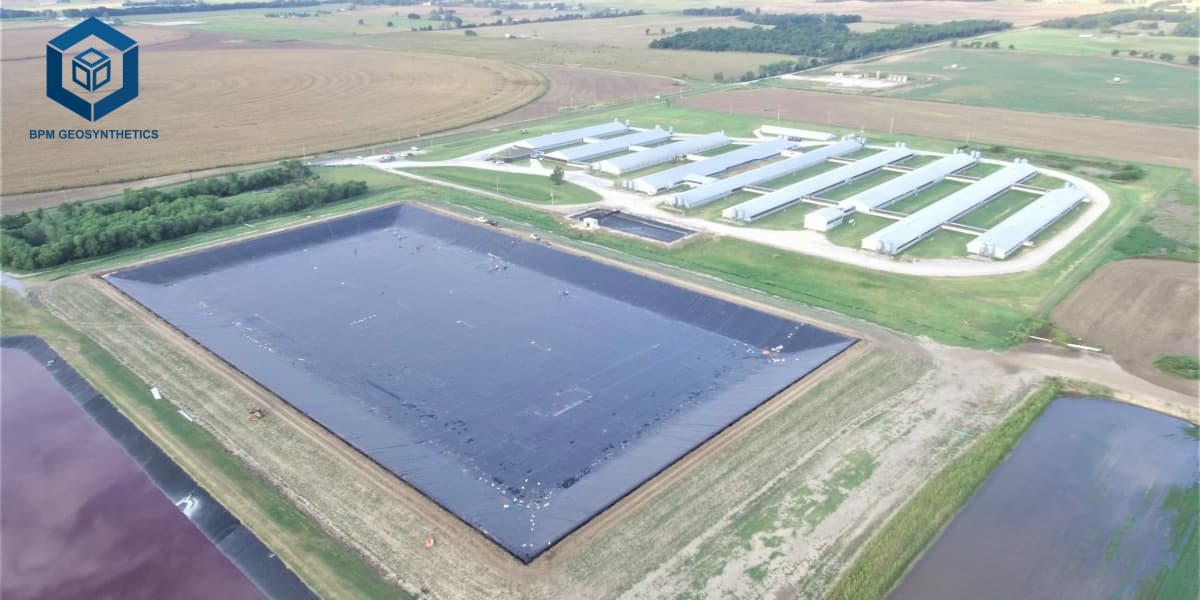
Geomembranes are synthetic, flexible, waterproof sheets used as impermeable barriers in environmental and civil engineering. Manufactured from polymers like HDPE, PVC, or EPDM, their primary function is to block fluid or gas migration.
Geo membran is critical for lining landfills to prevent leachate contamination, covering mining tailings, and storing water in reservoirs or canals. In civil projects, they control seepage in dams and tunnels, and cap contaminated soil. Their durability, chemical resistance, and customizability make them essential for long-term containment and environmental protection, ensuring the safety of surrounding soil and groundwater.State the widespread use of 300 micron (~0.3mm/12 mil) thickness as a common, economical option.
2. Geomembran 300 micron Disadvantages in Physical Properties
The main drawback of 300-micron geomembranes(also named 0.3mm geomembrane) in terms of physical properties stems from their thinness.
2.1 Weak Puncture Resistance
This is the most common physical disadvantage of thin geo membranes. A thickness of 300 micrometers (0.3 millimeters) cannot provide a sufficient barrier against the impact of sharp objects.
2.1.1 Actual Impact
If the foundation is not properly prepared, leaving sharp stones, metal fragments, or plant roots, these sharp objects can easily puncture the membrane during installation or after the soil covering, leading to leakage.
2.1.2 Data Support
According to geomembrane mechanical property tests, puncture resistance is directly proportional to thickness. The puncture resistance of a 300-micrometer geomembrane is typically only about 20%-25% of that of a 1.5-millimeter thick geomembrane.
2.2 Low Tensile and Tear Strength
HDPE membrane of this thickness have lower limits when subjected to tensile or tear forces.
2.2.1 Installation Damage
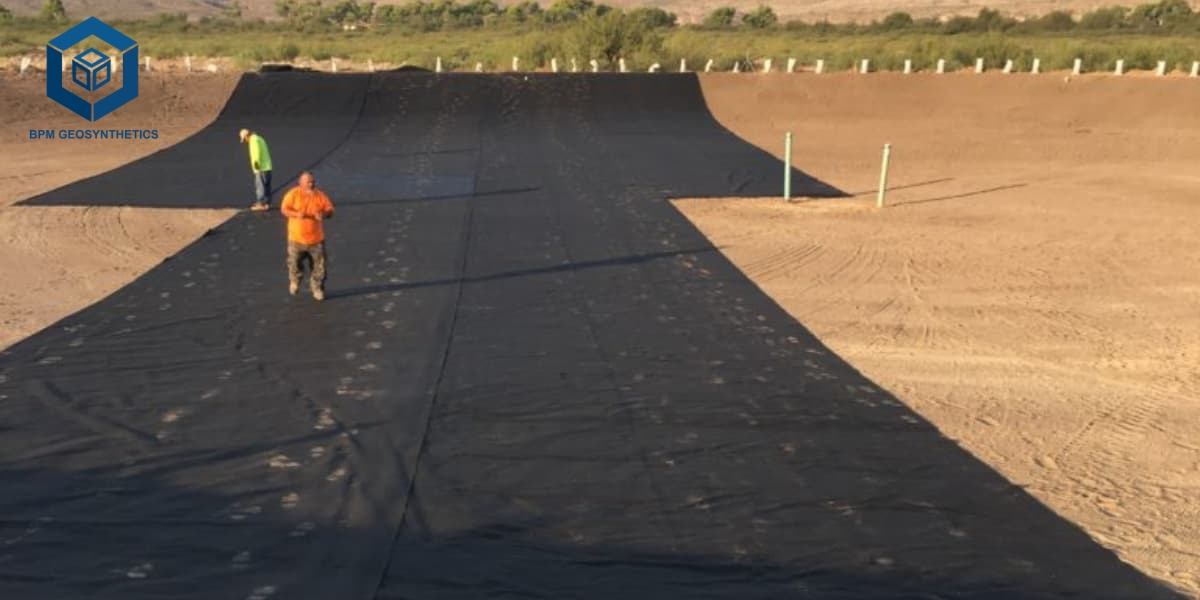
During construction and installation, dragging by workers, mechanical rolling, or improper folding can easily cause localized thinning or cracking of the hdpe geomembrana.
2.2.2 Uneven Settlement
If uneven settlement occurs in the foundation soil, thinner membranes are more prone to cracking due to insufficient tensile stress, while thicker membranes offer some buffering capacity.
2.3 Susceptibility to Environmental Stress Cracking
Especially when using HDPE (High-Density Polyethylene), 300-micron sheets are more susceptible to environmental stress cracking under long-term stress (such as at folds and weld edges).
2.3.1 Practical Impact
In low-temperature environments or environments with certain chemicals, minute defects within the membrane can rapidly propagate into cracks, ultimately leading to structural failure. Thinner sheets mean less material to resist crack propagation.
2.4 Insufficient Resistance to Hydrostatic Pressure
In applications requiring high head pressure (i.e., deeper water), a thickness of 300 microns may not be able to withstand hydrostatic pressure.
2.4.1 Actual Impact
Under water pressure, the membrane may bulge or displace gas/water in the foundation, causing voids beneath the membrane and potentially leading to collapse or rupture.
2.5 Extremely High Requirements for the Foundation
Due to its low physical strength, it places stringent requirements on the flatness and density of the underlying support layer (foundation).
2.5.1 Actual Impact
Even without obvious sharp objects, a slightly rough surface (such as large clay clods or gravel friction) under long-term dynamic loads can cause frictional wear on the 300-micron membrane, gradually thinning it until perforation.
2.6 Resistance to Low-Temperature Brittleness
In cold climates (especially for non-PVC polyolefin materials), the membrane will harden and become brittle.
2.6.1 Actual Impact
Bending or impacts at low temperatures (such as hail or falling rocks) are more likely to cause brittle fracture rather than plastic deformation in the 300-micron thin material.
3. Disadvantages of Geomembran 300 micron in Terms of Durability
The main drawback of 300-micron geomembranes in terms of durability lies in their weak resistance to long-term environmental erosion. The thinner thickness means that it has a small "safety margin" for resisting ultraviolet radiation, chemical erosion, and mechanical wear, and its performance deteriorates rapidly once the surface begins to age.
3.1 Poor resistance to ultraviolet (UV) aging; surface microcracks can lead to failure
The 300-micron thickness means that the surface aging layer has a significant impact on overall performance. UV radiation is a major factor causing aging in polymer materials, leading to microcracks on the material surface.
3.1.1 Key Data
A recent academic study in Japan conducted an in-depth analysis of the aging mechanism of high density polyethylene geomembrane. The results show that when the material surface develops microcracks of approximately 50 microns depth due to aging factors such as UV radiation, the material may still maintain its performance; however, once the crack depth reaches or exceeds 300 microns (i.e., equivalent to the material thickness), its key mechanical indicators such as tensile strength and elongation at break will below the design standard values, meaning material failure.
3.1.2 Practical Impact
For a thin 300 micron geomembrane, any surface aging (such as embrittlement and cracking caused by UV radiation) is fatal. Because the hdpe geo membrane material thickness is inherently limited, the depth of aging erosion can easily occupy a considerable proportion of the thickness, rapidly penetrating the entire protective layer and causing leakage.
3.2 Low Creep Performance Reserve and Rapid Thickness Decrease
Creep refers to the deformation of a material under long-term constant stress. After creep occurs, the thickness of the geomembrane gradually decreases, and all its properties deteriorate.
3.2.1 Practical Impact
A 300-micron geomembrane liner has a thin initial thickness. Once creep occurs, the "loss" of its effective thickness rapidly reduces its physical and mechanical properties. For example, when laid on slopes or under long-term water pressure, the membrane will gradually thin due to its own weight or continuous tension from the water pressure, and may eventually rupture at local weak points.
3.3 Extremely Small Tolerance for Chemical Erosion
Although some materials (such as HDPE) have a certain degree of chemical corrosion resistance, their durability is still affected by chemical and biological erosion.
3.3.1 Practical Impact
In environments with acids, alkalis, or wastewater, chemicals can react with stabilizers in the material or slowly swell the material. For thick films (e.g., 1.5mm or 2.0mm), slight erosion of the surface layer leaves the interior intact; however, for 300-micron films, the same erosion depth can penetrate 10%-20% of their thickness, causing the material to become brittle, increasing permeability, and significantly shortening its service life in wastewater environments. According to industry experience, a 0.5mm thick stabilized polyethylene film has a service life of 30-50 years under wastewater conditions. In contrast, 300-micron (0.3mm) films are thinner, and their effective lifespan is expected to be even shorter.
3.4 High Risk of Environmental Stress Cracking
Under the combined effects of temperature changes and chemical corrosion, the material is prone to stress cracking.
3.4.1 Actual Impact
Thin materials are more susceptible to penetrating cracks due to environmental stress cracking at weld edges, folds, or localized stress concentration points. Because the geomembrane sheet material thickness is insufficient to resist crack propagation, once a microcrack occurs, it quickly penetrates the entire membrane.
The biggest drawback of 300-micron hdpe geomembrane sheet in terms of durability is their extremely low tolerance for aging. Whether it's surface degradation caused by ultraviolet radiation, creep due to long-term stress, or chemical erosion, these factors often cause a gradual, insidious loss of material durability. For thick membranes, this process can take decades; however, for 300-micron films, the same aging depth (e.g., 200-300 microns) is sufficient to cause complete loss of function. Therefore, the 300-micron specification is generally unsuitable for permanent projects with long-term exposure (sunlight), strong chemical corrosion, or high stress requirements.
Summary
In summary, while geomembran 300 micron, as a thin and lightweight seepage-proof material, offer advantages in initial cost and ease of construction, their shortcomings in physical properties and long-term durability cannot be ignored.
Physically, their insufficient thickness results in weak puncture resistance and low tensile strength, placing extremely stringent requirements on foundation treatment and construction conditions. Any minor construction oversight or foundation defect can become a potential source of leakage. Regarding durability, their extremely low "aging tolerance" makes them particularly vulnerable—long-term UV radiation, slow erosion by chemical media, or creep and cracking under sustained stress can all degrade material performance to a depth of 200 to 300 microns, enough to cause the entire seepage-proof system to fail.
Therefore, 300-micron geomembranes are not a "one-size-fits-all" material suitable for all scenarios. They are more suitable for temporary or auxiliary projects with mild operating conditions, short service life, or adequate protective layers (such as thick overburden or concrete). For permanent key projects involving water quality safety, environmental protection, or structural stability, selecting thicker, rigorously certified high-quality geomembranes, coupled with scientific construction and monitoring, is the rational choice to ensure the long-term safety and stability of the project. In seepage prevention projects, "thickness" is not just a number, but a crucial buffer against time and natural forces.
BPM Geosynthetics – Reliable Geomembrane Manufacturer
If you are looking for high-quality geomembrane solutions, The Best Project Material Co., Ltd.(BPM Geosynthetics) offers a wide range of HDPE geomembranes with different thicknesses and specifications to meet various engineering requirements. With advanced production equipment, strict quality control, and extensive project experience, BPM Geosynthetics provides durable, cost-effective geomembrane products for applications such as aquaculture, landfills, mining, reservoirs, and irrigation systems.
If you need more information or a quotation, please feel free to contact us. Our team will be happy to recommend the most suitable geomembrane solution and provide a competitive price based on your project requirements.