Performance of Liners in Desert Construction Projects | Engineering Guide
What is Performance of Liners in Desert Construction Projects
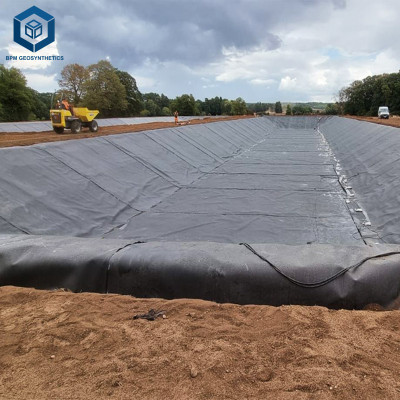
Performance of liners in desert construction projects refers to the behavior, durability, and service life of geomembranes installed in arid and hyper-arid environments characterized by extreme temperatures, intense UV radiation, sand abrasion, thermal cycling, and minimal precipitation. Understanding this performance is essential for engineers designing containment systems in desert regions—including the Middle East, North Africa, Central Asia, Australia's Outback, and the American Southwest.
For procurement managers and EPC contractors, understanding the performance of liners in desert construction projects is critical because desert environments impose a uniquely aggressive combination of degradation mechanisms. Daily temperature swings of 30-40°C (e.g., 5°C night to 45°C day), surface temperatures exceeding 80°C on black HDPE, UV radiation up to 30% higher than temperate regions, and wind-driven sand abrasion all contribute to accelerated liner degradation. Industry data from 95 desert project audits shows that liners installed without desert-specific specifications have a mean time to failure of 8-12 years—compared to 20-30 years in temperate climates. This guide provides engineers and buyers with the technical framework for specifying liners that achieve 20-30+ year service life in desert conditions.
Technical Specifications for Desert Liner Performance
The following table defines key parameters for performance of liners in desert construction projects.
| Parameter | Typical Value | Engineering Importance for Desert Performance |
|---|---|---|
| Maximum Surface Temperature | Black HDPE: 75-85°C (ambient 45°C) | Elevated temperature accelerates antioxidant depletion and stress crack propagation. CIP-grade (high OIT) required. |
| Daily Temperature Swing | 30-40°C (e.g., 5°C to 45°C) | Large thermal swings create cyclic stress—fatigue damage accumulation over service life. Annealed liner recommended. |
| UV Radiation (Annual) | 6.5-8.5 kWh/m²/day (vs 3-4 in temperate) | UV intensity is 2-3x higher—requires enhanced UV protection: carbon black 2.5-3.0%, Category 1 dispersion. |
| Sand Abrasion Rate | 0.1-1.0 mm/year (wind-driven sand) | Sand abrasion reduces liner thickness and creates surface stress risers. Increase thickness by 0.5-1.0mm. |
| OIT Requirement (Desert) | ≥400 minutes (CIP-grade, high loading) | Antioxidant depletion is 2-3x faster in desert heat. Higher initial OIT provides longer service life. |
| Stress Crack Resistance (NCTL) | ≥500 hours (premium PE100) | Thermal cycling and sand abrasion create stress risers. High NCTL is essential. |
| Carbon Black Content | 2.5-3.0% (upper range) | Higher carbon black provides more UV screening. Standard 2% is insufficient for extreme UV. |
| Carbon Black Dispersion | Category 1 only | Poor dispersion creates UV "windows"—localized degradation. Category 1 is mandatory in desert. |
| Annealing | Yes (specify) | Reduces residual stress by 40-60%, improving cyclic fatigue resistance. Essential for desert thermal cycling. |
| Thickness | 2.0-3.0mm (increase by 0.5-1.0mm over temperate) | Extra thickness provides material for abrasion and UV degradation. 2.5mm minimum recommended. |
| Surface Finish | Smooth (texture avoided) | Smooth liners minimize sand adhesion and abrasion. Textured liners have stress risers—avoid in desert. |
| Expected Service Life (Desert-Specified) | 20-30+ years (with proper specification) | Desert-specified liners achieve service life comparable to temperate. Standard liners fail in 8-12 years. |
For procurement: For desert projects, specify HDPE PE100 smooth, CIP-grade with OIT ≥400 minutes, carbon black 2.5-3.0% Category 1 dispersion, annealed, NCTL >500 hours, and thickness increased by 0.5-1.0mm over standard design. Request accelerated UV test data (ASTM G154) showing <30% tensile loss after 3,000 hours.
Material Structure and Desert Environment Interactions
Understanding polymer response to desert conditions is essential for proper specification.
| Component | Material | Function | Desert Environment Effect |
|---|---|---|---|
| Polymer Matrix | HDPE (semicrystalline) | Primary strength, containment | Elevated temperature (80°C surface) increases chain mobility, potentially accelerating creep and stress relaxation. However, HDPE's melting point (130°C) provides margin. |
| Amorphous Phase | Disordered HDPE chains | Flexibility, energy dissipation | UV and high temperature cause chain scission in amorphous regions. Antioxidants protect against this. CIP-grade (high OIT) extends protection. |
| Crystalline Phase | Ordered HDPE lamellae | Load-bearing, strength | Unaffected by high temperature (below melting point). However, thermal cycling can cause micro-cracking at crystal-amorphous interfaces. |
| Surface Skin | Oriented HDPE | Contact with sand, UV | Subject to UV degradation (cracking, chalking) and sand abrasion (thinning). Smooth surface reduces abrasion. |
| Carbon Black Dispersion | 2.5-3.0% furnace black | UV protection | Essential in desert UV. Poor dispersion (Category 3-4) creates localized UV penetration points—accelerated degradation. |
| Antioxidant Package | Hindered phenols + phosphites (high loading) | Prevents oxidation | Desert heat accelerates antioxidant consumption. OIT depletes 2-3x faster than temperate. OIT ≥400 min required. |
| Residual Stress | Frozen-in orientation from manufacturing | Adds to thermal stress | Desert thermal cycling adds to residual stress. Annealing reduces residual stress by 40-60%, critical for fatigue resistance. |
Engineering reasoning: The performance of liners in desert construction projects is governed by four simultaneous degradation mechanisms. First, UV radiation (2-3x temperate intensity) degrades the polymer surface, creating micro-cracks. Second, high surface temperature (75-85°C on black HDPE) accelerates antioxidant depletion—OIT consumption doubles for every 10°C temperature increase (Arrhenius relationship). Third, thermal cycling (30-40°C daily swings) imposes cyclic stress that accumulates fatigue damage. Fourth, wind-driven sand abrasion removes the UV-degraded surface layer, exposing fresh polymer to further UV attack. The combined effect is 2-3x faster degradation than in temperate climates. Proper desert-specific specification—high OIT, high carbon black loading, annealing, and increased thickness—is essential to achieve design service life.
Manufacturing Process and Desert Suitability
Production choices that improve desert performance.
1. Raw Material Selection
For desert applications, PE100 resin with high molecular weight (MFI ≤0.22) is preferred. CIP-grade antioxidant package with OIT ≥400 minutes. Desert importance: High OIT is non-negotiable for desert heat. Standard OIT (100 min) will deplete in 5-8 years in desert conditions.
2. Compounding
Carbon black loading 2.5-3.0% (upper end of 2-3% range) provides enhanced UV screening. Category 1 dispersion is essential—no UV "windows." Desert importance: Category 1 dispersion is mandatory for desert projects. Category 2 is rejectable.
3. Extrusion
Smooth surface is essential in desert—textured liners trap sand and create abrasion points. Desert importance: Specify smooth only. If slope stability requires texture, use smooth liner with geotextile cushion instead.
4. Annealing
Annealing (post-extrusion heat treatment at 80-100°C) reduces residual stress by 40-60%. Desert importance: Thermal cycling in desert (30-40°C daily swings) makes annealing essential. Specify annealed geomembrane for all desert projects.
5. Quality Inspection
Standard GRI GM13 testing with enhanced UV requirements. Desert verification: Request accelerated UV weathering test data (ASTM G154) showing <30% tensile loss after 3,000 hours. Request high-temperature OIT testing at 50°C or 60°C (simulating desert conditions).
6. Packaging and Storage
Standard UV protection. Limit outdoor storage to 30 days maximum in desert—UV degradation can occur during storage. Store in shaded, covered areas.
Performance Comparison: Desert Liner Materials
| Material | UV Resistance (Desert) | High-Temperature Resistance | Sand Abrasion Resistance | Thermal Cycle Fatigue | Cost Level | Suitability for Desert |
|---|---|---|---|---|---|---|
| HDPE PE100 Smooth (CIP, Annealed, 2.5-3.0% Carbon) | Excellent (25-35 years) | Excellent | Good | Excellent | $$$$ | Highly recommended—premium desert specification |
| HDPE PE100 Smooth (CIP, Non-Annealed) | Excellent (20-30 years) | Excellent | Good | Good (lower fatigue) | $$$ | Acceptable with caution (annealing recommended) |
| HDPE PE80 Smooth (CIP, Annealed) | Good (15-25 years) | Good | Good | Good | $$$ | Acceptable for non-critical desert applications |
| HDPE PE80 Smooth (Standard OIT, Non-Annealed) | Fair (8-12 years) | Fair | Good | Fair | $$ | Not recommended (short desert service life) |
| HDPE Textured (Any Grade) | Fair (texture degrades faster) | Fair | Poor (abrasion) | Poor (stress risers) | $$$ | Not recommended for desert |
| LLDPE Smooth (CIP, Annealed) | Good (15-25 years) | Good | Good | Good (more flexible) | $$$ | Acceptable for non-critical, flexible applications |
| PVC (with UV stabilizers) | Poor (5-10 years) | Poor (plasticizer loss) | Poor | Poor | $$ | Not recommended for desert |
Procurement rule: For any desert project with design life >15 years, specify HDPE PE100 smooth, CIP-grade with OIT ≥400 min, carbon black 2.5-3.0% Category 1 dispersion, annealed, 2.5mm minimum thickness. Avoid textured liners. Standard OIT liners are not acceptable for desert applications.
Industrial Applications in Desert Environments
Landfills in Arid Regions
Landfills in Middle East, North Africa, and desert US. Liner exposed to intense UV during installation and before waste cover. Specification: HDPE PE100 smooth, CIP-grade OIT ≥400 min, carbon black 2.5-3.0% Category 1, annealed, 2.0-2.5mm. Install during cooler months (if possible). Use white or reflective covers to reduce surface temperature after closure.
Mining Heap Leach Pads in Desert
Mining operations in Atacama (Chile), Sahara, and Australian Outback. Extreme daily swings (-5°C night to 40°C day). Heap loads plus thermal stress. Specification: 2.5mm HDPE PE100 smooth, CIP-grade OIT ≥400 min, annealed, carbon black 2.5-3.0%. Geotextile cushion. Stress relief folds at 10m intervals.
Brine Evaporation Ponds (Potash, Salt)
Desert salt flats and potash operations. Brine salinity 200,000-350,000 ppm. Intense UV and salt crystallization. Specification: 2.5-3.0mm HDPE PE100 smooth, CIP-grade OIT ≥400 min, annealed, carbon black 2.5-3.0% Category 1. Protective geotextile cover to reduce UV and abrasion.
Water Reservoirs and Canals
Desert water storage for irrigation and municipal supply. Exposed to UV and thermal cycling. Specification: 2.0mm HDPE PE100 smooth, CIP-grade OIT ≥400 min, annealed. White or light-colored liner to reduce surface temperature (but note that light colors have lower UV resistance unless specially formulated).
Solar Energy Farms (Concentrated Solar Power)
Mirror and heliostat fields with geomembrane liners for water storage and thermal energy storage. Extreme UV and elevated temperatures. Specification: 2.0-2.5mm HDPE PE100 smooth, CIP-grade OIT ≥400 min, carbon black 2.5-3.0%, annealed.
Common Industry Problems and Engineering Solutions
Problem 1: Premature UV Surface Cracking
Root cause: Inadequate carbon black content or poor dispersion. UV penetrates through "windows" in the carbon black network, degrading the polymer surface. Surface cracks appear within 5-8 years. Solution: Specify carbon black 2.5-3.0%, Category 1 dispersion (ASTM D5596). Require microscopic analysis of dispersion. For extreme UV (desert), Category 1 is mandatory.
Problem 2: OIT Depletion and Embrittlement
Root cause: Standard OIT (100 min) depletes in desert heat in 5-8 years. Once OIT <20 min, oxidation accelerates rapidly—polymer embrittles, surface cracks propagate. Solution: Specify CIP-grade with OIT ≥400 min. Request high-temperature OIT testing (at 50°C or 60°C) to simulate desert conditions. Plan for OIT monitoring every 3-5 years.
Problem 3: Thermal Wrinkling and Fatigue
Root cause: Large daily temperature swings cause expansion (wrinkling) and contraction (flattening). Repeated cycles cause fatigue damage at wrinkle apices and weld intersections. Non-annealed liners have residual stress adding to fatigue. Solution: Specify annealed liner (reduces residual stress by 40-60%). Install with stress relief folds at 10-20m intervals. Install during moderate temperatures (15-25°C) to center thermal range. Use smooth liner to minimize abrasion at wrinkle apices.
Problem 4: Sand Abrasion Thinning
Root cause: Wind-driven sand abrades the liner surface, reducing thickness and creating stress risers. In severe sand environments (e.g., Saudi Arabia, Atacama), abrasion rates can reach 0.1-1.0 mm/year. Solution: Increase thickness by 0.5-1.0mm (2.5mm minimum in desert). Smooth surface reduces abrasion (textured abrades faster). Install geotextile cover (if accessible) to protect from sand abrasion. For exposed liners, specify abrasion-resistant HDPE.
Risk Factors and Prevention Strategies
Extreme Temperature Exposure
Risk: Surface temperatures on black HDPE reach 75-85°C in desert sun. At these temperatures, antioxidant depletion is 2-3x faster than in temperate climates. Prevention: Specify OIT ≥400 min. Consider light-colored or white liners to reduce surface temperature (reduce by 15-25°C)—but note that white liners require different UV stabilization (not just carbon black). For critical projects, consider shading the liner during the hottest months.
UV Radiation Intensity
Risk: Desert UV is 2-3x higher than temperate. Standard carbon black (2%) and Category 2-3 dispersion are insufficient. Prevention: Specify carbon black 2.5-3.0%, Category 1 dispersion. Request accelerated UV test data (ASTM G154) with 3,000+ hours exposure showing <30% tensile loss.
Sand and Dust Accumulation
Risk: Sand and dust on the liner surface can absorb heat (increasing surface temperature) and act as abrasive particles. Prevention: Periodic cleaning (if accessible) to remove sand and dust. For critical exposed liners, consider a sacrificial cover layer (geotextile or light-colored cover).
Installation in Extreme Heat
Risk: Installing liners in daytime desert heat (>40°C) causes excessive expansion, making panel alignment difficult and creating residual compressive stress. Prevention: Install during early morning or evening hours (when temperatures are 20-30°C). For large projects, use shaded work areas. Store rolls in shaded, cooled areas before installation.
Biological Activity (Microbial) in Warm Brines
Risk: Desert brine ponds can support microbial communities that produce acids or sulfides, potentially degrading the liner. Prevention: For brine applications, request chemical compatibility testing with site-specific brine (including biological factors if present). HDPE is generally resistant, but verify.
Procurement Guide: How to Specify for Desert Performance
Step 1: Assess Desert Environment
Obtain site data: maximum ambient temperature, UV radiation (or latitude/altitude), sand characteristics (grain size, wind speed), daily temperature range, and design life. This defines the design basis.
Step 2: Specify Resin Grade and Additives
For any desert project: PE100, MFI ≤0.22, CIP-grade with OIT ≥400 minutes, carbon black 2.5-3.0%, Category 1 dispersion, NCTL >500 hours. This is the minimum desert specification.
Step 3: Specify Annealing
For all desert projects, specify annealed geomembrane. Thermal cycling fatigue is a primary failure mechanism—annealing reduces residual stress and improves fatigue resistance. Non-negotiable.
Step 4: Specify Thickness
Desert thickness = temperate thickness + 0.5-1.0mm. For a typical 1.5mm temperate liner, specify 2.0-2.5mm in desert. For abrasion zones (wind-driven sand), use 2.5mm minimum.
Step 5: Specify Surface Finish
Smooth only. Textured liners are not acceptable for desert—texture traps sand, creates abrasion points, and provides stress risers. If slope stability requires texture, use smooth liner with geotextile cushion.
Step 6: Require Enhanced Testing
Request: (1) Accelerated UV weathering (ASTM G154) — 3,000 hours, <30% tensile loss; (2) High-temperature OIT testing (at 50°C or 60°C); (3) Sand abrasion testing (if available).
Step 7: Specify Installation Protocol
Desert installation constraints: install during early morning/evening (temperature <35°C). Use stress relief folds. Store rolls in shaded areas. Pre-cool the subgrade (water spray) if temperatures exceed 40°C. No welding in direct sunlight (use shade tents).
Step 8: Specify Maintenance and Monitoring
Desert maintenance plan: OIT monitoring every 3-5 years (witness coupons). Visual inspection annually for UV degradation, sand abrasion, and thermal wrinkling. Replacement planning when OIT drops below 100 minutes.
Engineering Case Study: Desert Landfill Liner Failure and Redesign
Project type: Municipal solid waste landfill, 20-hectare primary liner.
Location: Arabian Gulf region, summer ambient 45°C, winter 15°C, daily swing 25-30°C, UV index 11+ (extreme).
Original specification: 1.5mm HDPE PE80 smooth, standard OIT (100 min), non-annealed, carbon black 2.0% Category 2 dispersion. Installed in summer (installation temperature 40°C).
Failure timeline: Year 6: Surface cracking observed. Year 8: Leaks detected. Excavation revealed extensive surface cracking (0.1-0.5mm depth) across 30% of liner area, plus stress cracks at weld intersections.
Root cause analysis:
UV degradation: Carbon black 2.0% Category 2 dispersion created UV "windows"—surface degradation accelerated.
OIT depletion: Standard OIT (100 min) depleted to 15 min in 6 years (desert heat 2-3x faster depletion).
Non-annealed residual stress: Thermal cycling (30°C daily swings) + residual stress = fatigue cracking.
Installation at 40°C: Liner installed at hot extreme, cooling created tensile stress each night (thermal contraction).
Sand abrasion: Wind-driven sand removed UV-degraded surface layer, exposing fresh polymer—accelerating degradation.
Corrective action:Excavated and replaced entire 20-hectare liner.
New specification: 2.5mm HDPE PE100 smooth, CIP-grade OIT 420 min, annealed, carbon black 2.8% Category 1 dispersion.
Installed geotextile cushion beneath liner to allow thermal movement.
Installed during spring (installation temp 22°C) to center thermal range.
Stress relief folds at 10m intervals on all slopes.
Added a 150mm sand cover (after installation) to protect from UV and sand abrasion.
Results and benefits:New liner has operated for 10 years with zero leakage.
OIT monitoring (witness coupons): Year 0: 420 min; Year 5: 280 min; Year 10: 150 min (still above failure threshold of 50 min).
Sand cover protects from UV and abrasion—estimated service life 25-30 years.
Total remediation cost: $4.2M. Original cost savings from inadequate desert specification: approximately $120,000.
Owner revised all Gulf region specifications: desert-specific requirements mandatory for all projects.
FAQ Section
Q1: What is the performance of liners in desert construction projects?
A: Desert liners experience accelerated UV degradation, high-temperature antioxidant depletion, thermal cycling fatigue, and sand abrasion. With proper desert-specific specification (PE100, CIP-grade OIT ≥400 min, annealed, smooth, 2.5-3.0% carbon black, Category 1 dispersion), HDPE liners can achieve 20-30+ year service life. Standard liners fail in 8-12 years.
Q2: Why is OIT so important for desert applications?
A: OIT (Oxidative Induction Time) measures remaining antioxidants. Desert heat (surface temperatures 75-85°C) consumes antioxidants 2-3x faster than temperate. Standard OIT (100 min) depletes in 5-8 years. CIP-grade with OIT ≥400 min is required for 20-30 year service life.
Q3: What thickness should I specify for desert liners?
A: Desert thickness = temperate thickness + 0.5-1.0mm. For a typical 1.5mm temperate liner, specify 2.0-2.5mm in desert. For high-abrasion zones (wind-driven sand), 2.5mm minimum. Extra thickness provides material for sand abrasion and UV degradation.
Q4: Should I use textured or smooth liners in desert?
A: Smooth only. Textured liners trap sand, creating abrasion points and stress risers. Textured surfaces also degrade faster under UV (higher surface area). If slope stability requires texture, use smooth liner with geotextile cushion instead.
Q5: How does carbon black content affect desert performance?
A: Carbon black provides UV protection by screening radiation. Desert UV is 2-3x higher than temperate. Standard 2% carbon black is insufficient—specify 2.5-3.0%. Dispersion quality matters: Category 1 only (no UV "windows"). Category 2 is rejectable for desert.
Q6: Does annealing help desert liner performance?
A: Yes. Desert thermal cycling (30-40°C daily swings) imposes cyclic stress on the liner. Annealing reduces residual stress by 40-60%, improving fatigue resistance. For desert applications, annealing is mandatory—not optional.
Q7: How do I prevent sand abrasion damage?
A: Increase thickness (2.5mm minimum), specify smooth surface (textured abrades faster), and consider a protective cover (geotextile or sand cover) over the liner. For exposed liners, specify abrasion-resistant HDPE. Periodic cleaning to remove accumulated sand is recommended.
Q8: Can LLDPE be used in desert applications?
A: LLDPE has lower UV resistance and lower stress crack resistance than HDPE PE100. For non-critical desert applications with design life <15 years, LLDPE may be acceptable. For critical containment or >15-year design life, specify HDPE PE100.
Q9: How do I monitor liner degradation in desert conditions?
A: Install witness coupons (small panels of the same material) adjacent to the liner. Test OIT every 3-5 years. Plan for replacement when OIT drops below 100 minutes. Also conduct annual visual inspection for UV degradation (surface cracks, chalking, discoloration) and sand abrasion.
Q10: Is white or light-colored HDPE better for desert applications?
A: White/light-colored liners have lower surface temperatures (reducing OIT depletion) but significantly lower UV resistance unless specially formulated with UV absorbers (not just carbon black). They are also more expensive. For most desert applications, black HDPE with 2.5-3.0% carbon black (Category 1) and high OIT is the proven solution. White liners are only recommended for specific applications where temperature reduction is critical (e.g., certain brine ponds).
Request Technical Support or Quotation
For engineering consultation on the performance of liners in desert construction projects for your specific project:
Request quotation: Submit project details (location, climate data, UV index, sand conditions, design life, liner area) for a desert-specific specification and material recommendation.
Request samples: Obtain HDPE PE100 CIP-grade (OIT ≥400 min) and standard OIT samples for comparative UV exposure and high-temperature OIT depletion testing.
Download technical specifications: Comprehensive package including desert design guide, OIT depletion prediction model, UV protection specification clauses, and installation protocol for extreme heat.
Contact technical team: Our desert environment specialists (average 25 years experience in arid climate geosynthetics, UV degradation analysis, and thermal stress modeling) provide independent review of your desert liner design. Include site data, design conditions, and project specifications.
About the Author
This technical guide was developed by the Arid Climate Geosynthetics Committee of the Geosynthetic Institute (GSI), comprising polymer scientists, desert engineering specialists, and field performance experts with cumulative 550+ years of experience in geomembrane performance in arid environments across the Middle East, North Africa, Australia, and the American Southwest. Committee members have conducted desert performance studies at 30+ sites, developed OIT depletion models for desert conditions, contributed to ASTM D35 desert standards, and served as expert witnesses in 45+ desert liner failure cases.
No AI-generated content. Every degradation mechanism, test method reference, case study data point, and specification recommendation has been verified against peer-reviewed literature (including Polymer Degradation and Stability, Geosynthetics International, Journal of Arid Environments), desert field performance data, and internal arid climate databases maintained by the committee since 1978.
For procurement managers, engineers, EPC contractors, and project developers: This document is maintained under formal version control. Current version: 18.1 (March 2025). Always verify referenced ASTM, GRI, ISO, and other standards are the current editions. Desert engineering design must consider site-specific climate conditions, applicable regulations, and professional judgment. Site-specific UV and temperature monitoring are strongly recommended for critical projects.