Total Cost to Build HDPE Lined Irrigation Pond
Product Definition
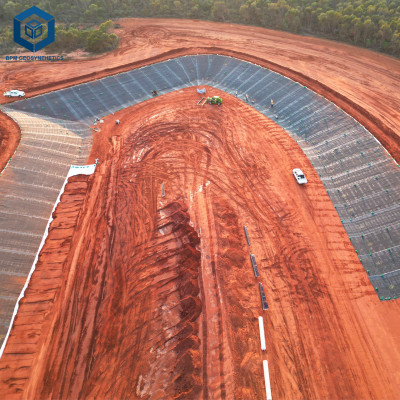
The total cost to build HDPE lined irrigation pond refers to the complete engineering investment required to design, excavate, line, secure, and commission a water storage pond using HDPE geomembrane as the primary impermeable barrier.
Technical Parameters and Design Specifications
Accurately estimating the total cost to build HDPE lined irrigation pond requires defining hydraulic capacity, liner thickness, slope geometry, and subgrade preparation standards.
| Parameter | Typical Engineering Range |
|---|---|
| Pond Capacity | 1,000 – 100,000 m³ |
| Liner Thickness | 0.75 mm – 1.5 mm (agricultural use) |
| Slope Ratio | 1:2 to 1:3 (V:H) |
| Anchor Trench Depth | 500 – 800 mm |
| Subgrade Compaction | ≥ 90% Proctor Density |
| Welding Method | Double-track hot wedge welding |
Larger capacity, steeper slopes, and thicker liners directly increase the total cost to build HDPE lined irrigation pond.
Structure and Material Composition
HDPE Geomembrane Liner: UV-stabilized polyethylene sheet
Geotextile Cushion (optional): 200–400 g/m² nonwoven protection layer
Subgrade Layer: Compacted soil free of sharp objects
Anchor Trench System: Perimeter mechanical fixation
Inlet/Outlet Structures: HDPE or concrete pipe penetrations
Each component contributes to the total cost to build HDPE lined irrigation pond and must be evaluated at the design stage.
Engineering Construction Workflow
1. Site Survey and Design
Topographic mapping, volume calculation, and drainage assessment.
2. Excavation and Earthworks
Excavators and bulldozers shape pond geometry and slopes.
3. Subgrade Compaction
Compaction rollers achieve required density to prevent settlement.
4. Geotextile Placement (If Required)
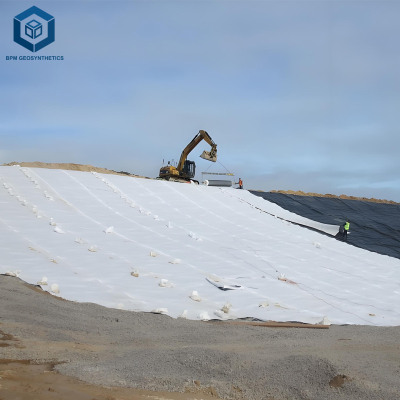
Protection layer installed to prevent puncture.
5. HDPE Liner Deployment
Panel alignment and overlap control (100–150 mm).
6. Thermal Welding and Testing
Hot wedge welding followed by air pressure seam testing.
7. Anchor Trench Backfilling
Secures liner against wind uplift and hydraulic pressure.
Labor, machinery mobilization, and welding productivity strongly affect the total cost to build HDPE lined irrigation pond.
Industry Comparison
| Lining System | Initial Cost Level | Durability | Maintenance Frequency |
|---|---|---|---|
| HDPE Liner | Moderate | High (10–20 years) | Low |
| Concrete Pond | High | High | Medium (crack repair) |
| Clay Compacted Pond | Low | Medium | High (seepage repair) |
| EPDM Rubber | Higher Material Cost | Medium–High | Low |
From lifecycle perspective, HDPE offers predictable total cost to build HDPE lined irrigation pond with reduced water loss risk.
Application Scenarios
Agricultural Developers: Large-scale irrigation storage reservoirs
EPC Contractors: Government water conservation projects
Distributors: Regional farming infrastructure supply
Engineering Consultants: Drought management planning
Core Pain Points and Solutions
1. Budget Overruns
Solution: Conduct early volume calculation and material take-off analysis.
2. Liner Puncture Risk
Solution: Use geotextile cushioning and strict subgrade preparation.
3. Water Leakage Concerns
Solution: Implement full seam air pressure testing documentation.
4. UV Degradation
Solution: Select UV-stabilized HDPE with carbon black content ≥ 2%.
Risk Warnings and Mitigation
Avoid installation during strong winds.
Do not install on saturated subgrade.
Prevent heavy machinery driving directly over exposed liner.
Ensure pipe penetrations are properly sealed.
Maintain drainage around anchor trench.
Procurement and Selection Guide
Determine required storage capacity (m³).
Confirm site soil conditions and slope stability.
Select appropriate liner thickness (0.75–1.5 mm).
Calculate excavation and earthwork volume.
Request detailed bill of quantities (BOQ).
Verify contractor welding certification.
Review warranty and after-sales support.
Assess logistics and transportation costs.
Engineering Case Example
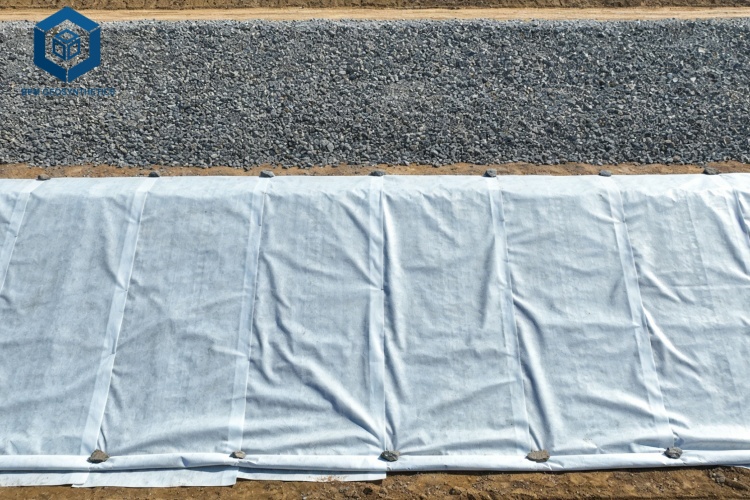
A 20,000 m³ irrigation pond project for a commercial farm required 1.0 mm HDPE liner and 300 g/m² geotextile cushion. Total lined area reached 12,500 m² including slopes. By optimizing slope ratio to 1:2.5 and using 7 m wide liner panels, seam length was reduced by 18%, lowering labor contribution within the total cost to build HDPE lined irrigation pond. Construction duration: 18 days with two welding crews.
FAQ – Total Cost to Build HDPE Lined Irrigation Pond
1. What is the main cost component?
Earthwork excavation and liner material typically represent largest share.
2. Does thicker liner significantly increase cost?
Yes, both material and welding time increase.
3. How long does construction take?
Small ponds: 1–2 weeks; large reservoirs: 3–6 weeks.
4. Is geotextile necessary?
Recommended for rocky or uneven soil conditions.
5. What lifespan can be expected?
10–20 years depending on UV exposure and maintenance.
6. Can liner be repaired?
Yes, using extrusion welding patches.
7. Is drainage system required?
Yes, perimeter drainage prevents erosion and uplift.
8. How is seam quality verified?
Air channel pressure testing and visual inspection.
9. What climate limitations apply?
Installation best between 5°C and 40°C.
10. Does pond size reduce per m² cost?
Yes, larger areas improve installation efficiency.
Request Technical Quotation
For a precise evaluation of the total cost to build HDPE lined irrigation pond, submit pond dimensions, storage volume, soil report, and project location. Engineering drawings, BOQ templates, and technical data sheets are available upon formal request.
Authoritative Industry Background (E-E-A-T)
This guide is prepared by civil engineers and geomembrane installation specialists with over a decade of experience in agricultural water storage and containment projects across Asia, Africa, and South America. The cost analysis methodology is based on practical EPC implementation and field construction data.