Geomembrane Installation Cost Per Square Meter Guide
Product Definition
Geomembrane installation cost per square meter refers to the total engineering expense required to deploy, weld, test, and secure geomembrane liners on-site, excluding or including material supply depending on contract scope. It covers labor, equipment, surface preparation, welding, quality control, and project management.
Technical Parameters and Installation Specifications
Understanding geomembrane installation cost per square meter requires analyzing technical specifications that directly influence labor intensity and welding complexity.
| Parameter | Typical Engineering Range |
|---|---|
| Thickness | 0.75 mm – 2.5 mm |
| Panel Width | 5 m – 8 m |
| Welding Method | Double-track hot wedge / Extrusion weld |
| Welding Speed | 2 – 4 m/min (depending on thickness) |
| Overlap Width | 100 – 150 mm |
| Non-Destructive Testing | Air pressure test / Vacuum box test |
| Subgrade Tolerance | ±20 mm smoothness control |
Higher thickness, steep slopes, confined areas, or strict testing requirements increase geomembrane installation cost per square meter.
Structure and Material Composition Impacting Installation
Base Material: HDPE, LLDPE, or PVC geomembrane
Surface Type: Smooth or textured (textured increases handling complexity)
Backing Layer: Geotextile cushioning (if composite system)
Anchor System: Anchor trench or mechanical fastening
Textured geomembranes and composite liners generally increase geomembrane installation cost per square meter due to reduced welding speed and added placement precision.
Manufacturing and Installation Workflow
1. Subgrade Preparation
Compaction, debris removal, and grading to ensure smooth surface.
2. Panel Deployment
Unrolling using spreader bars or manual alignment depending on project size.
3. Panel Alignment and Overlap
Controlled overlap positioning (100–150 mm) before welding.
4. Thermal Welding
Hot wedge welding machines with temperature control (200–450°C depending on material).
5. Quality Testing
Air pressure channel test for double seams; vacuum test for detail welds.
6. Anchor Trench Backfilling
Securing liner perimeter and slope transitions.
Each stage contributes to geomembrane installation cost per square meter through labor hours, equipment usage, and inspection procedures.
Industry Comparison
| Liner Type | Installation Complexity | Average Installation Cost Level | Typical Application |
|---|---|---|---|
| HDPE | Moderate–High | Moderate | Landfill, Mining |
| LLDPE | Moderate | Moderate | Ponds, Lagoons |
| PVC | Lower | Lower | Decorative Water Bodies |
| EPDM | Low Welding (Seamed) | Higher Material, Lower Welding | Landscape Ponds |
For engineered containment systems, HDPE remains the most common material influencing geomembrane installation cost per square meter.
Application Scenarios
EPC Contractors: Municipal solid waste landfill cells
Mining Operators: Heap leach pads and tailings ponds
Developers: Industrial wastewater lagoons
Distributors: Regional aquaculture infrastructure projects
Core Pain Points and Engineering Solutions
1. Budget Uncertainty
Solution: Separate material and installation contracts for transparent geomembrane installation cost per square meter analysis.
2. Slow Welding Productivity
Solution: Use wider panels (7–8 m) to reduce seam quantity.
3. High Rework Rates
Solution: Implement trial weld calibration daily and maintain temperature logs.
4. Weather Delays
Solution: Schedule installation under recommended temperature range (5–40°C).
Risk Warnings and Mitigation Advice
Avoid installation on frozen or waterlogged subgrade.
Do not weld during heavy wind or rain.
Verify equipment calibration before daily operation.
Ensure certified welding technicians are deployed.
Conduct full seam inspection documentation.
Procurement and Selection Guide
Define liner thickness and material type.
Calculate total surface area including slope factors.
Assess site accessibility and equipment requirements.
Request detailed installation method statement.
Confirm non-destructive testing procedures.
Evaluate contractor certification and past projects.
Clarify warranty and defect liability period.
Review insurance and safety compliance.
Engineering Case Example
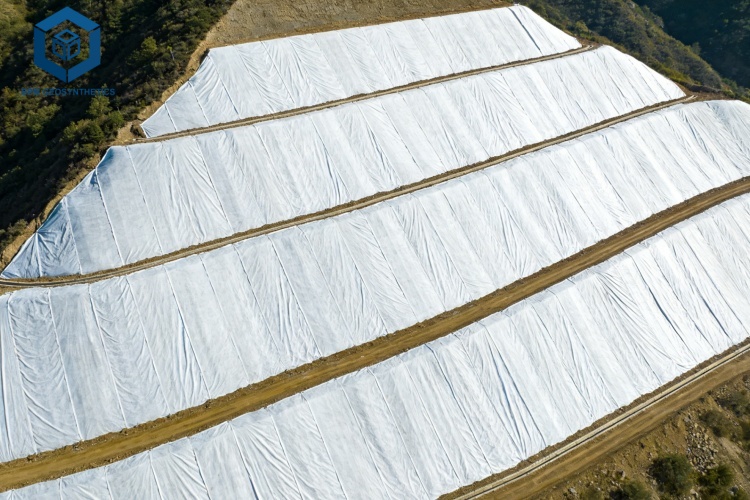
A 120,000 m² industrial wastewater lagoon project required 1.5 mm HDPE liner installation. The contractor optimized panel width to 7 m, reducing seam length by 15%. Average geomembrane installation cost per square meter was controlled within competitive industry range by increasing welding productivity to 3.5 m/min and implementing strict QA/QC documentation.
FAQ – Geomembrane Installation Cost Per Square Meter
1. What affects installation cost most?
Thickness, slope angle, seam quantity, and site conditions.
2. Does thicker liner increase cost significantly?
Yes, welding speed decreases with thickness.
3. Are textured liners more expensive to install?
Yes, due to reduced welding speed and handling difficulty.
4. What is included in installation cost?
Labor, equipment, welding, testing, and supervision.
5. Is subgrade preparation included?
Usually priced separately unless specified in contract.
6. How long does installation take?
Typically 3,000–8,000 m² per crew per day depending on site.
7. Can installation proceed in cold weather?
Limited; below 5°C requires special procedures.
8. Is third-party inspection necessary?
Recommended for landfill and mining projects.
9. How to reduce seam failures?
Maintain temperature calibration and conduct regular testing.
10. What warranty is typical?
Installation workmanship warranty usually 1–2 years.
Request Technical Quotation
To obtain an accurate geomembrane installation cost per square meter quotation, provide project area, liner thickness, slope gradient, location, and required testing standards. Detailed method statements and technical data sheets are available upon formal inquiry.
Authoritative Industry Background (E-E-A-T)
This technical guide is prepared by engineers with over 10 years of experience in geomembrane installation supervision, landfill construction, and international EPC coordination. The information reflects practical site conditions, cost structure analysis, and real-world containment engineering practices.