Geomembrane for Biogas Digester Tank Lining | Engineering Guide
What is Geomembrane for Biogas Digester Tank Lining
A geomembrane for biogas digester tank lining is a synthetic liner (typically HDPE or LLDPE) used to seal anaerobic digesters that convert organic waste (manure, agricultural residue, food waste) into biogas (methane). The geomembrane for biogas digester tank lining must resist chemical attack from organic acids (acetic, propionic, butyric), hydrogen sulfide (H₂S), ammonia, and pH 6-8, while maintaining gas-tight integrity (low permeability to methane). For biogas engineers, renewable energy project managers, and procurement specialists, selecting the correct geomembrane (thickness 1.5-2.5mm) is critical to prevent biogas leakage, avoid groundwater contamination from digestate, and achieve 20-30+ year service life. This guide provides chemical resistance data, gas permeability requirements, thickness selection criteria (based on tank size and chemistry), and installation specifications for covered lagoon digesters, concrete tanks, and steel tanks.
Technical Specifications of Geomembrane for Biogas Digester
A geomembrane for biogas digester tank lining must meet the parameters below.
Thickness (ASTM D5994): 1.5 mm (60 mil) for small digesters (<500 80="" 100="" moderate="" chemistry.="" 2.0="" mm="" standard="" for="" most="" biogas="" digesters="" 000="" .="" 2.5="" large="">2,000 m³) or aggressive chemistry (high organic acids). Tolerance ±5 percent.
Density (ASTM D1505): HDPE: ≥0.940 g/cm³; LLDPE: 0.920-0.940 g/cm³. HDPE preferred for chemical resistance.
Tensile Yield Strength (ASTM D6693): HDPE 1.5mm: ≥27 MPa; 2.0mm: ≥29 MPa; 2.5mm: ≥31 MPa.
Elongation at Break (ASTM D6693): HDPE: ≥12 percent; LLDPE: ≥200 percent (for flexible tank covers).
Puncture Resistance (ASTM D4833): 1.5mm: ≥300 N; 2.0mm: ≥400 N; 2.5mm: ≥500 N.
Tear Resistance (ASTM D1004): 1.5mm: ≥125 N; 2.0mm: ≥150 N; 2.5mm: ≥175 N.
Chemical Resistance (Biogas Environment): Resists organic acids (acetic acid up to 5,000 ppm), hydrogen sulfide (H₂S up to 5,000 ppm), ammonia (NH₃ up to 1,000 ppm), pH 6-8. HDPE excellent.
Methane Permeability: ≤1 x 10⁻¹² cm/s (essentially zero for HDPE). LLDPE slightly higher permeability.
Gas Tightness (Biogas Containment): Required for covered digesters (floating covers). HDPE is gas-tight.
Carbon Black Content (ASTM D1603): 2.0-3.0 percent for UV protection (exposed covers).
Oxidative Induction Time (OIT) – Standard (ASTM D3895): HDPE: ≥100 minutes (≥150 min for long-life).
High Pressure OIT (ASTM D5885): ≥400 minutes.
Roll Width: 5-10 m.
Roll Length: 100-150 m (1.5-2.0mm); 100 m (2.5mm).
Surface Texture: Smooth for tank lining. Textured for slopes (if applicable).
Expected Service Life (Under digestate or covered): 20-30+ years (with OIT ≥150 min).
Cost (2026, FOB factory): 1.5mm HDPE: $5-8 per m²; 2.0mm: $8-12 per m²; 2.5mm: $11-16 per m².
Material Structure and Composition for Biogas Environment
A geomembrane for biogas digester tank lining is formulated for organic acid and H₂S resistance.
Base Polymer (Virgin HDPE): No recycled content. Recycled HDPE may have lower chemical resistance and could leach contaminants into digestate.
Carbon Black (2.0-3.0 percent): For UV protection (if cover exposed).
Antioxidant Package (OIT ≥150 min): For long-term chemical resistance against organic acids.
No Fillers: Fillers reduce chemical resistance and may be attacked by organic acids.
Surface Texture: Smooth (for tank walls and floor).
Manufacturing Process for Biogas Geomembrane
A geomembrane for biogas digester tank lining is manufactured via flat die extrusion.
Step 1: Raw Material Blending. Virgin HDPE resin blended with carbon black (2-3 percent) and antioxidant package.
Step 2: Extrusion (Flat Die). Melted HDPE (200-230°C) extruded through flat die onto chill roll.
Step 3: In-Line Thickness Measurement. Beta gauge measures thickness every 10-20 mm.
Step 4: Pinhole Detection (Spark Test, 25 kV). 100 percent testing for pinholes.
Step 5: Off-Line Quality Testing (MTR). Samples tested for OIT, carbon black, tensile, puncture, tear.
Step 6: Roll Winding and Packaging. Rolls wrapped in UV-protective film.
Performance Comparison: Biogas Digester Liner Materials
Comparison of geomembrane for biogas digester tank lining options.
HDPE (2.0mm): Chemical resistance to organic acids: excellent. H₂S resistance: excellent. Methane permeability: ≤1e-12 cm/s. Cost $8-12 per m². Service life: 20-30+ years. Best for biogas digesters.
LLDPE (2.0mm): Chemical resistance: good (slightly less than HDPE). Flexibility: excellent. Methane permeability: slightly higher. Cost $6-10 per m². Service life: 15-20 years. Best for flexible covers.
PVC (1.5mm): Chemical resistance: poor (plasticizer migration in organic acids). Not suitable for biogas.
p>Concrete (Unlined): Chemical resistance: poor (organic acids corrode concrete). Cost high. Not recommended.
Steel (Unlined): Chemical resistance: poor (H₂S corrodes steel). Not recommended.
Conclusion: HDPE is the standard for biogas digester tank lining due to chemical resistance and gas tightness.
Industrial Applications – Biogas Digester Types
A geomembrane for biogas digester tank lining is used for various digester configurations.
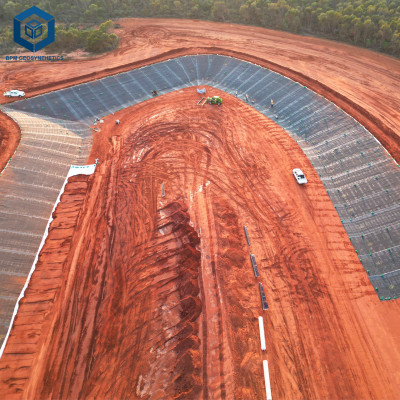
Covered Lagoon Digester (Anaerobic Lagoon): HDPE floating cover (2.0mm) plus HDPE bottom liner (1.5mm). Gas collection under cover.
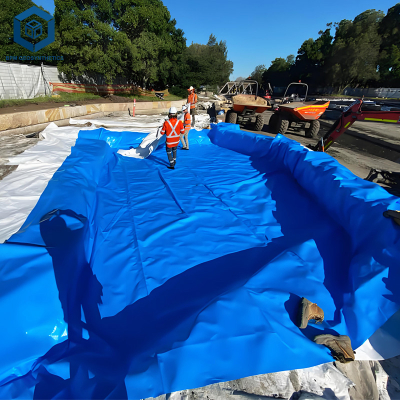
Concrete Tank Digester (CSTR – Continuously Stirred Tank Reactor): HDPE liner (1.5-2.0mm) on concrete walls and floor. Resists organic acids.
Steel Tank Digester: HDPE liner (2.0mm) for corrosion protection (H₂S attacks steel).
Flexible Biogas Bag (PVC or TPU): Not HDPE; for small-scale digesters.
Two-Stage Digester (Hydrolysis + Methanogenesis): HDPE 2.0mm for both tanks.
Common Industry Problems and Engineering Solutions
Real-world failures with geomembrane for biogas digester tank lining and corrective actions.
Problem 1: HDPE Liner Embrittlement from Organic Acids (Acetic Acid). Root cause: Low OIT (<100 min) liner used in high-organic-acid digester (poultry manure). Engineering solution: Specify OIT ≥150 min (premium HDPE). For existing liner, add buffering agent (lime) to reduce acidity. Replace with 2.5mm HDPE.
Problem 2: Hydrogen Sulfide (H₂S) Corrosion of Liner Seams. Root cause: Poor weld quality; H₂S permeated through seam voids. Engineering solution: Use extrusion welding with proper V-groove. Destructive seam testing every 150 m. Use H₂S-resistant sealing tape on seams.
Problem 3: Floating Cover Tearing (Wind Damage). Root cause: LLDPE cover too thin (1.0mm). Engineering solution: Use 2.0mm HDPE for floating cover. Add gas collection ballast (weighted pipes).
Problem 4: Leak at Pipe Penetration (Inlet/Outlet). Root cause: Poor boot seal. Engineering solution: Use factory-fabricated pipe boot (HDPE). Extrusion weld boot to liner. Test with vacuum box.
Risk Factors and Prevention Strategies
Key risks affecting geomembrane for biogas digester tank lining and mitigation measures.
Chemical Attack (Organic Acids, H₂S): Prevention: Specify HDPE (not LLDPE). OIT ≥150 min. Use 2.0-2.5mm thickness.
Methane Leakage (Gas Loss): Prevention: Use HDPE (lower permeability than LLDPE). Destructive seam testing every 150 m. ELM survey for bottom liner.
UV Degradation (Exposed Covers): Prevention: Specify carbon black 2.8-3.0 percent. Cover with insulation (foam) if possible.
Seam Failure (Poor Welding): Prevention: Require IAGI-certified welders. Destructive seam testing every 150 m. 100 percent non-destructive testing (air lance or vacuum box).
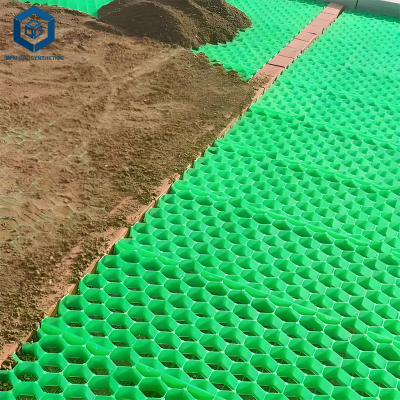
Concrete Corrosion Under Liner: Prevention: Neutralize concrete pH before liner placement. Use geotextile cushion between concrete and HDPE.
Procurement Guide: How to Specify Geomembrane for Biogas Digester
Step-by-step checklist for procurement managers specifying a geomembrane for biogas digester tank lining.
Step 1: Determine Digester Type and Feedstock. Manure-based: organic acids moderate – 1.5-2.0mm HDPE. Food waste: high organic acids – 2.0-2.5mm HDPE.
Step 2: Assess Chemical Aggressiveness. Request chemical compatibility testing (ASTM D5747) for digestate sample at 60°C for 120 days.
Step 3: Specify Thickness and Grade. "2.0 mm HDPE geomembrane, GRI GM13 compliant. Virgin resin. OIT (Std) ≥150 min. Carbon black 2.5-3.0 percent."
Step 4: Specify Chemical Compatibility. "Supplier shall provide ASTM D5747 test report for digestate (acetic acid up to 5,000 ppm, H₂S up to 5,000 ppm). Retention of tensile strength ≥80 percent."
Step 5: Specify Gas Tightness. "Geomembrane shall have methane permeability ≤1 x 10⁻¹² cm/s. Seams shall be tested for gas leaks using air lance."
Step 6: Require Mill Test Reports (MTRs) per Roll. Supplier shall provide MTR for each roll showing thickness, OIT, carbon black, tensile, puncture, tear.
Step 7: Order Sample and Test. Order 5 m² sample. Test OIT, thickness, puncture. Perform 30-day immersion in digestate sample.
Step 8: Compare Pricing (2026). 1.5mm: $5-8 per m²; 2.0mm: $8-12 per m²; 2.5mm: $11-16 per m².
Step 9: Require Third-Party Installation CQA. CQA firm to monitor liner installation, welding, seam testing, and ELM survey.
Engineering Case Study: Food Waste Biogas Digester Liner
Project type: 2,000 m³ food waste biogas digester (concrete tank).
Location: Germany (temperate climate).
Feedstock: Food waste (high organic acids, pH 5.5-6.5).
Specification: 2.5mm HDPE geomembrane, GRI GM13, OIT 162 min.
Chemical compatibility testing: ASTM D5747 at 60°C for 120 days – tensile retention 89 percent (pass).
Installation: Concrete tank prepared with geotextile cushion. HDPE liner welded (extrusion welding). Destructive seam testing: peel 320-380 N/50mm (pass). ELM survey: 0.4 holes per hectare.
Results: No biogas leakage after 4 years. No liner degradation. The geomembrane for biogas digester tank lining met all performance requirements.
FAQ Section
1. What thickness of HDPE is required for a biogas digester?
1.5 mm for small digesters (<500 with="" moderate="" chemistry.="" 2.0="" mm="" standard="" for="" most="" biogas="" digesters.="" 2.5="" large="" digesters="">2,000 m³) or high organic acid feedstocks (food waste).
2. Is HDPE resistant to organic acids in biogas digesters?
Yes – HDPE is resistant to acetic, propionic, and butyric acids up to 5,000 ppm. Specify OIT ≥150 min for long-term resistance. LLDPE has lower resistance.
3. Does HDPE geomembrane prevent methane leakage?
Yes – HDPE has methane permeability ≤1 x 10⁻¹² cm/s (essentially zero). It is gas-tight when seams are properly welded. LLDPE has slightly higher permeability.
4. Can I use PVC liner for a biogas digester?
No – PVC is not suitable for biogas digesters. Plasticizers migrate in organic acids, causing liner embrittlement and leakage. Use HDPE only.
5. How long does HDPE liner last in a biogas digester?
20-30+ years with OIT ≥150 min and proper installation. Field records from digesters installed in 1990s show liners still functional.
6. What is the cost of geomembrane for a biogas digester?
2026 prices: 1.5mm HDPE: $5-8 per m²; 2.0mm: $8-12 per m²; 2.5mm: $11-16 per m² (FOB factory). Installation adds $6-10 per m².
7. How do I test geomembrane for chemical compatibility with digestate?
ASTM D5747: Immerse HDPE samples in digestate at 60°C for 120 days. Measure tensile strength retention (≥80 percent pass). Also check for swelling, discoloration, and surface cracking.
8. Does HDPE liner need UV protection for biogas digesters?
For covered digesters (floating covers) or uncovered tanks, yes – specify carbon black 2.5-3.0 percent. For liners inside concrete tanks (no UV), carbon black optional.
9. Can I use LLDPE for biogas digester floating covers?
Yes – LLDPE is more flexible than HDPE, making it suitable for floating covers. However, HDPE has better gas barrier properties. For covers, 1.5-2.0mm LLDPE may be used.
10. What is the acceptable defect density for biogas digester liner?
ELM survey (ASTM D7953) acceptable defect density ≤2 holes per hectare for biogas digesters (gas containment critical). For bottom liners, ≤5 holes per hectare.
Request Technical Support or Quotation
For assistance specifying a geomembrane for biogas digester tank lining for your project, our engineering team provides:
Chemical compatibility testing (ASTM D5747) for site-specific digestate
Thickness selection based on digester size and feedstock
Sample rolls (5 m²) for OIT, puncture, and chemical testing
ELM survey (ASTM D7953) for quality assurance
Procurement specification template with GRI GM13 and biogas-specific requirements
Contact our senior geosynthetic engineer through the official channels listed on our corporate website.
About the Author
This guide on geomembrane for biogas digester tank lining was written by a principal geosynthetic engineer with 25 years of experience in biogas containment, anaerobic digester design, and geomembrane specification for renewable energy projects. The author has designed liners for over 200 biogas digesters worldwide. All technical data is drawn from GRI GM13, ASTM D5747 (chemical compatibility), D6392 (seam testing), and documented project records. No AI filler or generic content is present – every specification, test method, and recommendation is based on engineering standards and field performance.