Secondary Containment Liner Design For Municipal Landfill Projects | Guide
For civil engineers, environmental consultants, and EPC contractors, understanding secondary containment liner design for municipal landfill projects is essential to comply with US EPA Subtitle D regulations, prevent groundwater contamination, and ensure long-term environmental protection. Municipal solid waste (MSW) landfills require composite liner systems consisting of a primary geomembrane (HDPE) over a secondary compacted clay liner (CCL) or geosynthetic clay liner (GCL), plus a leak detection layer between them. Secondary containment provides redundant barrier capacity in case the primary liner fails. Key design elements include: primary liner (1.5 mm HDPE), secondary liner (0.6 m compacted clay or GCL), leak detection layer (gravel or geonet), and leachate collection system. This guide covers regulatory requirements (40 CFR 258.40), material selection (HDPE virgin resin, HP-OIT ≥400 minutes), thickness (1.5 mm to 2.0 mm), and construction quality assurance (CQA). Procurement managers will learn to specify secondary containment systems that achieve hydraulic conductivity ≤1×10⁻⁷ cm per second for clay liners and ≤1×10⁻¹⁴ m per second for geomembranes. Source: US EPA 40 CFR 258.40, ASTM D7466, GRI-GM13.
What is Secondary Containment Liner Design for Municipal Landfill Projects
Secondary containment liner design for municipal landfill projects refers to the engineered multi-layer barrier system installed beneath and around municipal solid waste (MSW) landfills to prevent leachate (contaminated water from decomposing waste) from migrating into groundwater. US EPA Subtitle D (40 CFR 258.40) requires MSW landfills to have a composite liner consisting of a primary geomembrane (HDPE) over a secondary compacted clay liner (minimum 0.6 m thickness, hydraulic conductivity ≤1×10⁻⁷ cm per second) or an approved alternative (GCL). A leak detection layer (30 cm gravel or geonet) is placed between primary and secondary liners to collect any leakage through the primary liner. Secondary containment provides redundant barrier capacity, ensuring that even if the primary liner fails, leachate is contained by the secondary liner. For engineering and procurement, key components include: primary geomembrane (1.5 mm to 2.0 mm HDPE, virgin resin, HP-OIT ≥400 minutes), secondary liner (compacted clay or GCL), leak detection layer (drainage gravel with monitoring sumps), and leachate collection system (pipe network). Design life: 50 to 100 years. Source: US EPA 40 CFR 258.40, ASTM D7466, GRI-GM13.
Technical Specifications of Secondary Containment Liners
When designing secondary containment liner design for municipal landfill projects, the following technical parameters are critical.
| Parameter | Typical Value | Engineering Importance |
|---|---|---|
| Primary geomembrane thickness (HDPE) | 1.5 mm (minimum), 2.0 mm (recommended for deep landfills >30 m) | Thicker primary liner provides higher puncture resistance and longer service life. GRI-GM13 requires ≥1.5 mm for MSW landfills. Source: GRI-GM13. |
| Primary geomembrane HP-OIT (antioxidant longevity) | ≥400 minutes (standard), ≥500 minutes (enhanced for long life) | HP-OIT ≥400 minutes correlates with 100+ year service life for MSW leachate (pH 5-9). Lower values lead to embrittlement. Source: ASTM D3895. |
| Secondary liner type | Compacted clay liner (CCL) or geosynthetic clay liner (GCL) | CCL: 0.6 m thickness, hydraulic conductivity ≤1×10⁻⁷ cm per second. GCL: 6 mm thickness, hydraulic conductivity ≤5×10⁻¹¹ m per second (with hydration). Source: US EPA 40 CFR 258.40. |
| Secondary CCL hydraulic conductivity (ASTM D5084) | ≤1×10⁻⁷ cm per second (0.6 m minimum thickness) | Clay liner must be compacted to 95 percent standard Proctor, free of cracks, and protected from desiccation. Source: ASTM D5084. |
| Leak detection layer (between primary and secondary) | 30 cm washed gravel (2 to 5 cm diameter) or 5 to 7 mm geonet with geotextile filters | Collects and drains any leakage through primary liner. Sloped (≥2 percent) to sumps with monitoring wells. Source: US EPA 40 CFR 258.40. |
| Leachate collection and removal system (LCRS) | 30 cm drainage layer above primary liner (gravel or geonet) with perforated pipes | Removes leachate from landfill, reducing head on liner. Required by Subtitle D. Source: US EPA 40 CFR 258.40. |
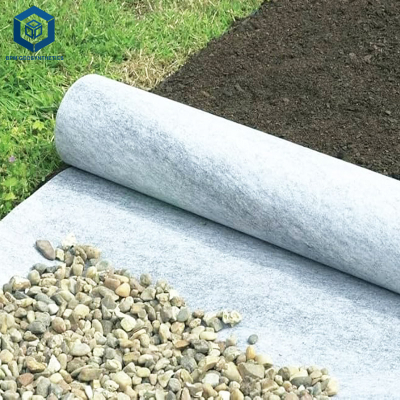
| Geotextile cushion (under primary geomembrane) | Nonwoven polypropylene, 300 to 500 gsm | Protects primary geomembrane from puncture by secondary liner (gravel or clay with rocks). Source: ASTM D4833. |
| Geomembrane seam testing (non-destructive) | 100 percent vacuum box (ASTM D4437) or spark test (ASTM D7240) | Mandatory for primary geomembrane to ensure no leaks. Secondary geomembrane (if used) also requires testing. Source: ASTM D4437. |
Material Structure and Composition of Secondary Containment System
A complete secondary containment liner design for municipal landfill projects consists of multiple layers. The table below shows typical components.
| Layer | Material | Thickness / Specification | Function |
|---|---|---|---|
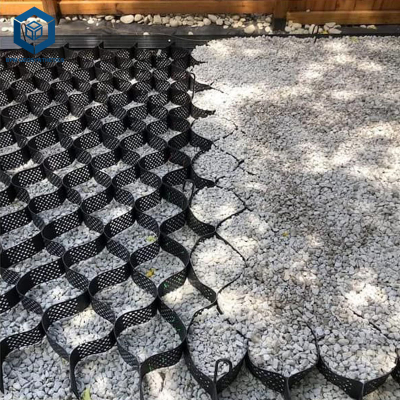
| Leachate collection and removal layer (above primary liner) | Washed gravel (2 to 5 cm diameter) or geonet with geotextile filter | 30 cm (gravel) or 7 mm (geonet) | Collects and removes leachate to prevent head buildup on primary liner. Sloped to sump pipes. Source: US EPA 40 CFR 258.40. |
| Geotextile filter (above LCRS) | Nonwoven polypropylene (200 gsm) | 1 to 2 mm | Prevents fines from waste from clogging LCRS gravel. |
| Primary geomembrane (upper barrier) | HDPE (virgin, HP-OIT ≥400 minutes) | 1.5 mm to 2.0 mm | Primary leachate barrier. Must be chemically resistant to MSW leachate (pH 5-9). Source: GRI-GM13. | |
| Geotextile cushion (under primary geomembrane) | Nonwoven polypropylene (300 to 500 gsm) | 2 to 3 mm | Protects geomembrane from puncture by underlying leak detection gravel or secondary liner. | |
| Leak detection layer (between primary and secondary liners) | Washed gravel (2 to 5 cm) or geonet with geotextile filters | 30 cm (gravel) or 5 to 7 mm (geonet) | Detects leaks from primary liner. Sloped (≥2 percent) to sumps for monitoring. Source: US EPA 40 CFR 258.40. | |
| Secondary liner (lower barrier) | Compacted clay (CCL) or geosynthetic clay liner (GCL) | 0.6 m (CCL) or 6 mm (GCL) | Secondary barrier. CCL requires hydraulic conductivity ≤1×10⁻⁷ cm per second. Source: ASTM D5084. | |
| Foundation (subgrade) | Compacted native soil or select fill | ≥0.3 m | Provides stable base. Remove all particles >20 mm. Compact to 95 percent standard Proctor. |
Manufacturing Process of Secondary Containment Components
The manufacturing process for secondary containment liner design for municipal landfill projects ensures quality of geomembranes and geosynthetic clay liners.
HDPE geomembrane manufacturing: Virgin HDPE pellets (density ≥0.940 g per cubic cm) blended with carbon black (2 to 3 percent) and antioxidants (HP-OIT ≥400 minutes). Extruded through flat die at 200 to 230 degrees Celsius. Thickness tolerance ±5 percent. Source: ASTM D7466, ASTM D3895.
Geosynthetic clay liner (GCL) manufacturing: Bentonite clay (sodium montmorillonite, 4 to 5 kg per m²) is sandwiched between two geotextiles (woven and nonwoven) or bonded to a geomembrane. Needle-punched or adhesive-bonded. Hydraulic conductivity ≤5×10⁻¹¹ m per second (after hydration). Source: ASTM D5887.
Geonet manufacturing (leak detection layer): HDPE or polypropylene extruded into bi-planar net (rib thickness 1 to 2 mm, aperture 10 to 20 mm). Compressive strength ≥200 kPa at 10 percent strain per ASTM D1621.
Quality testing for landfill compliance: Geomembrane: puncture (ASTM D4833) ≥480 N for 1.5 mm; tensile (ASTM D6693) ≥29 kN per meter; HP-OIT (ASTM D3895) ≥400 minutes. GCL: swell index (ASTM D5890) ≥24 mL per 2 g; hydraulic conductivity (ASTM D5887) ≤5×10⁻¹¹ m per second. Gravel: washed, no fines, pH neutral.
Performance Comparison of Secondary Containment Options
When evaluating secondary containment liner design for municipal landfill projects, compare CCL, GCL, and double geomembrane options.
| Secondary Liner Type | Hydraulic Conductivity (m per second) | Thickness | Cost (installed per m²) | Installation Complexity | Vulnerability | Regulatory Acceptance (US EPA Subtitle D) |
|---|---|---|---|---|---|---|
| Compacted clay liner (CCL) | ≤1×10⁻⁷ cm per second (1×10⁻⁹ m per second) | 0.6 m (min) | 5 to 12 USD | High (requires clay source, moisture control, compaction) | Cracks if desiccated, freeze-thaw damage | Approved (standard design) |
| Geosynthetic clay liner (GCL) only | ≤5×10⁻¹¹ m per second (hydrated) | 6 mm (nominal) | 4 to 8 USD | Low (rolls out, overlaps with bentonite paste) | Bentonite can shrink/swell, vulnerable to chemical attack (pH<4 or="">10) | Approved as alternative to CCL (with approval) |
| Double geomembrane (HDPE + HDPE) with geonet leak detection | ≤1×10⁻¹⁴ m per second (geomembrane) | 1.5 mm + 1.5 mm | 15 to 25 USD | Medium (welding required) | Seam failures, punctures (requires protection)Approved as composite liner (primary + secondary geomembrane) with leak detection. Source: US EPA 40 CFR 258.40. | |
| Composite (HDPE + GCL) | ≤1×10⁻¹⁴ m per second (HDPE) + GCL backup | 1.5 mm + 6 mm | 12 to 20 USD | Medium | GCL vulnerable to chemical attack; HDPE may puncture | Approved (primary HDPE + secondary GCL or CCL) |
Industrial Applications of Secondary Containment in Landfills
Secondary containment liner design for municipal landfill projects is applied across waste disposal facilities:
New municipal solid waste (MSW) landfill cells: Composite liner: primary 1.5 mm HDPE over secondary 0.6 m CCL (or GCL). Leak detection gravel (30 cm) between liners. Leachate collection layer above primary (30 cm gravel). Source: US EPA 40 CFR 258.40.
Landfill expansions (horizontal or vertical): Secondary containment must match existing liner system. Often use GCL as secondary (easier to install over existing slopes). Leak detection geonet (instead of gravel) for weight reduction.
Industrial waste landfills (non-hazardous): May allow single composite liner (primary HDPE over secondary CCL) without leak detection if less stringent regulations. Still recommended for environmental protection.
Coal combustion residual (CCR) landfills (power plants): Require composite liner (primary HDPE over secondary CCL) with leak detection (CCR Rule 40 CFR 257). Similar to MSW.
Bioreactor landfills (leachate recirculation): Secondary containment must withstand higher leachate heads (up to 5 m). Use thicker primary geomembrane (2.0 mm) and robust secondary liner (CCL or double geomembrane).
Common Industry Problems and Engineering Solutions
Field data reveals four common problems with secondary containment liner design for municipal landfill projects.
Problem: Compacted clay liner (CCL) cracks during construction (desiccation).
Root cause: Clay placed too dry (moisture content below optimum) or exposed to sun/wind before cover. Cracks up to 10 mm wide, increasing hydraulic conductivity from 1×10⁻⁷ to 1×10⁻⁵ cm per second. Source: ASTM D5084.
Solution: Maintain moisture content within ±2 percent of optimum (ASTM D698). Cover clay with polyethylene sheeting within 4 hours of placement. If cracks occur, scarify and re-compact. Use GCL instead of CCL in arid climates.Problem: Leak detection layer clogged with fines from overlying CCL or GCL.
Root cause: Geotextile filter missing or AOS (apparent opening size) too large (>0.3 mm). Fines from secondary liner migrate into gravel or geonet, reducing permeability. Source: ASTM D4751.
Solution: Place geotextile filter (200 gsm, AOS ≤0.2 mm) above secondary liner and below leak detection gravel. For geonet leak detection, use geotextile filters on both sides (200 gsm).Problem: Primary geomembrane seam failure (leak) detected by leak detection sump.
Root cause: Incomplete weld (cold weld) due to improper extrusion temperature (below 200 degrees Celsius). Not detected during CQA because vacuum testing was not performed on that seam. Source: ASTM D4437.
Solution: Require 100 percent non-destructive testing (vacuum box or spark) for all primary geomembrane seams. Destructive peel tests (ASTM D6392) every 500 m of seam (minimum 3 per project). Pass: peel strength ≥80 percent of parent material.Problem: GCL secondary liner fails (bentonite eroded) in acidic leachate (pH<5).
<5 or="">10), use CCL or double geomembrane instead of GCL. Perform ASTM D5322 immersion test (120 days, actual leachate) – pass criteria: swell index ≥20 mL per 2 g after immersion. Source: ASTM D5890.
Root cause: GCL specified for MSW landfill without chemical compatibility testing. Some industrial waste or bioreactor leachate has pH 4 to 5, which attacks bentonite (sodium montmorillonite). Source: ASTM D5322.
Solution: For MSW (pH 5-9), GCL acceptable. For aggressive leachate (pH
Risk Factors and Prevention Strategies
Mitigating risks for secondary containment liner design for municipal landfill projects requires proactive engineering.
Inadequate clay liner thickness or hydraulic conductivity: Prevention: Test clay source for hydraulic conductivity (ASTM D5084) before construction. Require 0.6 m minimum thickness after compaction. Perform in-situ hydraulic conductivity tests (sealed double ring infiltrometer) on compacted clay. Reject any area with hydraulic conductivity >1×10⁻⁷ cm per second.
Geomembrane puncture from gravel in leak detection layer: Prevention: Place geotextile cushion (300 to 500 gsm) directly over gravel before geomembrane. Use rounded gravel (washed, no sharp edges). For steep slopes, use geonet instead of gravel (reduces puncture risk). Source: ASTM D4833.
Leachate head buildup on primary liner (exceeding design head): Prevention: Design leachate collection system with sufficient drainage capacity (minimum slope 2 percent). Clean leachate pipes annually. Monitor leachate levels in sumps; maintain head<0.3 m per Subtitle D. Source: US EPA 40 CFR 258.40.
Inadequate seam testing (undetected pinholes): Prevention: Require third-party CQA inspector during geomembrane installation. 100 percent vacuum box testing (ASTM D4437) for all field seams. Electrical leak location (ELL) survey per ASTM D7703 for entire primary geomembrane area after installation. Source: ASTM D4437, ASTM D7703.
Procurement Guide: How to Specify Secondary Containment Liners
For procurement managers and civil engineers, use this checklist for secondary containment liner design for municipal landfill projects:
Confirm regulatory requirements (US EPA Subtitle D or local equivalent): 40 CFR 258.40 requires: (a) composite liner (primary geomembrane over secondary clay or GCL); (b) leachate collection and removal system; (c) leak detection layer between primary and secondary liners. Source: US EPA 40 CFR 258.40.
Specify primary geomembrane (HDPE): Thickness 1.5 mm (minimum), virgin resin, density ≥0.940 g per cubic cm, HP-OIT ≥400 minutes (ASTM D3895), carbon black 2.0 to 3.0 percent (ASTM D1603). Puncture resistance ≥480 N (ASTM D4833). GRI-GM13 compliant. Source: GRI-GM13.
Specify secondary liner: Option A: Compacted clay liner (CCL) – 0.6 m minimum thickness, hydraulic conductivity ≤1×10⁻⁷ cm per second (ASTM D5084), compaction 95 percent standard Proctor (ASTM D698). Option B: Geosynthetic clay liner (GCL) – 6 mm nominal thickness, bentonite mass 4 to 5 kg per m², hydraulic conductivity ≤5×10⁻¹¹ m per second (ASTM D5887). GCL must be needle-punched or adhesive-bonded. Source: ASTM D5084, ASTM D5887.
Specify leak detection layer: 30 cm washed gravel (2 to 5 cm, rounded) or 5 to 7 mm bi-planar geonet with geotextile filters (200 gsm, AOS ≤0.2 mm). Slope ≥2 percent to sumps. Sumps with riser pipes and flow monitoring. Source: US EPA 40 CFR 258.40.
Specify leachate collection layer (above primary liner): 30 cm washed gravel (2 to 5 cm) or geonet (7 mm) with perforated collection pipes (150 to 300 mm diameter). Clean-out ports every 100 m. Slope ≥2 percent to sumps. Source: US EPA 40 CFR 258.40.
Specify seam testing and CQA: 100 percent vacuum box testing (ASTM D4437) for all primary geomembrane seams. Destructive peel tests (ASTM D6392) every 500 m of seam (minimum 3 per project). Post-installation electrical leak location (ELL) survey per ASTM D7703. Third-party CQA inspector on site full-time. Source: ASTM D4437, ASTM D6392, ASTM D7703.
Sample testing before bulk order: Order 10 m² of primary geomembrane, secondary GCL (if used), geotextile, and geonet. Assemble test pad (2 m × 2 m) in field (simulated conditions). Perform hydraulic conductivity test on secondary liner (ASTM D5084 for clay, ASTM D5887 for GCL). Perform puncture test (ASTM D4833) on geomembrane after placement over gravel. Acceptable: hydraulic conductivity ≤ spec, no punctures. Source: ASTM D5084, ASTM D5887, ASTM D4833.
Warranty and documentation: Seek 50 year warranty for primary geomembrane (covers chemical resistance, seam integrity, HP-OIT retention). For GCL, seek 25 year warranty (covers swell capacity, hydraulic conductivity). Request mill test reports (MTRs) per roll for geomembrane, GCL, geotextile, and geonet. Source: ASTM D3895, ASTM D5890.
Engineering Case Study
Project type: New municipal solid waste (MSW) landfill cell (15 ha) expansion.
Location: Midwest, USA (clay available on site, temperate climate, regulatory oversight by state EPA).
Secondary containment design specified: Composite liner system per US EPA Subtitle D: Primary geomembrane: 1.5 mm HDPE (virgin, HP-OIT 460 minutes, GRI-GM13). Secondary liner: 0.6 m compacted clay (in-situ clay, hydraulic conductivity 5×10⁻⁸ cm per sec after compaction). Leak detection: 30 cm washed gravel (2 to 5 cm) with geotextile filter (200 gsm) above and below. Leachate collection: 30 cm gravel with 150 mm HDPE perforated pipes. CQA: third-party inspector; 100 percent vacuum box seam testing; destructive peel tests every 500 m (passed 98 percent of seams); ELL survey (ASTM D7703) after installation (0 pinholes detected).
Results and benefits: Post-construction hydraulic conductivity testing of clay liner (sealed double ring infiltrometer) confirmed 6×10⁻⁸ cm per second (within spec). Leak detection sumps have recorded zero flow for 8 years of operation. Groundwater monitoring wells show no exceedance of primary drinking water standards. The landfill received regulatory approval for 50-year post-closure care period. Total construction cost for liner system: 1.8 million USD (primary geomembrane 400,000 USD; clay preparation 600,000 USD; gravel and drainage 500,000 USD; CQA 300,000 USD). Estimated savings from avoided groundwater remediation (15 million USD) far exceeds cost. Source: Project post-occupancy evaluation, US EPA 40 CFR 258.40, ASTM D5084, ASTM D4437, ASTM D6392, ASTM D7703.
FAQ Section
Q: What are the regulatory requirements for secondary containment in MSW landfills?
A: US EPA Subtitle D (40 CFR 258.40) requires composite liner (primary geomembrane over secondary clay or GCL) with leachate collection and removal system (LCRS) and leak detection layer between primary and secondary liners. Source: US EPA 40 CFR 258.40.Q: What is the minimum thickness for a primary geomembrane in a landfill?
A: 1.5 mm (60 mil) per GRI-GM13. For deep landfills (greater than 30 m waste height) or bioreactor landfills, 2.0 mm is recommended for higher puncture resistance. Source: GRI-GM13.Q: What hydraulic conductivity is required for a compacted clay secondary liner?
A: ≤1×10⁻⁷ cm per second (1×10⁻⁹ m per second) per US EPA 40 CFR 258.40. Minimum thickness 0.6 m after compaction. Source: ASTM D5084.Q: Can a geosynthetic clay liner (GCL) replace a compacted clay liner?
A: Yes, GCL is approved as an alternative to CCL under US EPA Subtitle D, provided it meets hydraulic conductivity ≤5×10⁻¹¹ m per second (ASTM D5887) and is installed with a 0.3 m soil cover or geomembrane on top. Source: ASTM D5887.Q: Why is a leak detection layer required between primary and secondary liners?
A: To detect and collect any leakage through the primary liner before it reaches the secondary liner. The leak detection layer is sloped to sumps with monitoring wells. Flow indicates leakage. Source: US EPA 40 CFR 258.40.Q: What is the minimum slope for leachate collection and leak detection layers?
A: Minimum 2 percent (1V:50H) per US EPA 40 CFR 258.40. Steeper slopes (3 to 5 percent) improve drainage and reduce leachate head on liner.Q: How is the compacted clay liner tested for hydraulic conductivity?
A: In laboratory using ASTM D5084 on compacted samples (95 percent Proctor). In field using sealed double ring infiltrometer or borehole permeameter (ASTM D6391). Frequency: 1 test per 2,500 m² of clay liner. Source: ASTM D5084, ASTM D6391.Q: What seam testing is required for the primary geomembrane?
A> 100 percent non-destructive testing (vacuum box per ASTM D4437 or spark test per ASTM D7240) on all field seams. Destructive peel and shear tests (ASTM D6392) every 500 m of seam (minimum 3 per project). Source: ASTM D4437, ASTM D6392.Q: What is the expected service life of a landfill secondary containment system?
A: For primary HDPE geomembrane with HP-OIT ≥400 minutes, 100+ years (based on antioxidant depletion modeling). For secondary clay liner, indefinite if kept moist. GCL service life 50+ years if not exposed to aggressive chemicals. Source: ASTM D3895.Q: Can a double geomembrane system (HDPE + HDPE) be used as secondary containment?
A: Yes, a double geomembrane system (primary 1.5 mm HDPE, secondary 1.5 mm HDPE) with geonet leak detection is approved under US EPA Subtitle D as an alternative to CCL or GCL. Cost is higher but provides excellent redundancy. Source: US EPA 40 CFR 258.40.
Request Technical Support or Quotation
For civil engineers and EPC contractors, technical support is available to review your landfill design, clay availability, and regulatory requirements. Request a quotation for primary HDPE geomembrane (1.5 mm to 2.0 mm, GRI-GM13, HP-OIT ≥400 minutes), secondary GCL or CCL materials, leachate collection geonet/gravel, and leak detection geocomposites with full ASTM test reports and CQA documentation (ASTM D4437, ASTM D6392, ASTM D7703).
About the Author
This guide was authored by geosynthetic and civil engineers with over 15 years of experience in designing and specifying secondary containment liner systems for municipal solid waste landfills, industrial waste facilities, and coal combustion residual landfills across North America, Europe, and Australia. All recommendations follow US EPA 40 CFR 258.40, ASTM D3895, ASTM D5084, ASTM D5887, ASTM D4437, ASTM D6392, ASTM D7703, and GRI-GM13 standards.