Reliable geomembrane supplier for mining project
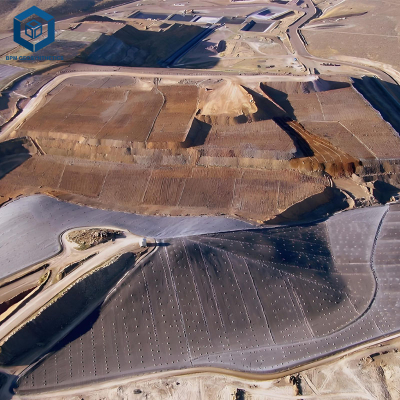
A reliable geomembrane supplier for mining project applications provides high-performance polymer liners engineered for containment systems such as tailings storage facilities, heap leach pads, evaporation ponds, and process water reservoirs. These geomembranes act as impermeable barriers that prevent environmental contamination while ensuring long-term mechanical and chemical stability under harsh mining conditions.
Mining containment projects demand high‑quality geomembrane for mining. Selecting a reliable geomembrane supplier for mining project is critical for heap leach pad and tailings pond applications, as part of broader geosynthetics for mining solutions.
Technical Parameters and Specifications
When evaluating a reliable geomembrane supplier for mining project procurement, engineers typically review the following technical specifications used in large-scale mining containment systems.
Different mining projects have different requirements for geomembrane for mining performance. Users need to pay attention to core technical indicators for waste and mining containment, including indicators for hdpe geomembrane for environmental protection.
| Parameter | Typical Range | Standard Reference |
|---|---|---|
| Material Type | HDPE / LLDPE | ASTM D638 |
| Thickness | 0.75 mm – 3.0 mm | ASTM D5199 |
| Density | ≥0.940 g/cm³ | ASTM D1505 |
| Tensile Strength | ≥27 kN/m | ASTM D6693 |
| Elongation at Break | ≥700% | ASTM D6693 |
| Puncture Resistance | ≥320 N | ASTM D4833 |
| Carbon Black Content | 2–3% | ASTM D4218 |
| Oxidative Induction Time | ≥100 minutes | ASTM D3895 |
Mining projects usually specify thicker geomembranes (1.5 mm – 2.5 mm) to withstand heavy loads, chemical exposure, and long service life requirements.
Structure and Material Composition
Geomembranes supplied by a reliable geomembrane supplier for mining project installations typically consist of engineered polymer formulations designed for extreme environments.
High-Density Polyethylene Resin – Provides chemical resistance and structural strength.
Carbon Black Additives – Improve UV stability for outdoor mining environments.
Antioxidants – Extend service life and prevent thermal degradation.
Stabilizers – Enhance resistance to environmental stress cracking.
Optional Textured Surface – Improves friction performance on slopes.
Manufacturing Process
A reliable geomembrane supplier for mining project projects must maintain controlled production processes to guarantee consistent performance.
Raw Material Inspection
Polyethylene resin and additives are verified through laboratory testing before production.Precision Mixing
Raw materials are blended using automated dosing systems to maintain formulation consistency.Flat Die Extrusion
Extruders produce continuous geomembrane sheets under controlled temperature and pressure.Calendering and Cooling
Sheets pass through precision rollers to achieve uniform thickness.Surface Texturing (Optional)
Texturing rollers create friction surfaces for slope stability.Quality Testing
Each roll undergoes thickness, tensile strength, and density verification.Roll Packaging
Geomembranes are wound into export rolls typically ranging from 5–8 meters in width.
Industry Material Comparison
| Material | Chemical Resistance | Mechanical Strength | Service Life | Mining Suitability |
|---|---|---|---|---|
| HDPE Geomembrane | Excellent | Very High | 20–50 years | Highly suitable |
| LLDPE Geomembrane | Good | High flexibility | 15–30 years | Moderate slopes |
| PVC Liner | Moderate | Lower strength | 10–20 years | Limited mining use |
| Clay Liners | Low | Low | Variable | Rarely used alone |
Each material has its pros and cons, project conditions should guide material selection. For mining and waste facilities, geomembrane for waste containment and geomembrane for mining are the most commonly‑specified liner solutions.
Application Scenarios in Mining Projects
Mining engineers frequently select a reliable geomembrane supplier for mining project containment systems used in the following scenarios:
Heap leach pads for gold and copper mining
Tailings storage facilities
Process water reservoirs
Evaporation ponds
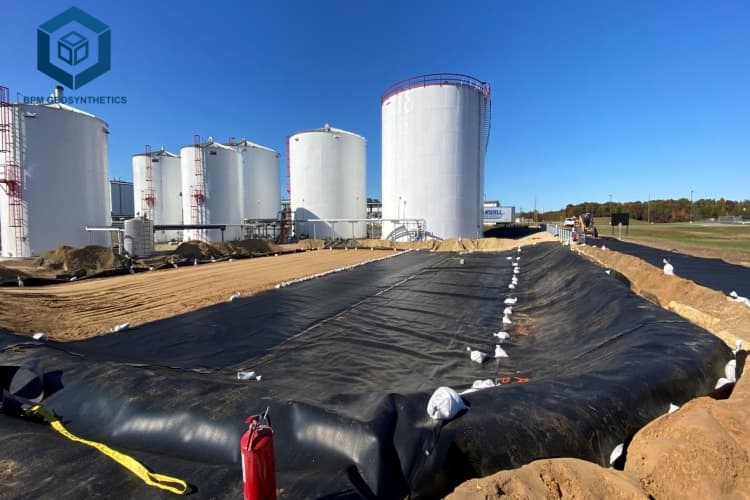
Waste containment basins
Stormwater control ponds
These applications require materials capable of resisting acids, heavy metals, and mechanical stress from mining operations.
Core Procurement Challenges and Solutions
1. Material Failure Risk
Problem: Substandard liners may fail under chemical exposure.
Solution: Choose a reliable geomembrane supplier for mining project systems that meets ASTM and GRI-GM13 standards.
2. Inconsistent Thickness
Problem: Thickness variation reduces structural integrity.
Solution: Require third-party testing reports and roll inspection data.
3. Installation Compatibility
Problem: Poor weldability increases installation defects.
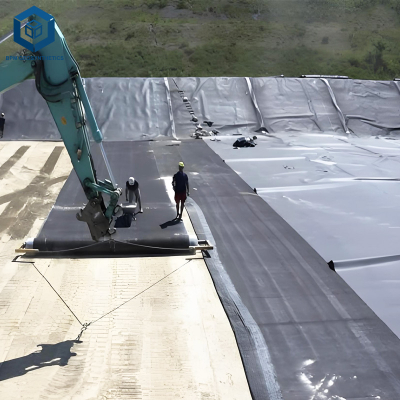
Solution: Ensure geomembranes are compatible with wedge welding equipment.
4. Long-Term Environmental Exposure
Problem: UV degradation reduces lifespan.
Solution: Select geomembranes with certified carbon black dispersion.
Risk Warnings and Prevention Measures
Mining containment liner failures are frequently traced back to procurement‑stage oversights, according to feedback from global EPC and geotechnical project teams. Several common risks deserve attention during geomembrane selection and deployment.
Improper installation can cause seam failure.
Unverified suppliers may provide recycled resin materials.
Incorrect thickness selection increases puncture risk.
Transport damage can compromise liner integrity.
Procurement teams should only partner with a reliable geomembrane supplier for mining project containment systems capable of providing traceable production records and test certificates.
Procurement Selection Guide
Define containment system design requirements.
Specify geomembrane thickness according to load conditions.
Verify supplier compliance with ASTM or GRI standards.
Request laboratory test reports for each production batch.
Evaluate supplier manufacturing capacity and export capability.
Review previous mining project references.
Confirm welding compatibility with installation contractors.
Engineering Case Example
A copper mining project in South America required a containment liner for a 180,000 m² heap leach pad. As part of overall geosynthetics for mining infrastructure planning, engineers prioritized a manufacturer experienced in geomembrane for waste containment and hdpe geomembrane for environmental protection applications, capable of producing 2.0 mm HDPE liners with textured surfaces for slope stability.
The installation included:
2.0 mm HDPE textured geomembrane
Roll width: 7 meters
Total material supplied: 210,000 m²
Installation method: thermal wedge welding
The system successfully achieved leak detection standards and has operated continuously for more than six years without liner failure.
FAQ
1. What thickness is typically used in mining geomembranes?
Most mining projects use 1.5 mm to 2.5 mm HDPE geomembranes.
2. Why is HDPE preferred in mining applications?
HDPE provides superior chemical resistance and long-term durability.
3. What standards should geomembranes meet?
Common standards include ASTM specifications and GRI-GM13 guidelines.
4. What is the expected service life?
Properly installed geomembranes can last 20–50 years.
5. Can geomembranes resist mining chemicals?
Yes, HDPE geomembranes resist acids, salts, and heavy metals.
6. Are textured geomembranes necessary?
Textured surfaces improve friction and slope stability.
7. What roll width is commonly supplied?
Typically between 5 and 8 meters depending on production equipment.
8. How are seams joined?
Seams are welded using hot wedge or extrusion welding equipment.
9. How should geomembranes be stored?
They should be stored on flat surfaces away from sharp objects and sunlight.
10. What documents should suppliers provide?
Quality certificates, test reports, and production traceability records.
Request Technical Documents or Quotation
If you are sourcing a reliable geomembrane supplier for mining project infrastructure, request complete technical documentation before procurement. Engineering teams typically require specification sheets, laboratory reports, and project references before approving materials for mining containment systems.
Professional suppliers can provide:
Engineering specification sheets
Sample geomembrane rolls
Third-party testing reports
Project reference documentation
Bulk pricing quotations
Author Expertise (E-E-A-T)
This technical guide was prepared by engineers with more than 10 years of experience in geomembrane manufacturing, mining containment design, and international project supply. The information reflects commonly accepted engineering standards used by EPC contractors, mining developers, and infrastructure consultants worldwide.