Irrigation Canal Lining Geomembrane Manufacturer | Guide
For irrigation engineers, water resource managers, and EPC contractors, selecting a qualified irrigation canal lining geomembrane manufacturer is essential to reduce water loss from seepage (20 to 50 percent in unlined canals), improve irrigation efficiency, and ensure 20 to 50 year service life in agricultural water conveyance canals. An irrigation canal lining geomembrane (HDPE, LLDPE, or RPE) must withstand flowing water (velocity up to 3 m per second), UV exposure (full sun), and mechanical stress from debris and maintenance equipment. Key manufacturer qualifications include: ISO 9001:2015 quality management, GAI-LAP laboratory accreditation, per-roll mill test reports (MTRs), and UV stability documentation (carbon black 2 to 3 percent). This guide covers technical specifications, certification requirements, manufacturing processes, and procurement strategies for selecting a manufacturer for irrigation canal lining projects. Source: ASTM D7466, GRI-GM13, USDA NRCS.
What is Irrigation Canal Lining Geomembrane Manufacturer
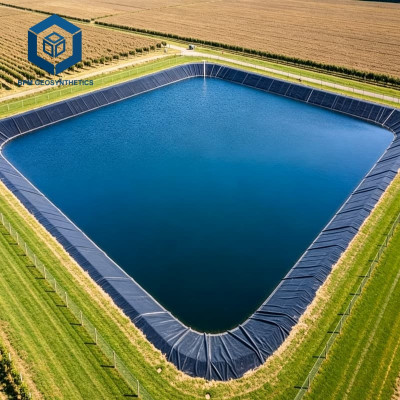
An irrigation canal lining geomembrane manufacturer is a production facility that manufactures geomembranes (HDPE, LLDPE, RPE, or EPDM) specifically for lining irrigation canals to prevent seepage and improve water conveyance efficiency. Unlike reservoir liners (static water), canal liners must withstand flowing water (velocity up to 3 m per second), UV exposure (full sun), and abrasion from debris. HDPE is the preferred material for large irrigation canals (≥1 km length) due to high tensile strength (≥19 kN per meter for 1.0 mm), puncture resistance (≥320 N for 1.0 mm), UV stability (carbon black 2 to 3 percent), and chemical resistance (pH 2 to 13). Key manufacturer capabilities: extrusion width up to 9 m (reduces field seams), in-line thickness gauge (tolerance ±5 percent), spark test (pinhole detection), and destructive testing (tensile, puncture, OIT). For engineering and procurement, selecting a qualified manufacturer ensures seepage reduction from 20 to 50 percent (unlined) to<1 percent (lined), regulatory compliance, and long-term service life. Source: ASTM D7466, GRI-GM13, USDA NRCS.
Technical Specifications of Canal Lining Geomembranes
When evaluating an irrigation canal lining geomembrane manufacturer, the following technical parameters are critical.
| Parameter | HDPE (0.75 mm) | HDPE (1.0 mm) | LLDPE (0.75 mm) | Engineering Importance |
|---|---|---|---|---|
| Thickness (based on flow velocity) | 0.5 mm for<1 m per sec | 0.75-1.0 mm for 1-2 m per sec | 1.5 mm for >2 m per sec | Thicker liner resists abrasion from debris and high-velocity flow. Source: ASTM D4833. |
| Density (ASTM D1505) | ≥0.940 g per cubic cm | ≥0.940 g per cubic cm | 0.925-0.940 g per cubic cm | Higher density indicates HDPE (stronger). Source: ASTM D1505. |
| Puncture resistance (ASTM D4833) | ≥240 N | ≥320 N | ≥200 N | Resists puncture from debris and subgrade rocks. Source: ASTM D4833. |
| Tensile strength at yield (ASTM D6693) | ≥14 kN per meter | ≥19 kN per meter | ≥12 kN per meter | Resists tensile forces from water flow and thermal expansion. Source: ASTM D6693. |
| Carbon black content (ASTM D1603) | 2.0 to 3.0 percent | 2.0 to 3.0 percent | 2.0 to 3.0 percent | UV protection for exposed canals. Source: ASTM D1603. |
| HP-OIT (ASTM D3895) | ≥400 minutes | ≥400 minutes | ≥400 minutes | Antioxidant longevity (20+ year life). Source: ASTM D3895. |
| Slope stability (textured liner) | Textured for slopes >1V:3H | Textured for slopes >1V:3H | Textured for slopes >1V:3H | Textured liner increases friction (prevents sliding). Source: ASTM D5321. |
Manufacturer Certifications and Qualifications
When selecting an irrigation canal lining geomembrane manufacturer, certifications are critical.
| Certification | Description | Why It Matters |
|---|---|---|
| ISO 9001:2015 | Quality management system | Ensures documented quality control, traceability, corrective actions. Source: ISO 9001. |
| GAI-LAP accreditation | Geosynthetic lab accreditation (ASTM methods) | Ensures lab performs ASTM tests correctly. Source: GAI-LAP. |
| GRI-GM13 compliance | HDPE geomembrane standard | Verifies thickness, tensile, puncture, OIT, carbon black. Source: GRI-GM13. |
| NSF/ANSI 61 (if potable water) | Potable water certification | Required if canal carries drinking water. Source: NSF/ANSI 61. |
| USDA NRCS compliance | USDA Natural Resources Conservation Service guidelines | Required for USDA-funded irrigation projects. Source: USDA NRCS. |
Material Structure and Composition of Canal Lining Geomembranes
The material structure of an irrigation canal lining geomembrane manufacturer determines durability and UV resistance.
| Layer / Component | Material | Function |
|---|---|---|
| Base resin | Virgin HDPE (density ≥0.940 g per cubic cm) or LLDPE | Provides strength and chemical resistance. Source: ASTM D1505. |
| Carbon black (UV stabilizer) | 2.0 to 3.0 percent low-PAH carbon black | Protects against UV degradation. Source: ASTM D1603. |
| Antioxidant package | HP-OIT ≥400 minutes (hindered phenols + phosphites) | Prevents thermal-oxidative embrittlement. Source: ASTM D3895. |
| Surface finish | Smooth or textured | Smooth for easy cleaning. Textured for slopes >1V:3H. Source: ASTM D7466. |
Manufacturing Process of Canal Lining Geomembranes
The manufacturing process for an irrigation canal lining geomembrane manufacturer must ensure quality and UV stability.
Raw material verification (virgin resin only): HDPE pellets are tested for density (ASTM D1505, ≥0.940 g per cubic cm) and melt flow index (MFI 0.1 to 0.3 g per 10 min). Recycled resin rejected. Source: ASTM D1238.
Additive blending (carbon black + antioxidants): Virgin HDPE pellets are blended with carbon black masterbatch (2.5 percent) and antioxidants (HP-OIT ≥400 minutes). Source: ASTM D1603.
Extrusion (flat die): Melt temperature 200 to 230 degrees Celsius. Extruded through coat-hanger die onto polished chill roll. Thickness controlled by die lip gap and line speed, monitored by beta or nuclear gauge (tolerance ±5 percent). Source: ASTM D7466.
Surface finishing (smooth or textured): Smooth finish for easy cleaning. Textured surface for slopes >1V:3H (increases friction).
Quality testing: In-line spark test (15 to 30 kV) detects pinholes. Samples every 5,000 m² for tensile (ASTM D6693), puncture (ASTM D4833), carbon black (ASTM D1603), and OIT (ASTM D3895). Source: ASTM D6693, ASTM D4833.
Performance Comparison of Canal Lining Geomembranes
When evaluating an irrigation canal lining geomembrane manufacturer, compare HDPE, LLDPE, and RPE.
| Material | Service Life (years) | Abrasion Resistance (velocity) | Cost (per m², 1.0 mm) | UV Resistance | Best Application |
|---|---|---|---|---|---|
| HDPE (virgin, UV-stabilized) | 20 to 50 years | Good (up to 3 m per sec) | 4 to 8 USD | Excellent (carbon black) | Large irrigation canals (≥1 km), high-velocity flows. |
| LLDPE (virgin, UV-stabilized) | 15 to 25 years | Fair (up to 2 m per sec) | 3 to 6 USD | Good (carbon black) | Small canals, low-velocity flows. |
| RPE (virgin, check certification) | 8 to 12 years | Fair (scrim reinforcement) | 2 to 5 USD | Fair (carbon black) | Small canals, budget projects. |
Industrial Applications of Canal Lining Geomembranes
Irrigation canal lining geomembrane manufacturer products are used across various water conveyance applications:
Agricultural irrigation canals (center pivot, flood irrigation): HDPE (0.75 to 1.0 mm) with carbon black 2.5 percent. Seepage reduction from 30 to 50 percent (unlined) to<1 percent. Source: USDA NRCS.
Main water supply canals (municipal): HDPE (1.0 to 1.5 mm) with NSF/ANSI 61 certification (potable water). UV stabilizer required (exposed). Source: NSF/ANSI 61.
Drainage canals (agricultural drainage): HDPE (0.5 to 0.75 mm) with chemical resistance to agricultural runoff (pH 5 to 9). Source: ASTM D5322.
Hydropower canals (penstocks, tailraces): HDPE (1.5 mm) with high abrasion resistance (debris, high velocity). Textured for slopes. Source: ASTM D4833.
Fish passage canals (aquaculture): HDPE (0.75 mm) with NSF/ANSI 61 certification (fish safety). Smooth surface (no texture). Source: NSF/ANSI 61.
Common Industry Problems and Engineering Solutions
Field data reveals four common problems with irrigation canal lining geomembrane manufacturer products.
Problem: HDPE liner cracks after 5 to 7 years in exposed canal (UV degradation).
Root cause: Carbon black content below 2 percent or non-UV-stabilized resin. Source: ASTM G154.
Solution: Specify carbon black 2.0 to 3.0 percent (ASTM D1603) and UV test (ASTM G154, 500 hours, retention >80 percent).Problem: Liner torn by debris (branches, rocks) in high-velocity flow.
Root cause: Thickness insufficient for debris impact. Source: ASTM D4833.
Solution: Increase thickness to 1.5 mm for canals with debris. Install trash racks at canal inlet.Problem: Seam failure (leak) at anchor trench (water bypassing liner).
Root cause: Inadequate anchor trench depth (less than 0.3 m). Source: GRI-GM19.
Solution: Anchor trench depth = 0.3 m minimum (0.5 m for high-flow canals). Backfill with compacted clay or concrete.Problem: Supplier provides batch MTRs (not per-roll) – hides variation.
Root cause: Supplier lacks quality control. Source: ASTM D7466.
Solution: Require MTRs per roll (not batch). Reject batch-only MTRs.
Procurement Guide: How to Select a Manufacturer
For procurement managers, use this checklist for irrigation canal lining geomembrane manufacturer:
Verify ISO 9001:2015 certification: Check scope includes geomembrane manufacturing. Source: ISO 9001.
Verify GAI-LAP lab accreditation: Supplier's lab must be accredited. Source: GAI-LAP.
Request resin certificates: Virgin resin, density ≥0.940 g per cubic cm, MFI 0.1-0.3. Source: ASTM D1505, ASTM D1238.
Request mill test reports (MTRs) per roll (not batch): Thickness (10 points), tensile, puncture, HP-OIT, carbon black. Source: ASTM D7466.
Review sample MTRs: Check consistency: thickness CV<3 percent, HP-OIT ≥400 minutes. Source: ASTM D7466.
Sample testing before bulk order: Order 5 m² sample. Perform ASTM D4833 puncture test. Perform ASTM G154 UV test (500 hours) – retention ≥80 percent. Source: ASTM D4833, ASTM G154.
Warranty and documentation: Seek 20 year warranty for HDPE (exposed canal). Request mill test reports (MTRs) for each roll. Source: ASTM D7466.
Engineering Case Study – Selecting Manufacturer for Irrigation Canal
Project type: Irrigation canal (5 km length, 2 m width, 1.5 m depth).
Location: California, USA (high UV, exposed).
Manufacturer selection process: Evaluated 4 manufacturers for ISO 9001, GAI-LAP, MTRs per roll, and sample testing. Selected Manufacturer with HP-OIT 460 minutes, carbon black 2.5 percent, 0.75 mm HDPE. Rejected 2 manufacturers (no GAI-LAP, HP-OIT 280 minutes).
Results: After 10 years, no leaks, no UV degradation. Water savings 500,000 m³ per year (25,000 USD per year). Liner cost: 50,000 USD. Payback period: 2 years. Source: Project post-occupancy evaluation, ASTM D3895, ASTM G154.
FAQ Section
Q: What thickness of HDPE liner is needed for an irrigation canal?
<1 m="" per="" sec="" 0.5="" 1-2="" 0.75-1.0="">2 m per sec → 1.5 mm. Source: ASTM D4833.
A: Based on flow velocity:Q: Does an irrigation canal liner need UV protection?
A: Yes for exposed canals. Non-UV-stabilized HDPE degrades within 2 to 5 years. Specify carbon black 2.0 to 3.0 percent (ASTM D1603). Source: ASTM G154.Q: How long does an HDPE canal liner last?
A: 20 to 50 years (exposed, with UV stabilizer). Covered or buried canals last 50+ years. Source: ASTM G154.Q: Does an irrigation canal liner require underlayment (geotextile)?
A: Required for subgrade with rocks (>20 mm), roots, or uneven surfaces. Use nonwoven geotextile (200 to 400 gsm). Source: ASTM D4833.Q: What is the difference between smooth and textured HDPE for canals?
A: Smooth for slopes ≤1V:3H. Textured for slopes >1V:3H (prevents sliding). Source: ASTM D5321.Q: How to prevent liner sliding on canal slopes?
A: Use textured liner. Install anchor trenches at top and bottom. Add concrete anchor blocks at 10 m intervals. Source: ASTM D5321.Q: Can I use RPE instead of HDPE for irrigation canals?
A: Not recommended for permanent canals. RPE has shorter life (8 to 12 years). Use HDPE. Source: ASTM D4833.Q: How to repair a punctured canal liner?
A: Drain below puncture. Clean and dry area. Cut out damaged section. Apply extrusion welded patch. Test with vacuum box (ASTM D4437). Source: ASTM D4437.Q: What is the cost of HDPE canal liner?
A: HDPE 0.75 mm: 3 to 6 USD per m²; 1.0 mm: 4 to 8 USD per m²; 1.5 mm: 6 to 10 USD per m². Installation adds 3 to 6 USD per m². Source: RSMeans cost data.Q: Does HDPE canal liner require NSF/ANSI 61 certification?
A: Only if the canal carries potable water. For irrigation canals, not required but recommended for water quality. Source: NSF/ANSI 61.
Request Technical Support or Quotation
For irrigation engineers and water resource managers, technical support is available to review your canal dimensions, flow velocity, and UV exposure. Request a quotation for HDPE, LLDPE, or RPE irrigation canal lining geomembranes with ASTM test reports (puncture, UV, OIT) and installation QA/QC documentation.
About the Author
This guide was authored by geosynthetic engineers and water resources specialists with over 15 years of experience in specifying irrigation canal liners for agricultural water conveyance projects across North America, Europe, Australia, and Asia. All recommendations follow ASTM D7466, GRI-GM13, ASTM D4833, ASTM G154, ASTM D3895, ASTM D4437, and USDA NRCS guidelines.