Farm Water Storage Pond Liner Factory | Engineering Guide
Farm water storage pond liner factory operations are a cornerstone of agricultural water management — delivering engineered geomembrane solutions that ensure retention, protect subgrades, and lower lifecycle costs. This guide covers material specifications, manufacturing quality, and procurement strategies for engineers, EPC contractors, and project developers who rely on a trusted farm water storage pond liner factory for large-scale irrigation, aquaculture, and firewater reservoirs.
What is Farm Water Storage Pond Liner Factory
A farm water storage pond liner factory is a specialized production facility that manufactures high-density polyethylene (HDPE), LLDPE, and reinforced geomembranes for agricultural containment. These liners are engineered to resist permeation, chemical attack from fertilizers and silage leachate, and mechanical stress from soil settlement. For engineering teams, the factory provides technical datasheets with critical values — tensile modulus, tear resistance, and stress-crack performance — that feed into hydraulic design and slope stability calculations. Procurement managers evaluate a farm water storage pond liner factory based on quality consistency, certification (ISO 9001, ASTM D5199, GRI-GM13), and the ability to supply large rolls (up to 8 m width) with minimal field seams. The factory’s role extends beyond production: it supports installation with welding parameters, CQA plans, and failure mode analysis, making it an indispensable partner in long-term water infrastructure.
Technical Specifications of Farm Water Storage Pond Liner Factory
Products from a qualified farm water storage pond liner factory must meet exacting benchmarks. The table below lists typical parameters and their engineering relevance:
| Parameter | Typical Value | Engineering Importance |
|---|---|---|
| Thickness (nominal) | 0.50 – 3.00 mm (20–120 mil) | Directly affects puncture resistance and hydraulic pressure tolerance |
| Density (HDPE) | 0.940 – 0.960 g/cm³ | Ensures dimensional stability and resistance to flotation |
| Tensile Yield Strength (MD/TD) | ≥ 15 MPa (ASTM D6693) | Prevents deformation under installation and soil loads |
| Elongation at Break | ≥ 700% (MD/TD) | Accommodates subgrade movement without brittle failure |
| Puncture Resistance | ≥ 200 N (ASTM D4833) | Protects against sharp rocks and roots during and after installation |
| UV Stability (1600 h) | ≥ 50% retained tensile strength | Critical for exposed ponds; ensures long-term weatherability |
| Design Service Life | 25 – 50 years (with cover) | Directly impacts project amortization and maintenance schedules |
All values are verified through in-house and third-party testing per ASTM and ISO protocols. A reliable farm water storage pond liner factory provides lot-specific test reports.
Material Structure and Composition
The multi-layer design from a modern farm water storage pond liner factory is engineered for combined durability and installability. The table below details the typical composition:
| Layer / Component | Material | Function |
|---|---|---|
| Top (exposure) layer | HDPE with 2.0–2.5% carbon black + UV stabilizers | Resists photo-oxidation and thermal degradation |
| Core / structural layer | Virgin HDPE or LLDPE (scrim-reinforced optional) | Provides tensile strength and stress distribution |
| Bottom (subgrade) layer | Smooth or textured HDPE (co-extruded) | Enhances interface friction; reduces sliding on slopes |
| Weldable edge / overlap zone | Same base resin (non-contaminated) | Ensures strong field seams via thermal or extrusion welding |
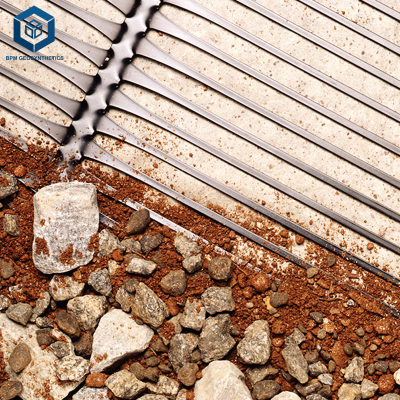
The co-extrusion process bonds all layers into a monolithic sheet. Textured surfaces (dimpled or spike patterns) increase friction angle by 15°–25°, a critical factor for ponds with side slopes steeper than 3H:1V. The absence of plasticizers and fillers ensures long-term chemical resistance and dimensional stability, which is why engineers specify products from a reputable farm water storage pond liner factory.
Manufacturing Process of Farm Water Storage Pond Liner Factory
Industrial production at a high-capacity farm water storage pond liner factory follows a tightly controlled six-stage sequence. Each step is monitored with SPC to ensure zero-defect output.
Raw material preparation – Virgin HDPE/LLDPE pellets, carbon black masterbatch, and antioxidants are precision-weighed and blended in forced-air dryers to reduce moisture below 0.02%, preventing bubble formation during extrusion.
Extrusion and forming – The blend is melted in a twin-screw extruder (230–250°C) and forced through a flat-sheet die. Calender rollers set thickness and texture, with online gauges providing real-time feedback.
Surface treatment – Corona or flame treatment increases surface energy to optimize weldability. For textured liners, embossing rollers create uniform friction patterns without compromising thickness.
Precision finishing – The sheet passes through cooling baths, edge-trimming units, and winding stations. Widths up to 8 m are achievable, reducing field seams by up to 30%.
Quality inspection – In-line and off-line tests include ultrasonic thickness mapping, tensile (ASTM D6693), puncture (D4833), and pinhole detection via high-voltage spark. Any coil with deviations is quarantined.
Packaging and labeling – Rolls are wrapped in opaque, UV-blocking film, labeled with batch number, thickness, and certification marks, then palletized for shipment.
Each stage is engineered to prevent defects: extrusion temperature variance >±5°C can reduce stress-crack resistance by as much as 30%, a failure mode well-documented in field returns. A professional farm water storage pond liner factory maintains full traceability from raw material to finished roll.
Performance Comparison with Alternative Materials
When evaluating a farm water storage pond liner factory product against alternatives, engineers consider durability, cost, and constructability. The table below summarizes a multi-attribute comparison:
| Material | Durability (years) | Cost Level | Installation Complexity | Maintenance | Typical Applications |
|---|---|---|---|---|---|
| HDPE (factory liner) | 25–50 | Medium–High | Moderate (welding required) | Low (inspections) | Irrigation, aquaculture, fire ponds |
| Compacted clay | 10–20 (crack-prone) | Low (material) / high (transport) | High (moisture control) | High (re-compaction) | Small seasonal ponds |
| Concrete (shotcrete) | 15–30 (cracking, joints) | High (labor + rebar) | Very high (curing, forms) | Moderate (sealants) | Steep slopes, high-head |
| PVC geomembrane | 10–20 (UV, plasticizer loss) | Medium | Low (lightweight) | Moderate (replacement) | Small decorative or low-stress ponds |
HDPE from a certified farm water storage pond liner factory offers the best lifecycle value, especially in aggressive chemical environments (manure, silage effluent) where clay and PVC degrade prematurely.
Industrial Applications of Farm Water Storage Pond Liner Factory
The output from a farm water storage pond liner factory serves a broad spectrum of agricultural and light-industrial uses:
Irrigation reservoirs: Main storage for drip and pivot systems, with capacities from 5,000 to 500,000 m³.
Livestock waste lagoons: Anaerobic digesters and manure holding ponds where chemical resistance is paramount.
Aquaculture: Shrimp, tilapia, and catfish farms require smooth, non-toxic surfaces that are easy to clean.
Fire suppression tanks: On-farm emergency water storage, often in remote areas.
Tailwater recovery: Capture and reuse of runoff from irrigated fields to reduce groundwater pumping.
A recent infrastructure project involved a 15-ha pond in a semi-arid region, using 1.5 mm textured liner from a specialized farm water storage pond liner factory. The design included a 40-year service life and 3.5 m water depth, with anchor trenches and a geotextile cushion layer.
Common Industry Problems and Engineering Solutions
Even liners from a high-quality farm water storage pond liner factory can encounter issues if design or installation falls short. Below are four recurring problems and their engineering remedies.
Problem 1: Stress cracking around pipe penetrations
Root cause: Differential settlement and thermal cycling.
Solution: Use prefabricated boots with expansion loops; specify high-stress-crack-resistant resin (NCTL ≥ 300 h).
Problem 2: Punctures from sharp subgrade debris
Root cause: Inadequate geotextile cushion layer.
Solution: Install 300–500 g/m² nonwoven geotextile; require factory-certified puncture resistance ≥ 200 N.
Problem 3: Field seam failures
Root cause: Contamination or improper weld temperature.
Solution: Perform peel and shear tests on test strips at start of each shift; use dual-track extrusion welders.
Problem 4: UV surface cracking on exposed slopes
Root cause: Insufficient carbon black content or cover soil.
Solution: Specify ≥2% carbon black and either provide 300 mm soil cover or use a UV-stabilized grade from the factory.
Risk Factors and Prevention Strategies
Engineering risk management for projects using a farm water storage pond liner factory product involves proactive measures in five critical areas:
Installation errors: Wrinkles and slack cause stress concentrations. Prevention: proper subgrade compaction and anchor trench design per ASTM D7489.
Material mismatch: Using non-compatible fittings or patch materials. Prevention: specify that all accessories come from the same factory lot.
Environmental exposure: High diurnal temperature swings. Prevention: select HDPE with low coefficient of thermal expansion and allow for expansion gaps.
Subfloor issues: Expansive soils or gas venting. Prevention: install venting pipes and a geogrid reinforcing layer.
Chemical attack: Low-pH water or high ammonia. Prevention: use chemical-resistant grades (e.g., polyamide-modified HDPE) verified by the factory’s immersion tests.
Procurement Guide: How to Choose the Right Farm Water Storage Pond Liner Factory
Buyers should follow this step‑by‑step checklist when engaging a farm water storage pond liner factory:
Traffic load evaluation – Determine vehicle and equipment loads during installation to specify puncture and tensile grades.
Specification verification – Cross-check thickness, density, and mechanical properties against the design criteria.
Certifications – Require ISO 9001, GRI-GM13, and ASTM compliance; request raw material certificates of analysis.
Supplier capability – Audit factory capacity, lead times, and track record on similar projects.
Quality control – Review in-house testing frequency and third-party lab reports.
Sample testing – Request 1 m² samples for independent peel, puncture, and UV aging tests.
Warranty evaluation – Examine warranty terms covering both material defects and seam integrity (typically 10–20 years).
Engineering Case Study
Project: 8.5 ha walnut orchard irrigation reservoir
Location: Central Valley, California (summer temperatures >40°C)
Size: 110,000 m³ storage, 4.2 m maximum depth
Product specification: 1.8 mm smooth/textured HDPE liner from a certified farm water storage pond liner factory; 500 g/m² geotextile underlay; double-welded seams with 100% air testing.
Results & benefits: Installation completed in 18 days with zero leakage. After 3 years, dye-trace tests show<5% seepage compared to design; stress-crack performance maintained across thermal cycles. The project reduced water loss by 35% compared to the previous clay-lined pond. Factory technical support provided on-site seam testing and weld parameter adjustments.
FAQ Section
Typically 0.75–1.5 mm for most farm ponds; 1.5 mm+ for steep slopes or rocky subgrades.
With proper installation and cover, HDPE liners from a reputable farm water storage pond liner factory last 25–50 years.
Yes — patching with the same resin and extrusion welding is standard; follow the factory's repair guidelines.
Strongly recommended — it protects against punctures and provides drainage, especially in coarse or rocky soils.
ASTM D5199, GRI-GM13, ISO 9001, and specific UV/chemical resistance reports.
In large rolls (up to 8 m width, 100 m length), wrapped for UV protection, with batch traceability.
HDPE remains flexible below -40°C, but freeze-thaw cycles require proper subgrade compaction to prevent frost heave.
Textured increases interface friction, essential for slopes >3H:1V; smooth is used for flat bottoms.
Using thermal fusion (wedge or hot air) or extrusion welding; all seams are tested via vacuum or air pressure.
Most established factories offer technical supervision, CQA guidelines, and weld training for contractors.
Request Technical Support or Quotation
For project-specific engineering assistance, product samples, or detailed technical datasheets from a qualified farm water storage pond liner factory, our technical advisory team is available to support your project. We provide:
Customized quotations based on pond geometry and performance criteria
Free 1 m² sample panels for independent testing
Full technical specifications and installation manuals
Direct consultation with polymer and civil engineers
Submit your project parameters through the contact form on our website to receive a detailed engineering proposal within 48 hours.
About the Author
This guide was prepared by senior industry engineers with over 15 years of experience in geomembrane manufacturing, large-scale water containment projects, and global supply chain management. Our team has contributed to EPC projects across 30+ countries, providing technical due diligence, factory audits, and installation QA/QC. We are not affiliated with any specific brand or platform — our advice is independent and rooted in engineering principles and field failure analysis.