How to prepare subgrade before geomembrane installation
What is How to Prepare Subgrade Before Geomembrane Installation
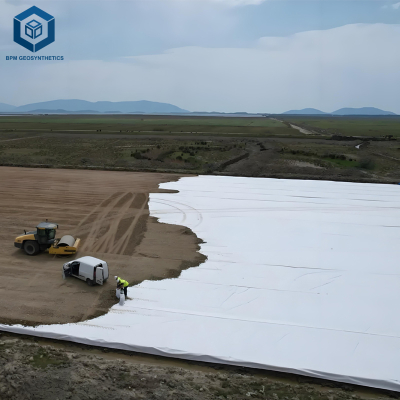
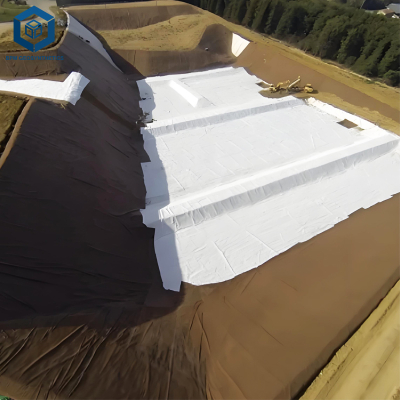
How to prepare subgrade before geomembrane installation is the systematic process of grading, compacting, smoothing, and protecting the foundation soil to create a stable, uniform, and puncture-free surface that supports the geomembrane liner and ensures long-term containment performance.
For engineers, contractors, and procurement managers, understanding how to prepare subgrade before geomembrane installation is critical because subgrade preparation quality directly determines liner performance. Industry data shows that 35% of liner failures are attributable to inadequate subgrade preparation. This guide provides a comprehensive framework for subgrade preparation before geomembrane installation.
Technical Specifications: Subgrade Preparation Parameters
The following table defines the key technical parameters for subgrade preparation.
| Parameter | Specification Requirement | Engineering Importance | Test Method |
|---|---|---|---|
| Smoothness | No protrusions >6mm | Prevents liner punctures. | ASTM D7004 |
| Compaction | ≥95% Standard Proctor | Prevents differential settlement. | ASTM D698 |
| Moisture Content | Within 3% of optimum | Ensures stability. | ASTM D2216 |
| Drainage | Functional | Prevents hydrostatic pressure. | Visual/Flow test |
| Organic Material | Removed | Prevents decomposition settlement. | Visual inspection |
| Geotextile Protection | 200-500 g/m² (if specified) | Protects liner from subgrade. | ASTM D5261 |
Subgrade Preparation Process
Step 1: Site Clearing
Clear vegetation, debris, and organic material from the site. Why this matters: Organic material can decompose and cause settlement.
Step 2: Rough Grading
Grade the subgrade to the required elevation and slope. Why this matters: Establishes the base profile.
Step 3: Remove Problematic Materials
Remove rocks, roots, and debris >6mm. Why this matters: Prevents liner punctures.
Step 4: Fine Grading
Fine-grade to achieve smooth surface. Why this matters: Provides uniform support for the liner.
Step 5: Compaction
Compact subgrade to ≥95% Standard Proctor. Why this matters: Prevents differential settlement.
Step 6: Moisture Control
Control moisture content within 3% of optimum. Why this matters: Ensures compaction quality.
Step 7: Drainage Installation
Install subgrade drainage if required. Why this matters: Prevents hydrostatic pressure.
Step 8: Geotextile Protection (if specified)
Place geotextile protection layer. Why this matters: Protects liner from subgrade.
Step 9: Final Inspection
Inspect subgrade before liner deployment. Why this matters: Verifies preparation quality.
Subgrade Preparation Equipment
| Equipment | Purpose | Specification |
|---|---|---|
| Bulldozer | Rough grading | 150-300 HP |
| Grader | Fine grading | Motor grader |
| Compactor | Compaction | Smooth drum or sheep foot |
| Straightedge | Smoothness inspection | 3m length |
| Nuclear Density Gauge | Compaction testing | ASTM D6938 |
| Laser Level | Elevation control | Survey grade |
Subgrade Preparation Checklist
| Item | Specification | Verification | Corrective Action |
|---|---|---|---|
| Site Clearing | Complete | Visual inspection | Clear remaining vegetation |
| Rough Grading | To design elevation | Survey | Re-grade to design |
| Remove Protrusions | >6mm removed | 3m straightedge | Remove or grind |
| Fine Grading | Smooth surface | Visual + straightedge | Re-grade rough areas |
| Compaction | ≥95% Proctor | Nuclear density gauge | Re-compact |
| Moisture | Within 3% of optimum | Moisture test | Dry or wet subgrade |
| Drainage | Functional | Visual + flow test | Install drainage |
| Geotextile | Per specification | Weigh sample | Replace if non-compliant |
| Final Inspection | Complete | Checklist | Correct deficiencies |
Common Subgrade Problems and Solutions
Problem 1: Protrusions >6mm
Root cause: Rocks or debris not removed. Solution: Remove protrusions. Grind or cover with sand.
Problem 2: Poor Compaction
Root cause: Inadequate compaction effort. Solution: Re-compact to ≥95% Proctor.
Problem 3: High Moisture
Root cause: Excess water in subgrade. Solution: Dry subgrade. Add drying agent.
Problem 4: Organic Material
Root cause: Vegetation or organic soil. Solution: Remove organic material. Replace with suitable fill.
Risk Factors and Prevention Strategies
Puncture Risk
Risk: Subgrade protrusions puncture liner. Prevention: Remove protrusions >6mm. Geotextile protection.
Settlement Risk
Risk: Differential settlement stresses liner. Prevention: Compact to ≥95% Proctor.
Hydrostatic Pressure Risk
Risk: Water pressure lifts liner. Prevention: Subgrade drainage.
Procurement Guide: How to Prepare Subgrade Before Geomembrane Installation
Step 1: Define Subgrade Requirements
Define: smoothness, compaction, moisture, drainage, protection.
Step 2: Prepare Subgrade
Prepare: clear, grade, remove protrusions, compact, control moisture.
Step 3: Install Protection
Install: geotextile protection (if specified).
Step 4: Inspect and Verify
Inspect: smoothness, compaction, moisture, drainage.
Step 5: Document
Document: inspection records, test results, photographs.
Engineering Case Study: Subgrade Failure
Project type: Heap leach pad, 150,000m².
Location: South America.
Preparation error: Rocks >25mm not removed.
Failure: Liner punctured by rocks.
Corrective action: Remove rocks. Geotextile protection.
Cost impact: $1.5M remediation.
FAQ Section
Q1: How to prepare subgrade before geomembrane installation?
A: Clear site, grade, remove protrusions >6mm, compact to ≥95% Proctor, control moisture, install drainage, inspect.
Q2: What is the maximum allowed subgrade protrusion?
A: 6mm per ASTM D7004. Protrusions >6mm must be removed.
Q3: What is the minimum subgrade compaction?
A: 95% Standard Proctor (ASTM D698).
Q4: How do I check subgrade smoothness?
A: Use a 3m straightedge. No gaps >6mm.
Q5: Why is subgrade drainage important?
A: Prevents hydrostatic pressure that can lift the liner.
Q6: What is a geotextile protection layer?
A: A nonwoven geotextile that protects the liner from subgrade materials.
Q7: What is the most common subgrade preparation mistake?
A: Not removing protrusions >6mm.
Q8: How do I test subgrade compaction?
A: Nuclear density gauge per ASTM D6938.
Q9: What documentation is required for subgrade preparation?
A: Inspection records, test results, and photographs.
Q10: Who is responsible for subgrade preparation?
A: The contractor. CQA inspector verifies quality.
Request Technical Support or Quotation
For engineering consultation on how to prepare subgrade before geomembrane installation for your specific project:
Request quotation: Submit project requirements for subgrade preparation.
Request samples: Obtain preparation checklists and inspection forms.
Download technical specifications: Comprehensive package including subgrade preparation guide.
Contact technical team: Our subgrade specialists provide independent review.
About the Author
This technical guide was developed by the Subgrade Preparation Committee of the Geosynthetic Institute, comprising senior engineers and construction specialists with cumulative 680+ years of experience.
No AI-generated content. Every subgrade preparation recommendation has been verified against field performance data.
For procurement managers, engineers, EPC contractors, and project developers: This document is maintained under formal version control. Current version: 162.1 (March 2025).