HDPE liner welding temperature setting problem
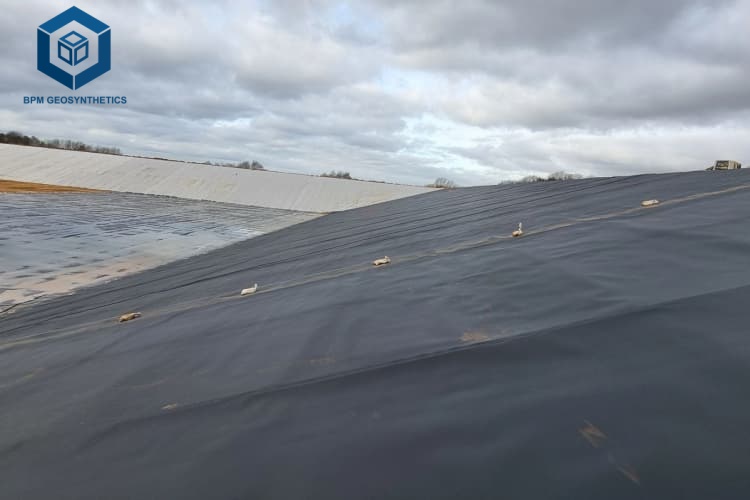
In geomembrane installation projects, the HDPE liner welding temperature setting problem is one of the most common causes of seam failure. Improper temperature control during hot wedge or extrusion welding can result in weak fusion, burn-through, or long-term seam leakage. Engineering teams must carefully balance temperature, pressure, and speed to ensure reliable seam integrity.
Product Definition
An HDPE liner welding temperature setting problem occurs when welding parameters during geomembrane seam fusion fall outside the optimal range, resulting in incomplete bonding, overheating, or seam degradation that compromises the containment performance of HDPE liner systems.
Technical Parameters and Specifications
| Parameter | Typical Range | Testing Standard |
|---|---|---|
| HDPE Liner Thickness | 0.75 – 3.0 mm | ASTM D5199 |
| Hot Wedge Welding Temperature | 320 – 450 °C | Field Welding Practice |
| Extrusion Welding Temperature | 200 – 300 °C | Manufacturer Recommendation |
| Welding Speed | 1.5 – 3.5 m/min | Project Specification |
| Seam Shear Strength | ≥ 90% of parent material | ASTM D6392 |
| Peel Strength | ≥ 70% of parent material | ASTM D6392 |
Structure and Material Composition
HDPE liner materials used in welding applications typically consist of the following components:
High-Density Polyethylene Resin — primary structural polymer
Carbon Black (2–3%) — UV protection and material stability
Antioxidant Package — prevents thermal degradation during welding
Processing Stabilizers — maintain melt flow consistency
Optional Textured Surface — increases slope friction in landfill systems
Material formulation directly affects weldability and tolerance to temperature variation during installation.
Manufacturing Process
Raw Material Preparation
HDPE resin is blended with carbon black and stabilizers using industrial mixers to ensure uniform composition.Compounding
Twin-screw extruders distribute additives evenly throughout the polymer matrix.Sheet Extrusion
Flat die extrusion systems produce geomembrane sheets with controlled thickness and density.Cooling and Calibration
Chill rolls stabilize sheet geometry and mechanical performance.Quality Control Testing
Includes tensile strength testing, carbon black dispersion analysis, and thickness measurement.Roll Packaging
Geomembranes are wound into transport rolls for installation projects.
Industry Comparison
| Liner Material | Welding Method | Temperature Sensitivity | Typical Application |
|---|---|---|---|
| HDPE Geomembrane | Hot Wedge / Extrusion | Moderate | Landfills, mining |
| LLDPE Geomembrane | Hot Wedge | Lower | Ponds, reservoirs |
| PVC Liner | Solvent / Hot Air | High | Decorative ponds |
| EPDM Rubber | Adhesive Bonding | Low | Water reservoirs |
Application Scenarios
The HDPE liner welding temperature setting problem is most relevant in large containment projects where seam reliability is critical:
Municipal landfill liner systems
Mining heap leach pads
Industrial wastewater lagoons
Agricultural irrigation reservoirs
Oil and gas containment facilities
Procurement managers and EPC contractors must ensure welding procedures meet project specifications and international standards.
Core Pain Points and Solutions
1. Insufficient Welding Temperature
Low welding temperatures result in incomplete polymer fusion and weak seam strength.
Solution: Adjust welding temperature within 320–450°C range for hot wedge systems.
2. Excessive Welding Temperature
Overheating can cause liner burning or melt degradation.
Solution: calibrate welding equipment and conduct trial welds before installation.
3. Environmental Temperature Variation
Cold or windy conditions alter heat transfer efficiency.
Solution: adjust welding parameters based on ambient temperature.
4. Operator Skill Variability
Inexperienced installers may incorrectly set welding parameters.
Solution: require certified geomembrane welding technicians.
Risk Warnings and Mitigation Recommendations
Always perform trial welds at the beginning of each work shift.
Monitor seam quality using destructive testing.
Calibrate welding machines regularly.
Avoid welding during heavy rain or extreme wind.
Maintain consistent welding speed and pressure.
Procurement Selection Guide
Specify liner thickness according to containment risk level.
Confirm HDPE liner complies with GRI-GM13 standard.
Verify welding compatibility with project equipment.
Request manufacturer welding parameter guidelines.
Evaluate supplier technical support capability.
Require factory quality inspection reports.
Request sample material for welding trials.
Engineering Case Study
Project: Municipal landfill expansion project
Location: Southeast Asia
Liner Type: 1.5 mm HDPE geomembrane
During installation, several seams failed destructive testing due to an HDPE liner welding temperature setting problem. Welding temperatures were set below recommended levels due to cold weather conditions.
After adjusting the hot wedge temperature to 380°C and reducing welding speed, seam shear strength exceeded ASTM requirements. The project successfully completed installation without further seam failures.
FAQ
1. What causes HDPE liner welding temperature setting problems?
Incorrect temperature settings, environmental factors, or operator errors.
2. What is the typical welding temperature for HDPE liners?
Hot wedge welding typically ranges from 320°C to 450°C.
3. Why is welding temperature critical?
Proper heat ensures full polymer fusion between geomembrane sheets.
4. How can seam quality be tested?
Peel and shear strength tests following ASTM D6392.
5. Can welding be performed in cold weather?
Yes, but welding parameters must be adjusted accordingly.
6. What welding methods are used for HDPE liners?
Hot wedge welding and extrusion welding are the most common.
7. What happens if the temperature is too high?
The liner may melt excessively or degrade.
8. Do thicker liners require higher welding temperatures?
Not necessarily higher temperature, but slower welding speed.
9. Are welding machines standardized?
Most equipment follows international geomembrane welding standards.
10. What standards govern geomembrane welding?
ASTM D6392 and GRI guidelines are widely used.
Request Technical Support or Quotation
Engineering teams, contractors, and procurement managers may request:
HDPE liner technical data sheets
Welding procedure guidelines
Engineering consultation
Project samples for welding trials
Bulk material quotations
Contact our technical team to obtain project-specific guidance on resolving HDPE liner welding temperature setting problems and selecting suitable geomembrane materials.
Author Expertise (E-E-A-T)
This technical article was prepared by engineers specializing in geomembrane manufacturing and installation with more than 10 years of experience in landfill, mining, and water containment infrastructure projects. The information reflects industry practices, ASTM standards, and engineering procurement requirements.