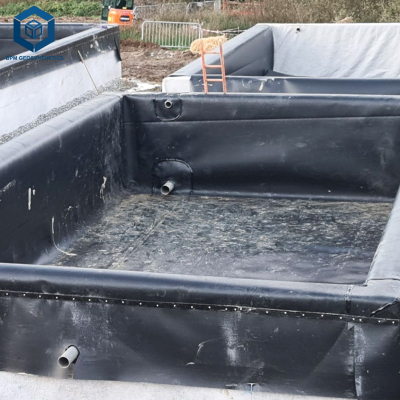
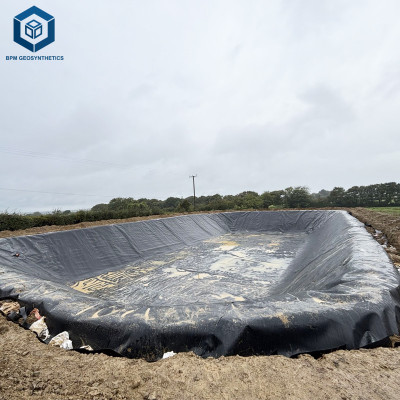
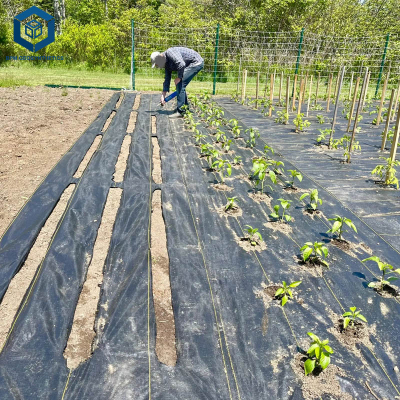
Geomembrane cracking under UV exposure
Geomembrane cracking under UV exposure refers to structural degradation caused by prolonged ultraviolet radiation. UV energy breaks polymer chains within geomembranes, leading to oxidation, brittleness, and surface cracking. This problem commonly affects exposed liners in mining, landfill, aquaculture, and water containment projects.
Product Definition
Geomembranes are polymeric waterproof liners used for containment applications. In projects where liners remain exposed, geomembrane cracking under UV exposure becomes a critical durability issue due to photo-oxidative degradation of polyethylene or other polymer materials.
Technical Parameters and Specifications
| Parameter | Typical Range | Testing Standard |
|---|---|---|
| Material Type | HDPE / LLDPE / PVC | ASTM D883 |
| Thickness | 0.5 – 3.0 mm | ASTM D5199 |
| Carbon Black Content | 2.0 – 3.0% | ASTM D4218 |
| UV Resistance | ≥ 2000 hours | ASTM G154 |
| Oxidative Induction Time (OIT) | ≥ 100 minutes | ASTM D3895 |
| Tensile Strength | ≥ 27 MPa | ASTM D6693 |
Structure and Material Composition
A typical UV-resistant geomembrane consists of multiple engineered components:
Polyethylene Base Resin — primary structural polymer
Carbon Black — UV stabilizer absorbing radiation
Antioxidants — delay thermal oxidation
UV Stabilizers (HALS) — prevent photo-oxidation reactions
Processing Additives — improve extrusion stability
Improper formulation or insufficient stabilizer content often leads to geomembrane cracking under UV exposure.
Manufacturing Process
Raw Material Preparation
High-density polyethylene resin is blended with carbon black and stabilizers using high-speed mixers.Extrusion Compounding
Twin-screw extruders homogenize additives within the polymer matrix.Film Extrusion
Flat-die extrusion equipment forms geomembrane sheets with controlled thickness.Cooling and Calendering
Chilled rollers stabilize sheet structure and surface finish.Quality Inspection
Mechanical tests, carbon black dispersion tests, and UV resistance verification.Roll Packaging
Geomembranes are wound into rolls for transport and installation.
Industry Comparison
| Material | UV Resistance | Cracking Risk | Typical Applications |
|---|---|---|---|
| HDPE Geomembrane | Excellent | Low (if stabilized) | Landfills, mining |
| LLDPE Geomembrane | Good | Moderate | Ponds, lagoons |
| PVC Liner | Moderate | Higher | Decorative ponds |
| EPDM Rubber | Excellent | Very Low | Exposed reservoirs |
Application Scenarios
Projects where geomembrane cracking under UV exposure is a key engineering concern include:
Mining heap leach pads
Municipal landfill caps
Agricultural irrigation reservoirs
Aquaculture ponds
Industrial wastewater containment systems
Procurement teams and EPC contractors must evaluate UV durability when specifying liners for exposed environments.
Core Pain Points and Solutions
1. Polymer Degradation
UV radiation breaks polymer chains. Solution: select geomembranes with ≥2.5% carbon black and HALS stabilizers.
2. Premature Surface Cracking
Improper carbon black dispersion leads to weak UV protection. Solution: verify carbon black dispersion grade (ASTM D5596).
3. Thermal Expansion Stress
High temperature cycles accelerate crack formation. Solution: design expansion allowances and anchor trenches.
4. Poor Installation Practices
Mechanical damage during installation may evolve into UV cracks. Solution: use protective geotextile layers.
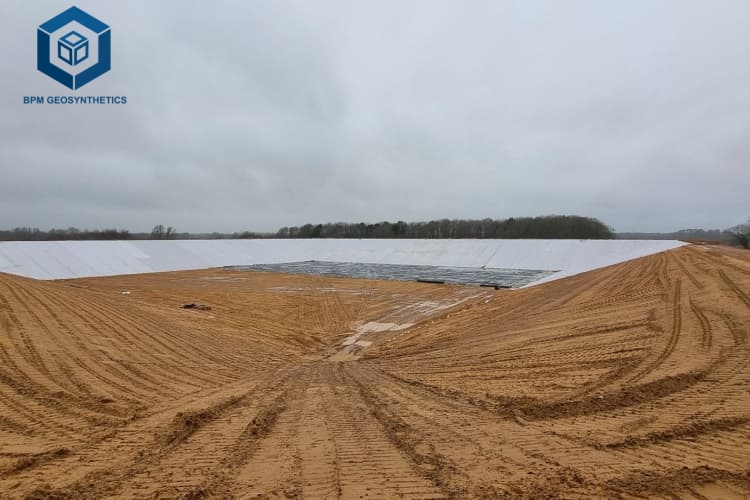
Risk Warnings and Mitigation Recommendations
Avoid long-term storage under sunlight before installation.
Verify carbon black dispersion during factory inspection.
Use protective soil cover if exposure exceeds design life.
Ensure welding seams meet ASTM D6392 strength standards.
Procurement Selection Guide
Determine whether the liner will remain exposed or covered.
Specify minimum carbon black content (2–3%).
Request UV aging test reports (ASTM G154).
Confirm oxidative induction time values.
Evaluate supplier manufacturing capability and quality control.
Request engineering samples before bulk procurement.
Check international certifications (ISO, GRI-GM13).
Engineering Case Study
Project: Copper heap leach pad liner system
Location: South America
Liner Type: 2.0 mm HDPE geomembrane
The liner remained exposed to intense sunlight at high altitude. Early installations using low-stabilizer materials showed geomembrane cracking under UV exposure within three years.
The replacement system used HDPE geomembranes with 2.5% carbon black and improved antioxidant packages. After eight years of operation, the liner maintained mechanical integrity without visible cracking.
FAQ
1. What causes geomembrane cracking under UV exposure?
Photo-oxidative degradation of polymer chains caused by ultraviolet radiation.
2. Which geomembrane material resists UV best?
HDPE with proper carbon black stabilization provides strong UV resistance.
3. How long can exposed geomembranes last?
High-quality HDPE liners may perform for 10–20 years depending on climate.
4. What role does carbon black play?
It absorbs UV radiation and protects the polymer structure.
5. Can cracks be repaired?
Localized damage can be patched using extrusion welding.
6. Is thickness related to UV durability?
Thickness improves durability but stabilization chemistry is more critical.
7. Do lighter colored liners perform worse?
Yes, black liners typically provide better UV protection.
8. How is UV resistance tested?
Accelerated weathering tests such as ASTM G154 simulate sunlight exposure.
9. Should geomembranes always be covered?
Covering improves lifespan but may not be feasible in all projects.
10. What standards define geomembrane quality?
GRI-GM13 and ASTM standards define performance requirements.
Request Technical Support or Quotation
Engineering teams and procurement managers can request:
Technical data sheets
UV aging test reports
Project engineering consultation
Sample materials for evaluation
Bulk pricing quotations
Contact our technical department for project-specific recommendations regarding geomembrane cracking under UV exposure and liner material selection.
Author Expertise (E-E-A-T)
This article was prepared by geomembrane engineers with more than 12 years of experience in containment liner manufacturing and installation consulting. The technical data is based on ASTM standards, field installation reports, and engineering procurement practices used in landfill, mining, and water infrastructure projects.