HDPE liner for shrimp farming pond specification
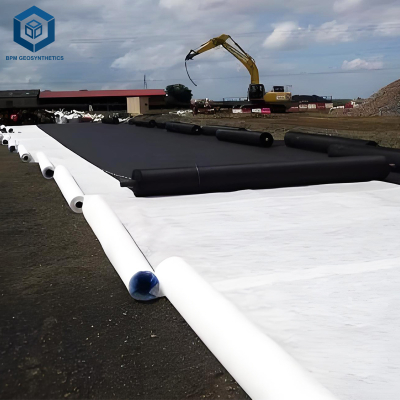
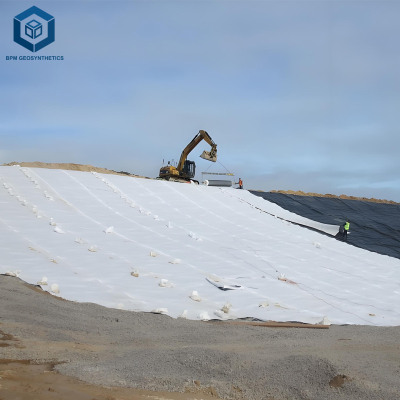
HDPE liner for shrimp farming pond specification refers to the technical requirements of high-density polyethylene geomembranes used in aquaculture ponds. These liners provide impermeable containment, improve water quality control, and enhance biosecurity, making them essential for intensive shrimp farming systems and commercial aquaculture operations.
Technical Parameters & Specifications
| Parameter | Typical Specification |
|---|---|
| Material | Virgin HDPE Geomembrane |
| Thickness | 0.5 mm – 1.5 mm |
| Density | ≥ 0.94 g/cm³ |
| Tensile Strength | ≥ 20 – 27 kN/m |
| Elongation at Break | ≥ 600% |
| UV Resistance | Excellent (carbon black 2–3%) |
| Service Life | 5 – 10 years (aquaculture conditions) |
| Roll Width | 5 – 8 m |
Structure & Material Composition
HDPE Resin: Provides impermeability and chemical resistance
Carbon Black: Protects against UV degradation
Antioxidants: Prevents thermal aging
Stabilizers: Enhances durability in outdoor pond environments
Smooth Surface: Preferred for easy cleaning and maintenance
Manufacturing Process
Raw Material Selection: High-quality virgin HDPE resin.
Extrusion: Flat die extrusion forming continuous liner sheets.
Thickness Control: Precision calibration to meet aquaculture standards.
Cooling: Stabilizes mechanical properties.
Surface Finishing: Smooth surface for pond application.
Quality Testing: Tensile strength, elongation, UV resistance tests.
Industry Comparison
| Material | Durability | Waterproof Performance | Maintenance | Cost |
|---|---|---|---|---|
| HDPE Liner | High | Excellent | Low | Medium |
| Concrete Pond | Very High | Excellent | High | High |
| Clay Pond | Low | Medium | High | Low |
| PVC Liner | Medium | High | Medium | Low |
Application Scenarios
Shrimp Farms: Intensive and semi-intensive aquaculture ponds
Aquaculture EPC Contractors: Design and construction of farming systems
Farm Developers: Large-scale commercial shrimp production
Distributors: Supply of aquaculture lining materials
Core Pain Points & Solutions
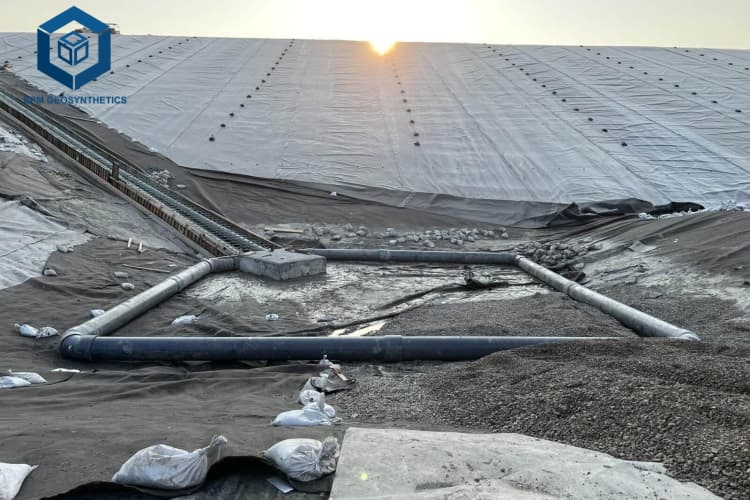
Water Leakage in Earthen Ponds:
Solution: Install HDPE liner for shrimp farming pond specification to ensure full impermeability.Poor Water Quality Control:
Solution: Use HDPE liner to isolate soil contamination and maintain stable water conditions.Frequent Maintenance Costs:
Solution: Reduce sediment accumulation and simplify cleaning with smooth HDPE surface.Liner Damage from Equipment:
Solution: Use appropriate thickness (≥0.75 mm) and protective underlayer.UV Degradation:
Solution: Ensure carbon black content and UV stabilization.
Risk Warnings & Mitigation
Thin liner selection → higher risk of puncture.
Improper installation → seam leakage.
Poor subgrade preparation → liner damage.
Excessive sun exposure before installation → reduced lifespan.
Procurement & Selection Guide
Define pond size, depth, and farming intensity.
Select HDPE liner thickness based on usage (0.5–1.5 mm).
Specify UV resistance and carbon black content.
Request technical datasheets and quality certifications.
Evaluate supplier production capability and delivery time.
Confirm welding method and installation requirements.
Consider long-term maintenance and replacement cost.
Engineering Case Study
A coastal shrimp farm project installed 0.75 mm HDPE liner across 50,000 sqm ponds. The liner reduced water seepage by over 95%, improved shrimp survival rates, and lowered maintenance costs. After 3 years of operation, the system maintained stable performance with minimal repair requirements.
FAQ (Frequently Asked Questions)
1. What thickness is best for shrimp ponds?
Typically 0.5–1.0 mm for standard farms.2. Why use HDPE liner in shrimp farming?
To prevent leakage and improve water quality.3. Is HDPE safe for shrimp?
Yes, it is non-toxic and widely used in aquaculture.4. How long does it last?
5–10 years depending on conditions.5. Can it resist saltwater?
Yes, HDPE is highly resistant to saline environments.6. What surface type is recommended?
Smooth surface for easy cleaning.7. Is installation difficult?
Requires welding equipment and trained technicians.8. Can it be repaired?
Yes, using patch welding methods.9. What affects cost?
Thickness, area, and logistics.10. Is geotextile required?
Recommended for protection on rough subgrades.11. Can it be reused?
Limited reuse depending on condition.
Call to Action (CTA)
For detailed HDPE liner for shrimp farming pond specification, pricing, and sample requests, contact our technical team. We provide aquaculture project support, material selection guidance, and supply solutions for large-scale shrimp farming operations.
E-E-A-T: Authoritative Expertise
This article is written by geosynthetics engineers with over 10 years of experience in aquaculture and environmental containment projects. Our team has supported shrimp farming developments worldwide, offering HDPE liner solutions, installation guidance, and long-term performance optimization.