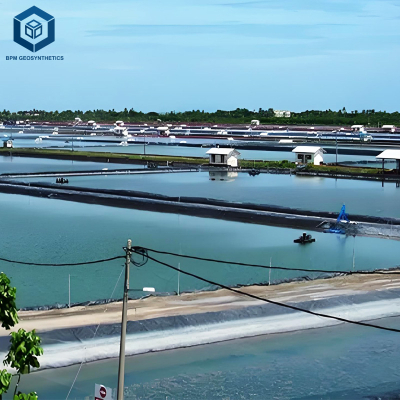
Hdpe geomembrane specification for mining tailings dam design
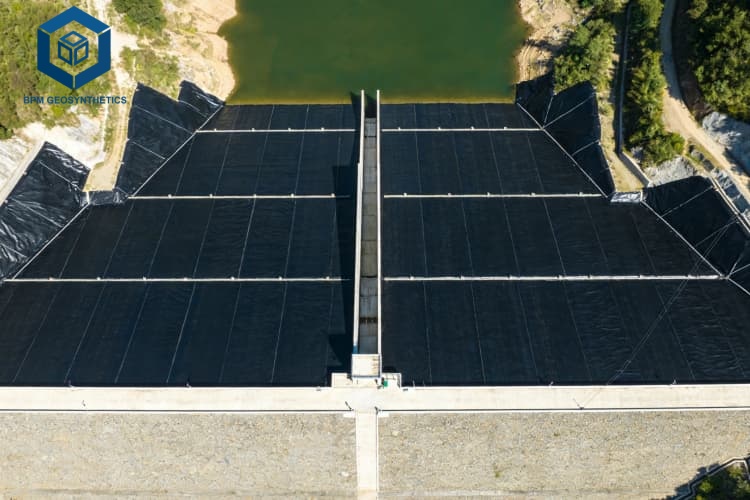
HDPE geomembrane is a high-performance impermeable liner manufactured from high-density polyethylene resin, specifically engineered for mining tailings dam containment. It provides long-term resistance to chemical exposure, UV radiation, and mechanical stress, ensuring environmental protection by preventing seepage of hazardous tailings and process water.
Technical Parameters & Specifications
| Property | Test Standard | Typical Value (1.5 mm) |
|---|---|---|
| Thickness | ASTM D5199 | 1.0 – 2.5 mm |
| Density | ASTM D1505 | ≥ 0.94 g/cm³ |
| Tensile Strength (Yield) | ASTM D6693 | ≥ 27 kN/m |
| Elongation at Break | ASTM D6693 | ≥ 700% |
| Puncture Resistance | ASTM D4833 | ≥ 480 N |
| Carbon Black Content | ASTM D1603 | 2.0% – 3.0% |
| Oxidative Induction Time (OIT) | ASTM D3895 | ≥ 100 min |
| Stress Crack Resistance | ASTM D5397 | ≥ 500 hours |
Structure & Material Composition
Primary Layer: High-density polyethylene (HDPE) resin (virgin grade ≥97.5%)
UV Stabilization: Carbon black (2–3%) for long-term outdoor exposure
Antioxidants: Prevent thermal and oxidative degradation
Optional Textured Surface: Improves friction for slope stability in tailings dams
Composite System (Typical):
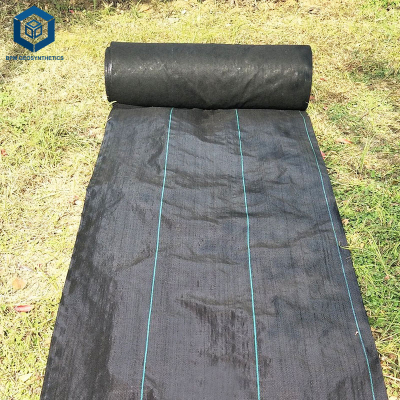
Nonwoven geotextile (cushion layer)
Drainage layer (if required)

Manufacturing Process
Raw Material Selection: High-quality HDPE resin and additives batching.
Extrusion: Flat die extrusion or blown film process using automated extrusion lines.
Sheet Formation: Controlled thickness calibration via rollers.
Surface Texturing: Nitrogen gas injection (for textured geomembrane).
Cooling: Rapid cooling to maintain dimensional stability.
Quality Control: Continuous monitoring of thickness, tensile strength, and defects.
Roll Packaging: Standard rolls (5–8 m width) for site deployment.
Industry Comparison
| Material | Chemical Resistance | Durability | Cost | Suitability for Tailings Dam |
|---|---|---|---|---|
| HDPE Geomembrane | Excellent | ★★★★★ | Medium | Highly Recommended |
| LLDPE | Good | ★★★★☆ | Medium | Conditional |
| PVC | Moderate | ★★★☆☆ | Low | Not Preferred |
| EPDM | Good | ★★★★☆ | High | Limited Use |
Application Scenarios
EPC Contractors: Tailings storage facilities (TSF) requiring long-term containment.
Mining Companies: Copper, gold, and coal tailings dam lining systems.
Engineering Consultants: Environmental compliance and seepage control design.
Distributors: Supply of standardized geomembrane rolls for mining infrastructure.
Core Pain Points & Solutions
Seepage Risk: Use ≥1.5 mm HDPE geomembrane with double-seam welding.
Chemical Attack: Select high OIT and stress crack resistance materials.
Slope Instability: Apply textured geomembrane for higher interface friction.
Puncture Damage: Install nonwoven geotextile cushioning layer.
Risk Warnings & Mitigation
Subgrade irregularities may cause liner damage → Ensure proper compaction and smoothing.
Improper welding may lead to leakage → Conduct vacuum box and air pressure testing.
UV degradation (low-quality products) → Verify carbon black content and dispersion.
Thermal expansion → Design anchor trenches and allow expansion tolerance.
Procurement & Selection Guide
Define tailings chemical composition and pH range.
Select appropriate thickness (typically 1.5–2.0 mm).
Verify compliance with GRI GM13 standard.
Evaluate supplier manufacturing capability and QC system.
Request third-party lab test reports.
Confirm installation support and welding expertise.
Assess lifecycle cost instead of initial price only.
Engineering Case Study
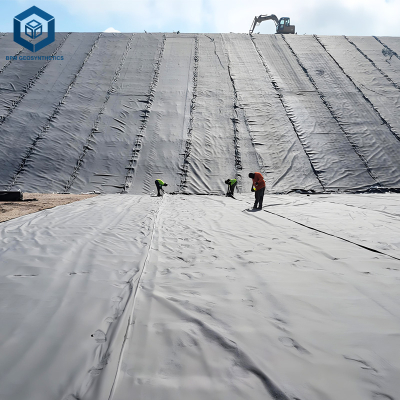
A copper mining project implemented a 2.0 mm textured HDPE geomembrane for a tailings dam covering 120,000 m². The system included a 500 g/m² nonwoven geotextile cushion layer. Installation used hot wedge welding with 100% seam testing. After 6 years of operation, monitoring reports confirmed zero leakage and stable liner performance under acidic conditions (pH 3–5).
FAQ (Frequently Asked Questions)
1. What thickness is best for tailings dams?
Typically 1.5–2.0 mm depending on risk level.2. Why is HDPE preferred?
Due to superior chemical resistance and durability.3. Is textured geomembrane necessary?
Recommended for slopes to improve friction.4. What standard should be followed?
GRI GM13 for HDPE geomembrane.5. Can HDPE resist acidic tailings?
Yes, it performs well in low pH environments.6. How long does it last?
20–30 years under proper conditions.7. Is geotextile required?
Strongly recommended for puncture protection.8. What welding method is used?
Hot wedge or extrusion welding.9. Can it be repaired?
Yes, through patch welding techniques.10. What is the key selection factor?
Chemical resistance and stress crack resistance.
Call to Action (CTA)
For detailed HDPE geomembrane specifications, mining project references, and technical consultation, please contact our engineering team. We provide datasheets, samples, and customized solutions for tailings dam design and construction.
E-E-A-T: Authoritative Expertise
This content is developed by geomembrane engineers with over a decade of experience in mining containment systems. Our team has supported large-scale tailings dam projects globally, ensuring compliance with international standards and delivering reliable long-term performance in demanding mining environments.