Geomembrane selection guide for irrigation reservoir project
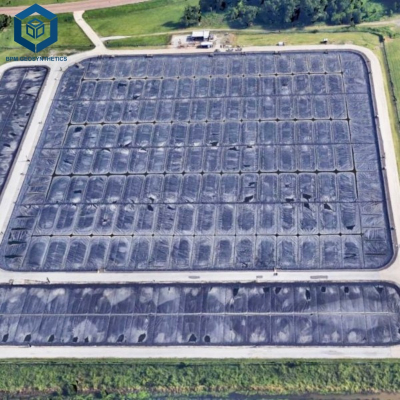
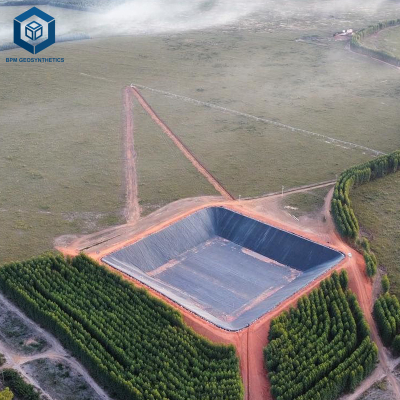
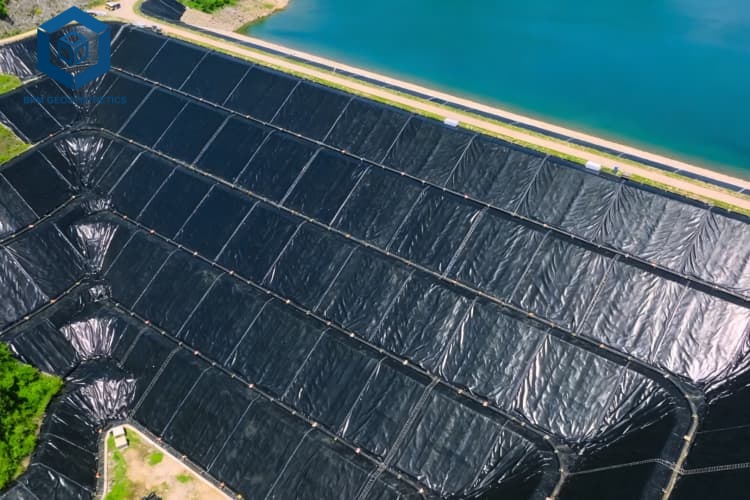
A geomembrane used in irrigation reservoir projects is an impermeable polymer liner designed to prevent water seepage and ensure efficient water storage. It plays a critical role in agricultural water conservation by improving reservoir efficiency, reducing loss, and protecting underlying soil and groundwater systems.
Technical Parameters & Specifications
| Parameter | HDPE | LLDPE | PVC |
|---|---|---|---|
| Thickness | 0.5 – 2.0 mm | 0.5 – 1.5 mm | 0.5 – 1.5 mm |
| Density | ≥ 0.94 g/cm³ | 0.92 – 0.94 g/cm³ | 1.20 – 1.35 g/cm³ |
| Tensile Strength | ≥ 25 MPa | ≥ 20 MPa | ≥ 15 MPa |
| Elongation | ≥ 700% | ≥ 800% | ≥ 300% |
| UV Resistance | Excellent | Good | Moderate |
| Service Life | 20–30 years | 15–25 years | 8–15 years |
Structure & Material Composition
High-density polyethylene resin (≥97.5%)
Carbon black (UV stabilization)
Antioxidants
Linear low-density polyethylene
Higher flexibility additives
Polyvinyl chloride resin
Plasticizers for flexibility
Composite System:
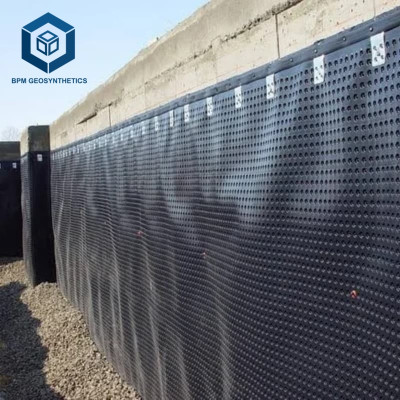
Nonwoven geotextile protection layer
Optional drainage layer
Manufacturing Process
Raw Material Preparation: Resin selection and additive mixing.
Extrusion or Calendering:
HDPE/LLDPE: Blown film or flat die extrusion
PVC: Calendering process
Sheet Formation: Thickness control via precision rollers.
Surface Treatment: Smooth or textured finish depending on design.
Cooling & Cutting: Controlled cooling to ensure dimensional stability.
Quality Control: Mechanical testing and defect inspection.
Industry Comparison
| Criteria | HDPE | LLDPE | PVC |
|---|---|---|---|
| Durability | ★★★★★ | ★★★★☆ | ★★★☆☆ |
| Flexibility | ★★★☆☆ | ★★★★★ | ★★★★☆ |
| Installation Ease | Medium | Easy | Easy |
| Cost | Medium | Medium | Low |
| Best Use Case | Large reservoirs | Irregular terrain | Small projects |
Application Scenarios
EPC Contractors: Design and construction of large irrigation reservoirs.
Agricultural Developers: Water storage for farming and irrigation systems.
Distributors: Supply geomembrane rolls to regional agricultural projects.
Engineering Consultants: Specification and design optimization.
Core Pain Points & Solutions
Water Seepage Loss: Use ≥1.0 mm HDPE geomembrane to ensure impermeability.
Uneven Ground: Select LLDPE for higher flexibility and adaptability.
UV Exposure: Choose materials with high carbon black content.
Puncture Risk: Install geotextile cushioning layer.
Risk Warnings & Mitigation
Poor subgrade preparation → Ensure compaction and removal of sharp objects.
Improper welding → Conduct seam testing (air pressure or vacuum box).
Low-quality materials → Verify supplier certifications and test reports.
Thermal expansion → Design anchor trenches properly.
Procurement & Selection Guide
Define reservoir size and water volume.
Analyze soil conditions and subgrade stability.
Select appropriate material (HDPE, LLDPE, or PVC).
Determine thickness (≥0.75 mm standard, ≥1.0 mm recommended).
Verify compliance with international standards.
Evaluate supplier production capacity and quality control.
Request installation support and technical documentation.
Engineering Case Study
An agricultural irrigation project in a semi-arid region installed a 1.0 mm HDPE geomembrane over a 25,000 m² reservoir. The system included a 300 g/m² geotextile cushion layer. Installation used hot wedge welding with full seam inspection. Water loss was reduced by over 90%, significantly improving irrigation efficiency and crop yield.
FAQ (Frequently Asked Questions)
1. What is the best geomembrane for irrigation reservoirs?
HDPE is most commonly used due to durability.2. When should LLDPE be used?
For uneven or flexible terrain conditions.3. Is PVC suitable?
Yes, for small or low-budget projects.4. What thickness is recommended?
0.75–1.5 mm depending on project size.5. Do I need geotextile?
Yes, for puncture protection.6. How long does HDPE last?
Up to 30 years.7. Is UV resistance important?
Yes, especially for exposed reservoirs.8. What welding method is used?
Hot wedge welding.9. Can liners be repaired?
Yes, using patch welding.10. What is the key selection factor?
Durability and impermeability.
Call to Action (CTA)
For detailed geomembrane specifications, irrigation project consultation, and sample requests, please contact our technical team. We provide tailored solutions, engineering support, and competitive quotations for global irrigation reservoir projects.
E-E-A-T: Authoritative Expertise
This guide is prepared by engineers with over 10 years of experience in geomembrane manufacturing and agricultural water management systems. Our expertise covers irrigation reservoir design, material selection, and installation practices aligned with international engineering standards.