Geotextile needle punched vs woven comparison
Geotextile needle punched vs woven comparison refers to the technical evaluation between two primary geotextile manufacturing structures used in civil engineering projects. Needle punched geotextiles are nonwoven fabrics bonded through mechanical entanglement, while woven geotextiles are produced by interlacing synthetic yarns to provide high tensile strength and soil stabilization performance.
Technical Parameters and Specifications
When conducting a geotextile needle punched vs woven comparison, engineers typically analyze mechanical strength, permeability, filtration capacity, and durability. These parameters determine suitability for drainage, separation, reinforcement, or filtration applications.
| Technical Parameter | Needle Punched Geotextile | Woven Geotextile | Engineering Impact |
|---|---|---|---|
| Mass per Unit Area | 100 – 800 g/m² | 120 – 600 g/m² | Influences durability and filtration |
| Tensile Strength | 8 – 30 kN/m | 20 – 100 kN/m | Structural reinforcement capability |
| Elongation at Break | 50 – 120% | 10 – 25% | Flexibility and deformation tolerance |
| Permeability | High | Moderate | Water drainage efficiency |
| Filtration Performance | Excellent | Moderate | Soil particle retention |
| Typical Roll Width | 2 – 6 meters | 3 – 6 meters | Installation efficiency |
Structure and Material Composition
Understanding the structural difference is critical in any geotextile needle punched vs woven comparison.
Polypropylene or Polyester Fibers – Main raw materials providing durability and chemical resistance
Needle Punched Nonwoven Structure – Random fiber orientation forming a porous filtration matrix
Woven Yarn Structure – Interlaced warp and weft yarns forming high-strength reinforcement fabric
UV Stabilizers – Improve resistance to sunlight exposure
Thermal Bonding (Optional) – Improves dimensional stability in nonwoven fabrics
Manufacturing Process
1. Raw Fiber Preparation
Polypropylene or polyester polymer chips are melted and extruded into synthetic fibers used in geotextile production.
2. Fiber Carding
Fibers are combed and aligned to form a continuous web structure for nonwoven production.
3. Needle Punching
In needle punched geotextiles, barbed needles mechanically entangle fibers to create a strong nonwoven fabric.
4. Yarn Weaving
For woven geotextiles, high-strength polymer yarns are interlaced using industrial looms to produce structured fabrics.
5. Heat Stabilization
Thermal treatment improves dimensional stability and enhances mechanical properties.
6. Quality Inspection
Finished products undergo tensile strength, permeability, and filtration testing before packaging and shipment.
Industry Comparison
| Material Type | Main Function | Strength | Drainage Capability | Typical Applications |
|---|---|---|---|---|
| Needle Punched Geotextile | Filtration & drainage | Moderate | High | Landfill liners and drainage systems |
| Woven Geotextile | Soil reinforcement | Very High | Moderate | Road base stabilization |
| Geogrid | Reinforcement | Extremely High | Low | Retaining walls and slopes |
| Geomembrane | Containment barrier | Moderate | None | Landfill and mining containment |
Application Scenarios
A practical geotextile needle punched vs woven comparison helps engineers select the appropriate material for specific infrastructure projects.
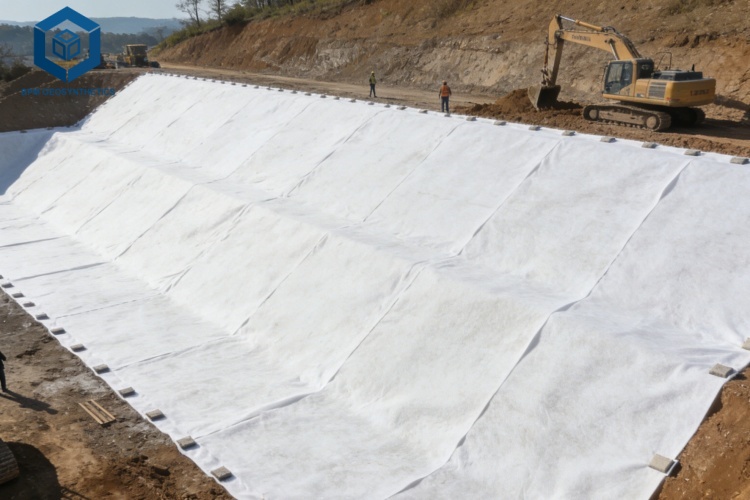
Highway and railway subgrade stabilization
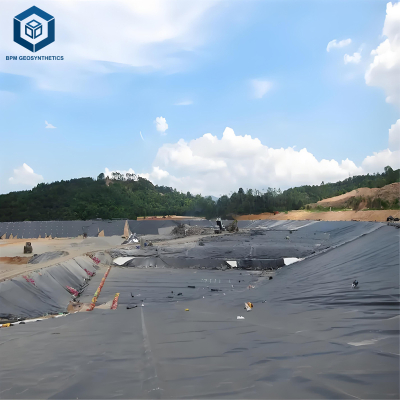
Landfill drainage and filtration layers
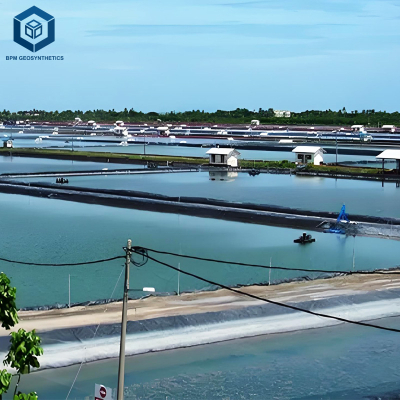
Coastal erosion protection systems
Mining tailings containment structures
Agricultural irrigation drainage systems
Core Pain Points and Solutions
1. Incorrect Material Selection
Solution: Match geotextile type to project function such as filtration or reinforcement.
2. Insufficient Tensile Strength
Solution: Use woven geotextiles for high-load structural reinforcement.
3. Poor Drainage Performance
Solution: Select needle punched geotextiles with high permeability.
4. Installation Damage
Solution: Specify proper mass per unit area and protective layers.
Risk Warnings and Mitigation
Using woven geotextiles in drainage applications may reduce filtration efficiency
Insufficient material weight may cause puncture damage
Improper overlap installation can compromise performance
Exposure to UV radiation before installation may degrade materials
Low-quality recycled fibers may reduce durability
Procurement and Selection Guidelines
Define the engineering function (filtration, separation, reinforcement)
Compare needle punched vs woven geotextile mechanical properties
Evaluate permeability and drainage requirements
Verify compliance with international geotextile standards
Request laboratory test reports from suppliers
Conduct project-specific material sampling
Assess supplier manufacturing capacity and quality systems
Engineering Case Study
A highway construction project required geotextile reinforcement and drainage layers across a 12-kilometer road section. Engineers conducted a detailed geotextile needle punched vs woven comparison and selected woven geotextiles for subgrade reinforcement while using needle punched nonwoven geotextiles for drainage layers. This combined solution improved structural stability and water management, extending the road design life significantly.
FAQ – Geotextile Needle Punched vs Woven Comparison
1. What is the main difference between needle punched and woven geotextiles?
Needle punched fabrics are nonwoven filtration materials, while woven fabrics provide structural reinforcement.
2. Which geotextile has higher tensile strength?
Woven geotextiles typically provide higher tensile strength.
3. Which material offers better filtration?
Needle punched geotextiles provide superior filtration performance.
4. Are both materials made from the same polymers?
Yes, both commonly use polypropylene or polyester fibers.
5. Which geotextile is used for road reinforcement?
Woven geotextiles are commonly used for soil reinforcement.
6. Which geotextile is better for drainage systems?
Needle punched geotextiles provide better drainage capacity.
7. Can both types be used together?
Yes, many projects combine them for different functions.
8. What roll widths are typically available?
Most geotextiles are produced in widths between 2 and 6 meters.
9. Are geotextiles resistant to chemicals?
Polypropylene and polyester fibers offer good chemical resistance.
10. How long do geotextiles last in infrastructure projects?
High-quality geotextiles can last several decades depending on installation conditions.
Request Quotation or Technical Documentation
Procurement teams and engineering consultants evaluating materials through a geotextile needle punched vs woven comparison may request the following support:
Detailed product quotations
Technical datasheets and laboratory test reports
Project-specific engineering recommendations
Geotextile samples for testing
Installation guidelines and project references
Author Expertise and Industry Authority
This technical guide was prepared by geosynthetic engineering specialists with extensive experience in civil infrastructure, landfill containment systems, and geotextile manufacturing technologies. The analysis reflects engineering practices commonly applied by EPC contractors, infrastructure developers, and global geosynthetic material procurement teams.