Geotextile clogging drainage problem
Geotextile clogging drainage problem refers to the reduction or loss of permeability in geotextile filtration layers caused by fine soil particles, biological growth, or chemical deposits blocking pore spaces. When clogging occurs, drainage efficiency declines, leading to water accumulation, reduced filtration performance, and potential structural damage in civil engineering projects.
Technical Parameters and Engineering Specifications
Preventing a geotextile clogging drainage problem requires appropriate material selection and compliance with engineering filtration criteria. The following parameters are commonly considered in infrastructure and environmental containment projects.
| Parameter | Typical Range | Engineering Purpose |
|---|---|---|
| Mass per Unit Area | 150 – 600 g/m² | Determines mechanical strength and filtration capacity |
| Apparent Opening Size (AOS) | 0.07 – 0.25 mm | Controls soil particle retention |
| Permittivity | 0.5 – 2.0 s⁻¹ | Indicates water flow through the fabric |
| Tensile Strength | 8 – 25 kN/m | Prevents tearing during installation |
| Elongation at Break | 40 – 80% | Improves adaptability to soil deformation |
| Thickness | 1.5 – 5 mm | Affects drainage channel formation |
Structure and Material Composition
Geotextiles used in filtration and drainage systems are engineered materials designed to minimize the geotextile clogging drainage problem through controlled pore structures.
Polypropylene Fibers – chemically stable and resistant to biological degradation
Polyester Fibers – high tensile strength for heavy-load applications
Needle-Punched Nonwoven Layer – creates a three-dimensional pore network
Thermally Bonded Surface – improves durability and filtration stability
Drainage Interface Layer – facilitates water flow along the geotextile plane
These structural elements help maintain permeability and reduce the risk of geotextile clogging drainage problem during long-term service.
Manufacturing Process
1. Polymer Fiber Production
Polypropylene or polyester pellets are melted and extruded into continuous fibers using industrial spinning equipment.
2. Fiber Web Formation
Carding machines arrange fibers into a uniform web structure.
3. Needle Punching
High-speed needle looms mechanically entangle fibers to form a stable nonwoven fabric with controlled pore distribution.
4. Thermal Stabilization
Heat treatment ensures dimensional stability and reduces fiber movement under hydraulic pressure.
5. Quality Inspection
Permeability testing
Apparent opening size measurement
Tensile strength verification
Clogging resistance evaluation
Industry Material Comparison
| Material | Drainage Capacity | Clogging Resistance | Typical Application |
|---|---|---|---|
| Nonwoven Geotextile | High | High | Drainage filtration systems |
| Woven Geotextile | Moderate | Moderate | Soil stabilization |
| Sand Filter Layer | Moderate | Low | Traditional filtration systems |
| Geonet Composite | Very High | High | Landfill drainage layers |
Application Scenarios
Understanding the geotextile clogging drainage problem is critical in projects where long-term filtration and water flow are essential.
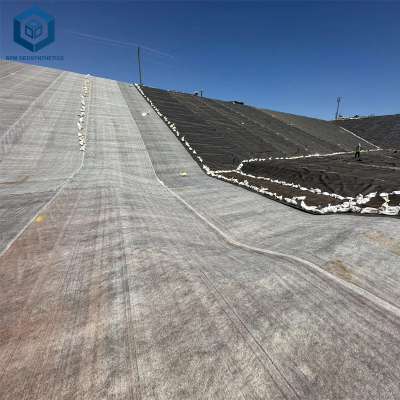
Landfill leachate drainage systems
Road and railway subgrade drainage
Retaining wall backfill filtration
Mining tailings management
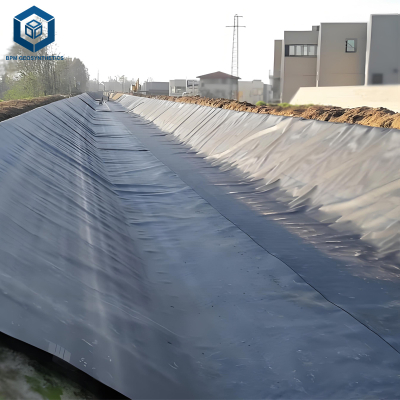
Stormwater management infrastructure
Agricultural irrigation drainage networks
Primary users include EPC contractors, civil engineering consultants, infrastructure developers, and international construction material distributors.

Core Problems and Engineering Solutions
1. Soil Particle Migration
Fine particles gradually accumulate within the fabric pores.
Solution: Select geotextiles with appropriate apparent opening size relative to soil gradation.
2. Biological Fouling
Organic growth can obstruct the drainage pathways.
Solution: Use polymer fibers resistant to biological degradation.
3. Chemical Precipitation
Mineral deposits from groundwater may block pore spaces.
Solution: Analyze water chemistry before material selection.
4. Inadequate Hydraulic Design
Improper system design may accelerate geotextile clogging drainage problem.
Solution: Integrate drainage layers such as geonets or gravel support layers.
Risk Warnings and Prevention Strategies
Avoid installing geotextiles directly over highly dispersive soils
Ensure proper compaction of surrounding soil layers
Conduct laboratory filtration compatibility testing
Prevent excessive sediment load in drainage systems
Maintain proper drainage gradients to reduce stagnation
Ignoring the geotextile clogging drainage problem may lead to drainage system failure and long-term infrastructure damage.
Procurement and Selection Guide
Identify soil particle size distribution
Select appropriate geotextile apparent opening size
Verify hydraulic permittivity requirements
Confirm tensile strength for installation conditions
Evaluate long-term clogging resistance
Review manufacturer testing certifications
Request product samples for laboratory validation
Engineering Case Example
In a highway drainage project in Southeast Asia, engineers encountered a geotextile clogging drainage problem after heavy rainfall caused sediment infiltration into the drainage layer.
The initial design used a woven geotextile with limited pore volume. Engineers replaced it with a needle-punched nonwoven geotextile combined with a gravel drainage layer.
After redesign, hydraulic conductivity improved significantly, and the drainage system maintained stable performance even under seasonal rainfall conditions.
FAQ – Geotextile Clogging Drainage Problem
1. What causes geotextile clogging drainage problem?
Fine soil particles, biological growth, or chemical deposits blocking fabric pores.
2. Can clogging completely stop drainage?
Severe clogging may significantly reduce or block water flow.
3. Which geotextile type resists clogging best?
Needle-punched nonwoven geotextiles generally offer higher clogging resistance.
4. How is clogging risk evaluated?
Laboratory filtration compatibility tests between soil and geotextile.
5. Does soil type affect clogging risk?
Yes, silty and clay soils increase clogging potential.
6. Can drainage layers reduce clogging?
Yes, gravel or geonet layers help maintain hydraulic flow.
7. Is maintenance possible after clogging?
In many cases replacement or redesign is required.
8. How long do geotextile drainage systems last?
Typically 30–50 years when properly designed.
9. Are geotextiles chemically resistant?
Most polypropylene geotextiles resist common environmental chemicals.
10. Should filtration tests be done before procurement?
Yes, compatibility testing ensures long-term drainage performance.
Request Technical Documentation or Quotation
For engineering projects involving filtration and drainage systems where geotextile clogging drainage problem may occur, procurement teams may request the following documentation:
Product technical data sheets
Hydraulic performance reports
Material samples for soil compatibility testing
Engineering design recommendations
International supply quotations
Author Expertise and Industry Authority
This article was prepared by professionals with extensive experience in geosynthetic materials, civil infrastructure construction, and environmental engineering systems. The technical analysis reflects industry practices used by EPC contractors, infrastructure developers, and global geosynthetic material suppliers.