Hdpe geomembrane puncture resistance test failure
HDPE geomembrane puncture resistance test failure refers to the inability of a high-density polyethylene liner to withstand specified puncture loads during laboratory testing or field verification. Failure typically indicates insufficient material strength, improper thickness selection, or inadequate protection layers, which may compromise the integrity of containment systems used in environmental and civil engineering projects.
Technical Parameters and Engineering Specifications
Preventing HDPE geomembrane puncture resistance test failure requires compliance with widely accepted geosynthetic testing standards and appropriate material specifications. Engineers and procurement teams typically evaluate the following parameters.
| Parameter | Typical Range | Engineering Purpose |
|---|---|---|
| Geomembrane Thickness | 1.0 – 3.0 mm | Primary factor influencing puncture resistance |
| Puncture Resistance (ASTM D4833) | 300 – 900 N | Measures resistance to concentrated load penetration |
| Tensile Strength | 20 – 35 kN/m | Indicates overall mechanical durability |
| Elongation at Break | 500 – 800% | Provides deformation tolerance before rupture |
| Density | ≥ 0.940 g/cm³ | Confirms HDPE material classification |
| Carbon Black Content | 2.0 – 3.0% | Ensures UV resistance and long-term stability |
Structure and Material Composition
HDPE geomembranes are engineered polymer liners designed for long-term environmental containment. Their structural composition directly affects resistance to puncture damage.
HDPE Resin Matrix – high-density polyethylene providing chemical and mechanical stability
Carbon Black Additives – UV protection and long-term durability
Antioxidants and Stabilizers – prevent thermal degradation
Smooth or Textured Surface Layer – enhances friction performance
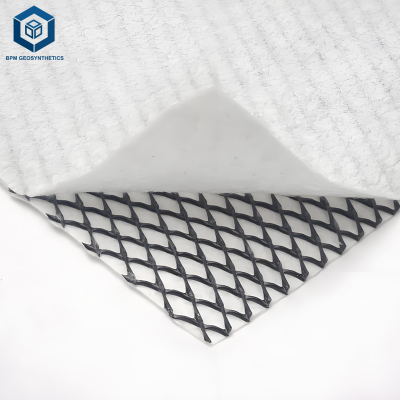
Protective Geotextile Cushion – often used to prevent puncture during installation
Improper material formulation or absence of cushioning layers can increase the probability of HDPE geomembrane puncture resistance test failure.
Manufacturing Process
1. Raw Material Blending
HDPE resin pellets are mixed with carbon black, antioxidants, and stabilizers using automated feeding systems.
2. Extrusion Processing
The blended material is melted in industrial extruders operating at temperatures between 200°C and 240°C.
3. Sheet Formation
Molten polymer is pushed through flat dies to produce continuous geomembrane sheets with controlled thickness.
4. Calendering and Surface Finishing
Cooling rollers control thickness uniformity and surface texture characteristics.
5. Quality Control Testing
Puncture resistance testing (ASTM D4833)
Tensile strength testing
Carbon black dispersion analysis
Thickness verification
Strict process control ensures the material can pass puncture resistance testing and reduces the risk of HDPE geomembrane puncture resistance test failure.

Industry Material Comparison
| Material | Puncture Resistance | Chemical Resistance | Typical Applications |
|---|---|---|---|
| HDPE Geomembrane | High | Excellent | Landfills, mining containment |
| LLDPE Geomembrane | Moderate | High | Flexible environmental liners |
| PVC Membrane | Moderate | Moderate | Water reservoirs |
| Clay Liner | Low | Moderate | Traditional containment systems |
Application Scenarios
Understanding the causes of HDPE geomembrane puncture resistance test failure is important for projects requiring high mechanical durability and environmental protection.
Municipal landfill containment systems
Mining tailings storage facilities
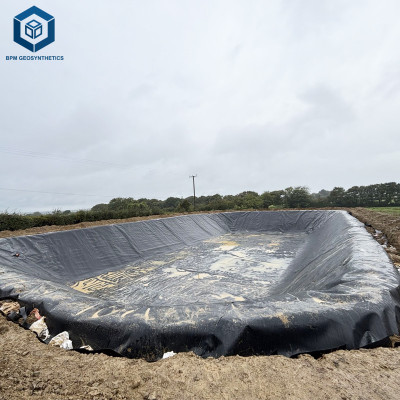
Industrial wastewater lagoons
Oil and gas containment basins
Agricultural irrigation reservoirs
Stormwater retention ponds
Typical users include EPC contractors, environmental engineers, infrastructure developers, and international distributors of geosynthetic materials.
Core Problems and Engineering Solutions
1. Insufficient Material Thickness
Thin geomembranes may fail puncture testing when exposed to concentrated loads.
Solution: Select thickness according to project load conditions, typically ≥1.5 mm for landfill systems.
2. Poor Subgrade Preparation
Sharp stones or debris beneath the liner increase puncture risk.
Solution: Install protective geotextile layers and ensure smooth subgrade grading.
3. Low Material Quality
Inconsistent polymer blending may reduce mechanical strength.
Solution: Procure materials certified by recognized testing laboratories.
4. Improper Installation Practices
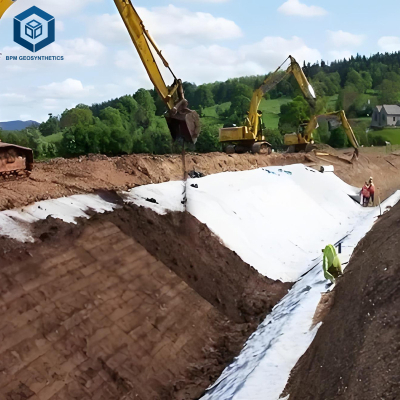
Heavy equipment or improper handling can damage liners before testing.
Solution: Implement controlled installation procedures and protective layers.
Risk Warnings and Prevention Strategies
Always conduct subgrade inspection before liner installation
Use cushioning geotextile layers when sharp aggregates are present
Verify geomembrane thickness using certified measurement tools
Perform field quality assurance tests after welding
Follow standardized installation guidelines
Ignoring these precautions can significantly increase the probability of HDPE geomembrane puncture resistance test failure during project commissioning.
Procurement and Selection Guide
Determine mechanical load requirements for the containment system
Select appropriate geomembrane thickness
Verify puncture resistance test results from manufacturers
Review laboratory test reports and certifications
Confirm compatibility with geotextile protection layers
Evaluate supplier production capacity and quality control systems
Request sample materials for independent testing
Engineering Case Example
In a landfill containment project covering approximately 150,000 square meters, engineers encountered HDPE geomembrane puncture resistance test failure during quality assurance testing.
Investigation revealed that coarse gravel in the subgrade created concentrated stress points beneath the liner. The engineering team redesigned the system by adding a 400 g/m² nonwoven geotextile cushion layer and increasing the geomembrane thickness from 1.0 mm to 1.5 mm.
After these adjustments, the geomembrane successfully passed puncture resistance testing and the containment system was approved for operation.
FAQ – HDPE Geomembrane Puncture Resistance Test Failure
1. What causes puncture resistance test failure?
Insufficient thickness, poor material quality, or sharp subgrade conditions.
2. Which test standard is commonly used?
ASTM D4833 is widely used for puncture resistance evaluation.
3. Does liner thickness affect puncture strength?
Yes, thicker geomembranes generally provide higher puncture resistance.
4. Are geotextile cushions necessary?
They are recommended when subgrade contains coarse aggregates.
5. Can installation damage cause failure?
Yes, improper handling or equipment loads may puncture the liner.
6. What thickness is typical for landfill liners?
Usually 1.5 mm to 2.5 mm depending on project design.
7. Are laboratory tests required before delivery?
Yes, manufacturers typically provide certified testing reports.
8. How long can HDPE geomembranes last?
Properly installed liners may last more than 30 years.
9. Can damaged liners be repaired?
Yes, localized patches or welding repairs are possible.
10. Should independent testing be performed?
Independent verification ensures compliance with project specifications.
Request Technical Documentation or Quotation
Engineering firms and procurement teams dealing with HDPE geomembrane puncture resistance test failure risks may request the following materials before project approval:
Technical data sheets
Certified laboratory test reports
Geomembrane samples for verification
Installation guidelines
International supply quotations
Author Expertise and Industry Authority
This technical article was prepared by specialists experienced in geosynthetic materials, environmental containment engineering, and large-scale infrastructure construction. The information reflects widely accepted industry standards used by EPC contractors, environmental engineers, and international suppliers of geomembrane systems.