Geotextile and Geomembrane Full System Price Estimate
A geotextile and geomembrane composite lining system combines filtration, separation, cushioning, and impermeable barrier functions into an integrated containment solution. A geotextile and geomembrane full system price estimate reflects total material supply, installation, welding, testing, and quality assurance costs required to achieve engineered seepage control performance.
Technical Parameters & Specifications
A reliable geotextile and geomembrane full system price estimate must be based on clearly defined technical specifications. Typical engineering parameters include:
Geomembrane Material: HDPE (high-density polyethylene)
Geomembrane Thickness: 0.75 mm – 2.0 mm (1.0–1.5 mm common for ponds; 1.5–2.0 mm for landfill)
Density: ≥ 0.94 g/cm³
Tensile Strength (1.5 mm HDPE): ≥ 22 kN/m
Geotextile Type: Nonwoven needle-punched polypropylene
Geotextile Weight: 200–600 g/m²
CBR Puncture Strength (400 g/m²): ≥ 2.5 kN
Overlap Width: 100–150 mm typical
Welding Method: Double-track hot wedge fusion
The geotextile and geomembrane full system price estimate varies significantly depending on thickness, geotextile weight, and required QA testing level.
Structure & Material Composition
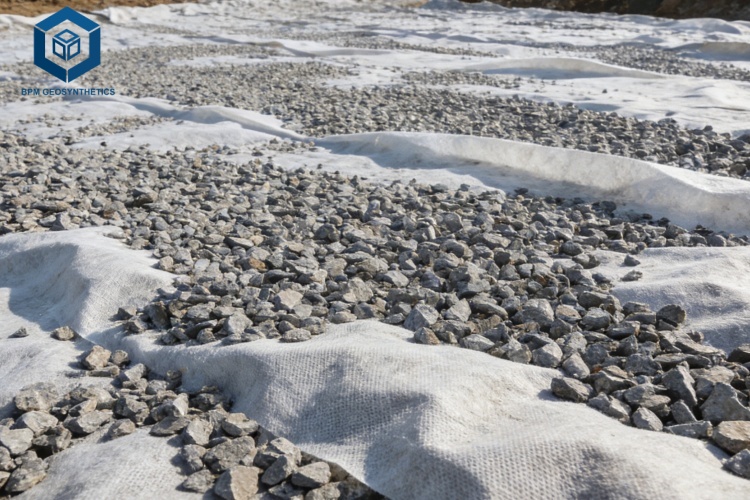
The full liner system typically consists of the following layered structure:
Prepared Subgrade: Compacted soil or sand base
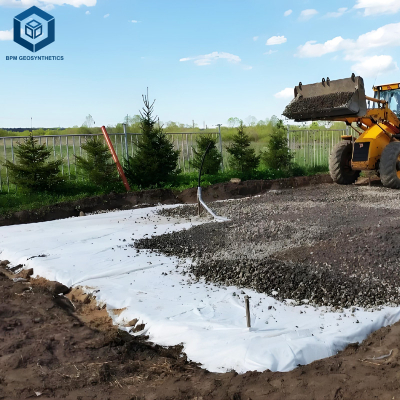
Lower Geotextile Cushion Layer: Protection against puncture
Geomembrane Impermeable Layer: Primary containment barrier
Upper Geotextile Protection Layer: Mechanical protection or drainage separation
Optional Drainage Layer: Geonet or gravel (project-specific)
Layer configuration directly affects the geotextile and geomembrane full system price estimate due to material quantities and installation complexity.
Manufacturing & Installation Process
Step 1: Raw Material Production
HDPE resin extrusion into sheets via flat die or blown film line
Geotextile needle-punch production with thermal bonding stabilization
Step 2: Site Preparation
Subgrade grading and compaction
Removal of sharp objects
Moisture control
Step 3: Geotextile Placement
Roll-out with minimal wrinkles
Overlap and spot anchoring
Step 4: Geomembrane Deployment & Welding
Panel alignment with 100–150 mm overlap
Hot wedge welding at controlled temperature
Extrusion welding for details
Step 5: Testing & QA/QC
Air channel pressure testing
Vacuum box inspection
Destructive seam sampling
Labor intensity and QA requirements significantly influence the final geotextile and geomembrane full system price estimate.
Industry Cost Comparison
| System Type | Estimated Total Cost (USD/m²) | Durability | Application Level |
|---|---|---|---|
| HDPE + Nonwoven Geotextile | 4 – 12 | Excellent (20+ years) | Landfill / Mining |
| Single Geomembrane Only | 2 – 7 | High | Ponds / Irrigation |
| Clay Liner System | 3 – 8 | Moderate | Low-risk containment |
| Concrete Lining | 15 – 40 | High structural strength | Reservoirs |
A comprehensive geotextile and geomembrane full system price estimate must include material, welding, testing, anchoring, and supervision costs.
Application Scenarios
EPC Contractors: Landfill cells and leachate ponds
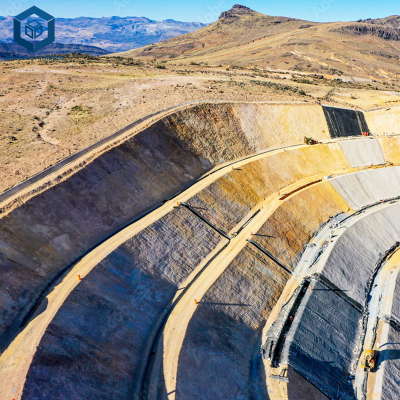
Mining Companies: Heap leach pads and tailings dams
Aquaculture Developers: Intensive shrimp and fish ponds
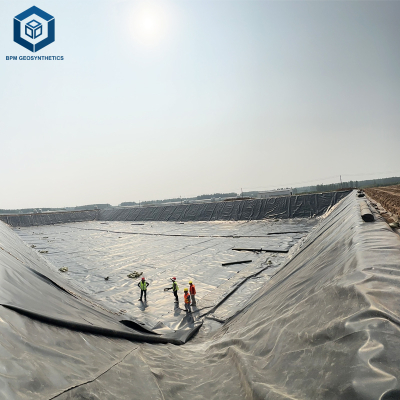
Industrial Parks: Wastewater containment lagoons
Agricultural Projects: Irrigation reservoirs
Each application scenario requires a customized geotextile and geomembrane full system price estimate based on risk category and service life expectations.
Core Pain Points & Solutions
1. Unclear Scope Definition
Solution: Break down system into material supply, installation, and QA line items.
2. Underestimated Installation Costs
Solution: Account for site access, weather delays, and seam length.
3. Puncture Failures
Solution: Select appropriate geotextile weight based on subgrade conditions.
4. Budget Overruns
Solution: Conduct accurate quantity takeoff before requesting geotextile and geomembrane full system price estimate.
Risk Warnings & Mitigation
Thin geomembrane selection increases long-term leakage risk.
Low-weight geotextile may not provide adequate puncture resistance.
Improper anchoring can cause wind uplift damage.
Insufficient testing may lead to regulatory rejection.
Cost-driven decisions without engineering validation can distort the geotextile and geomembrane full system price estimate and compromise performance.
Procurement & Selection Guide
Define project containment category and design life.
Specify geomembrane thickness and geotextile weight.
Prepare accurate surface area calculation including slopes.
Determine welding and testing standards.
Request detailed breakdown for geotextile and geomembrane full system price estimate.
Verify contractor certification and past project references.
Confirm warranty and after-installation support.
Engineering Case Example
Project: 30,000 m² industrial wastewater lagoon. System: 1.5 mm HDPE geomembrane + 400 g/m² nonwoven geotextile (top and bottom). Total installed area: 32,500 m² including slopes and anchor trench. Average geotextile and geomembrane full system price estimate: USD 8.6 per m². Testing: 100% air channel testing; destructive sample every 250 m. Completion time: 28 days. Outcome: Zero leakage after commissioning.
The case illustrates how material specification and QA requirements determine final system cost.
FAQ
1. What is included in a full system price estimate?
Materials, welding, anchoring, testing, and labor.
2. How long does installation take?
Typically 800–1,500 m² per crew per day.
3. Does thickness affect price significantly?
Yes, thicker membranes increase both material and welding cost.
4. Is geotextile mandatory?
Recommended for puncture protection in most engineered systems.
5. How accurate is a preliminary estimate?
±10–20% depending on available data.
6. Can price vary by region?
Yes, labor and logistics impact cost.
7. What is typical service life?
20–30 years under proper installation.
8. Are testing costs separate?
Sometimes; clarify during bidding stage.
9. How to reduce total cost?
Optimize design thickness based on engineering analysis.
10. Is factory prefabrication cheaper?
It can reduce field welding labor in large projects.
Request Technical Quotation
To obtain a formal geotextile and geomembrane full system price estimate, please provide:
Project drawings or layout plan
Total containment area
Material specifications
Installation timeline
Project location
Our engineering team will prepare a structured cost breakdown and technical proposal for review.
E-E-A-T: Technical Authority Statement
This content is prepared by engineers with more than 15 years of experience in geosynthetic manufacturing and field installation for landfill, mining, and water containment infrastructure projects. Specifications and cost ranges reflect common international engineering practice and field execution standards.
For project consultation, detailed technical data sheets, or sample materials, contact our technical department.