Geomembrane thickness tolerance during production
Geomembrane thickness tolerance during production refers to the allowable variation between the nominal thickness of a geomembrane sheet and the actual measured thickness produced during manufacturing. This tolerance is strictly controlled through extrusion calibration, roll pressure, and quality inspection to ensure that the geomembrane meets engineering performance requirements for containment, waterproofing, and environmental protection systems.
Technical Parameters and Specifications
| Parameter | Typical Value | Relevant Standard |
|---|---|---|
| Nominal Thickness Range | 0.3 mm – 3.0 mm | ASTM / GRI GM13 |
| Thickness Tolerance | ±5% – ±10% | ASTM D5199 |
| Density (HDPE) | ≥ 0.940 g/cm³ | ASTM D1505 |
| Tensile Strength | ≥ 15 kN/m | ASTM D6693 |
| Elongation at Break | ≥ 700% | ASTM D6693 |
| Carbon Black Content | 2.0% – 3.0% | ASTM D4218 |
| Roll Width | 5 m – 8 m | Manufacturing Standard |
Structure and Material Composition
The geomembrane sheet structure is engineered to maintain stable thickness distribution across the entire roll width.
Base Polymer Layer – High-density polyethylene (HDPE) or linear low-density polyethylene (LLDPE).
Carbon Black Stabilization – Provides UV resistance and improves long-term durability.
Antioxidant Package – Prevents polymer degradation during extrusion and service life.
Surface Texture (Optional) – Textured layers enhance friction for slope stability.
Uniform Thickness Layer – Controlled through flat-die extrusion calibration.
Manufacturing Process
Maintaining consistent geomembrane thickness tolerance during production requires precise control of extrusion equipment and monitoring systems.
Step 1 – Raw Material Preparation
HDPE resin, carbon black masterbatch, and additives are blended through automatic feeding systems to ensure consistent polymer composition.
Step 2 – Extrusion Melting
The raw materials are melted in a high-capacity extruder operating between 180°C and 230°C. Screw speed and melt pressure must remain stable.
Step 3 – Flat Die Sheet Forming
The molten polymer passes through a precision flat die. Automatic die-lip adjustment systems help maintain thickness tolerance across the sheet width.
Step 4 – Calender and Cooling
Cooling rollers stabilize sheet thickness and eliminate internal stress.
Step 5 – Online Thickness Measurement
Laser or ultrasonic sensors continuously measure thickness variation during production.
Step 6 – Rolling and Inspection
Finished geomembrane rolls are inspected according to ASTM thickness sampling procedures before packaging.
Industry Comparison
| Material | Thickness Stability | Chemical Resistance | Service Life | Typical Application |
|---|---|---|---|---|
| HDPE Geomembrane | Excellent | Excellent | 30–50 years | Landfills, mining ponds |
| LLDPE Geomembrane | Good | Good | 20–30 years | Irrigation ponds |
| PVC Membrane | Moderate | Moderate | 10–20 years | Waterproofing |
| EPDM Rubber | Flexible | Moderate | 20–25 years | Decorative ponds |
Application Scenarios
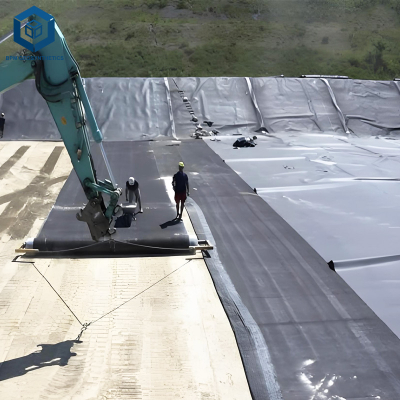
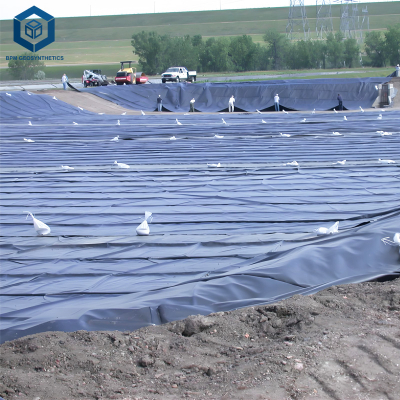
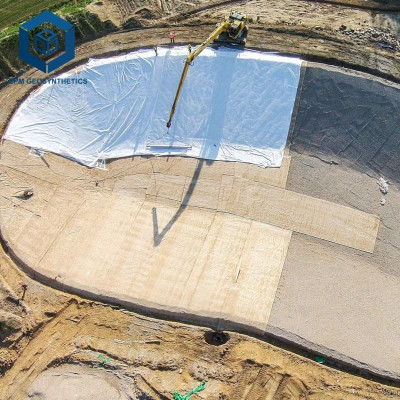
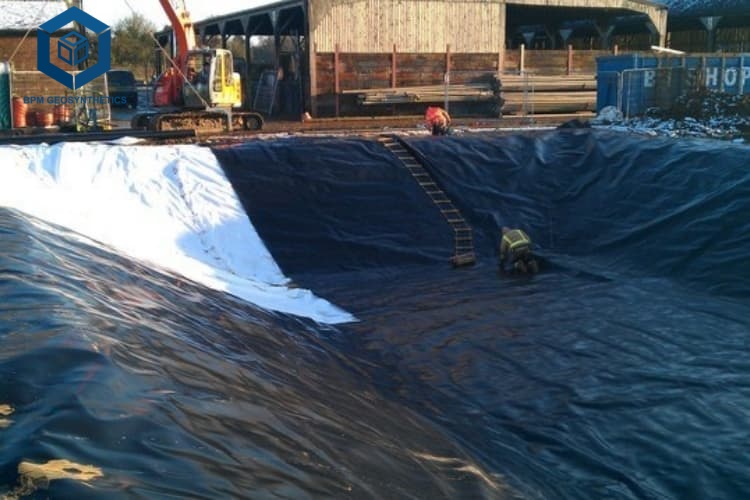
Controlling geomembrane thickness tolerance during production is critical in large-scale containment projects.
Landfill containment systems – Prevent leachate leakage.
Mining tailings storage facilities – Chemical resistance and structural stability.
Industrial wastewater ponds – Long-term impermeability.
Agricultural irrigation reservoirs – Cost-efficient water storage.
Oil & gas secondary containment – Environmental protection.
Core Pain Points and Engineering Solutions
Problem 1: Uneven sheet thickness
Solution: Use automatic die-lip adjustment and continuous laser measurement.Problem 2: Edge thinning during extrusion
Solution: Implement edge-trim control and improved die temperature balance.Problem 3: Raw material inconsistency
Solution: Use certified resin suppliers and automated batching systems.Problem 4: Quality variation between production batches
Solution: Implement ISO-based quality management and batch traceability.
Risk Warnings and Avoidance Recommendations
Excessive thickness variation may cause welding failure during installation.
Under-thickness sections may reduce puncture resistance and liner lifespan.
Poor calibration of extrusion dies can produce inconsistent rolls.
Improper storage conditions may deform geomembrane rolls.
Procurement Selection Guide
Verify compliance with ASTM or GRI geomembrane standards.
Request a certified thickness tolerance test report.
Evaluate manufacturing equipment (wide-die extrusion lines).
Inspect quality control procedures and laboratory capability.
Confirm roll width and thickness suitability for your project.
Request engineering references and installation compatibility.
Check production capacity for large EPC projects.
Engineering Case Study
In a large mining tailings pond project in Southeast Asia, an EPC contractor specified 1.5 mm HDPE geomembrane with strict thickness tolerance requirements. The geomembrane manufacturer implemented real-time thickness monitoring and maintained production tolerance within ±5%. Over 120,000 m² of liner was installed using dual-track wedge welding machines. Post-installation vacuum testing confirmed seam integrity, and the containment system has operated successfully for several years without leakage incidents.
Frequently Asked Questions (FAQ)
1. What is the acceptable geomembrane thickness tolerance?
Typically ±5% to ±10% depending on the standard and thickness.
2. Which standard regulates thickness testing?
ASTM D5199 is commonly used.
3. Why is thickness uniformity important?
It ensures mechanical strength and reliable welding performance.
4. How is thickness measured?
Using micrometers or automated ultrasonic sensors.
5. What causes thickness variation?
Extrusion pressure changes, die imbalance, or inconsistent raw materials.
6. Does thicker geomembrane always mean better performance?
No. Correct thickness with consistent tolerance is more important.
7. What tolerance is used in landfill liners?
Usually within ±5% for high-specification projects.
8. Can thickness affect welding quality?
Yes, uneven thickness may lead to weak seam strength.
9. How often should thickness be tested?
Sampling is performed regularly for each production roll.
10. What equipment improves thickness control?
Modern flat-die extrusion systems with automatic calibration.
Request a Quote / Technical Documentation / Engineering Samples
If you require detailed specifications, engineering samples, or a quotation for large geomembrane supply projects, contact our technical team. We provide full documentation including quality test reports, production specifications, and engineering support for EPC contractors, distributors, and project developers.
E-E-A-T: Author Expertise and Industry Authority
This technical article is prepared by engineers and material specialists with extensive experience in geomembrane manufacturing, polymer extrusion technology, and containment system engineering. The information is based on international standards including ASTM and industry manufacturing practices used in landfill, mining, and environmental protection projects worldwide.