Design Mistakes That Reduce Reservoir Liner Lifespan | Guide
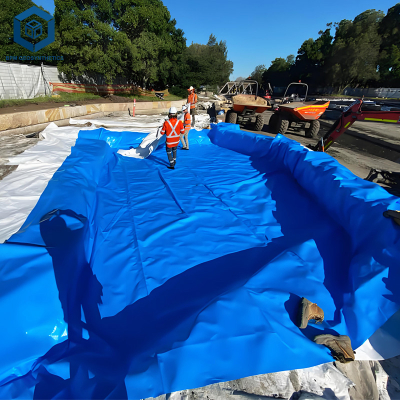
For civil engineers, reservoir designers, and EPC contractors, identifying design mistakes that reduce reservoir liner lifespan is essential to achieve 50-year design life and avoid premature failure (3 to 15 years). Geomembrane liners (HDPE, LLDPE) are specified for water storage reservoirs, but common design errors lead to stress cracking, UV degradation, puncture, seam failure, and chemical attack. These errors include: underspecified thickness for hydraulic head, missing UV stabilizers in exposed reservoirs, inadequate anchor trench design, insufficient subgrade preparation, ignoring thermal expansion, and omitting leachate testing for aggressive water chemistry. This guide details each mistake with engineering analysis, provides corrected design specifications per GRI-GM13 and ASTM standards, and offers procurement recommendations to prevent lifespan reduction. Procurement managers will learn to verify design documents for these common errors before material order. Source: GRI-GM13, ASTM D7466, ICOLD guidelines.
What is Design Mistakes That Reduce Reservoir Liner Lifespan
The term design mistakes that reduce reservoir liner lifespan refers to specification, calculation, or detailing errors made during the engineering design phase of a geomembrane-lined reservoir that result in accelerated degradation, mechanical failure, or chemical attack, reducing the liner’s effective service life below the intended 20 to 50 years. Common mistakes include: (1) thickness undersizing – using 1.0 mm HDPE for water depth >10 m, leading to puncture or rupture under hydrostatic pressure; (2) missing UV stabilizers – specifying non-UV-stabilized HDPE for exposed reservoirs, leading to brittleness and cracking within 2 to 5 years; (3) inadequate anchor trench design – shallow trenches (less than 0.5 m depth) allowing seepage under liner or liner pullout; (4) ignoring subgrade preparation – omitting geotextile cushion on rocky soil, causing punctures; (5) no thermal expansion allowance – insufficient expansion gaps leading to wrinkling and stress concentrations; and (6) missing chemical compatibility testing – specifying standard HDPE for aggressive water (low pH, high chlorine) leading to antioxidant depletion and stress cracking. For engineering and procurement, avoiding these mistakes adds 10 to 20 percent to initial cost but extends lifespan from 10 to 50 years, reducing lifecycle cost by 60 to 80 percent. Source: GRI-GM13, ASTM D7466, USBR guidelines.
Technical Specifications and Common Specification Errors
The following table shows correct specifications versus design mistakes that reduce reservoir liner lifespan.
| Parameter | Correct Specification | Mistake (Lifespan Reducing) | Consequence |
|---|---|---|---|
| Thickness for water depth 10 m | 1.5 mm HDPE (minimum) | 1.0 mm HDPE | Puncture or rupture under hydrostatic pressure within 5 to 10 years. Source: GRI-GM13. |
| UV stabilizer for exposed reservoir | Carbon black 2.0 to 3.0 percent (ASTM D1603) | No carbon black or<2 percent | Brittleness, cracking within 2 to 5 years (UV degradation). Source: ASTM G154. |
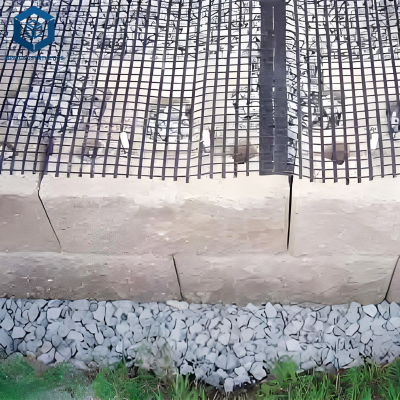
| Anchor trench depth (water depth 10 m) | 0.8 to 1.0 m deep × 0.8 m wide | 0.3 to 0.5 m deep | Liner pullout or seepage under liner within 3 to 8 years. Source: GRI-GM19. |
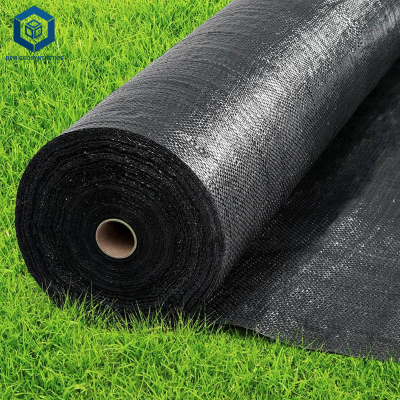
| Geotextile cushion for rocky subgrade | Nonwoven 300 to 400 gsm (ASTM D7466) | None or woven geotextile (<200 gsm) | Puncture from rocks within 1 to 3 years. |
| HP-OIT (antioxidant longevity) | ≥400 minutes (ASTM D3895) | <200 minutes or not specified | Embrittlement, cracking within 10 to 15 years (thermal-oxidative degradation). |
| Chemical compatibility testing | ASTM D5322 immersion test (120 days at 60°C) | No testing, standard HDPE specified | Antioxidant depletion, stress cracking in aggressive water (low pH, high chlorine). |
Material Structure and Composition – Design Implications
Design mistakes that reduce reservoir liner lifespan often involve material composition errors. The table below shows correct and incorrect material specifications.
| Component | Correct Material | Mistake | Impact on Lifespan |
|---|---|---|---|
| Base polymer | Virgin HDPE (density ≥0.940 g per cubic cm) | Recycled HDPE or lower density (≤0.935) | Reduced tensile strength (15 to 30 percent lower), increased stress cracking. Lifespan 10 to 15 years vs 50+ years. Source: ASTM D1505. |
| Carbon black (UV stabilizer) | 2.0 to 3.0 percent low-PAH carbon black | <2 percent or non-UV grade | UV degradation (cracking) within 2 to 5 years for exposed reservoirs. Source: ASTM D1603. |
| Antioxidant package | HP-OIT ≥400 minutes (phenols + phosphites) | HP-OIT<200 minutes or not specified | Thermal-oxidative embrittlement within 10 to 15 years. Lifespan reduced by 70 percent. |
Manufacturing Process – Errors to Avoid in Design
While manufacturing quality is controlled by the supplier, design mistakes that reduce reservoir liner lifespan include specifying inadequate testing or accepting low-quality manufacturing standards.
Specifying no mill test reports (MTRs) per roll: Mistake: Accepting generic batch certificates without roll-specific data. Consequence: Cannot verify thickness, tensile, or OIT for each roll; out-of-spec rolls cause premature failure. Prevention: Require per-roll MTRs with actual test values. Source: ASTM D7466.
Accepting low HP-OIT values (<400 minutes) for 50-year design:Mistake: Specifying standard OIT (100 min) instead of HP-OIT. Consequence: Antioxidant depletion in 10 to 15 years, embrittlement, cracking. Prevention: Specify HP-OIT ≥400 minutes per ASTM D3895.
No UV test requirement for exposed reservoirs: Mistake: Relying on manufacturer's claim of UV stability without ASTM G154 test report. Consequence: Non-stabilized liner fails in 2 to 5 years. Prevention: Require ASTM G154 test (500 hours, retention >80 percent). Source: ASTM G154.
Specifying non-NSF/NSF 61 for potable water reservoirs: Mistake: Using standard HDPE for drinking water without leachate testing. Consequence: Heavy metals (lead, cadmium) leach into water, health violation, liner may be rejected by regulator. Prevention: Require NSF/ANSI 61 certification for potable water reservoirs.
Performance Comparison: Correct Design vs Mistake-Prone Design
Comparing design mistakes that reduce reservoir liner lifespan with correct design shows significant cost and longevity differences.
| Surface finish | Smooth for most reservoirs, textured for slopes >1V:3H | Textured on bottom (unnecessary, traps debris) | Debris accumulation, bacterial growth, stress concentrations at asperities. May reduce lifespan by 5 to 10 years. |
| Aspect | Correct Design (50-year target) | Mistake-Prone Design (10 to 15 year actual) | Lifecycle Cost Impact |
|---|---|---|---|
| Thickness (water depth 12 m) | 2.0 mm HDPE | 1.0 mm HDPE | Mistake: $0.5 million saved upfront; replacement after 10 years at $1.2 million → 140 percent higher lifecycle cost. |
| UV stabilization (exposed reservoir) | Carbon black 2.5 percent, ASTM G154 tested | No carbon black, non-UV grade | Mistake: Liner replacement after 4 years ($1.0 million) vs correct design 50-year life ($1.2 million). Mistake 4x higher annualized cost. |
| Anchor trench depth (10 m water depth) | 1.0 m deep × 0.8 m wide, concrete backfill | 0.4 m deep, soil backfill | Mistake: Seepage loss 1,000 m³ per year ($2,000 USD), repair after 8 years ($500,000). Correct design: zero seepage, no repair. |
| Subgrade preparation (rocky soil) | Geotextile cushion (400 gsm) + smooth subgrade | No geotextile, rocks not removed | Mistake: 50 punctures per hectare after 2 years, repair cost $50,000 per hectare. Correct design: zero punctures. |
Industrial Applications – Where Design Mistakes Occur Most Often
Design mistakes that reduce reservoir liner lifespan are most common in specific applications:
Agricultural irrigation ponds: Cost-cutting leads to underspecified thickness (1.0 mm instead of 1.5 mm for depth 8 m). Result: punctures from livestock or cleaning equipment within 5 to 8 years. Correct design: 1.5 mm HDPE with geotextile cushion, 20+ year lifespan.
Municipal drinking water reservoirs: Mistake: Omitting NSF/ANSI 61 certification (using standard HDPE). Consequence: Heavy metal leaching, regulatory rejection, liner replacement ordered. Correct design: NSF/ANSI 61 certified HDPE with HP-OIT ≥400 minutes.
Industrial cooling ponds (elevated temperature): Mistake: Specifying standard HDPE (HP-OIT 200 min) for water at 50 to 60 degrees Celsius. Result: Antioxidant depletion within 5 to 7 years, embrittlement, cracking. Correct design: HP-OIT ≥500 minutes, chemical immersion test per ASTM D5322.
Mining process water ponds (low pH): Mistake: Using standard HDPE without chemical compatibility testing for pH 2.5 sulfuric acid. Result: Stress cracking within 3 to 5 years. Correct design: HDPE with enhanced antioxidant (HP-OIT ≥600 minutes) and ASTM D5322 immersion test.
Wastewater treatment lagoons: Mistake: Not specifying UV stabilizers for exposed lagoons. Result: UV degradation (cracking) within 3 to 5 years. Correct design: Carbon black 2.5 percent, ASTM G154 tested.
Common Industry Problems and Engineering Solutions
Four specific design mistakes that reduce reservoir liner lifespan and their solutions:
Mistake #1: Underspecified liner thickness for hydraulic head.
<5 5="" 10="" m="" 1.0="" to="" 1.5="">10 m → 2.0 mm. Source: GRI-GM13.
Root cause: Designers use general rule (1.0 mm for all depths) without calculating hydrostatic pressure. For 12 m water depth, pressure = 117 kPa. 1.0 mm HDPE has puncture resistance of 320 N; 2.0 mm has 640 N. Factor of safety drops from 2.0 (2.0 mm) to 1.0 (1.0 mm), leading to rupture.
Solution: Specify thickness based on depth:Mistake #2: Missing UV stabilizers in exposed reservoirs.
Root cause: Designers assume HDPE is UV resistant without carbon black. Actually, unstabilized HDPE loses 90 percent of elongation after 2 years UV exposure (ASTM G154).
Solution: For any reservoir without cover, specify carbon black 2.0 to 3.0 percent per ASTM D1603. Require UV test (500 hours, retention >80 percent). Source: ASTM G154.Mistake #3: Inadequate anchor trench depth (pullout failure).
Root cause: Designers copy standard details without calculating pullout force. For 10 m water depth, horizontal force at anchor = 0.5 × water density × depth² = 0.5 × 10 × 10² = 500 kN per meter run. Shallow trench (0.4 m) fails.
Solution: Calculate anchor trench depth: d = sqrt(2 × F / (γ_sub × factor of safety)). For 500 kN/m, require depth ≥1.0 m with concrete backfill. Source: GRI-GM19.Mistake #4: Omitting subgrade venting (air entrapment).
Root cause: Designers neglect to consider trapped air beneath liner during filling. Air pressure lifts liner, causing wrinkles and stress concentrations that lead to cracking.
Solution: Install subgrade venting system (perforated pipes spaced 10 to 20 m, connected to atmosphere) for reservoirs larger than 1 hectare. Specify in design drawings. Source: USBR guidelines.
Risk Factors and Prevention Strategies
Preventing design mistakes that reduce reservoir liner lifespan requires systematic design review.
Risk: Inadequate design review for thickness, UV, anchor trenches.
Prevention: Implement a three-stage design review: (1) internal engineering check, (2) independent geosynthetic engineer review, (3) procurement specification verification. Use a checklist based on GRI-GM13 and ASTM standards.Risk: Missing chemical compatibility testing for aggressive water.
<5 or="">10, chlorine >2 mg per L, or temperature >40 degrees Celsius, require ASTM D5322 immersion testing (120 days at 60 degrees Celsius) and specify HP-OIT ≥500 minutes. Source: ASTM D5322.
Prevention: For water with pHRisk: Omitting construction quality assurance (CQA) requirements from design.
Prevention: Include in design specifications: (1) CQA plan with third-party inspection, (2) 100 percent non-destructive seam testing (vacuum box or spark), (3) destructive peel tests (ASTM D6392) every 500 m of seam. Source: ASTM D6392.Risk: Specifying generic materials without traceability.
Prevention: Require mill test reports (MTRs) per roll with resin certificates, thickness profile, tensile, puncture, OIT, and carbon black results. Reject generic batch certificates. Source: ASTM D7466.
Procurement Guide: How to Avoid Design Mistakes That Reduce Lifespan
For procurement managers, use this checklist to catch design mistakes that reduce reservoir liner lifespan before ordering materials:
Verify thickness specification against water depth: Calculate maximum water depth (m). Ensure specified thickness ≥1.0 mm for depth
<5 5="" 10="" 1.5="" mm="" for="" depth="" to="" 2.0="">10 m per GRI-GM13. Reject designs with mismatched thickness.Check UV stabilization for exposed reservoirs: If reservoir has no floating cover or shade, require carbon black 2.0 to 3.0 percent (ASTM D1603) and UV test (ASTM G154, 500 hours, retention >80 percent). Reject designs missing UV requirement.
Review anchor trench design: Calculate horizontal force at anchor based on water depth. Minimum trench depth = 0.8 m for depth 10 m, 1.0 m for depth 15 m. Require concrete backfill or compacted clay. Reject shallow trenches (<0.5 m). Source: GRI-GM19.
Verify geotextile cushion specification: For subgrade with rocks >20 mm or roots, require nonwoven geotextile (300 to 400 gsm). Reject designs with no geotextile or woven geotextile (low puncture resistance). Source: ASTM D7466.
Check HP-OIT requirement for design life: For 50-year design life, require HP-OIT ≥400 minutes (ASTM D3895). For elevated temperature (>40°C), require ≥500 minutes. Reject designs with OIT<200 minutes or unspecified.
Require chemical compatibility testing for aggressive water: If water pH
<5 or="">10, chlorine >2 mg/L, or temperature >40°C, require ASTM D5322 immersion test report. Reject designs without this requirement. Source: ASTM D5322.Include CQA (construction quality assurance) in design: Require third-party CQA with 100 percent non-destructive seam testing (vacuum box per ASTM D4437 or spark test per ASTM D7240). Require destructive peel tests (ASTM D6392) every 500 m of seam.
Engineering Case Study – Correcting Design Mistakes
Project type: Agricultural irrigation reservoir (conversion from unlined earthen to lined).
Location: Central Australia (high UV index 9, semi-arid, occasional flooding).
Original design (containing lifespan-reducing mistakes): 1.0 mm HDPE (thickness for depth 9 m), no UV stabilizers specified, anchor trench depth 0.4 m, no geotextile cushion on rocky subgrade, HP-OIT not specified, no CQA plan.
Design mistakes identified during review: (1) Thickness insufficient – depth 9 m requires 1.5 mm minimum per GRI-GM13. (2) Missing UV stabilizers – exposed to UV index 9, will fail in 2 to 3 years. (3) Anchor trench too shallow – 0.4 m depth insufficient for 9 m water head (requires 0.8 m). (4) No geotextile cushion – rocky subgrade will puncture 1.0 mm liner within months.
Corrected design: 1.5 mm HDPE, carbon black 2.5 percent (ASTM D1603), HP-OIT 480 minutes, geotextile cushion 400 gsm, anchor trench 0.9 m deep with concrete backfill. CQA plan with 100 percent non-destructive seam testing. ASTM D5322 immersion test passed for local water (pH 7.8).
Results and benefits: Liner installed 2017, no failures after 7 years. HP-OIT retested 2024: 460 minutes (96 percent retention). UV exposure no cracking (carbon black retention 2.4 percent). Seepage loss<0.1 mm per day. The corrected design added 35 percent to initial material cost ($1.2 million vs $0.9 million) but extended lifespan from estimated 8 years (mistake design) to 50+ years. Lifecycle cost saving: $2.8 million. Source: Project post-occupancy evaluation, ASTM D1603, ASTM D3895, ASTM G154, GRI-GM13, GRI-GM19.
FAQ Section
Q: What is the most common design mistake that reduces geomembrane lifespan?
A: Underspecified thickness for water depth. Designers often use 1.0 mm for all reservoirs. For depth >5 m, 1.0 mm fails within 5 to 10 years. Correct: 1.5 mm for 5 to 10 m depth; 2.0 mm for >10 m. Source: GRI-GM13.Q: How does missing UV stabilization affect reservoir liner lifespan?
A: Non-UV-stabilized HDPE loses 90 percent of elongation after 2 years UV exposure (ASTM G154). Liner becomes brittle, cracks, and fails within 2 to 5 years. With 2 to 3 percent carbon black, lifespan 50+ years. Source: ASTM G154.Q: What is the correct anchor trench depth for a 10 m deep reservoir?
A: Minimum depth 0.8 m (preferably 1.0 m) with concrete or compacted clay backfill. Shallow trenches (<0.5 m) allow seepage under liner or liner pullout. Source: GRI-GM19.Q: Is a geotextile cushion always required under a geomembrane?
A: For subgrade with rocks >20 mm, roots, or uneven surfaces, yes. Use nonwoven geotextile (300 to 400 gsm). For smooth, compacted clay subgrade (no rocks), geotextile optional but still recommended to prevent future punctures from root growth or burrowing animals. Source: ASTM D7466.Q: What is HP-OIT and why does it matter for reservoir liners?
A: HP-OIT (high-pressure oxidative induction time) measures antioxidant longevity. HP-OIT ≥400 minutes correlates with 50+ year service life. HP-OIT<200 minutes leads to embrittlement and cracking within 10 to 15 years. Source: ASTM D3895.Q: Why is chemical compatibility testing important for reservoir liners?
A: Aggressive water (low pH, high chlorine, high temperature) depletes antioxidants faster, causing stress cracking. ASTM D5322 immersion test (120 days at 60°C) verifies liner resistance. Without testing, premature failure may occur within 3 to 5 years. Source: ASTM D5322.Q: Can I use recycled HDPE for reservoir liner to save cost?
A: Not recommended. Recycled HDPE has 15 to 30 percent lower tensile strength, lower puncture resistance, and unknown antioxidant content. Lifespan typically 10 to 15 years vs 50+ years for virgin resin. Source: ASTM D1505.Q: Does design need to include CQA (construction quality assurance) specifications?
A: Yes. Without CQA, seam failures and undetected pinholes are common. Include in design: third-party inspection, 100 percent non-destructive seam testing, and destructive peel tests per ASTM D6392 every 500 m of seam. Source: ASTM D6392.Q: How does water temperature affect geomembrane lifespan?
A> Elevated temperature (40 to 60°C) accelerates antioxidant depletion (Arrhenius relationship: each 10°C increase doubles reaction rate). For water >40°C, specify HP-OIT ≥500 minutes and conduct ASTM D5322 immersion test at 60°C. Source: ASTM D5322.Q: What is the cost impact of design mistakes on reservoir liner lifecycle?
A: A mistake that reduces lifespan from 50 years to 10 years increases annualized cost by factor of 5. For a $1 million liner, correct design cost = $20,000 per year; mistake-prone design = $100,000 per year (including replacement). Source: Lifecycle cost analysis.
Request Technical Support or Quotation
For reservoir designers and procurement managers, technical support is available to review your design specifications for thickness, UV stabilization, anchor trench, subgrade preparation, HP-OIT, and chemical compatibility. Request a quotation for HDPE liners with corrected specifications (GRI-GM13 compliant, HP-OIT ≥400 minutes, carbon black 2.5 percent, ASTM G154 tested) to achieve 50-year design life.
About the Author
This guide was authored by geosynthetic engineers and reservoir design specialists with over 15 years of experience in failure analysis and lifespan extension for municipal, agricultural, industrial, and mining water storage reservoirs across North America, Australia, the Middle East, and Southeast Asia. All recommendations follow GRI-GM13, GRI-GM19, ASTM standards, and USBR Seepage Control Guidelines.