Best hdpe geomembrane thickness for landfill liner
Product Definition
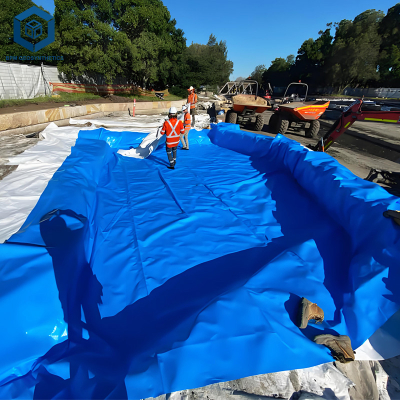
The best HDPE geomembrane thickness for landfill liner applications refers to the optimized high-density polyethylene barrier layer designed to prevent leachate migration, ensuring long-term environmental protection, structural stability, and regulatory compliance in municipal or hazardous waste containment systems.
Technical Parameters & Specifications
Selecting the best HDPE geomembrane thickness for landfill liner systems requires evaluating standardized mechanical and durability properties. Typical engineering parameters include:
Available Thickness: 1.0 mm, 1.5 mm, 2.0 mm, 2.5 mm
Density: ≥ 0.94 g/cm³
Tensile Strength at Yield: ≥ 22–30 kN/m (depending on thickness)
Elongation at Break: ≥ 700%
Puncture Resistance: 480–1000 N (increasing with thickness)
Stress Crack Resistance (NCTL): ≥ 500 hours
Oxidative Induction Time (OIT): ≥ 100 min (standard OIT)
Carbon Black Content: 2–3% for UV stability
Roll Width: 5–8 meters
For most municipal solid waste landfills, 1.5 mm and 2.0 mm are commonly evaluated as the best HDPE geomembrane thickness for landfill liner base systems.
Structure & Material Composition
HDPE Virgin Resin: Provides chemical resistance and impermeability
Carbon Black Additive: Enhances UV resistance and durability
Antioxidants: Improve thermal aging resistance
Optional Textured Surface: Increases friction angle on slopes
The best HDPE geomembrane thickness for landfill liner projects also depends on interface friction requirements and subgrade stability.
Manufacturing Process
1. Raw Material Batching
High-precision gravimetric dosing systems ensure consistent resin and additive distribution.
2. Flat Die Extrusion
Molten HDPE is extruded through a flat die to produce sheets with ±5% thickness tolerance.
3. Surface Texturing (If Required)
Nitrogen or mechanical embossing creates textured surfaces for slope applications.
4. Online Quality Monitoring
Continuous thickness scanning and spark testing prevent defects before roll winding.
5. Laboratory Testing
Tensile, tear, puncture, OIT, and stress crack tests confirm compliance with landfill engineering specifications.
Industry Comparison
| Material | Typical Thickness | Chemical Resistance | Puncture Resistance | Service Life | Landfill Suitability |
|---|---|---|---|---|---|
| HDPE Geomembrane | 1.5–2.5 mm | Excellent | High | 20–30+ years | Primary Barrier |
| LLDPE | 1.5–2.0 mm | Very Good | Moderate | 20+ years | Flexible Areas |
| PVC Liner | 1.0–2.0 mm | Moderate | Lower | 10–20 years | Limited Use |
| Compacted Clay | 600–900 mm | Variable | Low | Dependent on moisture | Secondary Layer |
HDPE remains the industry standard when determining the best HDPE geomembrane thickness for landfill liner containment.
Application Scenarios
EPC contractors constructing municipal landfill cells
Engineering consultants designing composite liner systems
Waste management authorities upgrading containment facilities
Distributors supplying geomembrane rolls for environmental projects
Core Pain Points & Engineering Solutions
1. Leachate Chemical Aggressiveness
Solution: Use ≥2.0 mm HDPE for hazardous or high-organic-content waste.
2. Subgrade Settlement
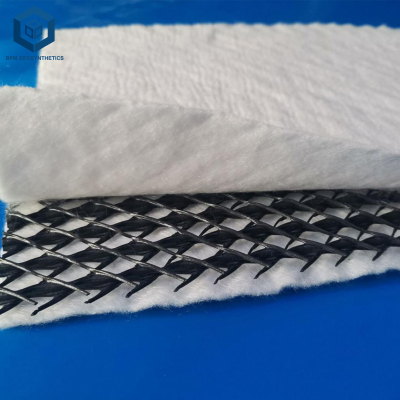
Solution: Increase thickness and combine with geotextile cushioning layers.
3. Puncture from Waste Loads
Solution: Conduct puncture risk assessment; 2.0–2.5 mm recommended for high loads.
4. Long-Term Oxidative Degradation
Solution: Specify high OIT values and antioxidant packages.
Risk Warnings & Avoidance
Do not select minimum thickness solely based on cost considerations
Avoid recycled-content liners for primary landfill barriers
Ensure double-seam welding with vacuum box testing
Conduct destructive seam peel and shear tests regularly
Verify regulatory compliance before procurement
Procurement & Selection Guide
Review local landfill regulatory requirements
Define waste classification (municipal, industrial, hazardous)
Calculate overburden and traffic loads
Assess subgrade preparation and cushioning design
Select the best HDPE geomembrane thickness for landfill liner based on risk analysis
Request full technical data sheets and third-party laboratory reports
Evaluate manufacturer production capacity and QA systems
Plan installation QA/QC procedures and third-party inspection
Engineering Case Study
Project: 120,000 m² Municipal Landfill Expansion
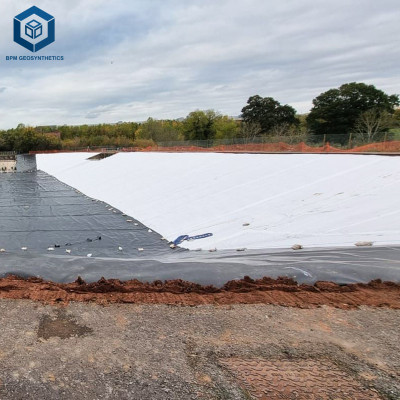
Liner Design: 2.0 mm HDPE geomembrane primary barrier over 800 g/m² nonwoven geotextile
Design Life: 30 years
Installation Method: Dual-track hot wedge welding with air channel pressure testing
Outcome: Passed regulatory leakage detection tests; no seepage recorded after six years of operation
FAQ
1. What is the most common thickness for municipal landfills?
1.5 mm to 2.0 mm, depending on regulatory requirements.
2. When is 2.5 mm required?
For hazardous waste or high mechanical stress conditions.
3. Is thicker always better?
Not necessarily; engineering balance between performance and cost is required.
4. Does thickness affect seam welding?
Yes, thicker liners require adjusted welding parameters.
5. What standards apply?
Commonly GRI-GM13 or equivalent engineering specifications.
6. Can 1.0 mm be used for landfill?
Typically not recommended for primary containment layers.
7. How long does HDPE last?
20–30+ years under controlled landfill conditions.
8. Is textured liner necessary?
Required on slopes to prevent sliding.
9. How to verify quality?
Review OIT, NCTL, and puncture resistance test results.
10. Should a composite liner be used?
Yes, often combined with clay or GCL for redundancy.
Request Technical Documentation & Quotation
For guidance on selecting the best HDPE geomembrane thickness for landfill liner projects, request detailed technical specifications, engineering consultation, and project-based quotations from our environmental containment team.
Author & Technical Authority
This article is prepared by a geosynthetics engineer with over 15 years of landfill liner system design and EPC project experience, supporting municipal authorities and contractors in environmental containment infrastructure worldwide.