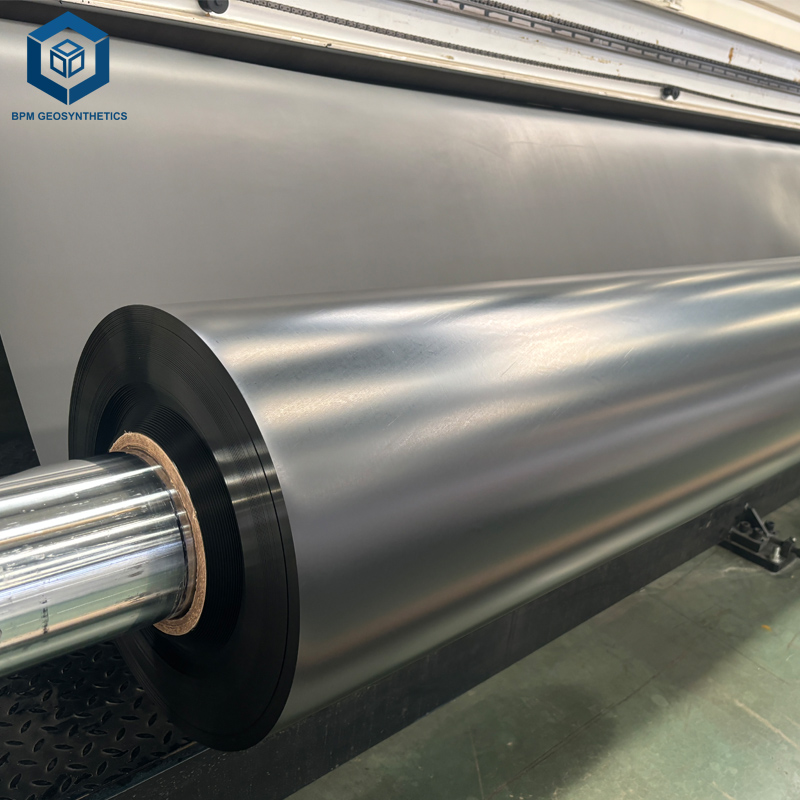
Agricultural Pond Liner
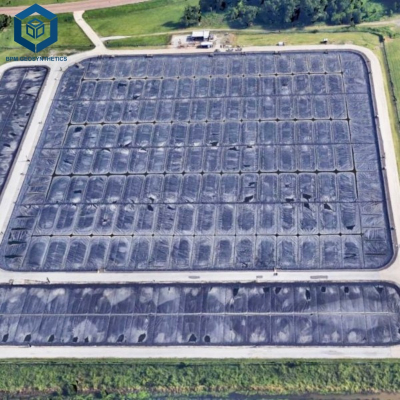
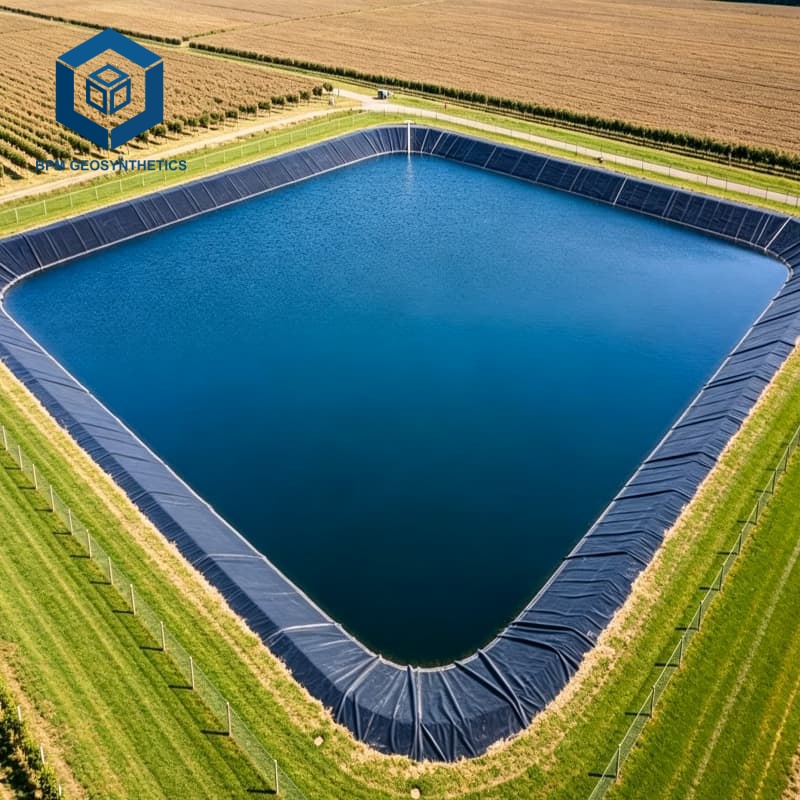
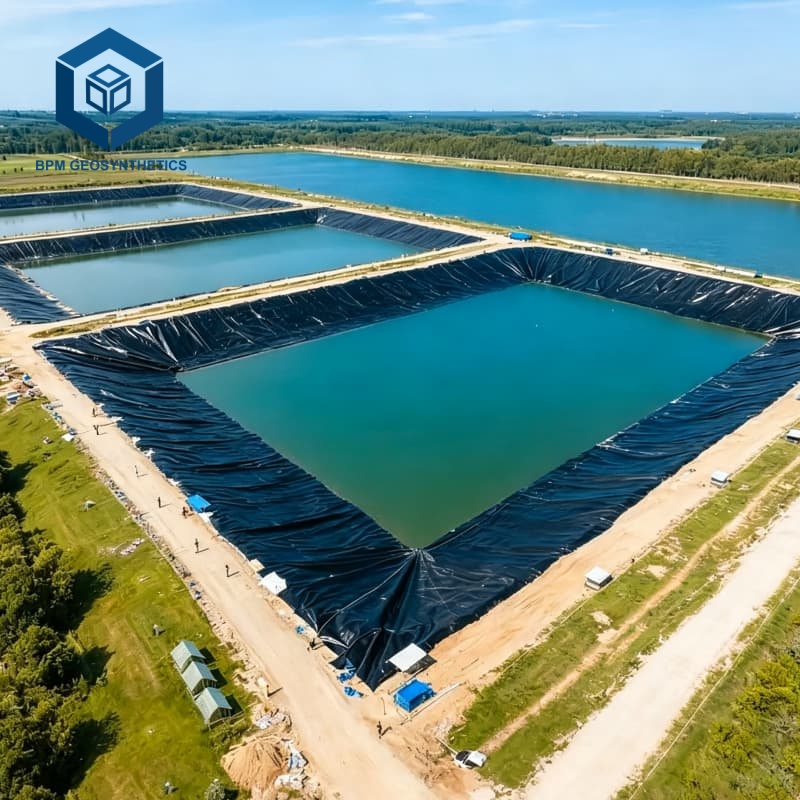
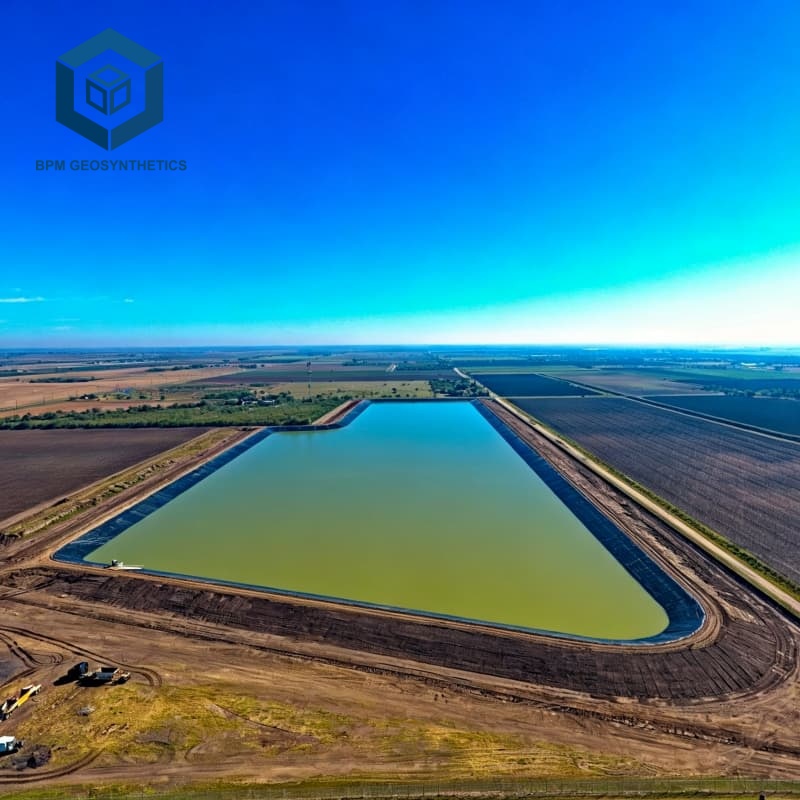
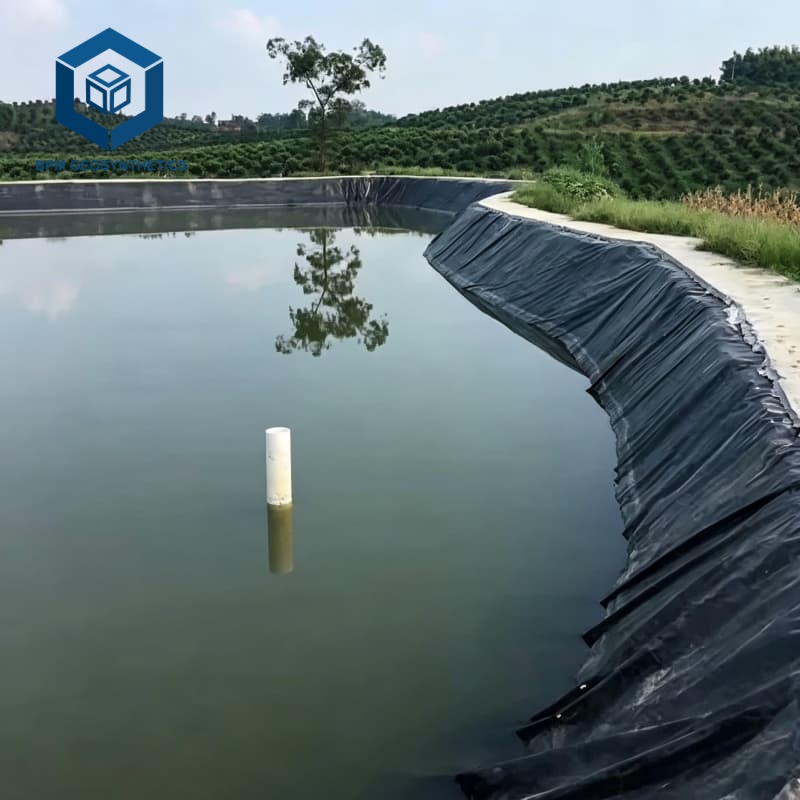
Designed for agricultural water storage projects, Agricultural Pond Liner provides a flexible and practical lining solution for farm ponds, irrigation basins, reservoirs, and farm dams. It can be customized to different project sizes and site conditions, helping simplify installation while supporting reliable water containment.
- Custom-made for different pond dimensions
- Wide roll options help reduce seam quantity
- Flexible layout for irregular pond shapes
- Easy to cut, place, and heat-weld on site
- Compatible with geotextile protection layers
- Available for large agricultural projects
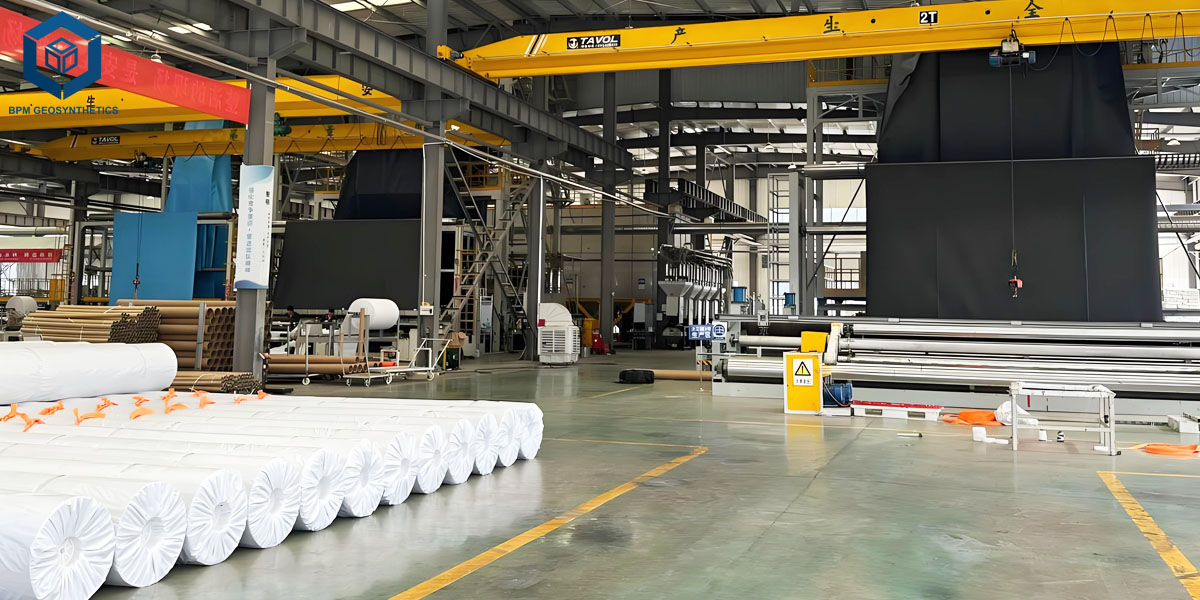
- Export-ready rolls for efficient container loading
Agricultural Pond Liner | BPM Geosynthetics Geomembrane Solutions
The Engine for Zero-Loss Agricultural Water Management
Agricultural Pond Liner is high-density polyethylene (HDPE) and flexible geomembrane containment barriers designed to eliminate water loss from soil seepage, control erosion, and protect water quality in agricultural reservoirs, farm dams, and irrigation ponds.
Whether you are designing a multi-hectare farm reservoir, lining an aquaculture pond, or renovating a leaking irrigation pit, BPM Geosynthetics provides customizable, engineered geomembrane systems engineered for extreme UV exposure, high chemical resistance, and decade-long durability.
- Material Standard: 100% Virgin HDPE / LLDPE (Compliant with GRI-GM13 / GRI-GM17).
- Thickness Range: 0.2 mm to 3.0 mm (8 mil to 120 mil)
- Roll Widths: Up to 10 meters (Ultra-wide roll format reduces field welding seams by up to 40%).
- UV & Weather Resistance: Extended carbon black dispersion for 20+ years of exposed outdoor performance.
- Customization: Custom roll lengths, colors, smooth or single/double-textured surface configurations.
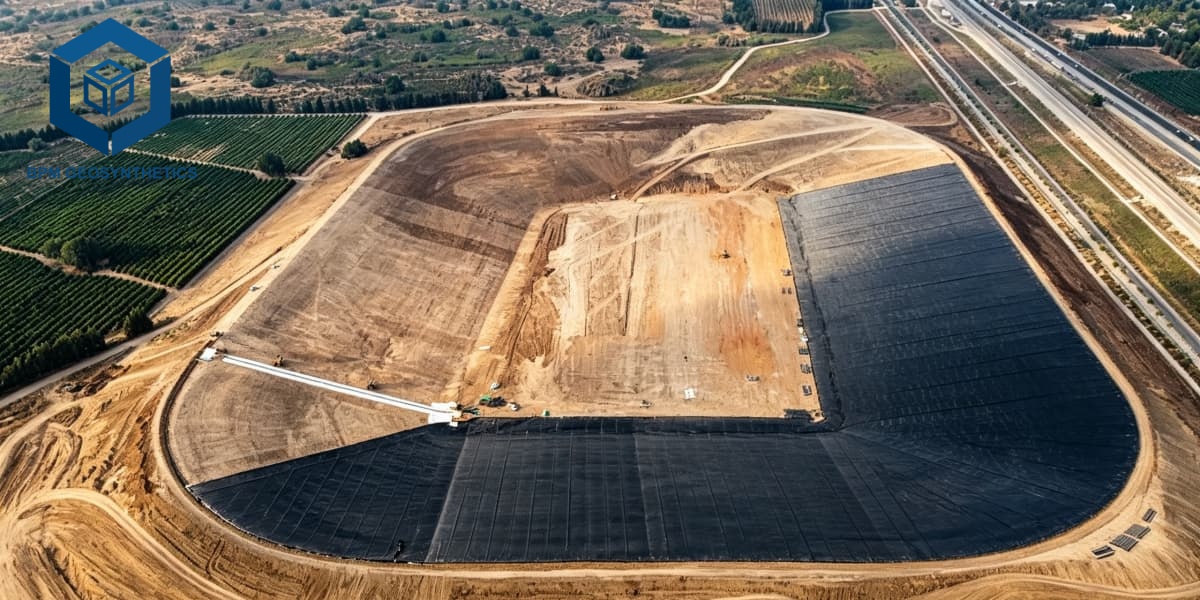
1. Agricultural Pond Liner Overview
An Agricultural Pond Liner is a continuous, low-permeability synthetic membrane installed along the base and side slopes of earthen water containment structures. Unlike basic agricultural plastic sheeting or standard PVC tarps, engineered geomembranes are explicitly formulated to withstand extreme environmental stress, soil movement, hydrostatic pressure, and relentless UV exposure without degrading or cracking.
1.1 Core Differences: Engineered Geomembranes vs. Standard Poly Sheeting
Feature | Engineered HDPE Geomembrane | Standard Agriculture Plastic / Tarps |
Primary Polymer | 100% Virgin Resin with ~2-3% Carbon Black | Recycled or Low-Grade Polyethylene |
Permeability Rate | Practically Impermeable (≈ 1 × 10⁻¹³ cm/s) | Prone to Micro-fissures and Rapid Seepage |
Lifespan (Exposed) | 15–20+ Years Outdoor Durability | 6–18 Months Before Brittle Failure |
Tensile & Tear Resistance | High Yield & Break Strength (GRI-GM13 Standard) | Low Structural Strength; Tears Easily Under Load |
Joint Integrity | Dual-Track Hot-Wedge Thermal Fusion Seams | Taped, Glued, or Simple Overlap (High Leak Risk) |
2. Benefits of Using a Agricultural Pond Liner
Unlined earthen ponds leak constantly. Depending on soil texture (sand, loam, or fractured rock), an unlined pond can lose between 10% to 30% of its total water volume per month purely to subsoil seepage. Key Agricultural Benefits:
2.1 Complete Water Retention:
Retains 99.9% of collected rainwater and pumped water, eliminating percolation into the surrounding subgrade.
2.2 Eliminates Soil Contamination & Salinization:
Stops groundwater minerals, salts, and pollutants from entering your water supply, preserving pure water for crops and livestock.
2.3 Reduces Pumping & Operational Energy Costs:
Prevents continuous refilling cycles, saving thousands of dollars annually in electricity and diesel costs for irrigation pumps.
2.4 Slope Stability & Bank Protection:
Prevents wave erosion, soil sloughing, and side-wall collapse caused by fluctuating water levels.
2.5 Simplified Maintenance & Sludge Removal:
Smooth geomembrane surfaces allow easy mechanical or manual removal of accumulated bio-sludge and algae without digging into native soil.
3. Agricultural Pond Liner Applications
BPM Geosynthetics Agricultural Pond Liners are deployed across diverse farming, livestock, and commercial water-management sectors worldwide. Primary Use Cases:
3.1 Farm Water Storage Reservoirs:
Large-scale water holding zones that capture seasonal rainfall or river diversions to secure year-round irrigation.
3.2 Crop & Orchard Irrigation Ponds:
Clean water holding basins for drip and overhead irrigation systems; reduces clogging in emitters by stopping clay particles from mixing into water.
3.3 Aquaculture & Fish Farming:
Ideal for tilapia, catfish, and shrimp production. Smooth HDPE liners prevent fish diseases associated with soil contact and maintain stable oxygen levels.
3.4 Livestock Watering Ponds & Dairy Lagoons:
Durable geomembrane liners engineered to hold water for cattle, poultry, and swine operations, as well as contain livestock manure and slurry safely.
3.5 Greenhouse Water Recycling Systems:
Impermeable catch basins designed to collect, treat, and recirculate nutrient-rich runoff water inside closed-loop agricultural greenhouses.
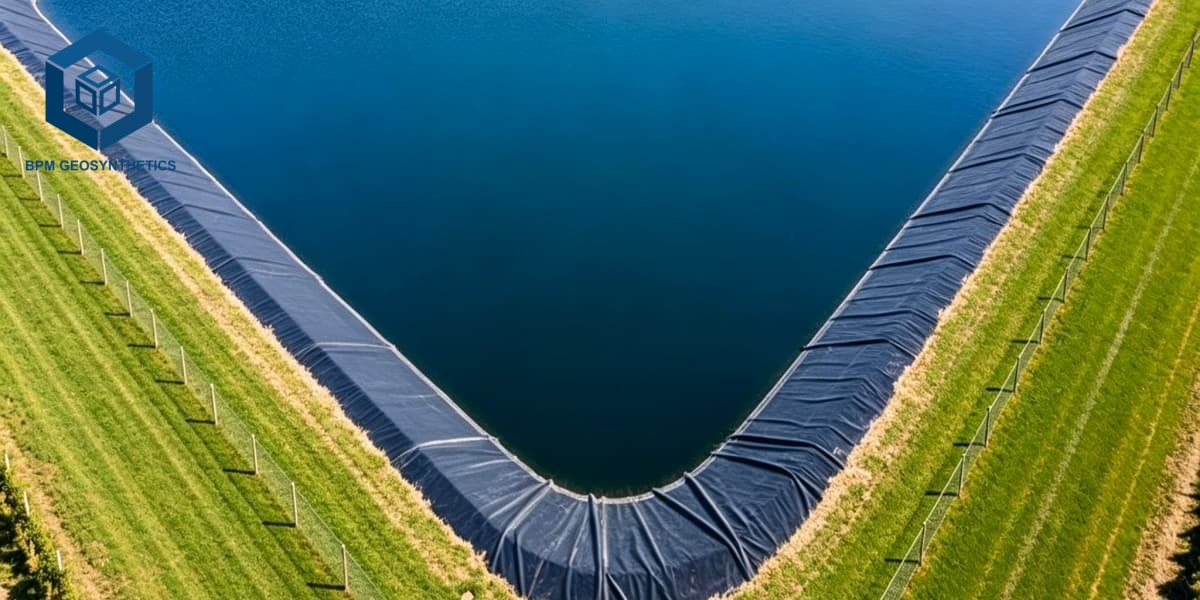
4. Reasons to Choose Agricultural Pond Liner
High-Density Polyethylene (HDPE) is the world’s most widely specified geomembrane material for agricultural water containment projects.
4.1 Superior Mechanical Strength:
Outstanding tensile stress resistance and break elongation allow HDPE to bridge minor subgrade settlements without rupture.
4.2 High Chemical & Biological Inertness:
Resists fertilizers, agricultural chemicals, organic waste, and soil micro-organisms.
4.3 Exceptional Weathering & UV Protection:
Formulated with high-grade carbon black, antioxidants, and thermal stabilizers to resist degradation from relentless sunlight.
4.4 Seamless Field Welding:
Dual-track fusion welding creates a monolithic chemical bond across seams, verified via pressurized air channel testing.
5. Agricultural Pond Liner Material Comparison: HDPE vs. LLDPE vs. PVC vs. EPDM
Selecting the right polymer depends on your pond’s geography, installation complexity, and project lifecycle budget:
Feature / Material | HDPE (High-Density Polyethylene) | LLDPE (Linear Low-Density Polyethylene) | PVC (Polyvinyl Chloride) | EPDM (Ethylene Propylene Diene Monomer) |
Flexibility / Conformability | Moderate | High | Very High | Excellent |
Tensile Strength | Very High | High | Moderate | Moderate |
Puncture Resistance | Exceptional | High | Moderate | Moderate |
UV Resistance (Exposed) | Superior (20+ Yrs) | Good (10–15 Yrs) | Poor (Requires Soil Cover) | Excellent |
Chemical Resistance | Superior | High | Moderate | Moderate |
Cost Efficiency | Best for Medium-Large Ponds | Balanced | Costly per ㎡ | High Initial Material Cost |
Primary Use Case | Commercial Farm Dams, Large Reservoirs | Irregular / Uneven Terrain, Steep Slopes | Small Decorative / Shallow Ponds | Small Custom/Complex Fish Ponds |
5.1 Selection Guide
Choose HDPE for large open reservoirs, agricultural dams, and projects requiring high durability and long-term exposed UV resistance.
Choose LLDPE for ponds with complex geometry, steep slope transitions, or high risk of differential settlement.
Choose EPDM or PVC for small-scale prefabricated tanks, nursery pits, or low-stress applications.
6. How to Choose the Right Agricultural Pond Liner Thickness
Agricultural pond liner thickness directly impacts puncture resistance, lifespan, and overall system installation robustness.
6.1 Thickness Selection Matrix
Liner Thickness | Recommended Applications | Subgrade Conditions |
0.20 mm–0.50 mm (8–20 mil) | Short-term holding pits, nursery pond covers, temporary agricultural lining, smooth sand beds. | Compacted smooth sand or clay; zero rocks, gravel, or roots. |
0.75 mm (30 mil) | Small farm ponds, shallow aquaculture pits, light-duty water containment. | Fine soil with minimal debris. Protective geotextile advised. |
1.00 mm (40 mil) | Standard Agricultural Choice: Irrigation storage, commercial fish ponds, medium reservoirs. | Typical farm subgrade. Geotextile recommended under liner. |
1.50 mm (60 mil) | Heavy-Duty Commercial: Large reservoirs, deep farm dams, manure lagoons, exposed slopes. | Moderate rocky soils, rough subgrades, deep water hydrostatic pressure. |
2.00 mm–3.00 mm (80–120 mil) | Mining dams, industrial-scale agricultural reservoirs, extreme structural loads. | Harsh, uneven conditions; heavy machinery traffic during installation. |
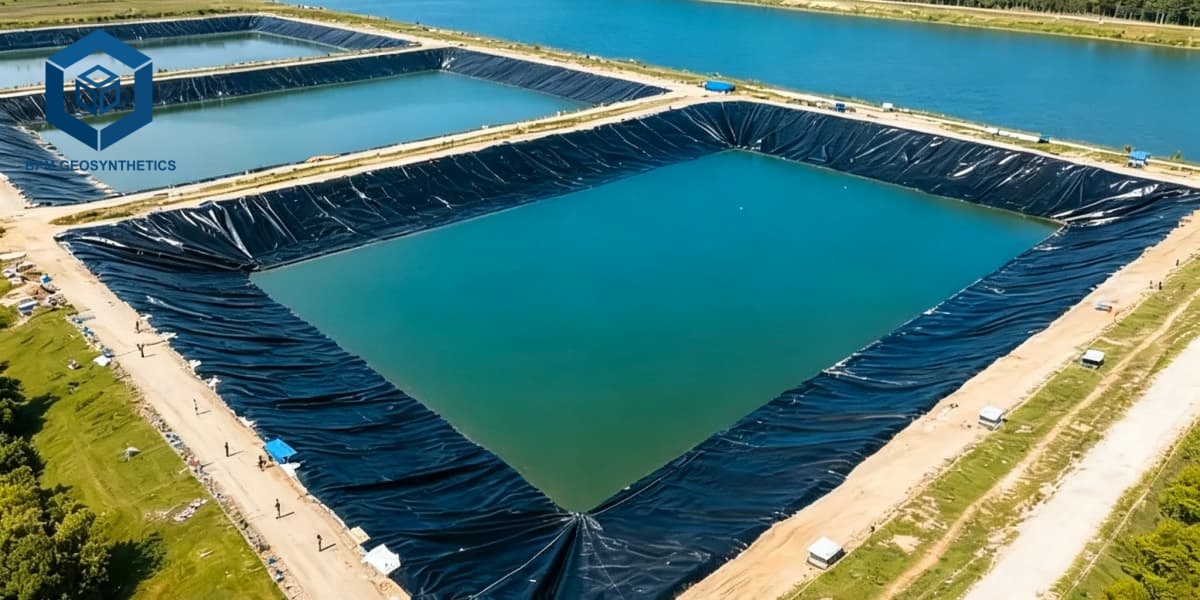
7. Agricultural Pond Liner Key Advantages & Product Differentiation
7.1 Ultra-Wide Roll Format (Up to 10 Meters):
Ultra-wide rolls significantly reduce total field seams, lowering installation time and drastically cutting down potential failure points during seam welding.
7.2 100% Virgin Premium Resin:
Manufactured without recycled post-consumer waste or fillers. This ensures uniform chemical structure, maximum stress-crack resistance, and environmental safety.
7.3 Surface Options (Smooth vs. Textured):
- Smooth: Best for maximum cost efficiency and easy cleaning.
- Single / Double-Textured: Friction-enhanced surface for steep slope stability and safer maintenance access.
7.4 Full Project Customization:
Custom lengths engineered to match your exact pond dimensions, reducing on-site cutting waste and installation labor.
8. Agricultural Pond Liner Step-by-Step Installation Guide
Proper site preparation and professional thermal fusion welding are crucial to ensuring a leak-free containment system.
8.1 Subgrade Preparation:
Ensure a solid, clean structural base. Excavate the pond to design depth and slope ratios. Clear the entire subgrade of sharp rocks, tree roots, vegetation, and debris. Compact the soil base until firm and stable.
8.2 Anchor Trench Excavation:
Secure the pond liner perimeter. Dig a continuous anchor trench (0.5 m × 0.5 m to 1.0 m × 1.0 m) approximately 1.0 meter back from the crest of the pond slope around the full perimeter.
8.3 Geotextile Underlayment Laydown:
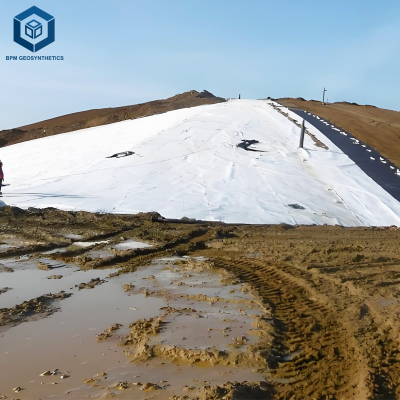
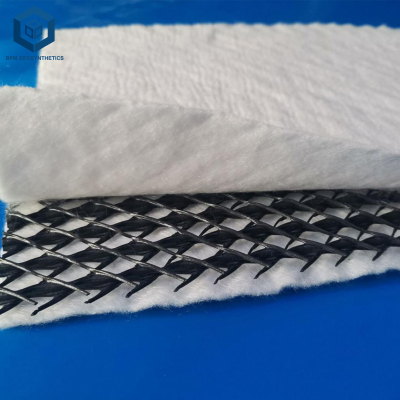
Protect against subsoil puncture. Unroll non-woven staple-fiber geotextile (200 g/m² – 400 g/m²) directly onto the subgrade to cushion the geomembrane against ground pressure and residual subsoil sharp points.
8.4 Geomembrane Deployment:
Unroll panels carefully. Unroll HDPE geomembrane panels carefully down the slopes into the pond base. Avoid dragging panels over rough terrain. Allow panels to rest and relax in sunlight to remove thermal wrinkles before welding.
8.5 Thermal Fusion Seam Welding:
Dual-track hot-wedge welding. Overlap adjacent panels by 10 cm - 15 cm. Use a double-wedge automatic thermal welder to join the main seams, creating a continuous double-track weld with an inner air channel.
8.6 Detailing & Extrusion Welding:
Seal pipe boots and corners. Use a hand-held extrusion welding gun with HDPE welding rod for pipe penetrations, sump pits, corner patches, and irregular geometric details.
8.7 Quality Control Air-Pressure Testing:
Verify 100% seam integrity. Seal both ends of the double-track air channel with needles and inject compressed air to 2.0 bar (200 kPa). Monitor for 5 minutes to confirm zero pressure drop, proving a 100% leak-proof seal.
8.8 Backfilling the Anchor Trench:
Lock the liner system in place. Place the extended edges of the geomembrane pond liner into the perimeter anchor trench. Backfill with clean soil or gravel and compact to permanently secure the system.
9. Agricultural Pond Liner Service Life, Durability & Maintenance
Under normal operating conditions and proper installation, BPM 1.0 mm+ HDPE Agricultural Pond Liners provide an operational service life of 20+ years exposed to direct UV rays, and up to 50+ years when buried under soil or water.
9.1 Best Maintenance Practices
- Routine Perimeter Inspection: Inspect perimeter anchor trenches and exposed top-slope edges quarterly for erosion or wind displacement.
- Keep Debris Away: Prevent heavy fallen tree limbs or sharp agricultural equipment from impacting exposed liner slopes.
- Prompt Repairs: Minor punctures or tears can be repaired easily on-site using a portable hand-held extrusion gun or specialized HDPE patching tape.
10. Agricultural Pond Liner Procurement Guide: How to Avoid Buying Wrong
Before requesting a formal quotation, verify these critical technical parameters:
10.1 Resin Source:
Ensure supplier specifies 100% Virgin HDPE (recycled resin degrades rapidly under UV rays).
10.2 Thickness Compliance:
Confirm nominal thickness vs. minimum thickness tolerances (according to GRI-GM13 standard limits, no single spot test should be lower than -10% of nominal rating).
10.3 Roll Width Selection:
Select wider geomembrane rolls (up to 10.0 meters) to minimize field welding labor expenses and speed up construction.
10.4 Logistics & Container Loading:
Ensure roll lengths match standard 20ft or 40ft High Cube container inner dimensions (11.8 meters) to optimize freight efficiency.
11. Agricultural Pond Liner Frequently Asked Questions (FAQ)
Q1: How can I choose the right agricultural pond liner supplier?
Look for a manufacturer that can provide consistent material quality, technical specifications, testing documentation, customized production, suitable packaging, and technical support for your project.
Q2: Can you help calculate the required pond liner area?
Yes. Provide the pond's length, width, depth, and side slope, and the supplier can help estimate the required liner area and recommend a suitable thickness.
Q3: What information should I provide for an agricultural pond liner quotation?
You can provide the pond dimensions, liner material, required thickness, quantity, delivery destination, and application. If you are unsure about the specifications, providing the pond dimensions and application is enough for an initial recommendation.
Q4: Do I need geotextile under an agricultural pond liner?
A geotextile protection layer is recommended when the pond subgrade contains rocks, roots, sharp objects, or other materials that could damage the liner. It helps protect the geomembrane from puncture and abrasion.
Q5: What is the difference between an agricultural pond liner and ordinary plastic sheeting?
Engineered geomembranes are specifically manufactured for containment applications and provide controlled thickness, high tensile strength, puncture resistance, and reliable welded seams. Ordinary plastic sheeting may not provide the same level of long-term performance.
Get a Fast Engineering Quote for Your Project
Ready to stop water seepage and secure your agricultural water supply? Contact The Best Project Material Co., Ltd. (BPM Geosynthetics)'s technical team today for expert material selection, accurate quantity calculations, and competitive direct factory pricing.
To help us provide an accurate quotation, please share:
- Pond Length, Width, and Depth (or Total Surface Area in ㎡)
- Project Application (Crop Irrigation, Aquaculture, Livestock, Dam)
- Subgrade Conditions (Sand, Clay, Rocky Soil)
- Preferred Thickness or Project Standards (e.g., 1.0 mm GRI-GM13)