What Thickness HDPE Geomembrane for Landfill Liner: Engineering Guide
What is Thickness HDPE Geomembrane for Landfill Liner?
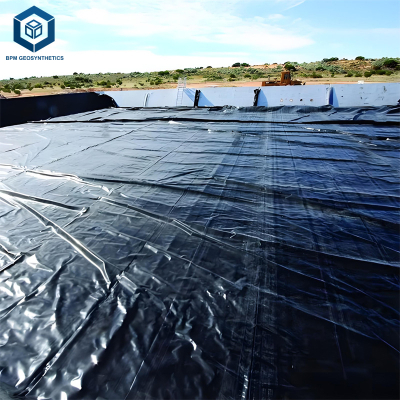
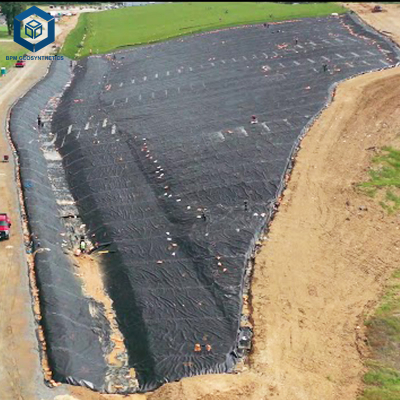
What thickness HDPE geomembrane for landfill liner is a critical engineering question for municipal solid waste (MSW) landfill design, determining the required thickness of high-density polyethylene geomembrane to achieve regulatory compliance, puncture resistance, hydraulic containment, and 50–100+ year design life. For civil engineers, EPC contractors, and procurement managers, understanding what thickness HDPE geomembrane for landfill liner is essential because US EPA Subtitle D and GRI GM13 require minimum 1.5 mm (60 mil) for landfill bottom liners and final covers, with 2.0 mm (80 mil) recommended for high-head conditions (> 30 m), aggressive leachate, or hazardous waste. Thicker liners provide higher puncture resistance (2.0 mm: 450–520 N vs. 1.5 mm: 320–380 N), tear resistance, and safety margin against installation damage. This guide provides engineering analysis of what thickness HDPE geomembrane for landfill liner: regulatory requirements (EPA, EU Landfill Directive), thickness selection based on waste height and leachate head, and procurement specifications.
Technical Specifications by Thickness for Landfill Liner
The table below compares critical engineering parameters for landfill liner thickness options.
| Parameter | 1.0 mm (40 mil) | 1.5 mm (60 mil) | 2.0 mm (80 mil) | 2.5 mm (100 mil) | Engineering Importance |
|---|---|---|---|---|---|
| Regulatory Status (US EPA Subtitle D) | Not permitted | Minimum required | Permitted / Recommended for high head | Special applications | Answers what thickness HDPE geomembrane for landfill liner: 1.5 mm minimum. |
| Puncture Resistance (ASTM D4833) | ~220 – 250 N | ~320 – 380 N | ~450 – 520 N | ~550 – 650 N | Higher thickness = better puncture resistance from subgrade stones. |
| Tear Resistance (ASTM D1004) | ~85 – 100 N | ~125 – 150 N | ~170 – 200 N | ~220 – 260 N | Resists tear propagation from installation damage. |
| Hydraulic Head Capacity (max leachate depth) | ≤ 5 m | ≤ 20 m | ≤ 30 m | ≤ 40 m | Thicker liner withstands higher leachate pressure without stress cracking. |
| Tensile Yield Strength (ASTM D6693) | ≥ 18 kN/m | ≥ 27 kN/m | ≥ 36 kN/m | ≥ 45 kN/m | Linear scaling with thickness. |
| Relative Material Cost | 0.7x baseline | 1.0x (baseline) | 1.3 – 1.4x | 1.7 – 1.8x | Thicker = significantly higher cost. |
| Installation Difficulty | Easy (light rolls) | Standard | Heavier rolls (requires heavier equipment) | Very heavy (crane often required) | 2.0 mm rolls weigh ~1,500 kg for 7m × 100m. |
| Typical Landfill Application | Not for MSW landfills | Standard MSW landfill bottom liner | High head (> 20 m), hazardous waste, Subtitle C | Extreme head, nuclear waste | 1.5 mm is standard; 2.0 mm for high-risk. |
Key takeaway: What thickness HDPE geomembrane for landfill liner? Minimum 1.5 mm (60 mil) per US EPA Subtitle D. 2.0 mm recommended for head > 20 m, hazardous waste, or aggressive leachate. 1.0 mm is not permitted.
Material Structure and Composition for Landfill Liner Thickness
Understanding material properties helps answer what thickness HDPE geomembrane for landfill liner.
| Component | Material | Function | Thickness Impact | |
|---|---|---|---|---|
| Base Resin | PE100/PE4710 bimodal (hexene/octene) | Provides mechanical strength, stress crack resistance | Same resin regardless of thickness; PENT ≥ 500 h required. | |
| Carbon Black | 2.0–3.0% furnace black | UV protection for exposed geomembrane | Same content; dispersion Category 1 or 2. | |
| Antioxidant Package | Primary + secondary (hindered phenol + phosphite) | Prevents thermal/oxidative degradation | OIT ≥ 100 min, HP-OIT ≥ 400 min regardless of thickness. |
Engineering insight: The answer to what thickness HDPE geomembrane for landfill liner depends on regulatory requirements and site conditions, not on chemical resistance — all thicknesses have same material properties.
Manufacturing Process: How Thickness Is Controlled for Landfill Liners
Production parameters affect thickness consistency and quality.
Resin compounding: Virgin PE100 resin + carbon black + antioxidants blended.
Extrusion: Flat die extrusion (200–220°C). Thicker geomembrane requires slower line speed (1.5 mm: 12–15 m/min; 2.0 mm: 8–10 m/min).
Calendering / polishing: Rolls set final thickness (±5% tolerance for premium, ±10% per GRI GM13).
Cooling: Controlled cooling to prevent residual stress.
Quality inspection: Thickness measured at 10 points per roll. PENT, OIT, puncture, tear testing per GRI GM13.
Packaging: UV-protective wrapping for shipping.
Performance Comparison: Thickness Options for Landfill Liners
Comparing different thicknesses for what thickness HDPE geomembrane for landfill liner.
| Liner Thickness | Regulatory Compliance (US EPA) | Puncture Resistance | Head Capacity | Relative Cost (Material) | Typical Landfill Application |
|---|---|---|---|---|---|
| 1.0 mm (40 mil) | No — not permitted for MSW landfills | Low (220 N) | ≤ 5 m | 0.7x | Temporary covers only — not for bottom liners |
| 1.5 mm (60 mil) | Yes — minimum standard | Standard (320 N) | ≤ 20 m | 1.0x (baseline) | Standard MSW landfill bottom liners, final covers |
| 2.0 mm (80 mil) | Yes — recommended for high head | High (450 N) | ≤ 30 m | 1.3 – 1.4x | High head (> 20 m), hazardous waste, Subtitle C |
| 2.5 mm (100 mil) | Yes — special applications | Very high (550 N) | ≤ 40 m | 1.7 – 1.8x | Extreme head, nuclear waste, very sharp subgrade |
Conclusion: What thickness HDPE geomembrane for landfill liner? 1.5 mm is industry standard. Upgrade to 2.0 mm for head > 20 m, hazardous waste, or high puncture risk. 1.0 mm not allowed.
Industrial Applications by Landfill Liner Thickness
Application-specific recommendations for what thickness HDPE geomembrane for landfill liner.
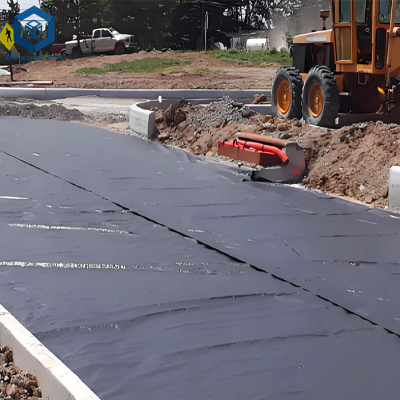
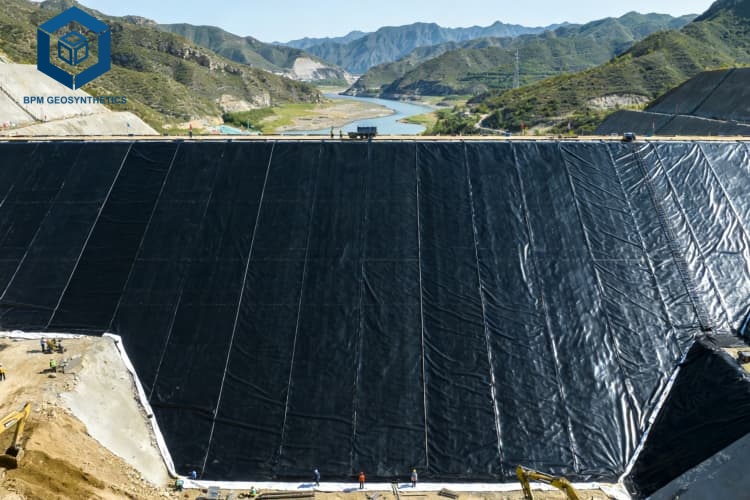
MSW landfill bottom liner (standard, head < 20 m): 1.5 mm HDPE, GRI GM13. 50–100+ year design life.
MSW landfill bottom liner (high head > 20 m): 2.0 mm HDPE. Higher safety margin for stress cracking.
Hazardous waste landfill (Subtitle C): 2.0 mm primary liner (often double liner system). Regulatory requirement.
Landfill final cover (cap): 1.5 mm HDPE (same as bottom liner). 1.0 mm sometimes used for temporary covers.
Leachate collection ponds: 1.5 mm HDPE minimum; 2.0 mm for high head.
Construction quality assurance: Thicker liners (2.0 mm) easier to weld (more forgiving), but require heavier equipment.
Common Industry Problems with Landfill Liner Thickness Selection
Real-world failures help answer what thickness HDPE geomembrane for landfill liner.
Problem 1: Puncture failure in 1.0 mm liner (non-compliant installation)
Root cause: 1.0 mm HDPE used in landfill bottom liner (not permitted). Puncture from subgrade stone.
Engineering solution: Always specify 1.5 mm minimum for what thickness HDPE geomembrane for landfill liner. 1.0 mm is not EPA-compliant.
Problem 2: Stress cracking under high head (1.5 mm liner with low PENT resin)
Root cause: Mononodal butene resin (PENT < 200 h) used in 1.5 mm liner. Head 25 m caused cracking.
Solution: Specify PE100/PE4710 bimodal resin with PENT ≥ 500 hours. For head > 20 m, upgrade to 2.0 mm.
Problem 3: Installation damage from sharp subgrade (insufficient geotextile)
Root cause: 1.5 mm liner installed over sharp stones without adequate geotextile cushion.
Solution: Use nonwoven geotextile ≥ 500 g/m². Consider upgrading to 2.0 mm liner for higher puncture resistance.
Problem 4: Regulatory violation — 1.0 mm liner installed in MSW landfill
Root cause: Contractor used non-compliant material to reduce cost. EPA fined facility.
Solution: Specify minimum 1.5 mm per US EPA Subtitle D. This is the definitive answer to what thickness HDPE geomembrane for landfill liner.
Risk Factors and Prevention Strategies for Landfill Liner Thickness
Risk: Specifying 1.0 mm for MSW landfill (non-compliant): Regulatory fines, liner replacement. Mitigation: Always specify 1.5 mm minimum per EPA Subtitle D.
Risk: Underestimating leachate head (> 20 m with 1.5 mm): Stress cracking potential. Mitigation: For head > 20 m, specify 2.0 mm liner. Calculate head based on waste height and leachate collection efficiency.
Risk: No geotextile cushion on sharp subgrade: Puncture of 1.5 mm liner. Mitigation: Use nonwoven geotextile ≥ 500 g/m². For very sharp subgrade, specify 2.0 mm liner.
Risk: Low PENT resin (< 500 hours) in 1.5 mm liner: Premature stress cracking. Mitigation: Specify PE100/PE4710 resin. Request PENT test report (≥ 500 h, ≥ 800 h recommended).
Procurement Guide: How to Specify What Thickness HDPE Geomembrane for Landfill Liner
Follow this 8-step checklist for B2B purchasing decisions.
Determine regulatory jurisdiction: US EPA Subtitle D requires 1.5 mm minimum for MSW landfills. EU Landfill Directive similar.
Calculate maximum leachate head: Head < 20 m → 1.5 mm acceptable; Head > 20 m → 2.0 mm recommended.
Assess subgrade puncture risk: Sharp stones, angular gravel → consider 2.0 mm or increase geotextile to ≥ 500 g/m².
Specify resin type: PE100/PE4710 bimodal with hexene/octene co-monomer. PENT ≥ 500 hours (≥ 800 h for high head).
Require GRI GM13 compliance: Full test reports: tensile, tear, puncture, PENT, OIT (≥ 100 min), HP-OIT (≥ 400 min), carbon black (2–3%, Category 1–2).
Order samples and perform thickness verification: Measure 10 points per roll. Accept ±10% per GRI GM13; premium ±5%.
Specify geotextile cushion: Nonwoven ≥ 300 g/m² (500 g/m² for sharp subgrade).
Require third-party QA/QC: Independent testing of thickness, puncture, and seam strength before acceptance.
Engineering Case Study: What Thickness HDPE Geomembrane for Landfill Liner — 2.0 mm Upgrade
Project type: Large MSW landfill bottom liner (leachate head 25 m, sharp subgrade).
Location: Midwest USA.
Project size: 200,000 m².
Thickness decision: 1.5 mm meets EPA minimum, but head 25 m exceeds recommended limit for 1.5 mm (≤ 20 m). Sharp subgrade increases puncture risk.
Selected thickness: 2.0 mm HDPE, PE100 resin, PENT 850 hours, OIT 125 minutes. Geotextile cushion: 500 g/m².
Results after 5 years: Zero punctures, no stress cracking. Regulatory inspection passed. This case demonstrates that what thickness HDPE geomembrane for landfill liner should be based on head calculation and subgrade condition, not just minimum regulatory thickness.
Frequently Asked Questions: What Thickness HDPE Geomembrane for Landfill Liner
Q1: What is the minimum thickness for MSW landfill liner per US EPA?
1.5 mm (60 mil) per US EPA Subtitle D. This is the definitive answer to what thickness HDPE geomembrane for landfill liner for municipal solid waste landfills.
Q2: Can 1.0 mm HDPE be used for landfill liner?
No. 1.0 mm is not permitted for MSW landfill bottom liners. May be used for temporary covers only. Always specify 1.5 mm minimum.
Q3: When should 2.0 mm HDPE be used instead of 1.5 mm?
For leachate head > 20 m, hazardous waste landfills (Subtitle C), very sharp subgrade, or when higher puncture resistance is required. 2.0 mm provides 40–50% higher puncture resistance.
Q4: Does thicker liner cost more?
Yes. 2.0 mm costs 30–40% more than 1.5 mm (material cost). Installed cost difference is 20–30% because labor is similar. Evaluate lifecycle cost and risk.
Q5: Is 2.5 mm ever required for landfill liners?
Rarely. For extreme head (> 30 m), nuclear waste, or very sharp subgrade. Most MSW landfills use 1.5 mm or 2.0 mm.
Q6: Does thickness affect chemical resistance?
No. Chemical resistance is a material property of HDPE, not thickness-dependent. All thicknesses have the same resistance to landfill leachate.
Q7: What PENT value is required for landfill liner HDPE?
Minimum 500 hours per GRI GM13. For high head (> 20 m) or long design life (100+ years), specify PENT ≥ 800 hours.
Q8: How is liner thickness measured on site?
Using a digital micrometer (accuracy 0.01 mm). Measure at 10 random points per roll, 50 mm from edges. Average must be within ±10% of nominal per GRI GM13.
Q9: Can 1.5 mm liner be used for hazardous waste landfill?
Typically no. Hazardous waste (Subtitle C) often requires 2.0 mm primary liner and double liner system. Verify with state EPA regulations.
Q10: What is the design life of 1.5 mm vs 2.0 mm landfill liner?
Both have 50–100+ year design life with proper resin (PE100, PENT ≥ 500 h). Thicker liner has higher safety margin against puncture and stress cracking.
Request Technical Support or Quotation for Landfill Liner Thickness Selection
For project-specific what thickness HDPE geomembrane for landfill liner analysis, including head calculation, regulatory compliance, and bulk procurement, our technical team is available.
Request a quotation – Provide waste height, leachate head, subgrade condition, and area.
Request engineering samples – Receive 1.5 mm and 2.0 mm HDPE samples with puncture and PENT test reports.
Download technical specifications – EPA Subtitle D compliance guide, thickness selection flowchart, and procurement checklist.
Contact technical support – Thickness optimization, head calculation, and regulatory compliance for landfill liner projects.
About the Author
This guide on what thickness HDPE geomembrane for landfill liner was written by Dipl.-Ing. Hendrik Voss, a civil engineer with 19 years of experience in geosynthetics for landfill and environmental containment. He has designed over 200 landfill liner systems across North America, Europe, and Asia, specializing in thickness optimization, head calculation, and regulatory compliance for MSW and hazardous waste landfills. His work is referenced in GRI and ASTM D35 committee discussions on geomembrane thickness standards for landfill applications.