1.5mm vs 2.0mm HDPE Liner for Tailings Pond: Engineering Guide
What is 1.5mm vs 2.0mm HDPE Liner for Tailings Pond?
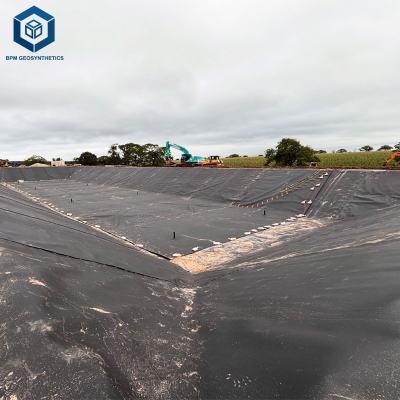
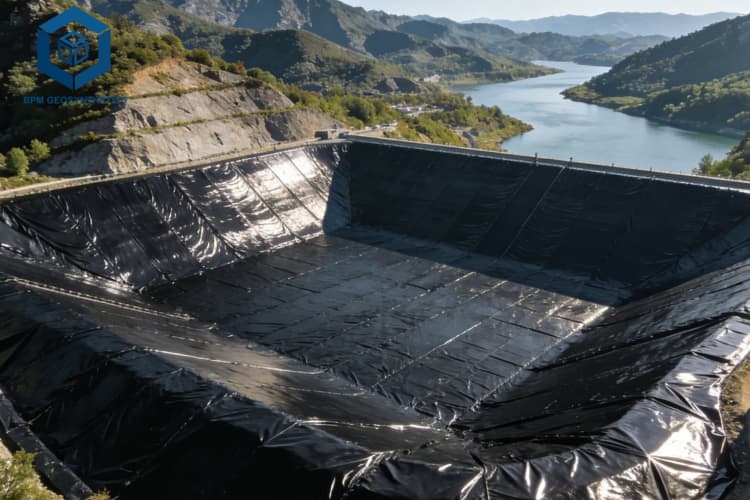
1.5mm vs 2.0mm HDPE liner for tailings pond compares the two most common thicknesses of high-density polyethylene geomembrane used in mining tailings storage facilities (TSFs). For mining engineers, EPC contractors, and procurement managers, understanding 1.5mm vs 2.0mm HDPE liner for tailings pond is critical because thickness selection directly affects puncture resistance from sharp tailings, hydraulic head capacity, stress crack resistance under thermal cycling, and overall containment cost. A 1.5mm liner (60 mil) is standard for many tailings ponds with moderate head (< 20 m) and rounded tailings. A 2.0mm liner (80 mil) provides 40–50% higher puncture resistance (450–520 N vs. 320–380 N), greater safety margin for high head (> 20 m), and better resistance to installation damage. This guide provides engineering data on 1.5mm vs 2.0mm HDPE liner for tailings pond: puncture resistance, head capacity, stress crack resistance (PENT), cost differential (2.0mm is 30–40% more material cost), and application-specific recommendations for copper, gold, and oil sands tailings.
Technical Specifications: 1.5mm vs 2.0mm HDPE Liner for Tailings Pond
The table below compares critical engineering parameters for tailings pond liner thickness options.
| Parameter | 1.5 mm (60 mil) | 2.0 mm (80 mil) | Engineering Importance |
|---|---|---|---|
| Puncture Resistance (ASTM D4833) | ~320 – 380 N | ~450 – 520 N | 2.0mm provides 40–50% higher puncture resistance — critical for sharp tailings (crushed ore). Key factor in 1.5mm vs 2.0mm HDPE liner for tailings pond. |
| Tear Resistance (ASTM D1004) | ~125 – 150 N | ~170 – 200 N | Higher tear resistance prevents propagation of installation damage. |
| Hydraulic Head Capacity (max tailings/water depth) | ≤ 20 m | ≤ 30 m | For head > 20 m, 2.0mm recommended to prevent stress cracking under load. |
| PENT Stress Crack Resistance (ASTM F1473) | ≥ 500 hours (resin-dependent) | ≥ 500 hours (resin-dependent) | Same resin requirement for both. Specify PE100/PE4710 bimodal with PENT ≥ 500 h (≥ 800 h recommended). Thickness does not change PENT. |
| Standard OIT (ASTM D3895) | ≥ 100 minutes | ≥ 100 minutes | Same antioxidant requirement; higher OIT (≥ 120 min) for high-temperature tailings. |
| High Pressure OIT (ASTM D5885) | ≥ 400 minutes | ≥ 400 minutes | Same requirement; HP-OIT ≥ 500 min recommended for long-term service. |
| Subgrade Flatness Tolerance (ASTM F710) | ≤ 3 mm/2m | ≤ 3 mm/2m | Similar; thicker liner slightly more forgiving of small irregularities. |
| Relative Material Cost | 1.0x (baseline) | 1.3 – 1.4x | 2.0mm costs 30–40% more in material. Installed cost difference is 20–30% (labor similar). |
| Roll Weight (7m × 100m) | ~1,000 – 1,100 kg | ~1,400 – 1,500 kg | 2.0mm rolls heavier — requires heavier deployment equipment. |
Key takeaway: 1.5mm vs 2.0mm HDPE liner for tailings pond — 1.5mm is standard for head < 20 m; 2.0mm provides 40–50% higher puncture resistance and is recommended for head > 20 m, sharp tailings, or higher safety margin.
Material Structure and Composition: Both Thicknesses Use Same Resin
Understanding material properties helps in 1.5mm vs 2.0mm HDPE liner for tailings pond selection.
| Component | Material | Function | Thickness Impact |
|---|---|---|---|
| Base Resin | PE100/PE4710 bimodal (hexene/octene) | Provides mechanical strength, stress crack resistance | Same resin for both thicknesses. PENT ≥ 500 h required (≥ 800 h recommended). |
| Carbon Black | 2.0–3.0% furnace black, Category 1–2 dispersion | UV protection for exposed tailings pond surfaces | Same content regardless of thickness. |
| Antioxidant Package | Primary + secondary (hindered phenol + phosphite) | Prevents thermal/oxidative degradation | Same OIT requirements; higher OIT for high-temperature tailings. |
Engineering insight: The 1.5mm vs 2.0mm HDPE liner for tailings pond decision is about mechanical robustness (puncture, tear, head capacity), not chemical resistance — both have identical chemical properties.
Manufacturing Process: How Thickness Affects Production for Tailings Ponds
Production differences between 1.5mm and 2.0mm liners.
Resin compounding: Same for both thicknesses. Virgin PE100 resin + carbon black + antioxidants.
Extrusion: 2.0mm requires slower line speed (8–10 m/min vs. 12–15 m/min for 1.5mm), reducing production output by 30–40%. This contributes to higher cost.
Calendering / polishing: Same process; rolls set final thickness.
Cooling: 2.0mm requires longer cooling zone to prevent residual stress.
Quality inspection: Same tests: thickness, tensile, tear, puncture, PENT, OIT, carbon black.
Roll winding: 2.0mm rolls heavier — requires stiffer cores (6 inch vs. 3 inch).
Performance Comparison: 1.5mm vs 2.0mm HDPE Liner for Tailings Pond vs. Alternatives
Comparing thickness options and alternative liner materials for tailings ponds.
| Liner Type | Puncture Resistance (N) | Head Capacity (m) | Relative Cost | Best Tailings Application |
|---|---|---|---|---|
| 1.0 mm HDPE | ~220 – 250 N | ≤ 10 m | 0.7x | Not recommended for tailings ponds — too thin. |
| 1.5 mm HDPE | ~320 – 380 N | ≤ 20 m | 1.0x (baseline) | Standard for tailings ponds with moderate head and rounded tailings. |
| 2.0 mm HDPE | ~450 – 520 N | ≤ 30 m | 1.3 – 1.4x | High head (> 20 m), sharp tailings (crushed ore), higher safety margin. |
| 2.5 mm HDPE | ~550 – 650 N | ≤ 40 m | 1.7 – 1.8x | Extreme head, very sharp tailings, nuclear waste. |
Conclusion: 1.5mm vs 2.0mm HDPE liner for tailings pond — 1.5mm is standard; 2.0mm is recommended for higher head, sharper tailings, or greater safety margin.
Industrial Applications by Tailings Type for 1.5mm vs 2.0mm HDPE Liner for Tailings Pond
Application-specific recommendations for 1.5mm vs 2.0mm HDPE liner for tailings pond.
Copper tailings (acid-generating, sharp ore): 2.0mm HDPE recommended. Higher puncture resistance from sharp crushed ore. Acid resistance same for both thicknesses.
Gold tailings (cyanide leach, fine tailings): 1.5mm HDPE acceptable for moderate head (< 20 m). 2.0mm for high head (> 20 m).
Oil sands tailings (mature fine tailings, high solids): 1.5mm HDPE typical for containment ponds. High abrasion may favor 2.0mm.
Potash / brine tailings (saline): 1.5mm HDPE sufficient. Chemical resistance same for both.
Uranium tailings (radioactive, acidic): 2.0mm HDPE recommended for higher safety margin and regulatory requirements.
Common Industry Problems with 1.5mm vs 2.0mm HDPE Liner for Tailings Pond
Real-world failures help guide thickness selection.
Problem 1: Puncture from sharp copper tailings (1.5mm liner)
Root cause: 1.5mm HDPE used with sharp, angular crushed ore. Puncture resistance (320 N) insufficient. Solution: Upgrade to 2.0mm HDPE (450+ N puncture resistance) or increase geotextile cushion to 800 g/m². This is a key consideration in 1.5mm vs 2.0mm HDPE liner for tailings pond.
Problem 2: Stress cracking under high head (1.5mm liner with low PENT resin)
Root cause: Head 25 m, 1.5mm liner with PENT < 500 hours (mononodal resin). Cracks formed. Solution: Specify PE100 resin with PENT ≥ 800 hours. For head > 20 m, use 2.0mm regardless of PENT.
Problem 3: Installation damage from heavy equipment (2.0mm liner more forgiving)
Root cause: 1.5mm liner torn by tracked vehicle during installation. Solution: Use 2.0mm liner in high-traffic areas during construction. Thicker liner resists installation damage.
Problem 4: Higher cost of 2.0mm liner over-specified for low-risk tailings
Root cause: 2.0mm specified for small tailings pond with head < 5 m and fine tailings. Unnecessary 30% cost premium. Solution: Use 1.5mm for low head, fine tailings. Reserve 2.0mm for high head or sharp tailings.
Risk Factors and Prevention Strategies for Tailings Pond Liner Thickness
Risk: Specifying 1.5mm for high head (> 20 m): Stress cracking potential increases. Mitigation: For head > 20 m, use 2.0mm regardless of resin quality.
Risk: Specifying 2.0mm for low head, fine tailings (unnecessary cost): Paying 30–40% premium for no benefit. Mitigation: Evaluate head and tailings angularity. 1.5mm sufficient for head < 20 m and rounded tailings.
Risk: Low PENT resin in either thickness: Premature stress cracking. Mitigation: Specify PE100/PE4710 bimodal resin with PENT ≥ 500 hours (≥ 800 h recommended).
Risk: Inadequate geotextile cushion with 1.5mm liner on sharp subgrade: Puncture. Mitigation: Use nonwoven geotextile ≥ 500 g/m². For very sharp tailings, upgrade to 2.0mm liner.
Procurement Guide: How to Choose Between 1.5mm vs 2.0mm HDPE Liner for Tailings Pond
Follow this 8-step checklist for B2B purchasing decisions.
Calculate maximum hydraulic head (tailings + water depth): Head < 10 m → 1.5mm acceptable. Head 10–20 m → 1.5mm with high PENT (≥ 800 h). Head > 20 m → 2.0mm required.
Assess tailings angularity: Sharp, crushed ore → 2.0mm recommended. Rounded tailings (e.g., natural sand, fine tailings) → 1.5mm acceptable.
Determine regulatory requirements: Some jurisdictions require 2.0mm for certain tailings types (e.g., uranium, cyanide leach). Verify local regulations.
Specify resin type: PE100/PE4710 bimodal with hexene/octene co-monomer. PENT ≥ 500 hours (≥ 800 h recommended).
Require GRI GM13 compliance: Test reports: puncture, tear, tensile, PENT, OIT (≥ 100 min), HP-OIT (≥ 400 min), carbon black (2–3%, Category 1–2).
Specify geotextile cushion: Nonwoven ≥ 300 g/m² (500 g/m² for sharp tailings).
Order samples and perform puncture testing: Test with site-specific tailings samples under representative pressure.
Calculate lifecycle cost: 2.0mm costs 30–40% more upfront but provides higher safety margin and may reduce risk of catastrophic failure.
Engineering Case Study: 1.5mm vs 2.0mm HDPE Liner for Tailings Pond — Copper Mine
Project type: Copper tailings pond (acid-generating, sharp crushed ore).
Location: Atacama Desert, Chile.
Project size: 200,000 m².
Head: 25 m (high).
1.5mm vs 2.0mm HDPE liner for tailings pond decision: 1.5mm would meet EPA minimum but head > 20 m and sharp ore increase puncture and stress crack risk. Selected 2.0mm HDPE, PE100 resin (PENT 850 hours), OIT 125 minutes. Geotextile cushion: 500 g/m².
Results after 5 years: Zero punctures, no stress cracking. Regulatory inspection passed. Mine operator reported that 2.0mm liner provided peace of mind for high-risk application. The additional 30% material cost was justified by risk reduction.
Frequently Asked Questions: 1.5mm vs 2.0mm HDPE Liner for Tailings Pond
Q1: Which is better — 1.5mm or 2.0mm HDPE liner for tailings pond?
It depends on head and tailings angularity. 1.5mm is standard for head < 20 m and rounded tailings. 2.0mm provides 40–50% higher puncture resistance and is recommended for head > 20 m or sharp tailings.
Q2: How much more does 2.0mm cost than 1.5mm?
Material cost: 30–40% higher. Installed cost: 20–30% higher (labor similar). Evaluate risk vs. cost for your specific tailings conditions.
Q3: Can 1.5mm HDPE be used for copper tailings with sharp ore?
Not recommended. Sharp ore puncture risk is high. Use 2.0mm HDPE for copper tailings (crushed ore) or increase geotextile cushion to 800 g/m² with 1.5mm.
Q4: Does thicker liner prevent stress cracking?
Not directly — stress cracking resistance is primarily a function of resin type (PENT). However, thicker liner reduces stress per unit thickness under same load, providing higher safety margin.
Q5: What PENT value is required for tailings pond liners?
Minimum 500 hours per GRI GM13. For high head (> 20 m) or long design life (50+ years), specify PENT ≥ 800 hours regardless of thickness.
Q6: Is 2.0mm liner harder to install than 1.5mm?
Slightly. 2.0mm rolls are 40–50% heavier (1,500 kg vs. 1,000 kg for 7m × 100m). Requires heavier deployment equipment. Welding parameters differ (higher temperature, slower speed).
Q7: Can I use 1.5mm liner for a tailings pond with head 25m?
Not recommended. Head > 20m increases stress cracking risk even with high PENT resin. Upgrade to 2.0mm for head > 20m.
Q8: What is the design life difference between 1.5mm and 2.0mm?
Both can achieve 50–100+ years with proper resin (PE100, PENT ≥ 500 h). 2.0mm has higher safety margin against puncture and installation damage.
Q9: How does geotextile cushion affect thickness selection?
Heavier geotextile (500–800 g/m²) can compensate for using 1.5mm liner on moderately sharp subgrade. For very sharp tailings, 2.0mm is still recommended.
Q10: Which thickness do most mining tailings ponds use?
1.5mm is most common for standard applications. 2.0mm is used for high head (> 20 m), sharp tailings, or where higher safety margin is required.
Request Technical Support or Quotation for Tailings Pond HDPE Liner
For project-specific 1.5mm vs 2.0mm HDPE liner for tailings pond selection, including head calculation, resin verification, and bulk procurement, our technical team is available.
Request a quotation – Provide tailings type, head, area, and angularity.
Request engineering samples – Receive 1.5mm and 2.0mm HDPE samples with puncture and PENT test reports.
Download technical specifications – Tailings pond liner selection guide, head calculation tool, and procurement checklist.
Contact technical support – Thickness optimization, resin verification, and puncture risk assessment for tailings ponds.
About the Author
This guide on 1.5mm vs 2.0mm HDPE liner for tailings pond was written by Dipl.-Ing. Hendrik Voss, a civil engineer with 19 years of experience in geosynthetics for mining tailings facilities. He has designed over 150 tailings pond liner systems across North and South America, Australia, and Africa, specializing in thickness optimization, puncture risk assessment, and regulatory compliance for copper, gold, uranium, and oil sands tailings. His work is referenced in GRI and ASTM D35 committee discussions on geomembrane standards for mining applications.