How to Choose Geomembrane Thickness for Fish Pond: Engineering Guide
What is How to Choose Geomembrane Thickness for Fish Pond?
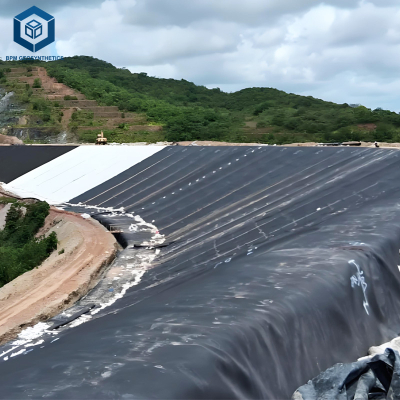
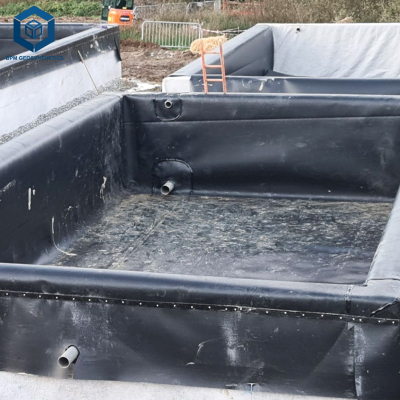
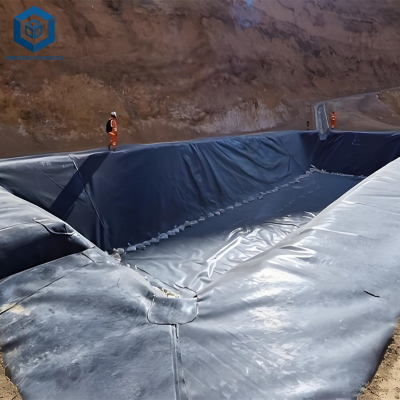
How to choose geomembrane thickness for fish pond is a critical engineering decision for aquaculture operations, determining liner durability, puncture resistance, UV protection, and cost-effectiveness. For procurement managers, aquaculture engineers, and EPC contractors, understanding how to choose geomembrane thickness for fish pond involves balancing fish welfare (non-toxic materials), mechanical protection (against fish teeth, claws, and maintenance equipment), UV exposure (ponds are often uncovered), and installation conditions. Typical thickness ranges from 0.5 mm (20 mil) for small decorative ponds to 1.0 mm (40 mil) for commercial fish ponds, 1.5 mm (60 mil) for high-risk or large ponds, and 2.0 mm (80 mil) for very large or abrasive environments. This guide provides engineering data on how to choose geomembrane thickness for fish pond: puncture risk assessment, UV degradation, fish species considerations, and procurement specifications for tilapia, catfish, trout, and shrimp aquaculture.
Technical Specifications for Fish Pond Geomembrane Thickness
The table below defines critical parameters for how to choose geomembrane thickness for fish pond.
| Parameter | Small Pond (< 1,000 m²) | Commercial Pond (1,000–10,000 m²) | Large Pond (> 10,000 m²) | Engineering Importance |
|---|---|---|---|---|
| Recommended Thickness | 0.5 – 0.75 mm (20–30 mil) | 1.0 mm (40 mil) | 1.0 – 1.5 mm (40–60 mil) | Answers how to choose geomembrane thickness for fish pond based on size.}, |
| Puncture Resistance (ASTM D4833) | ~150 – 200 N | ~220 – 250 N | ~250 – 350 N | Larger ponds have higher risk of puncture from maintenance equipment falling into pond.}, |
| UV Resistance (carbon black) | 2.0–3.0% required | 2.0–3.0% required | 2.0–3.0% required | Fish ponds are typically uncovered — UV exposure is critical regardless of thickness.}, |
| Tensile Strength (ASTM D6693) | ≥ 15 kN/m | ≥ 22 kN/m | ≥ 27 kN/m | Thicker liner handles higher water pressure and wave action.}, |
| Material Type | LLDPE or HDPE | HDPE (preferred) or LLDPE | HDPE (bimodal) | HDPE offers better puncture resistance and UV stability.}, |
| Fish Species Compatibility | All (non-toxic liner) | All | All | Geomembrane must be fish-safe (no plasticizers, no toxic additives).}, |
| Expected Service Life | 10 – 15 years | 15 – 20 years | 20 – 25+ years | Thicker liners last longer — important for commercial ROI.}, |
Key takeaway: How to choose geomembrane thickness for fish pond: 0.5–0.75 mm for small ponds, 1.0 mm for commercial ponds, 1.0–1.5 mm for large ponds. All require UV protection (carbon black 2–3%).
Material Structure and Composition for Fish Pond Geomembrane
Understanding material properties helps in how to choose geomembrane thickness for fish pond.
| Parameter | HDPE (High-Density) | LLDPE (Linear Low-Density) | Fish Pond Suitability |
|---|---|---|---|
| Density | 0.940 – 0.960 g/cm³ | 0.925 – 0.940 g/cm³ | HDPE stiffer, better puncture resistance. LLDPE more flexible.}, |
| Puncture Resistance | Higher (for same thickness) | Lower | HDPE preferred for fish ponds with sharp rocks or heavy equipment.}, |
| Flexibility | Lower (stiffer) | Higher (more conformable) | LLDPE better for uneven subgrade.}, |
| UV Resistance | Excellent (with carbon black 2–3%) | Excellent | Both require carbon black for UV protection.}, |
| Cost | Slightly higher | Slightly lower | HDPE typically 5–10% more expensive.}, |
Engineering insight: When learning how to choose geomembrane thickness for fish pond, HDPE is preferred for larger ponds (better puncture resistance); LLDPE for smaller ponds or uneven subgrades.
Manufacturing Process: How Quality Affects Fish Pond Liner
Production quality influences liner durability.
Resin compounding: Virgin polyethylene + carbon black (2–3%) + antioxidants. Fish-safe — no toxic additives.
Extrusion: Flat die extrusion (200–220°C). Thickness tolerance ±10% per GRI GM13.
Calendering / polishing: Smooth surface preferred for fish ponds (textured may trap debris).
Cooling: Controlled cooling to prevent residual stress.
Quality inspection: Thickness, tensile, tear, puncture, carbon black content. Request fish-safe certification.
Packaging: UV-protective wrapping for shipping.
Performance Comparison: Fish Pond Liner Thicknesses vs. Alternatives
Comparing geomembrane options for how to choose geomembrane thickness for fish pond.
| Liner Material | Thickness (mm) | Puncture Resistance | UV Resistance | Fish Safe | Cost ($/m²) | Suitable for Fish Pond? |
|---|---|---|---|---|---|---|
| HDPE (0.5 mm) | 0.5 | ~150 N | Yes (carbon black) | Yes | 2 – 4 | Small decorative ponds, low risk}, |
| HDPE (0.75 mm) | 0.75 | ~180 – 220 N | Yes | Yes | 3 – 5 | Small commercial ponds}, |
| HDPE (1.0 mm) | 1.0 | ~220 – 250 N | Yes | Yes | 4 – 7 | Standard commercial fish ponds — most common}, |
| HDPE (1.5 mm) | 1.5 | ~320 – 380 N | Yes | Yes | 6 – 10 | Large ponds, high puncture risk, heavy equipment}, |
| EPDM (rubber) | ||||||
| 1.0 – 1.5 | Good | Poor (requires cover) | Yes | 8 – 15 | Not recommended — UV sensitive, expensive}, |
Conclusion: How to choose geomembrane thickness for fish pond — 1.0 mm HDPE is standard for commercial aquaculture. Thicker for larger ponds or higher puncture risk.
Industrial Applications by Fish Pond Type
Application-specific recommendations for how to choose geomembrane thickness for fish pond.
Small decorative pond (goldfish, koi): 0.5 mm HDPE or LLDPE. Low risk, limited equipment use.
Tilapia / catfish pond (commercial, 1,000–5,000 m²): 1.0 mm HDPE. Standard thickness for most aquaculture.
Trout pond (cold water, high oxygen): 1.0 mm HDPE with high UV resistance. Trout farms often uncovered.
Shrimp pond (saltwater, coastal): 1.0–1.5 mm HDPE. Saltwater exposure requires good chemical resistance.
Large commercial fish farm (> 10,000 m²): 1.0 mm to 1.5 mm HDPE. Thicker for equipment access.
Breeding / hatchery ponds (small, high-value fish): 1.0 mm HDPE. Higher investment justifies thicker liner.
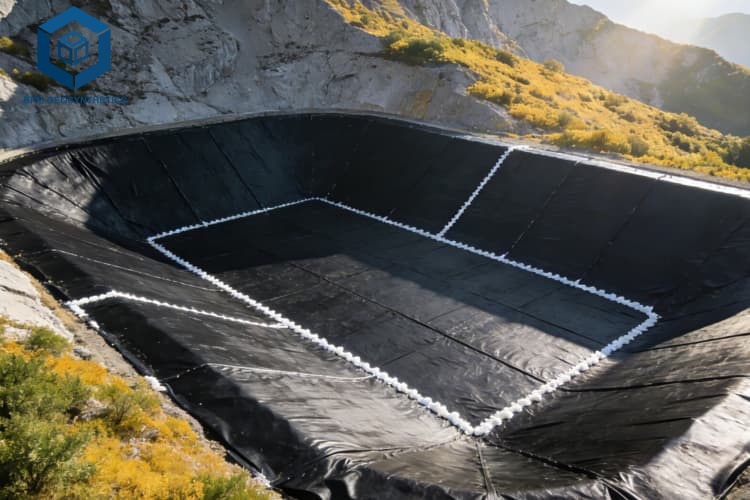
Common Industry Problems in Fish Pond Liner Selection
Real-world failures help understand how to choose geomembrane thickness for fish pond.
Problem 1: Puncture from fish teeth or claws (0.5 mm liner in catfish pond)
Root cause: 0.5 mm HDPE used in commercial catfish pond. Catfish teeth and barbels repeatedly contacted liner, causing punctures. Solution: For species with teeth or claws, specify minimum 1.0 mm HDPE. This is a key factor in how to choose geomembrane thickness for fish pond.
Problem 2: UV degradation — liner cracked after 4 years (no carbon black)
Root cause: Supplier provided liner without carbon black (or < 2%). Uncovered pond caused UV embrittlement. Solution: Always specify carbon black 2.0–3.0% per ASTM D1603. Thickness does not compensate for missing UV protection.
Problem 3: Lifting from wave action (0.5 mm liner in large pond)
Root cause: Thin liner (0.5 mm) in large pond (> 5,000 m²) lifted by wind-driven waves. Solution: For large ponds, use 1.0 mm minimum. Increase thickness or add ballast.
Problem 4: Damage from predator animals (otters, birds) — 0.75 mm liner
Root cause: Animals clawing at liner caused punctures. Solution: Use 1.0–1.5 mm HDPE. Add protective geotextile or fencing.
Risk Factors and Prevention Strategies for Fish Pond Liner
Risk: Under-specifying thickness for commercial pond: Punctures, leaks, fish loss. Mitigation: For any commercial fish pond, specify minimum 1.0 mm HDPE.
Risk: No UV protection (carbon black < 2%): Liner cracks within 3–5 years. Mitigation: Require ASTM D1603 test report (2.0–3.0% carbon black).
Risk: Using recycled content (unknown plasticizers): Toxic to fish. Mitigation: Specify virgin resin only. Request resin certificate.
Risk: Installation damage from heavy equipment during pond cleaning: Thinner liners tear. Mitigation: For ponds that require mechanical cleaning, use ≥ 1.5 mm HDPE or add geotextile protection.
Procurement Guide: How to Choose Geomembrane Thickness for Fish Pond
Follow this 8-step checklist for B2B purchasing decisions.
Determine pond area and depth: Small (< 1,000 m²) → 0.5–0.75 mm. Commercial (1,000–10,000 m²) → 1.0 mm. Large (> 10,000 m²) → 1.0–1.5 mm.
Assess puncture risk: Fish with teeth/claws (catfish, piranha) → ≥ 1.0 mm. Sharp rocks → thicker or geotextile.
Evaluate UV exposure: All uncovered ponds require carbon black 2.0–3.0% (UV protection).
Consider maintenance equipment: Mechanical cleaning with heavy equipment → 1.5 mm HDPE.
Specify material type: HDPE preferred for commercial ponds. LLDPE for small, irregular ponds.
Request fish-safe certification: No toxic additives, virgin resin. NSF/ANSI 61 for potable water — not required but indicative.
Order samples and perform puncture test: Test with site-specific rocks or simulated fish teeth.
Review warranty: Minimum 10 years for fish pond liner. Thicker liners (1.5 mm) may offer 20+ years.
Engineering Case Study: How to Choose Geomembrane Thickness for Fish Pond — Tilapia Farm
Project type: Commercial tilapia farm (12 ponds, each 2,000 m²).
Location: Thailand (high UV, tropical climate).
Project size: 24,000 m² total.
How to choose geomembrane thickness for fish pond analysis: Tilapia have no teeth, but ponds are uncovered (high UV). Maintenance includes wading and netting. Rock subgrade minimal.
Selected thickness: 1.0 mm HDPE, carbon black 2.5%, UV stabilized.
Results after 4 years: No punctures, no UV cracking, no leaks. Liner remains flexible. This case demonstrates that 1.0 mm HDPE is suitable for standard tilapia aquaculture when UV protection is specified.
Frequently Asked Questions: How to Choose Geomembrane Thickness for Fish Pond
Q1: What is the standard geomembrane thickness for a commercial fish pond?
1.0 mm (40 mil) HDPE is standard for most commercial fish ponds (tilapia, catfish, trout). This is the most common answer to how to choose geomembrane thickness for fish pond.
Q2: Can I use 0.5 mm liner for a fish pond?
Yes for small decorative ponds (< 1,000 m²) with no sharp rocks, no fish teeth, and minimal equipment use. For commercial fish farming, 0.5 mm is too thin — risk of puncture.
Q3: Does thicker liner affect fish health?
No. Thicker liner does not leach chemicals. All HDPE/LLDPE liners (virgin resin) are fish-safe. Thicker liner provides better protection without toxicity concerns.
Q4: Is UV protection required for fish pond liners?
Yes. Most fish ponds are uncovered, exposed to sunlight. Specify carbon black 2.0–3.0% for UV resistance. Without it, liner cracks within 3–5 years.
Q5: What is the difference between HDPE and LLDPE for fish ponds?
HDPE is stiffer and has higher puncture resistance — preferred for larger ponds. LLDPE is more flexible — better for irregular subgrades. Both are fish-safe.
Q6: How long does a 1.0 mm HDPE liner last in a fish pond?
15–20 years with proper UV protection (carbon black 2–3%) and no mechanical damage. Thicker liners (1.5 mm) last 20–25+ years.
Q7: Can I install geomembrane over existing clay pond?
Yes, after removing sharp rocks and smoothing subgrade. Geomembrane can be placed directly over compacted clay to improve water retention.
Q8: What thickness for catfish pond (sharp barbels)?
Catfish have sharp barbels and can damage thin liners. Recommend 1.0 mm HDPE minimum; 1.5 mm for high-density stocking.
Q9: Is textured geomembrane better for fish ponds?
Not recommended. Textured surface may trap debris and algae, making cleaning difficult. Smooth HDPE is preferred for fish ponds.
Q10: How to repair a punctured fish pond liner?
Clean area, cut patch from same material (minimum 150 mm larger than hole), use extrusion welding or adhesive patch. Patch must be fish-safe.
Request Technical Support or Quotation for Fish Pond Geomembrane
For project-specific how to choose geomembrane thickness for fish pond, including pond assessment, UV exposure analysis, and bulk procurement, our technical team is available.
Request a quotation – Provide pond area, fish species, UV exposure, and equipment use.
Request engineering samples – Receive HDPE samples (0.5, 0.75, 1.0, 1.5 mm) with puncture and UV test reports.
Download technical specifications – Fish pond liner selection guide, puncture risk calculator, and installation QA/QC checklist.
Contact technical support – Thickness optimization, fish-safe certification, and installation guidance for aquaculture projects.
About the Author
This guide on how to choose geomembrane thickness for fish pond was written by Dipl.-Ing. Hendrik Voss, a civil engineer with 19 years of experience in geosynthetics for aquaculture and water containment. He has designed over 500 fish pond liner systems across Southeast Asia, Africa, and South America, specializing in puncture risk assessment, UV durability analysis, and fish-safe material certification for tilapia, catfish, trout, and shrimp farms. His work is referenced in GRI and ASTM D35 committee discussions on geomembrane standards for aquaculture applications.