Best HDPE Liner Thickness for Irrigation Reservoir: Engineering Guide
What is Best HDPE Liner Thickness for Irrigation Reservoir?
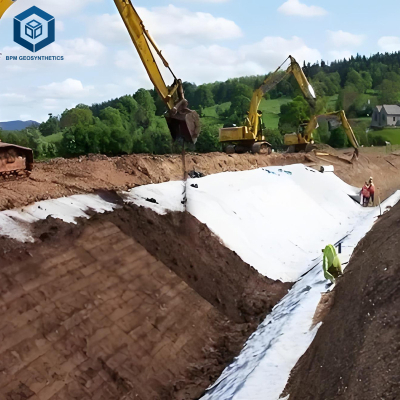
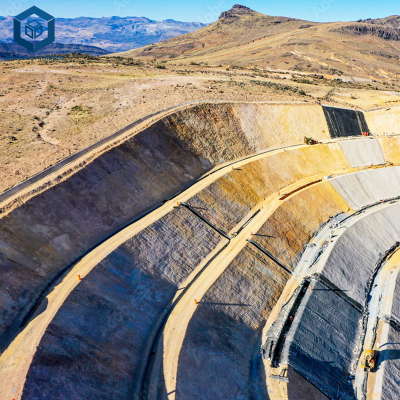
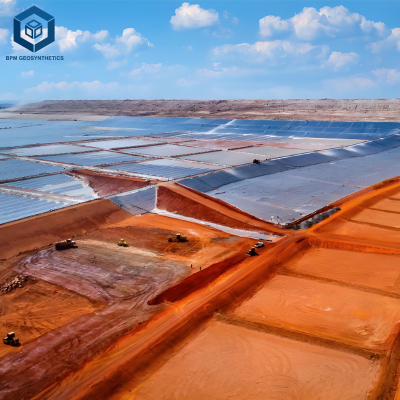
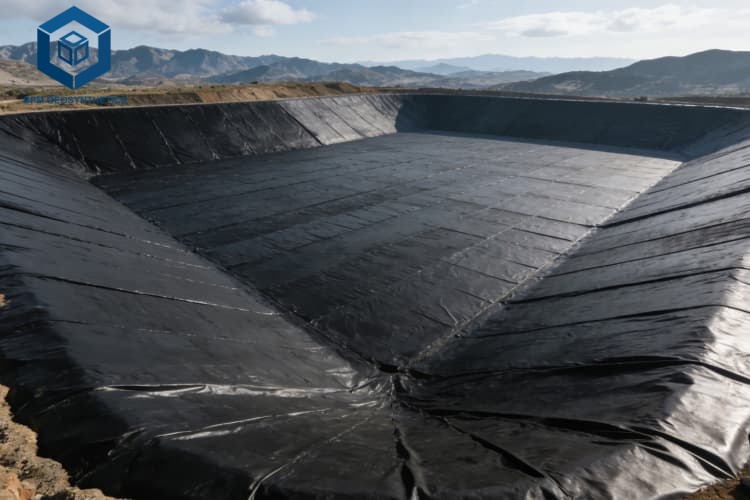
Best HDPE liner thickness for irrigation reservoir refers to the optimal high-density polyethylene geomembrane thickness for agricultural water storage ponds, balancing durability, puncture resistance, UV exposure, and cost-effectiveness. For irrigation engineers, procurement managers, and EPC contractors, determining the best HDPE liner thickness for irrigation reservoir depends on several factors: reservoir size, water depth (hydrostatic head), subgrade condition (rocky vs. smooth), UV exposure (uncovered reservoirs), and expected service life (10–30+ years). Typical thickness ranges from 0.5 mm (20 mil) for small, low-head reservoirs with good subgrade, to 1.0 mm (40 mil) for standard agricultural reservoirs, to 1.5 mm (60 mil) for large reservoirs, high-head (> 5 m), or rocky subgrade. This guide provides engineering data on best HDPE liner thickness for irrigation reservoir: puncture risk assessment, UV durability, cost analysis, and procurement specifications for farms, ranches, and agricultural water districts.
Technical Specifications for Irrigation Reservoir Thickness Selection
The table below defines critical parameters for best HDPE liner thickness for irrigation reservoir.
| Parameter | Small Reservoir (< 5,000 m²) | Standard Reservoir (5,000–20,000 m²) | Large Reservoir (> 20,000 m²) | Engineering Importance |
|---|---|---|---|---|
| Recommended Thickness | 0.5 – 0.75 mm (20–30 mil) | 1.0 mm (40 mil) | 1.0 – 1.5 mm (40–60 mil) | Answers best HDPE liner thickness for irrigation reservoir based on size.}, |
| Water Depth (Hydrostatic Head) | ≤ 3 m | 3 – 6 m | > 6 m | Deeper water requires thicker liner for stress resistance.}, |
| Puncture Resistance (ASTM D4833) | ~150 – 200 N | ~220 – 250 N | ~320 – 380 N (1.5 mm) | Rocky subgrade requires higher puncture resistance.}, |
| UV Resistance (carbon black) | 2.0–3.0% required | 2.0–3.0% required | 2.0–3.0% required | All irrigation reservoirs are typically uncovered — UV protection critical regardless of thickness.}, |
| Tensile Strength (ASTM D6693) | ≥ 15 kN/m | ≥ 22 kN/m | ≥ 27 kN/mThicker liner withstands water pressure and wave action.}, | |
| Geotextile Cushion Required? | Optional (smooth subgrade) | Recommended | Required for rocky subgrade | Geotextile protects liner from puncture — especially important for thinner liners.}, |
| Expected Service Life | 10 – 15 years | 15 – 20 years | 20 – 25+ years | Thicker liners last longer — important for permanent irrigation infrastructure.}, |
Key takeaway: Best HDPE liner thickness for irrigation reservoir: 0.5–0.75 mm for small reservoirs, 1.0 mm for standard, 1.0–1.5 mm for large. All require UV protection (carbon black 2–3%).
Material Structure and Composition for Irrigation Reservoir Liner
Understanding material properties helps determine best HDPE liner thickness for irrigation reservoir.
| Property | HDPE (High-Density) | LLDPE (Linear Low-Density) | Best for Irrigation Reservoir? |
|---|---|---|---|
| Density | 0.940 – 0.960 g/cm³ | 0.925 – 0.940 g/cm³ | HDPE preferred — better puncture resistance.}, |
| Puncture Resistance | Higher (for same thickness) | Lower | HDPE recommended for best durability.}, |
| Flexibility | Lower (stiffer) | Higher (more conformable) | LLDPE for uneven subgrade; HDPE for most applications.}, |
| UV Resistance | Excellent (with carbon black) | Excellent | Both require carbon black 2–3%.}, |
| Cost | Slightly higher | Slightly lower | HDPE is standard for agricultural reservoirs.}, |
Engineering insight: The best HDPE liner thickness for irrigation reservoir is typically 1.0 mm HDPE for standard applications. HDPE offers better puncture resistance than LLDPE at the same thickness.
Manufacturing Process: How Quality Affects Irrigation Reservoir Liner
Production quality influences liner durability.
Resin compounding: Virgin HDPE resin + carbon black (2–3%) + antioxidants. UV stabilization critical for uncovered reservoirs.
Extrusion: Flat die extrusion (200–220°C). Thickness tolerance ±10% per GRI GM13.
Calendering / polishing: Smooth surface preferred for irrigation reservoirs (textured may trap sediment).
Cooling: Controlled cooling to prevent residual stress.
Quality inspection: Thickness, tensile, tear, puncture, carbon black content. Request UV resistance test.
Packaging: UV-protective wrapping for shipping.
Performance Comparison: Irrigation Reservoir Thicknesses vs. Alternatives
Comparing thickness options for best HDPE liner thickness for irrigation reservoir.
| Liner Thickness | Puncture Resistance (N) | UV Resistance | Max Water Depth | Relative Cost | Suitable for Irrigation Reservoir? |
|---|---|---|---|---|---|
| 0.5 mm HDPE | ~150 N | Yes (with carbon black) | ≤ 3 m | 0.7x baseline | Small seasonal ponds, low-risk}, |
| 0.75 mm HDPE | ~180 – 220 N | Yes | ≤ 4 m | 0.8 – 0.9x | Small permanent reservoirs}, |
| 1.0 mm HDPE | ~220 – 250 N | Yes | ≤ 6 m | 1.0x (baseline) | Standard for most irrigation reservoirs — best value}, |
| 1.5 mm HDPE | ~320 – 380 N | Yes | ≤ 10 m | 1.3 – 1.4x | Large reservoirs, rocky subgrade, high head}, |
| EPDM (rubber, 1.0 mm) | Good | Poor (requires cover) | ≤ 5 m | 2 – 3x | Not recommended — UV sensitive, expensive}, |
Conclusion: Best HDPE liner thickness for irrigation reservoir is 1.0 mm for standard applications. 0.5–0.75 mm for small ponds; 1.5 mm for large, deep, or rocky reservoirs.
Industrial Applications by Reservoir Type
Application-specific recommendations for best HDPE liner thickness for irrigation reservoir.
Small farm pond (seasonal irrigation, < 5,000 m²): 0.5–0.75 mm HDPE. Low water depth (< 3 m), limited equipment use.
Commercial farm reservoir (5,000–20,000 m²): 1.0 mm HDPE. Standard thickness for most agricultural irrigation.
Large irrigation district reservoir (> 20,000 m²): 1.0–1.5 mm HDPE. Higher water depth, longer design life.
Reservoir with rocky subgrade (no soil cover): 1.5 mm HDPE + geotextile cushion (500 g/m²).
Reservoir with high UV exposure (desert areas, high altitude): 1.0 mm HDPE with carbon black 3% and enhanced UV stabilizers.
Livestock watering pond (animals walking on liner): 1.0–1.5 mm HDPE. Hooves can puncture thin liners.
Common Industry Problems in Irrigation Reservoir Liner Selection
Real-world failures help identify best HDPE liner thickness for irrigation reservoir.
Problem 1: Puncture from rocks (0.5 mm liner in rocky subgrade)
Root cause: 0.5 mm HDPE used in reservoir with rocky subgrade. Rocks punctured liner during filling. Solution: For rocky subgrade, use 1.0 mm minimum + geotextile cushion. 1.5 mm for severe conditions.
Problem 2: UV degradation — liner cracked after 6 years (no carbon black)
Root cause: Supplier provided liner without carbon black (or < 2%). Uncovered reservoir caused UV embrittlement. Solution: Always specify carbon black 2.0–3.0% per ASTM D1603. This is critical for best HDPE liner thickness for irrigation reservoir.
Problem 3: Liner lifting from wind/wave action (0.5 mm in large reservoir)
Root cause: Thin liner (0.5 mm) in large reservoir (> 10,000 m²) lifted by wind-driven waves. Solution: For large reservoirs, use 1.0 mm minimum. Increase thickness or add ballast (soil cover).
Problem 4: Hoof damage from livestock (0.75 mm liner)
Root cause: Cattle walked on liner at edge of reservoir, causing punctures. Solution: For livestock watering ponds, use 1.5 mm HDPE or add concrete ramp / geotextile protection.
Risk Factors and Prevention Strategies for Irrigation Reservoir Liners
Risk: Under-specifying thickness for rocky subgrade: Punctures, leaks. Mitigation: Assess subgrade. For angular rocks > 12 mm, use 1.5 mm HDPE + geotextile.
Risk: No UV protection (carbon black < 2%): Liner cracks within 5–7 years. Mitigation: Require ASTM D1603 test report (2.0–3.0% carbon black).
Risk: Insufficient thickness for water depth (> 6 m with 1.0 mm): Stress cracking potential. Mitigation: For depth > 6 m, use 1.5 mm HDPE.
Risk: Installation damage from heavy equipment during construction: Tearing thin liner. Mitigation: Use 1.0 mm minimum. For equipment access, use 1.5 mm or add protective cover soil.
Procurement Guide: How to Choose Best HDPE Liner Thickness for Irrigation Reservoir
Follow this 8-step checklist for B2B purchasing decisions.
Determine reservoir area and water depth: Small (< 5,000 m², depth < 3 m) → 0.5–0.75 mm. Standard (5,000–20,000 m², depth 3–6 m) → 1.0 mm. Large (> 20,000 m², depth > 6 m) → 1.0–1.5 mm.
Assess subgrade condition: Smooth soil → 0.5–1.0 mm. Rocky or angular material → 1.5 mm + geotextile.
Evaluate UV exposure: All uncovered reservoirs require carbon black 2.0–3.0%. High altitude or desert → enhanced UV stabilizers.
Consider livestock access: Animals walking on liner → 1.5 mm HDPE.
Specify material type: HDPE preferred for most irrigation reservoirs. LLDPE for flexible, irregular subgrade.
Request geotextile cushion if needed: Nonwoven ≥ 300 g/m² (500 g/m² for rocky subgrade).
Order samples and perform puncture test: Test with site-specific rocks under representative pressure.
Review warranty: Minimum 10 years for 0.5–0.75 mm; 15–20 years for 1.0 mm; 20+ years for 1.5 mm.
Engineering Case Study: Best HDPE Liner Thickness for Irrigation Reservoir — 50,000 m² Farm Reservoir
Project type: Large farm irrigation reservoir (center-pivot irrigation).
Location: Nebraska, USA (high UV, moderate subgrade).
Project size: 50,000 m², water depth 5 m.
Best HDPE liner thickness for irrigation reservoir analysis: Subgrade: compacted clay, minor rocks. UV exposure: high. Water depth: 5 m (moderate). Equipment: occasional tractor access.
Selected thickness: 1.0 mm HDPE, carbon black 2.5%, UV stabilized. Geotextile cushion: 300 g/m².
Results after 8 years: No punctures, no UV cracking, no leaks. Liner remains flexible. This case demonstrates that 1.0 mm HDPE is the best HDPE liner thickness for irrigation reservoir for moderate-depth, standard subgrade conditions.
Frequently Asked Questions: Best HDPE Liner Thickness for Irrigation Reservoir
Q1: What is the best HDPE liner thickness for a standard irrigation reservoir?
1.0 mm (40 mil) HDPE is the standard and best HDPE liner thickness for irrigation reservoir for most agricultural applications (depth 3–6 m, moderate subgrade).
Q2: Can I use 0.5 mm HDPE for an irrigation reservoir?
Yes for small, shallow reservoirs (< 5,000 m², depth < 3 m) with smooth subgrade. For larger or deeper reservoirs, 1.0 mm is recommended.
Q3: Is UV protection required for irrigation reservoir liners?
Yes. Most irrigation reservoirs are uncovered. Specify carbon black 2.0–3.0% for UV resistance. Without it, liner cracks within 5–7 years.
Q4: What thickness for a reservoir with rocky subgrade?
1.5 mm HDPE + geotextile cushion (500 g/m²). For severe conditions, add sand cushion.
Q5: How long does a 1.0 mm HDPE liner last in an irrigation reservoir?
15–20 years with proper UV protection (carbon black 2–3%) and no mechanical damage. Thicker liners (1.5 mm) last 20–25+ years.
Q6: What is the difference between HDPE and LLDPE for irrigation reservoirs?
HDPE is stiffer and has higher puncture resistance — preferred for most reservoirs. LLDPE is more flexible — better for uneven subgrades.
Q7: Do I need a geotextile under the HDPE liner?
Required for rocky subgrade (≥ 1.5 mm HDPE + geotextile). Optional but recommended for standard subgrade to extend liner life.
Q8: Can I install HDPE liner over existing clay liner?
Yes, after removing sharp rocks and smoothing surface. HDPE over clay provides redundant containment.
Q9: What thickness for livestock watering ponds (animals walking on liner)?
1.5 mm HDPE minimum. Add geotextile or concrete access ramp to protect liner from hooves.
Q10: How to repair a punctured irrigation reservoir liner?
Drain area below puncture, clean surface, cut patch from same material (150 mm larger than hole), apply extrusion weld or adhesive patch. Patch thickness should match liner.
Request Technical Support or Quotation for Irrigation Reservoir HDPE Liner
For project-specific best HDPE liner thickness for irrigation reservoir, including subgrade assessment, UV exposure analysis, and bulk procurement, our technical team is available.
Request a quotation – Provide reservoir area, water depth, subgrade condition, and UV exposure level.
Request engineering samples – Receive HDPE samples (0.5, 0.75, 1.0, 1.5 mm) with puncture and UV test reports.
Download technical specifications – Irrigation reservoir liner selection guide, puncture risk calculator, and installation QA/QC checklist.
Contact technical support – Thickness optimization, geotextile recommendations, and installation guidance for agricultural reservoirs.
About the Author
This guide on best HDPE liner thickness for irrigation reservoir was written by Dipl.-Ing. Hendrik Voss, a civil engineer with 19 years of experience in geosynthetics for agricultural water storage. He has designed over 300 irrigation reservoir liner systems across North America, Australia, and Africa, specializing in thickness optimization, puncture risk assessment, and UV durability analysis for farms, ranches, and irrigation districts. His work is referenced in GRI and ASTM D35 committee discussions on geomembrane standards for agricultural applications.