Ultimate Guide to Geotextile Membrane for Soakaway
Introduction
When heavy rain falls, where does all the water go? In many gardens and urban areas, the answer is "nowhere fast." This leads to waterlogging, flooding, and damage to foundations. The most effective solution to this problem is a soakaway—an underground structure designed to collect surface water and allow it to percolate slowly back into the surrounding soil.
Howeer, a soakaway is only as good as its filtration system. Without protection, a soakaway will quickly fill with silt and debris, turning into a useless muddy pit. This is where the geotextile membrane becomes the unsung hero of drainage. Often overlooked, this fabric is the critical component that determines whether your drainage system lasts five years or fifty.
This guide will explore what geotextile membranes are, why they are essential for soakaways, and how products like those from BPM Geosynthetics provide the durability needed for long-term projects.
1. What is a Geotextile Membrane for Soakaway?
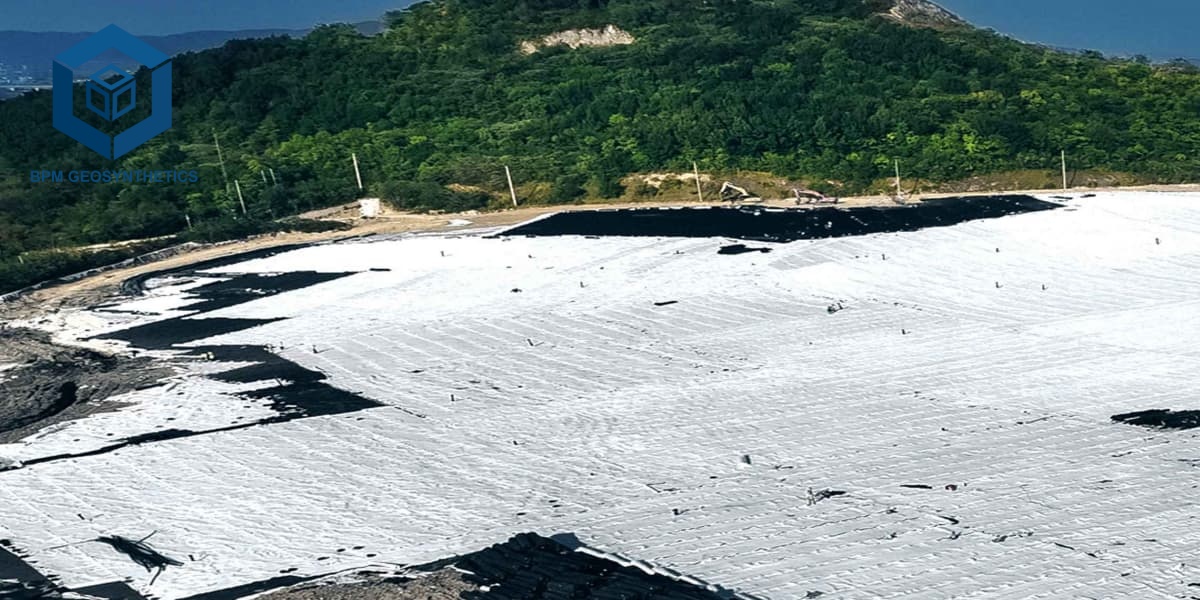
A geotextile membrane is a permeable fabric used in civil engineering and landscaping to separate, filter, reinforce, protect, or drain soil . Unlike standard plastic sheeting (which is impermeable and holds water), geotextiles are designed to let water pass through while holding soil particles back.
For soakaway applications, the industry standard is Non-Woven Geotextile. This type of fabric is created by bonding fibers together through heat or needle-punching, creating a felt-like texture. This structure creates a "3D porous network" that is excellent at capturing silt . You will often see it specified as 100gsm or heavier weight—the "gsm" (grams per square meter) refers to the fabric's thickness and durability. Heavier fabrics offer better puncture resistance, which is vital when backfilling a pit with sharp stones .
2. Geotextile Membrane for Soakaway: The Main Function – Filtration and Separation
The most important function of a geotextile membrane in a soakaway system is to serve as one physical separation and filtration barrier to the soil. A soakaway works by setting up a void space underground—principally made from gravel or plastic drainage crates—where the storm water is temporarily stored before it gradually seeps into the surrounding soil.
Pretty soon, if a geo fabric is not used, fine soil particles from the vicinity will be able to enter the soakaway structure, resulting in siltation, diminished capacity, and ultimately failure of the system. In the worst scenario, the soakaway gets completely blocked up and drainage efficiency is significantly reduced.
A geotextile is a permeable non woven membrane that wraps the soakaway structure like a protective filter. It is meant to allow water to pass freely even during heavy showers but still retain earth particles. That way, the internal void stays clean, open, and fully functional while at the same time allowing the water to disperse effectively into the surrounding soil.
2.1 Filtration Role
The non woven geotextile fabric functions as a filter, which lets water pass through while blocking the fine soil particles that would otherwise cause the drainage structure to become blocked.
2.2 Soil Retention and Soakaway Protection
It secures the adjacent soil, so preventing either soil erosion or collapse into the soakaway void, it therefore also plays a part in prolonging the soakaway lifespan and in preserving the drainage function over the long haul.
3. The Main Role of Geotextile Membrane for Soakaway Projects
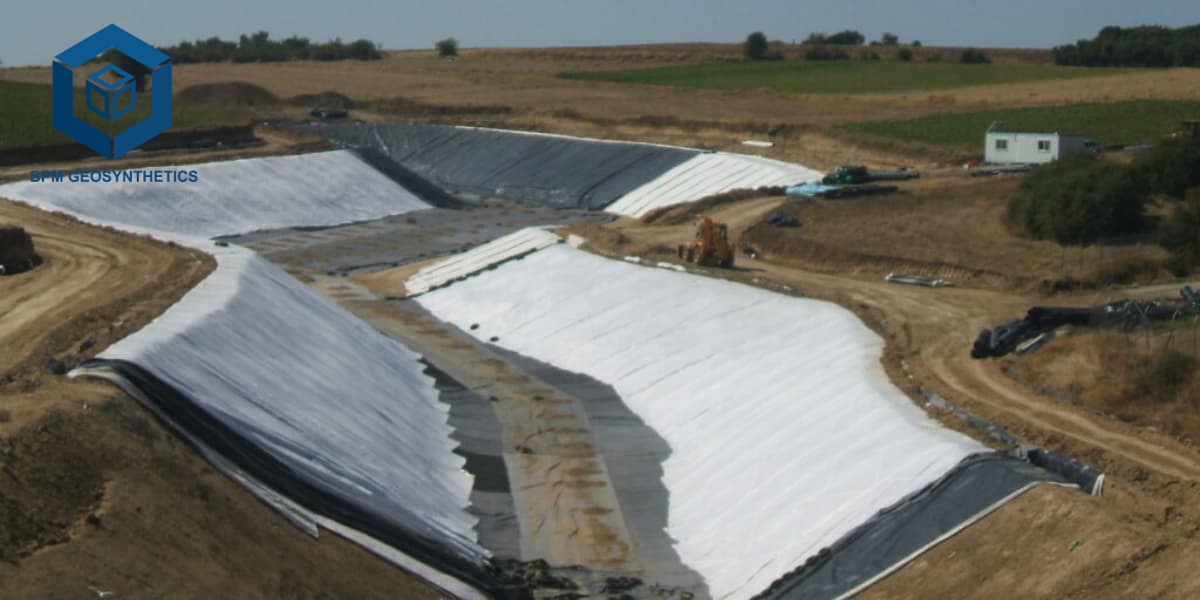
In a modern soakaway system—particularly those using plastic crates (like Polystorm crates) or gravel-filled trenches—the membrane serves three specific functions.
3.1 Wrapping the Structure:
The non woven geotextile membrane is laid into the excavated hole before the crates are placed. It is then folded over the top of the crates and sealed with tape. This creates a complete "cocoon.".
3.2 Preventing Silting:
As rainwater moves through the soil, it carries fine particles. The geotextile stops these particles at the boundary. Over time, a natural filter cake may form on the outside of the fabric, but the inner core of the soakaway remains free-flowing.
3.3 Maintaining Flow Rates:
By preventing the migration of soil, the non woven membrane ensures that the void spaces within the crates remain at nearly 95% void ratio, which is the industry standard for efficient water storage.
4. Geotextile Membrane for Soakaway: Results and Long-Term Effects
Employing a top-grade non woven geotextile membrane greatly enhances the functionality and durability of a soakaway drainage system. If a soakaway system is left unprotected by a geotextile, it can typically get clogged by fine soil particles in 2-5 years, which may cause the drainage to slow down or the system to fail. However, with geotextile filter acting as the separation layer and filter, the system's lifespan might be 60 years or more, subject to design and site conditions.
On the other hand, best geotextile fabric acts as a game changer for the project’s stability. It is well-known among construction experts as a layer that keeps drainage stone and the native soil separate especially where heavy-duty surfaces such as driveways and parking areas are the main concern. This separation prevents mixing of materials, thereby the base layer remains intact and the system is able to stand the test of time while at the same time facilitating water drainage.
4.1 Soil Filtration Function
Permeable geotextile fabric enables water to flow through but keeps soil particles trapped, so that the drainage layer does not get clogged.
4.2 Load Distribution and Separation
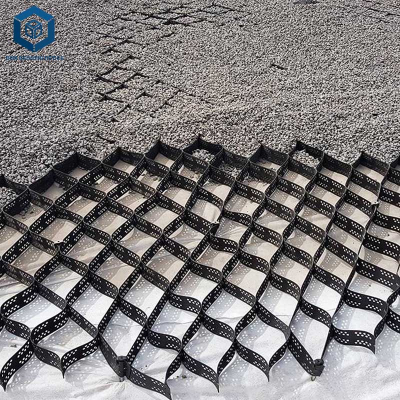
The geo textile material plays a double role by first allowing the gravel to bear the load over a greater area and secondly preventing the mixing of gravel with the weak soil subgrade. This ensures that the structural function will not deteriorate with time.
5. Installation Guide of Geotextile Membrane for Soakaway Systems
Using the geotextile membrane in soakaway construction requires careful installation to achieve the best results. Even a premium product can fall short if it is used improperly, especially for filtration and drainage roles.
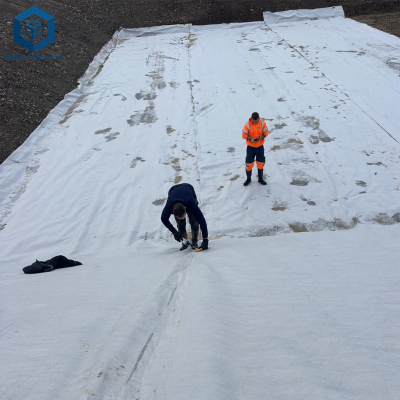
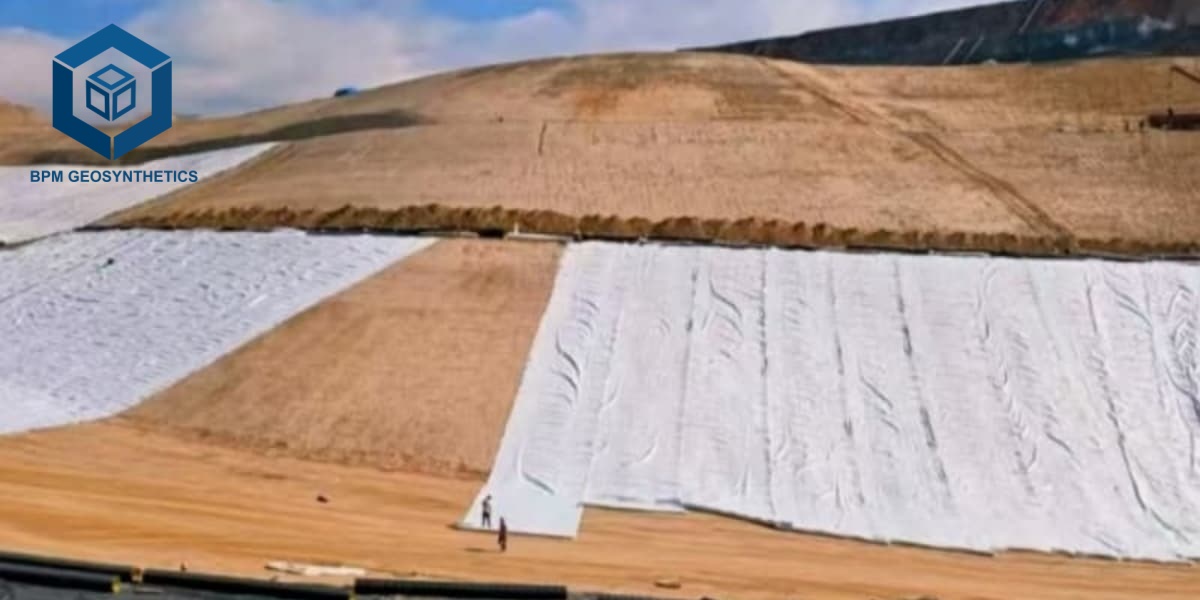
The first step generally involves ensuring the area of excavation is clean and stable, without any sharp objects that might harm the fabric. Next, the non-woven geotextile fabric should be extended on the bottom and sides of the soakaway pit with the entire surface covered, leaving no area uncovered or soil exposed.
At the stage when you drop the drainage crates or pack gravel, the fabric is then gently pulled over the top to completely cover the structure. Joints where overlapping happens should be tightly sealed to stop soil from sneaking in. Through this way, water is able to freely penetrate the system while the soil remains totally separated.
Installing the material correctly not only helps in achieving the highest level of water flow but also greatly increases the durability of the soakaway system.
5.1 Site Preparation and Ground Conditions
The first and most important step to site preparation. The bottom of the excavation should be even, well-packed, and devoid of sharp stones, roots, or other debris capable of puncturing the geotextile membrane. Also, a nicely-prepared subgrade facilitates equal support and lessens the chance of residual deformation or fabric damages.
5.2 Membrane Placement and Overlapping Technique
When putting down the membrane, the non woven filter fabric has to be spread out loosely in order not to be subjected to too much tension. According to the circumstances of the project, the minimum overlap between the sheets should be 300–500 mm. Proper overlapping performance ensures continuous filtration functionality and prevents soil from migrating through openings in the joints.
5.3 Backfilling and Encapsulation Method
After the installation of drainage crates or gravel, the geo fabric near me should be folded over completely so that a sealed encapsulation layer is created. Backfilling has to be done cautiously using proper granular material that the fabric is not torn or displaced. That way, the soakaway is well-guarded against silt intrusion while at the same time it retains its hydraulic efficiency under conditions of high soil load.
6. Summary and BPM Geosynthetics Products
Selecting the right material is the final step. While standard DIY stores offer basic fabrics, large-scale or heavy-duty projects require manufacturer-grade consistency. This is where BPM Geosynthetics comes into play.
The Best Project Material Co., Ltd.(BPM Geosynthetics) is an industry leader in providing complete geosynthetic solutions. While they are globally recognized for their HDPE Geomembranes (used for lining ponds and landfills to prevent contamination), their product range fully complements soakaway and drainage projects.
6.1 How BPM Geosynthetics Products Fit Into the Drainage Ecosystem?
6.1.1 BPM Geosynthetics Non Woven Geotextile
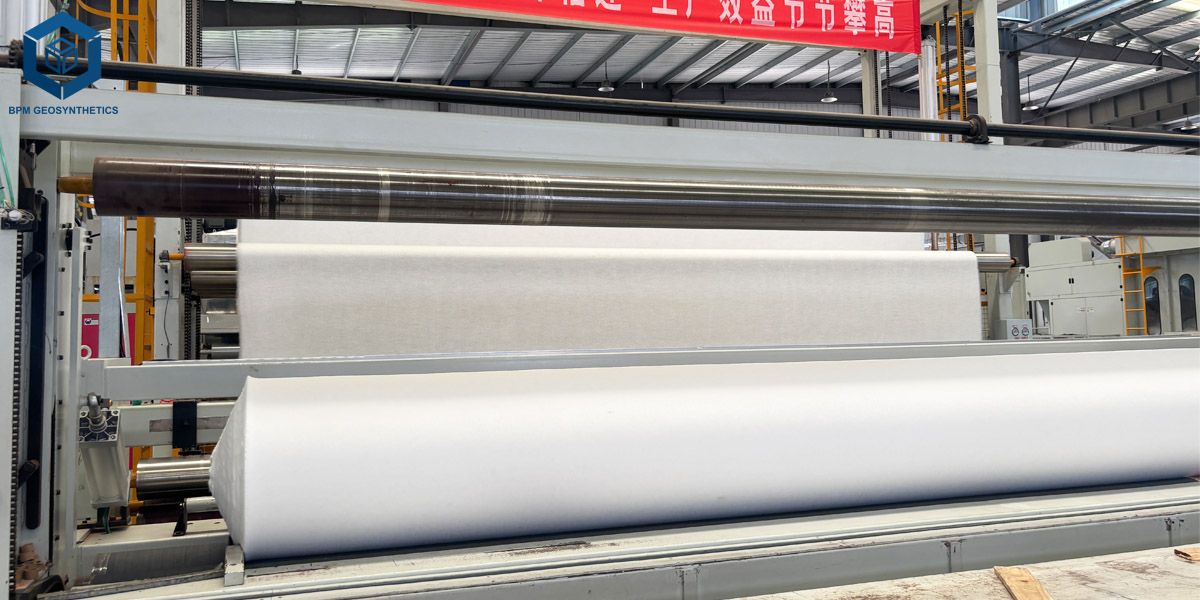
BPM Geosynthetics manufactures high-strength needle punched non woven geotextiles made from 100% polypropylene or polyester filaments. For a soakaway project, this is the primary membrane. BPM fabrics are engineered to offer high puncture resistance (CBR burst strength) and excellent permeability (vertical flow), ensuring long-term filtration efficiency.
6.1.2 BPM Geosynthetics Composite Geotextiles
For projects requiring wrapped drains or swales, BPM Geosynthetics often produces composite materials that combine the filtration of a non woven with the strength of a woven fabric. This is particularly useful for "green swales" where the membrane must be tough enough to handle vegetation root growth and heavy sediment loads without tearing.
6.1.3 Integration with Impermeable Liners
It is important to distinguish between a soakaway (which lets water out) and a retention pond (which holds water in). In complex sites, you might use a BPM Geosynthetics HDPE Smooth Geomembrane to line a detention basin to prevent pollution escaping, while using a BPM Non-Woven Geotextile on the inlet structure to filter the water coming in.
Conclusion
Whether you are installing a simple French drain in a garden or a large-scale stormwater management system for a housing development, the principle remains the same: you cannot have effective drainage without filtration.
The geotextile membrane is the "skin" of the soakaway. It keeps the skeleton (the crates or gravel) clean so it can do its job of holding water. For standard home projects, a 100gsm to 150gsm nonwoven geotextile is ideal. For engineered solutions requiring high tensile strength, UV resistance, and guaranteed manufacturing standards, BPM Geosynthetics provides the heavy-duty geotextiles and geomembranes that ensure your drainage solution remains sustainable for decades.