The 8 Best Geo Road Fabric Review
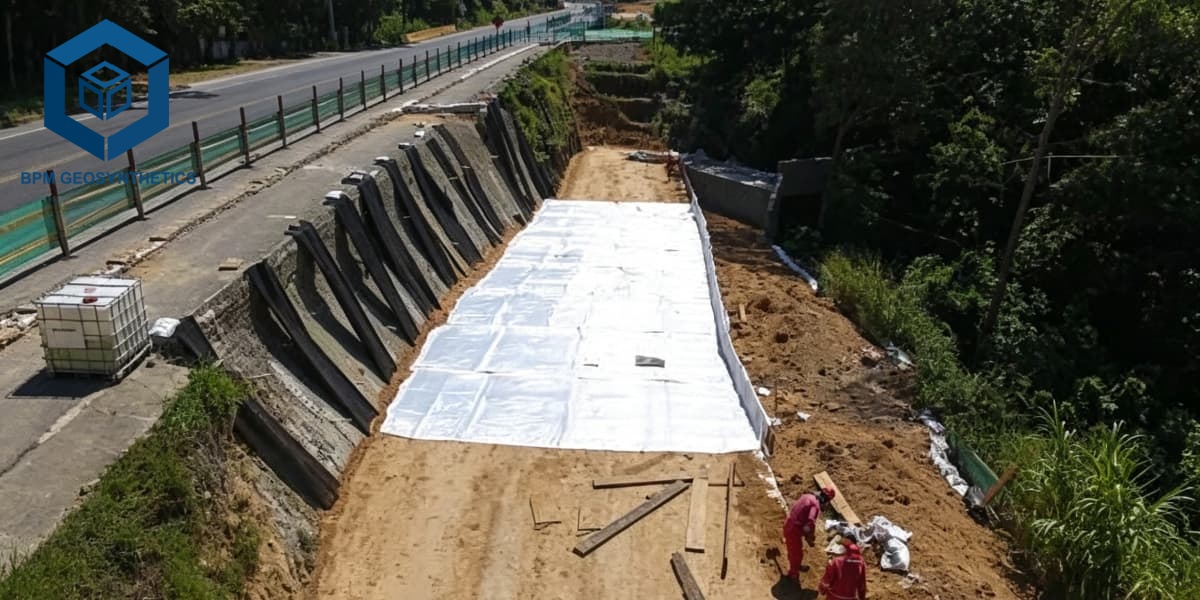
Geo road fabric have become an essential part of modern infrastructure, especially in road construction, where they perform the functions of separation, reinforcement, filtration, and drainage. The global market for geotextiles is expected to reach over $12 billion by 2030, with road applications accounting for the largest share. The growth of this market is driven by factors such as infrastructure development, cost-saving requirements, and the enforcement of stricter engineering standards.
Repairing pavements with geotextiles can result in a 50% longer lifespan, using 15–30% less aggregate, and significantly reducing maintenance expenses in the long run. Since there are many different kinds of geo road fabric in the market, it can be quite difficult to decide which one is the most suitable. This article contains a review of the top 8 geo road fabric that have stood out in laboratory testing, field trials, and performances in the market. It also highlights their features, advantages, disadvantages, and most suitable uses.
1. Geo Road Fabric Key Evaluation Criteria
We have used five key performance indicators while evaluating geotextiles to arrive at the best geo road fabric decisions for road construction and ground stabilization. These performance indicators are commonly recognized in the AASHTO and NTPEP testing standards. Adhering to these parameters assures that the selected geotextile offers dependable reinforcement, filtration, separation, and are made of long-lasting materials that can withstand a variety of site conditions.
1.1 Tensile Strength
The tensile strength is the maximum load a geotextile road fabric can withstand through pulling without failure. It is usually measured in kN/m. Materials with greater tensile strength enhance load spreading, reduce depressions and fluctuations, and increase the durability of roads, railways, and construction platforms built on weak or soft subgrades.
1.2 Water Flow Rate
The water flow rate, also called permeability or permittivity, is the measure of the capacity of a geotextile driveway fabric to let water flow through it with minimum resistance. The water flow rate is measured in L/m²/s. The availability of a greater water flow rate will prevent the water from accumulating and will enhance the drainage performance as well as decrease the risk of pavement breaks down due to water over-moisture.
1.3 CBR Puncture Resistance
CBR puncture resistance measures how well a geo fabric for roads can stand up to penetration by puncturing. The incisive forces may be caused by the sharp aggregates, construction machinery, or heavy loads. This property is one of the most important attributes of geotextiles. It is indicated in the charts in Newtons (N). If the geotextile has a higher puncture resistance then the greater is its ability to maintain integrity and function.
1.4 UV Stability
There might be cases that a non woven road fabric is placed outdoor to pre-exposure to sunlight before installation; in such a case UV resistance should be a priority. UV stability is measured by the percentage of retained tensile strength after 500 hours of accelerated UV exposure. Higher retention values indicate better weather resistance and reduced material degradation during storage and construction.
1.5 Cost-Effectiveness
Along with the basic purchase price per square meter, cost-effectiveness also takes into account the overall value offered by performance, durability, service life, and lower maintenance costs. For example, a superior road geo fabric in terms of quality may have a somewhat higher initial cost; however, it usually results in lower overall project cost due to its excellent performance and reliability in the long run.
2. The 8 Best Geo Road Fabric Review
2.1 Best Overall: BPM Geosynthetics Continuous Filament Non Woven Geotextile
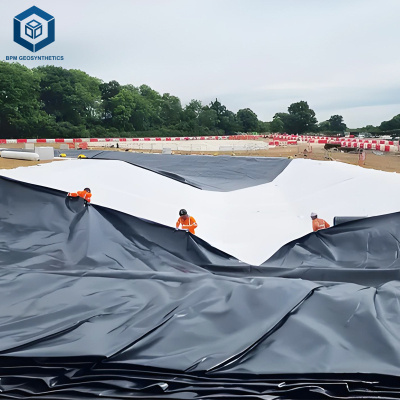
One of the first geo road fabric to be discussed is BPM Geosynthetics Continuous Filament Non Woven Geotextile, which has received recognition as one of the most multi-functional fabrics for infrastructure projects. BPM Geosynthetics is a high tensile, high-quality filtration, and long-lasting combination that yields dependable performance in road construction, railway foundation, embankments, landfills as well as drainage purposes where soil stabilizing capability is needed along with water permeability.
2.1.1 Specifications
Material: 100% Virgin PP or PET Continuous Filament
Manufacturing Process: Needle-Punched Non-Woven
Weight Range: 100–600 g/m²
CBR Puncture Resistance: Up to 1,500 N
Water Flow Rate: Approximately 250 L/m²/s
UV Resistance: Retains approximately 85% strength after 500 hours of UV exposure
Roll Width: Up to 8 meters
Service Life: Up to 50 years under buried conditions
2.1.2 Performance
Continuous filament geotextiles have an extremely strong in all directions mechanical characteristic due to the continuous structure of the filaments. They bring about a soil retention which is approximately 25% more than conventional staple fiber geotextiles. Besides that, the water may easily pass through such fabrics because of their high permeability. At the same time, such fabrics deter soil migration. Therefore, they are suitable in the construction of separation, filtration, and drainage. In addition to these, geofabric for roads are able to transfer the loads of traffic evenly over a larger area. Hence, they help to decrease the formation of ruts and increase the duration of the pavement.
2.1.3 Advantages
It is a fact that BPM Continuous Filament Non-Woven Geotextile boasts exceptional strength of the material under tension. This is why it can be regarded as a top pick when it comes to tough infrastructural projects such as highways, railways, airports, and landfills. Not only does its continuous filament make it a very effective filter and drain, but also it enables water to flow through undisturbed while at the same time it traps soil particles and impedes erosion. What is more, the geofabric road construction is very tough against puncture and tears so it can resist being damaged by the sharpness of aggregates and heavy construction machinery during the installation phase.
Besides, it can drastically enhance the performance of weak or soft subgrade soils by stabilizing the soil. This can also mean that the aggregate base thickness may be reduced by 20% and the overall construction costs can be lowered. Its excellent ability to withstand chemical, biological degradation, and exposure to the sun, makes the geotextile fabric for road stabilization a product of choice when looking for a reliable long-term solution even in hostile environmental conditions.
2.1.4 Disadvantages
Besides a number of advantages that BPM Continuous Filament Non-Woven Geotextile has, high quality always comes at a price and thus this material is more expensive initially than traditional staple fiber geotextiles. For projects that are very much concerned with the rate of water discharge, its permeability might be somewhat less than that of high flow drainage fabrics which have been specially made for rapid dewatering. In addition, where only light-duty landscaping, gardening, or residential applications are concerned, the use of its advanced mechanical properties is likely to be far greater than what would be required by the project. Here, more economical geotextile for road base options would be a more cost-effective choice.
2.1.5 Best Applications
This geo road fabric is particularly suitable for:
Highway and expressway base reinforcement
Municipal road construction
Railway and airport pavement stabilization
Landfill liner protection systems
Mining haul roads
Retaining wall backfill separation
Soft soil stabilization and embankment construction
Drainage and erosion control projects
2.1.6 Why It Stands Out
BPM Continuous Filament Non-Woven Geotextile maintains the right balance between reinforcement, filtration, drainage, and durability. Being highly resistant to puncture together with providing long design life and consistent hydraulic performance is a combination that has been a deciding factor for the engineers and contractors in choosing it for their heavy-duty civil engineering projects where the reliability of the product over a period of time is a must.
2.2 Best for Heavy-Duty Reinforcement: TenCate Mirafi 500X Woven Geotextile
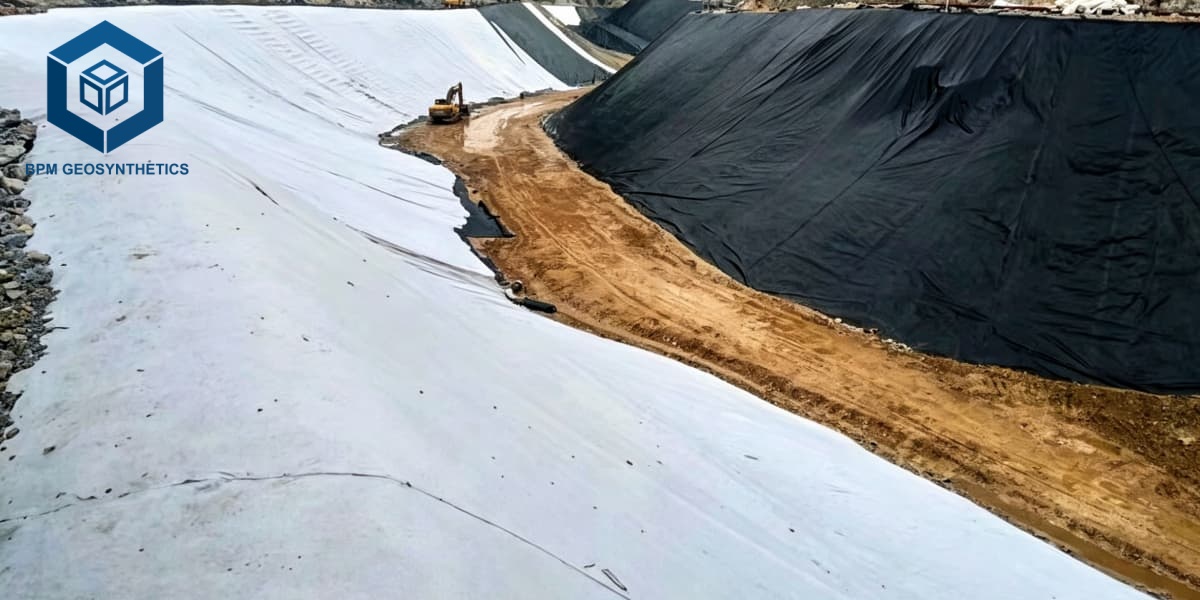
Designed with heavy-duty reinforcement applications in mind, TenCate Mirafi 500X Woven Geotextile is made of high-strength woven polypropylene that provides excellent load distribution and subgrade stabilization. It is suitable for industrial roads, mining sites, and other projects exposed to heavy traffic.
2.2.1 Specifications
Material: Woven Polypropylene (PP)
Weight: 300 g/m²
Tensile Strength: 315 kN/m
CBR Puncture Resistance: 1,200 N
Water Flow Rate: 20 L/m²/s
2.2.2 Performance
The geotextile for road construction offers excellent reinforcement as it helps distribute heavy loads across weak soils. Furthermore, it is capable of reducing rutting by up to 40% and also improving pavement stability which makes it perfect for use in infrastructure that is used for transporting goods and people.
2.2.3 Advantages
TenCate Mirafi 500X is a leader in tensile strength and resilience under deformation and traffic loads of a heavy nature. It is a very effective reinforcer of soft subgrades, it reduces settlement, and it is known for consistent long-term performance even under axle loads up to 50,000 pounds.
2.2.4 Disadvantages
The drainage may be limited due to the presence of the woven structure which may make it a less viable option for those requiring water permeability at a high level. Besides, this geotextile for roads is stiffer than non-woven geotextiles which could present some problem in the installation on uneven surfaces.
2.2.5 Best Applications
Industrial roads
Port pavements
Mining haul roads
Heavy-duty construction platforms
Soft subgrade reinforcement
2.2.6 Why It Stands Out
With its exceptional tensile strength and load-bearing capacity, TenCate Mirafi 500X is an excellent choice for infrastructure projects where reinforcement is more important than drainage performance.
2.3 Best for Filtration and Drainage: Propex Geotex 801 Non-Woven Geotextile
Propex Geotex 801 is crafted specially for projects that need effective filtration and drainage as the main features. Geotextiles made out of non-woven PET provide great water permeability but at the same time they catch fine soil particles well. This is why they are used for drainage systems and permeable pavements.
2.3.1 Specifications
Material: PET Non-Woven
Weight: 200 g/m²
Water Flow Rate: 300 L/m²/s
Fines Retention: 95%
2.3.2 Working Results
It performs well in draining water and at the same time it stops silt clogging. Its specially designed pores allow water to flow for a long time and at the same time they reduce the movement of soil particles.
2.3.3 Pros
The fabric has a very high permeability which makes it very effective in draining water and its very well designed pore size helps in filtering very fine soil quite efficiently. The material can resist biological breakdown strongly which means it is safe to be used for long-term underground applications as well.
2.3.4 Cons
At a strength of only about 14 kN/m, it would not be a good idea using this material for heavy structural reinforcement or road construction under very heavy loads as its strength is not enough.
2.3.5 Best Applications
Residential driveways
Parking lots
Drainage systems
Permeable paver installations
Wet climate infrastructure
2.3.6 What is special about it
Propex Geotex 801 is highly efficient in filtering and at the same time it has great capacity to let water flow through. So if you have a project that mainly requires good drainage then this is your best bet.
2.4 Budget Friendly Option: SRW NW6 Non-Woven Geotextile
SRW NW6 is a fairly cheap nonwoven geotextile that is mostly used for light construction and landscaping projects. It certainly does what it is supposed to do but overall it is an affordable option for both contractors and individual buyers.
2.4.1 Specifications
Material: PP Staple Fiber
Weight: 150 g/m²
Water Flow Rate: 200 L/m²/s
CBR Puncture Resistance: 300 N
2.4.2 Working Results
The material will separate and filter properly in low-traffic situations and it is able to conform to the low-level AASHTO performance standards.
2.4.3 Pros
SRW NW6 are reasonably priced, quite easy to move about and also installation is quite simple. Due to its less weight, it will also be best for use in residential and smaller scale types of projects.
2.4.4 Cons
It is not very strong against UV and its effective design life is considered to be between 5–10 years. Also, the lighter weight fabric is more likely to tear during installation as compared to heavier fabrics.
2.4.5 Best Applications
Gravel pathways
Rural roads
Landscaping projects
Temporary construction access roads
2.4.6 What is special about it
If you need something that will perform adequately at a reasonable cost, then you will find SRW NW6 one of the best budget-friendly options for light-duty applications.
2.5 Heavy Duty: Carthage Mills FX-120HS Non-Woven Geotextile
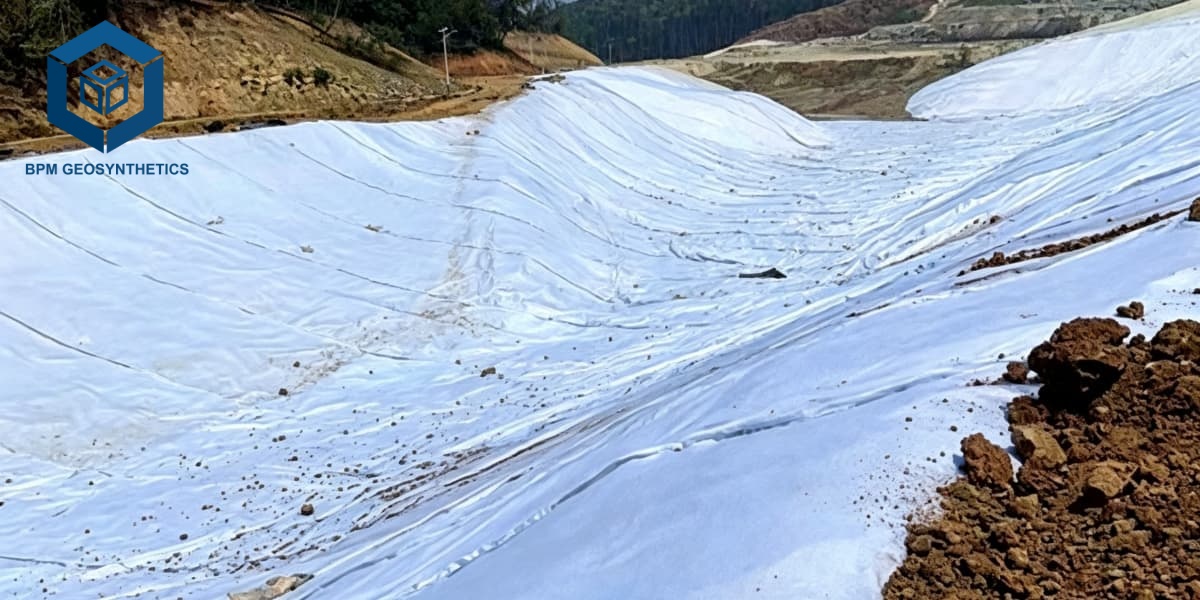
Carthage Mills FX-120HS is made of continuous filament material. It is a heavy-duty geotextile made to work very well in tough construction environments. It is able to resist high load punctures and also to endure severe installation conditions.
2.5.1 Specifications
Material: PET Continuous Filament
Weight: 400 g/m²
CBR Puncture Resistance: 2,000 N
UV Resistance: 90%
2.5.2 Working Results
Even when construction activities are very heavy, the material will still keep its mechanical performance at a high level. It will also work well in freeze-thaw environments and chemically aggressive soils.
2.5.3 Pros
Unlike other fabrics, installation damage is minimal because of its extremely tough puncture resistance. Also, the material can be expected to last a long time in harsh environments due to its very good chemical resistance as well as UV resistance.
2.5.4 Cons
Of course, a good product always comes at a price. The premium price is a reflection of the quality of this material as well as the fact that it is heavier and will therefore cost more for transport and will require more labor for installation as compared with lighter geotextiles.
2.5.5 Best Applications
Cold-region highways
Landfill liner protection
Mining projects
Heavy construction sites
Aggressive installation conditions
2.5.6 What is special about it
Carthage Mills FX-120HS is the ultimate choice when it comes to the combination of extraordinary puncture resistance and the capability to withstand different types of weather and other condition changes over a long period of time.
2.6 Top Sustainable Choice: US Fabrics US 80NW Non-Woven Geotextile
US Fabrics US 80NW is a green non woven geotextile made from recycled PET fibers. It offers dependable filtration and separation performance while assisting contractors to achieve their sustainable construction standards.
2.6.1 Specifications
Material: 30% Recycled PET Non-Woven
Weight: 200 g/m²
Tensile Strength: 20 kN/m
Water Flow Rate: 220 L/m²/s
2.6.2 Performance
This product is able to deliver a level of performance that is very similar to that of virgin-fiber geotextile fabric, while at the same time it makes it possible to construct in an environmentally responsible way. It measures up to sustainability programs and is a good fit for projects involving green infrastructure.
2.6.3 Advantages
US 80NW can lower carbon emissions by using recycled materials while still maintaining the filtration efficiency. It has received certification from the Global Recycled Standard (GRS) and is a very good alternative for projects that are targeted at sustainable building certifications.
2.6.4 Disadvantages
The material's UV resistance is a bit below that of top-of-the-line virgin-fiber products and the large roll sizes that are needed for big infrastructure projects may not be always available.
2.6.5 Best Applications
Green infrastructure
LEED-certified road projects
Stormwater management systems
Sustainable civil engineering projects
2.6.6 Why It Stands Out
US 80NW is a fabric that provides reliable performance from an engineering standpoint at the same time that it helps the environment making it a very suitable option for contractors who are aware of ecological issues as well as public infrastructure projects.
2.7 Best for Crack Prevention: Mirafi H2Rx Woven Geotextile
Mirafi H2Rx is a high-strength woven fabric that is used as a geotextile and has been specifically made to lessen reflective cracks in asphalt layers. Thanks to its outstanding reinforcement properties, it can help in making a pavement more durable and also result in less frequent maintenance.
2.7.1 Specifications
Material: Woven Polypropylene (PP)
Weight: 250 g/m²
Tensile Strength: 280 kN/m
Elongation: ≤15%
2.7.2 Performance
This textile helps in stress distribution effectively in the pavement system and can result in a 60% reduction in longitudinal cracks. It is a proven performer in road rehab and regather applications.
2.7.3 Advantages
Their high modulus level not only aids in the proper redistribution of stress but is also instrumental in the retardation of crack development. Moreover, this geotextile is capable of attaining a good level of adhesion with the asphalt layers, which serves to work on the stability and life-span of the pavement.
2.7.4 Disadvantages
The texture of the weave results in low permeability, thereby making it not so great a candidate for drainage use. Also, to fully benefit from a crack-control standpoint, professional help with installation is a must.
2.7.5 Best Applications
Highway rehabilitation
Asphalt overlay projects
Flood-prone roads
Crack prevention systems
2.7.6 Why It Stands Out
Mirafi H2Rx is a top-tier product for prolonging pavement life by shrinking reflective cracking in harsh road settings.
2.8 Best for DIY & Small Projects: ADS N0801 Non-Woven Geotextile
ADS N0801 is a non woven geotextile fabric product that is light in weight and is mainly intended for residential landscaping and small-scale construction. It is manageable, and it offers dependable separation and filtration properties for lightweight applications.
2.8.1 Specifications
Material: PP Staple Fiber
Weight: 120 g/m²
Water Flow Rate: 180 L/m²/s
Tensile Strength: 10 kN/m
2.8.2 Performance
This fabric is ASTM D4533 compliant and delivers adequate separation and drainage properties to handle the traffic of a residential area.
2.8.3 Advantages
Since it is very lightweight, it takes very little time and effort to cut it, move it around, and place it. Another factor that contributes to its widespread use among homeowners and DIYers is its low price.
2.8.4 Disadvantages
This geo fabric has quite low level of strength and is not fit for areas where there will be heavy vehicles or infrastructure projects that require high level of reinforcement over a long period of time.
2.8.5 Best Applications
Garden pathways
Small driveways
Landscaping projects
Residential drainage systems
2.8.6 Why It Stands Out
ADS N0801 has a great combination of cheapness, simple installing and very good performance that makes it suitable for small-scale residential and DIY situations.
Conclusion
Picking the right geotextile road fabric is a matter of finding the right combination strength of tensile, hydraulic properties and climatic factors that are specific to the site. When it comes to providing support for heavy load and control of deformation, high strength woven geotextiles (such as Geospan PET 300 or VEVOR woven PP) are the clear leaders. On the other hand, non-woven geotextiles are still indispensable for drainage intensive applications in fine-grained soils. With the help of field data of 2025, professionals now have an opportunity to design roads that are longer and require less maintenance based on the data-driven decisions. BPM Geosynthetics Continuous Filament Non-Woven Geotextile represents the best compromise between strength, drainage and durability features, which makes it suitable for 80% of road projects. As far as heavy traffic roads are concerned, TenCate Mirafi 500X is the top-of-the-line for reinforcement and resistance to rutting.
Wet & Silt-Prone Areas Select Propex Geotex 801 for superior filtration and drainage. Budget Projects SRW NW6 provides reliable basic performance at the lowest cost. When selecting, prioritize matching fabric properties to soil and traffic conditions—non-wovens for drainage/filtration, wovens for reinforcement. Always verify compliance with local standards (AASHTO, GB/T 17639) and request third-party test reports.
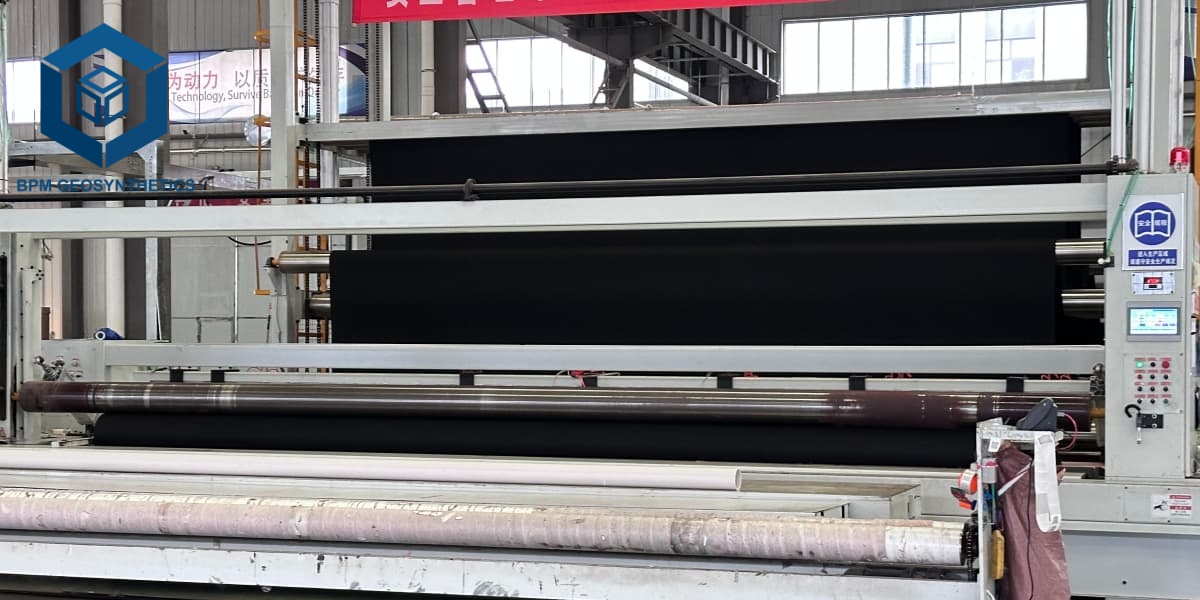
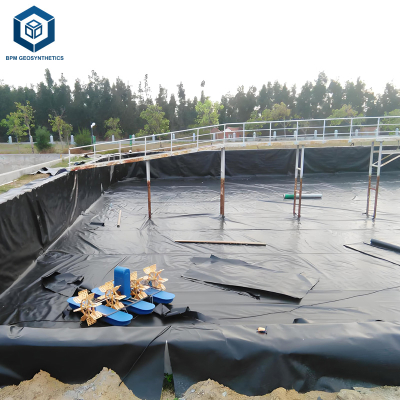
As Geotextile Fabric manufacturer of The Best Project Material Co., Ltd. (BPM Geosynthetics) already developing for more than 20 years, BPM Geosynthetics has always been committed to the production, research and development, sales, and service of geotechnical materials. With high-quality products and professional sales and after-sales teams, BPM geotextile has passed the ISO 9001 Quality Management System, ISO 14001 Environmental Management System, and ISO 45001 Occupational Health and Safety Management System certifications. It has also obtained SONCAP, SASO, and BV certifications and passed SGS and Intertek testing. BPM Geosynthetics geotextile products have reached the world-leading level and can be widely used in aquaculture, soil erosion control, drainage systems, mining, and many other engineering applications. BPM is willing to become your trusted partner by providing high cost-performance, innovative geomembrane and geosynthetic products, excellent quality, and comprehensive after-sales service.
Join BPM Geosynthetics, Win Our Future.