Liner Selection for Acidic Containment Applications
In industrial, mining, and chemical processing facilities, the containment of acidic liquids presents a significant challenge to geomembrane liner systems. Liner selection for acidic containment applications requires a thorough understanding of chemical resistance mechanisms, material compatibility, and long-term performance under aggressive conditions. This guide provides a comprehensive engineering analysis of liner selection for acidic environments, covering chemical resistance evaluation, material options, design considerations, and procurement criteria. For engineers, procurement managers, and EPC contractors, mastering the principles of acidic containment liner selection is essential for ensuring environmental protection, regulatory compliance, and long-term asset integrity.
What is Liner Selection for Acidic Containment Applications
Liner selection for acidic containment applications is the systematic engineering process of identifying and specifying the appropriate geomembrane material—typically HDPE, LLDPE, PVC, or specialty fluoropolymers—for containing acidic liquids with a pH below 4 (and often as low as pH 0-1). In the engineering context, this selection process involves evaluating the chemical resistance of candidate materials through immersion testing (ASTM D5747), considering temperature effects, and assessing mechanical properties such as stress crack resistance and tensile strength. For procurement and project management, proper liner selection is critical for preventing premature degradation, environmental contamination, and costly remediation. The selection must consider the specific acid type (sulfuric, hydrochloric, nitric), concentration, temperature, and expected service life.
Technical Specifications of Acid-Resistant Liners
Liner selection for acidic containment applications requires a clear understanding of the key technical parameters. The following table outlines the typical specifications and their engineering significance.
| Parameter | Typical Value | Engineering Importance |
|---|---|---|
| Thickness | 1.5 – 3.0 mm (specified per design) | Thicker liners provide greater chemical resistance margin and mechanical strength. |
| Density (HDPE) | 0.940 – 0.960 g/cm³ | Higher density improves chemical resistance and tensile strength. |
| Tensile Strength Retention | > 85% of original (ASTM D5747 after acid exposure) | Indicates the material's ability to resist acid-induced degradation. |
| Elongation Retention | > 70% of original | Maintains flexibility and stress resistance after acid exposure. |
| Stress Crack Resistance (SCR) | > 500 hours (ASTM D5397) | Critical for preventing brittle failure in acidic environments. |
| Oxidative Induction Time (OIT) | > 100 minutes (standard) or > 400 minutes (HP-OIT) | Antioxidant package performance; essential for long-term stability. |
| pH Range of Exposure | pH 0 – 4 (strong acids) | Defines the chemical environment the geomembrane must withstand. |
| Test Standard | ASTM D5747 (Chemical Immersion Test) | Standardized method for evaluating acid resistance. |
Chemical Resistance Mechanisms
Liner selection for acidic containment applications is governed by the following chemical resistance mechanisms:
Polymer Resistance: The base polymer (HDPE, LLDPE) must resist acid-catalyzed hydrolysis and chain scission. HDPE's high crystallinity provides excellent resistance to most acids.
Permeability: Low permeability prevents acid penetration into the polymer matrix, which can cause degradation.
Antioxidant Package: Hindered phenol and phosphite stabilizers protect the polymer from oxidative degradation, which can be accelerated by acidic conditions.
Molecular Weight: Higher molecular weight improves resistance to acid attack and stress cracking.
Performance Comparison: Liner Materials for Acidic Environments
For procurement managers, the following comparison highlights the differences in liner selection for acidic containment applications across material types.
| Material | Acid Resistance | Durability | Cost Level | Installation Complexity | Typical Applications |
|---|---|---|---|---|---|
| HDPE | Excellent (Resists most inorganic acids) | High | Moderate | Low | Sulfuric acid, hydrochloric acid, mining acids |
| LLDPE | Good (Resists dilute acids) | Good | Moderate-Lower | Low | Less aggressive acid environments |
| PVC | Moderate (Plasticizer degradation in strong acids) | Moderate | Moderate | Moderate | Not recommended for strong acids |
| Fluoropolymer (e.g., PVDF) | Excellent (Resists all acids) | Very High | High | High | Highly aggressive, high-temperature acid containment |
| Coextruded HDPE | Excellent (Enhanced antioxidant package) | High | Higher | Low | Critical applications with extended service life |
Material Structure and Composition
Liner selection for acidic containment applications is influenced by the material's composition. The following table details the key components and their role in acid resistance.
| Layer / Component | Material | Role in Acid Resistance |
|---|---|---|
| Base Polymer | HDPE (high molecular weight) | Provides the primary chemical resistance; high molecular weight improves resistance to chain scission. |
| Antioxidants | Hindered phenol, phosphite stabilizers | Protects against oxidative degradation, which can be accelerated by acid conditions. |
| Carbon Black | 2.0 – 3.0% by weight | Provides UV protection; also contributes to chemical resistance. |
| Stabilizer Package | Proprietary blend | Extends the material's service life in aggressive acid environments. |
Testing and Qualification Standards
Verifying liner selection for acidic containment applications requires specific testing protocols:
ASTM D5747: Standard test method for the chemical resistance of geomembranes. Specimens are immersed in the acid solution at elevated temperatures (typically 50°C or 60°C) for specified periods and then tested for tensile strength, elongation, and other properties.
ASTM D5397: Notched Constant Tensile Load Test (NCTL) for stress crack resistance, which can be performed after acid exposure.
ASTM D3895: Oxidative Induction Time (OIT) to assess the depletion of antioxidants.
ASTM D6693: Tensile properties of geomembranes, measured before and after exposure.
Common Industry Problems and Engineering Solutions
Issues related to liner selection for acidic containment applications can arise during operation. The following are four common problems and their engineering solutions.
Problem: Premature embrittlement of the geomembrane in a strong acid environment.
Root Cause: The antioxidant package was inadequate, or the material had insufficient stress crack resistance.
Solution: Specify a geomembrane with high SCR (> 500 hours) and a robust antioxidant package (HP-OIT > 400 minutes).Problem: Acid penetration through the liner causing subgrade contamination.
Root Cause: The liner's permeability is too high, or there are defects in the liner.
Solution: Use a thicker liner (2.0-3.0mm) and ensure rigorous quality control during installation.Problem: Seam failure in acid conditions.
Root Cause: The weld zone may have different chemical resistance than the parent material.
Solution: Perform chemical immersion testing on welded samples to verify seam integrity.Problem: Color change or surface degradation of the geomembrane.
Root Cause: Chemical attack on the surface layer, often due to improper material selection.
Solution: Select a coextruded geomembrane with a chemically resistant cap layer.
Risk Factors and Prevention Strategies
Managing liner selection for acidic containment applications requires proactive risk management:
Risk: Improper Material Selection. Prevention: Conduct a thorough chemical compatibility study and specify materials with proven acid resistance.
Risk: Material Mismatch. Prevention: Verify that the geomembrane is certified to meet the project's acid exposure conditions.
Risk: Environmental Exposure (Temperature). Prevention: Higher temperatures accelerate chemical degradation; account for this in material selection.
Risk: Subfloor or Foundation Issues. Prevention: Ensure proper subgrade preparation to prevent stress concentrations on the liner.
Procurement Guide: How to Specify for Acidic Environments
Procuring geomembranes with verified liner selection for acidic containment applications requires a structured approach:
Traffic Load Evaluation: Assess the chemical environment (acid type, concentration, pH, temperature, duration of exposure).
Specification Verification: Specify the required thickness, density, SCR, and OIT values.
Certifications: Require ASTM D5747 chemical immersion test reports.
Supplier Capability: Evaluate the supplier's experience with acid containment applications.
Quality Control: Request lot-specific test reports and third-party validation.
Sample Testing: Conduct welding trials on samples exposed to the acid solution.
Warranty Evaluation: Review warranty terms for chemical resistance.
Engineering Case Study: Acid-Resistant Liner for a Copper Heap Leach Pad
Project Type: Copper heap leach pad
Location: Atacama Desert, Chile
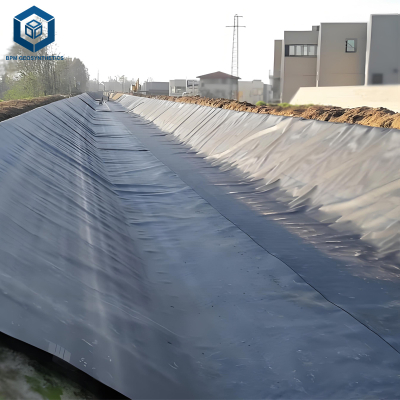
Project Size: 30 hectares of 2.0mm HDPE liner
Product Specification: Liner selection for acidic containment applications was critical due to the sulfuric acid solution (pH 1.5) used in the leaching process.
Challenge: The acid solution, combined with high ambient temperatures, required a liner with exceptional chemical resistance and thermal stability.
Implementation: A high-density HDPE liner with enhanced SCR (> 1,000 hours) and HP-OIT (> 500 minutes) was selected. Chemical immersion testing per ASTM D5747 was conducted at 60°C for 90 days. The liner showed minimal changes in tensile strength and elongation.
Results and Benefits: The liner has performed without failure for over 7 years. Regular inspections show no signs of degradation or stress cracking. The client reports zero environmental incidents related to liner failure.
FAQ Section
What is considered an acidic environment for geomembranes?
Is HDPE geomembrane suitable for all acids?
What testing standard is used to evaluate acid resistance?
How does temperature affect acid degradation of geomembranes?
What is stress crack resistance (SCR) and why is it important in acidic environments?
Can PVC geomembranes be used in acidic environments?
What is the role of antioxidants in acid resistance?
How long should chemical immersion testing be conducted for acid exposure?
What is the expected service life of HDPE in acidic conditions?
Can seams be tested for acid resistance?
Request Technical Support or Quotation
Ensuring proper liner selection for acidic containment applications is essential for project success. Our engineering team provides application-specific guidance and material selection support.
Request a detailed quotation with acid-resistant geomembrane specifications.
Request a chemical compatibility study for your specific acid exposure.
Download technical datasheets and ASTM D5747 test reports.
Request a consultation on material selection and procurement strategy.
About the Author
This guide was developed by a team of senior engineers and B2B technical consultants with extensive experience in geosynthetics, chemical resistance testing, and large-scale EPC projects across the mining, chemical processing, and industrial sectors. Our expertise spans from material science to field installation, ensuring that procurement and engineering decisions are grounded in technical reality and industry best practices.