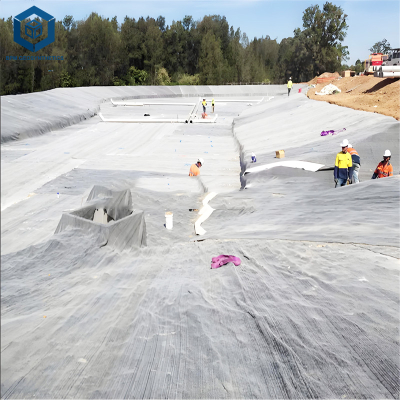
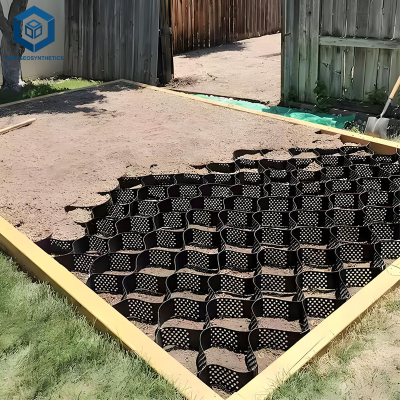
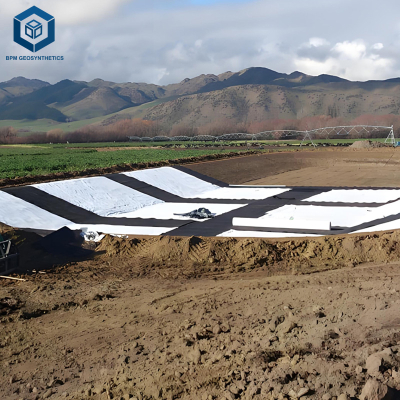
How Much is Geotextile Membrane Price?
Geotextile membrane is known as important geosynthetic materials which are mainly used in civil engineering, landscaping, and environmental projects to increase soil stability, enhance drainage, assist filtration, and reduce erosion. The international market of geotextiles is worth almost USD 7.91 billion in 2024 and it is forecasted to grow up to USD 15.02 billion by 2034 at a CAGR of 6.7%. So, getting a grip on geotextile pricing would be a great help for engineers, contractors, and project managers. The price of geotextile cost per square meter changes between $0.20 and $5.00 per square meter depending on the kind of material, weight, manufacturing processes, and the size of the project.
This detailed manual covers geotextile membrane price, specifications, applications, and also cost-saving measures, equipping you with data-driven insights for the financial planning of your projects without compromising on performance.
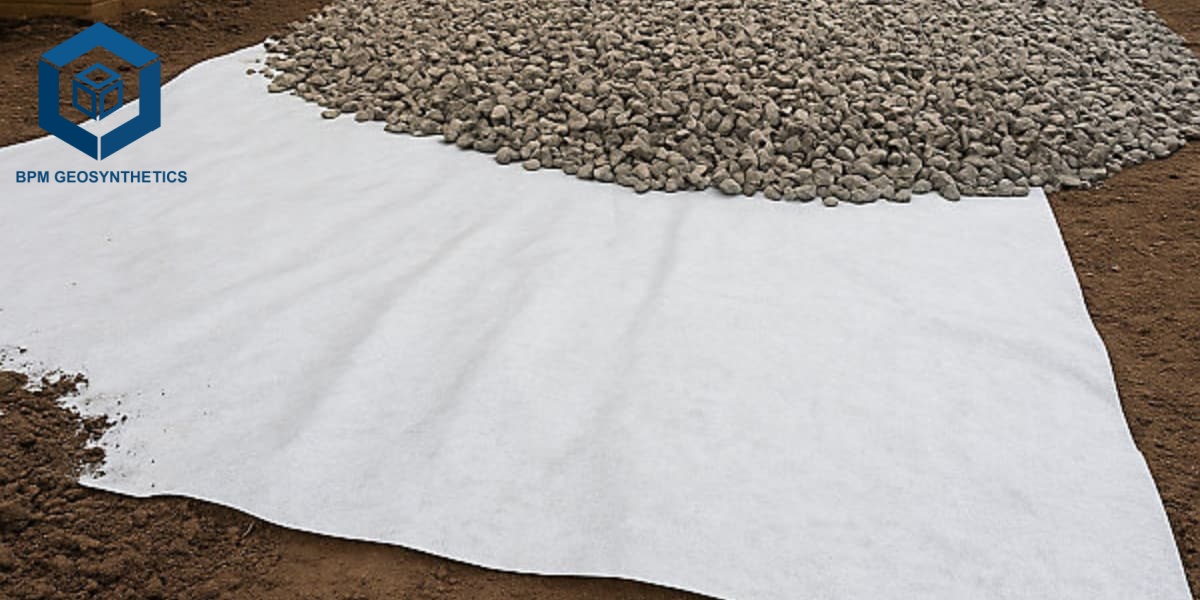
1. Introduction to BPM Geosynthetics Geotextile Membrane
Geotextiles are thin permeable fabrics, commonly manufactured with artificial polymers like polypropylene (PP), polyester (PET), or polyethylene (PE), intended to improve the performance of soil in construction and environmental works. They are classified as woven, non-woven, and knitted, with each type presenting specific advantages such as reinforcement, filtration, or drainage.
In fact, geotextiles can enhance soil stabilization by 50%, decrease erosion by 60%, and lessen maintenance expenses by around 15-20% when used for instance in road construction and landfills. Apart from that, their flexibility has also resulted in their implementation in 85% of the US highway projects and 70% of the worldwide landscaping applications.
1.1 Composition of Geotextile Membrane
Most of the time, the major constituents of geotextiles are synthetic fibers as per the following:
- Polypropylene (PP): has the highest market share of 60%, and is known for its chemical resistance and reasonable price.
- Polyester (PET): holds 30% of the market share, and is characterized by its very high tensile strength but it is also prone to hydrolysis in alkaline soils.
- Polyethylene (PE): accounts for 10% of the market and is mostly used in highly specialized applications like the liners of landfills.
- Additives: UV stabilizers and antioxidants (1-2%) increase the lifespan and the resistance of the product to environmental factors.
Natural fiber geotextiles (for example jute or coir) are employed in environmentally friendly projects, however, these products have a much shorter lifespan (1 to 5 years versus 20 to 50 years for synthetics).
1.2 Geotextile Membrane Key Specifications and Parameters
Technical parameters are the means of defining the performance of a geotextile. ASTM D4439 and AASHTO M288 standards were used to determine them:
- Tensile Strength: 10 to 800 kN/m, a key factor when it comes to reinforcement applications.
- Permeability: 10⁻¹ to 10⁻⁴ cm/s, ensures the passage of water for drainage (ASTM D4491).
- Puncture Resistance: 5 to 50 kN/m, helps prevent damages due to the use of aggregates (ASTM D4833).
- Weight (GSM): 80 to 800 g/m², linked to durability and cost.
- Thickness: 0.5 to 5.0 mm, has effects on the strength and the capacity for filtration.
- UV Resistance: Retains 90% strength after 500 hours of exposure (ASTM D4355).
- Chemical Resistance: Allows withstanding pH 2 to 12, suitable for harsh environments (ASTM D5322).
With these specifications, non woven geotextile membrane will be able to fulfill the requirements of the projects. For instance, 65% of non-woven geotextiles is utilized for drainage because of their high permeability.
1.3 Technical Data
| Item | Unit | Standard Specification | |||||||
| 100 | 200 | 300 | 400 | 500 | 600 | 800 | 1000 | ||
Weight | g/m² | 100 (±15%) | 200 (±16%) | 300 (±16%) | 400 (±16%) | 500 (±16%) | 600 (±16%) | 800 (±16%) | 1000 (±16%) |
Grab Strength (Vertical) | N | ≥450 | ≥900 | ≥1250 | ≥1600 | ≥2000 | ≥2400 | ≥3000 | ≥3600 |
Grab Strength (Horizontal) | ≥450 | ≥900 | ≥1250 | ≥1600 | ≥2000 | ≥2400 | ≥3000 | ≥3600 | |
Grab Elongation (Vertical) | % | 50–90 | 50–100 | ||||||
Grab Elongation (Horizontal) | 50–90 | 50–100 | |||||||
Trapezoidal Break Strength (Vertical) | N | ≥175 | ≥350 | ≥425 | ≥500 | ≥580 | ≥650 | ≥800 | ≥950 |
Trapezoidal Break Strength (Horizontal) | ≥175 | ≥350 | ≥425 | ≥500 | ≥580 | ≥650 | ≥800 | ≥950 | |
CBR Tear Strength | kN | ≥1.25 | ≥2.5 | ≥3.5 | ≥4.3 | ≥5.3 | ≥6.2 | ≥7.1 | ≥8.0 |
Break Strength (Vertical) | kN | ≥5.5 | ≥11 | ≥16 | ≥22 | ≥28 | ≥34 | ≥45 | ≥55 |
Break Strength (Horizontal) | ≥5.5 | ≥11 | ≥16 | ≥22 | ≥28 | ≥34 | ≥45 | ≥55 | |
Break Elongation (Vertical) | % | 40–65 | 50–80 | ||||||
Break Elongation (Horizontal) | 40–65 | 50–80 | |||||||
Tear Strength | N | ≥220 | ≥430 | ≥665 | ≥900 | ≥1200 | ≥1430 | ≥1900 | ≥2350 |
Thickness | mm | 1.4–1.7 | 1.8–2.2 | 2.4–2.8 | 3.0–3.5 | 3.6–4.0 | 4.0–4.4 | 4.8–5.2 | 5.6–6.0 |
Peel Strength | N/5cm | ≥80 | ≥80 | ≥80 | ≥80 | ≥80 | ≥100 | ≥100 | ≥100 |
Resistance to acid & alkaline | % | Break Strength Retention ≥90% / Elongation ≥90% | |||||||
Vertical Permeability | cm/s | ≤0.2 | |||||||
2. Factors Affecting Geotextile Membrane Price
Various factors affect the prices of geotextiles which give rise to the price range of $0.20-$5.00/m². Further down, we examine these factors using data from the industry.
2.1 Geotextile Membrane Price – Material Type
The material that is chosen plays a great role in determining the cost:
- Polypropylene (PP): $0.20–$2.00/m², holds 60% of the market share mostly because of the low production costs and the fact that it has 95% chemical resistance.
- Polyester (PET): $0.75–$2.50/m², provides 20% more UV resistance but it is also very susceptible to hydrolysis in alkaline soils.
- Polyethylene (PE): $0.50–$2.00/m², is utilized in 10% of applications due to its outstanding durability (ASTM D4355).
- Natural Fibers (Jute/Coir): $0.30–$1.00/m², friendly to the environment yet with a 50% shorter lifespan.
2.2 Geotextile Membrane Price – Types of Geotextile Membrane
The price of different geotextile types is driven by manufacturing complexity:
- Non Woven: $0.20–$2.50/m², methods of needle punching or thermal bonding make it cheaper, and it is used in 65% of drainage projects.
- Woven: $0.50–$3.00/m², more expensive as weaving is a complicated process, providing 200–800 kN/m tensile strength for reinforcement.
- Knitted: $1.00–$5.00/m², in 10% of the most exclusive applications such as coastal protection.
- Geotextile Tubes/Bags: $5.00–$54.00/m², for very specialized type of work such as shoreline stabilization.
Nonwoven geotextiles are 20–30% cheaper than wovens because they are easier to make.
2.3 Geotextile Membrane Price – Weight and Thickness
Weight (grams per square meter, GSM) and thickness are the main factors that determine the price:
- Lightweight (80–150 GSM, 0.5–1 mm): $0.20–$0.80/m², typically used in landscaping or as weed barriers.
- Medium (200–400 GSM, 1–2 mm): $0.50–$1.50/m², ideal choice for road stabilization.
- Heavyweight (400–800 GSM, 2–5 mm): $1.00–$2.50/m², mostly applied for drainage and reinforcement purposes.
The density of non woven membrane is responsible for a 30% increase in puncture resistance; however, the price rises by 50% (ASTM D4833).
2.4 Geotextile Membrane Price – Manufacturing Processes
The way a product is made affects its price:
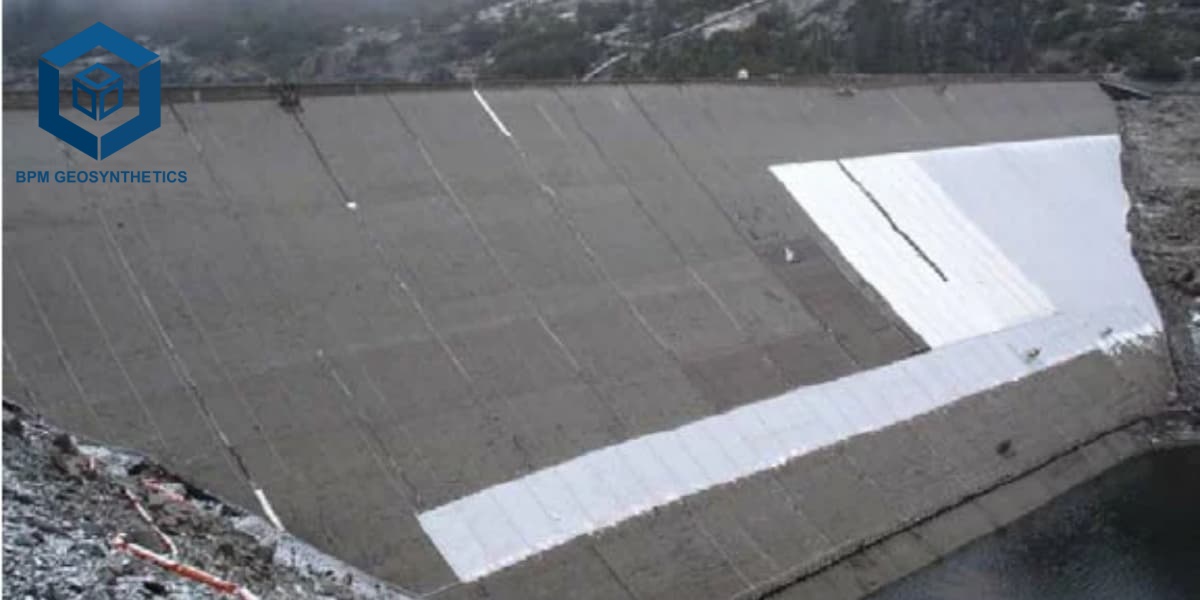
- Needle-Punching (Non-Woven): 20% less expensive than weaving, producing 100–800 GSM fabrics.
- Weaving (Woven): 30% more expensive due to the use of high-tenacity threads.
- UV/Chemical Treatments: 10–15% extra cost, helping the geotextile to keep 90% of its strength over 20 years (ASTM D4355).
Robotic production, which was implemented by 30% of the manufacturers in 2024, decreased labor costs by 10%, thus, prices were stabilized.
2.5 Geotextile Membrane Price – Project Size and Order Volume
Large volume orders significantly lower the price:
- Small Orders (<1,000 m²): $1.00–$3.00/m².
- Large Orders (>10,000 m²): 10–20% price reductions, resulting in a price of $0.20–$2.50/m².
Bulk discount can make a 10,000 m² project save $1,000–$5,000.
2.6 Geotextile Membrane Price – Geographic Location
Price differences by region are attributable to labor, logistics, and production costs:
- North America: $0.50–$2.50/m², mainly because of high labor costs and compliance with BABA.
- Europe: $0.40–$2.50/m², high prices due to very strict standards.
- Asia-Pacific: $0.20–$2.00/m², inexpensive due to local production.
- Africa (e.g., Kenya): KSh 50–250/m² ($0.03–$0.17/sq.ft.), competitive mainly because of scale.
International shipments contribute an additional $0.10–$0.30/m², with Asia-Pacific projects gaining the most from local sourcing.
2.7 Geotextile Membrane Price – Certifications and Quality Standards
Geotextiles that are certified to meet ASTM D4632 or ISO 9001 standards are priced 10–15% higher ($0.30–$0.50/m²) but only offer about 95% quality assurance. On the other hand, local or generic suppliers offer a significantly lower cost range ($0.20–$0.80/m²) at the risk of up to 20% reduced durability.
2.8 Geotextile Membrane Price – Installation and Ancillary Costs
Installation can be 30–50% of total costs, with an average range of $0.50–$2.00/m²:
- Site Preparation: Clearing and grading cost $0.20–$0.50/m² additional.
- Labor: Using skilled workers will result in a charge of around $0.30–$1.00/m², with a higher rate in urban areas ($1.50/m² in New York vs. $0.80/m² in rural areas).
- Equipment: Use of compactors and excavators lead to $0.10–$0.50/m² additional.
Correct installation with 12–18-inch overlaps and 4–6-inch cover can increase the life of a geotextile by 20%.
3. Applications of Geotextile Membrane
Majority of geotextile membrane are used in infrastructure projects (constituting 40% of the market). Some of key applications with data are given below:
3.1 Road Construction
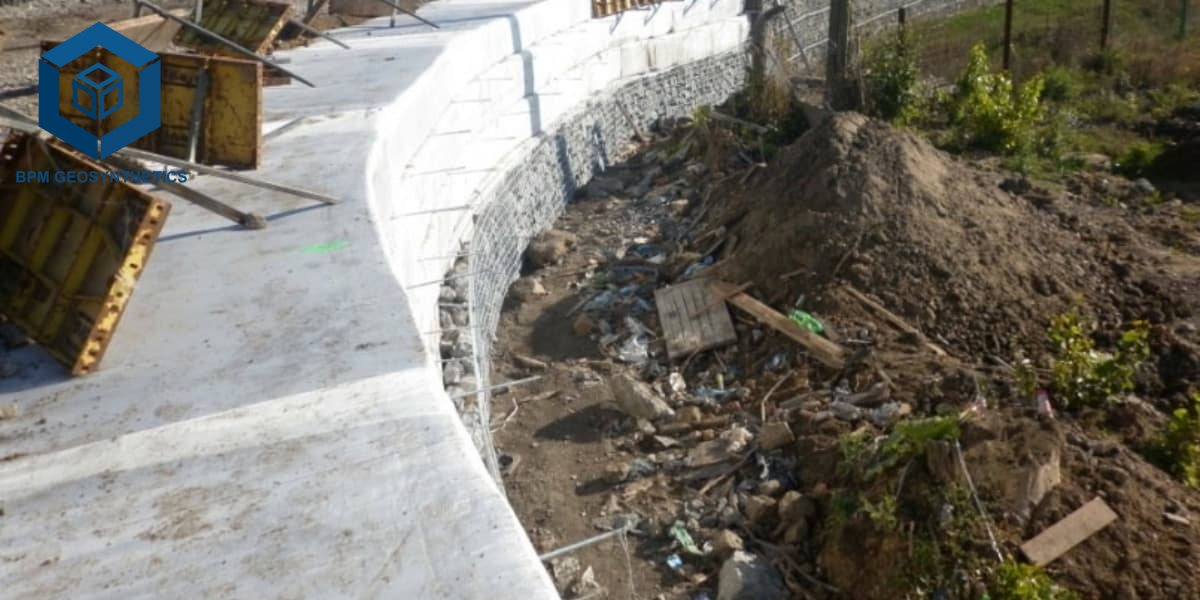
Geo fabric membrane are being used for stabilizing subgrades in 85% of US highways, which reduces the amount of mixing with aggregate by 90% and extends road life by 20%. For instance, highway projects in 2023 used a 200 gsm woven geotextile priced at $0.40 per square foot, which led to a saving of $50,000 per lane mile.
3.2 Erosion Control
Changes in permeable geotextile membrane help to prevent the loss of soil by about 60% in coastal and slope protection projects. For example, a 2024 coast project that used geotextile tubes figured the cost at $3.00 per square foot, realizing savings of 25% on maintenance compared to the traditional method of armoring.
3.3 Drainage Systems
Geotextiles are widely used in drainage projects as they not only prevent water build-up but also reduce erosion by 85%. For example, one particular residential project in 2025 benefited from using a 100 gsm non-woven geotextile at a price of $0.15 per sq.ft. to line a French drain.
3.4 Landfill Liners
Geotextile drainage membrane serve as protective layers in landfill liners and they are effective in preventing up to 95% of punctures. Example: In 2024, a landfill project at the site used a 400 gsm non-woven geotextile priced at $0.50 per square meter and compliance was ensured with EPA standards.
3.5 Landscaping and Agriculture
Geotextile membrane drainage typically feature in as many as 70% of landscaping projects where they are used both to control weeds and stabilize soil. One particular 2025 project, for instance, made use of a 100 gsm non-woven PP geotextile priced at $0.20/m² and as a result, the weed growth was reduced by 90%.
4. Geotextile Membrane Price Cost-Saving Strategies
Ways to optimize geotextile budget:
- Bulk purchasing: Orders of >10,000 m² will save 10–20%
- Local sourcing: It reduces the cost of freight by 10–15%
- Matching specifications: Using lightweight geotextiles (100–200 GSM) for low-stress applications saves 20–30%
- Certified installers: Make sure they do proper overlaps; this will extend the lifespan by 20%
- Eco-friendly options: Recycled PP or natural fibers not only save 10–20% but also meet the sustainability targets
5. Why is the Price of the BPM Geosynthetics Geotextile Membrane More Competitive?
BPM Geosynthetics's Geotextilic Membrane is available at industry-leading rates without compromising on quality. Here are the reasons for our comparably lower costs than many global competitors:
5.1 Direct Factory Production (No Middlemen)
5.1.1 Vertically Integrated Manufacturing:
We have full control of the chain of production and so third party markups are completely eliminated.
5.1.2 Bulk Material Sourcing:
Long-term relationships with polymer suppliers allow us to negotiate for lower resin prices which in turn reduces base costs by 10-20%.
5.2 High-Efficiency Manufacturing
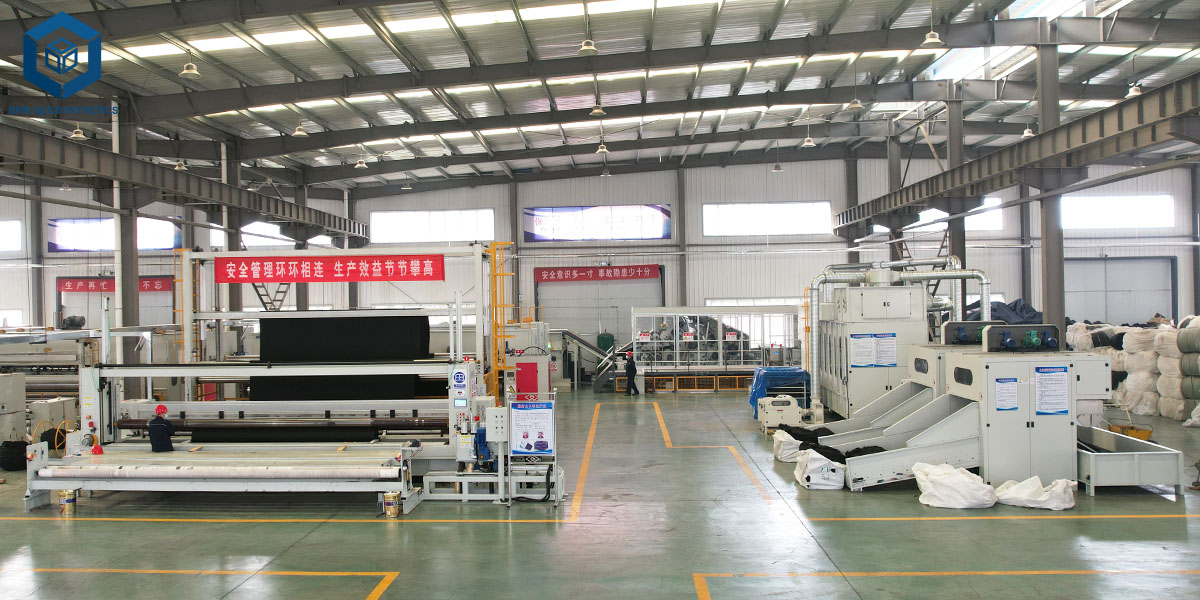
5.2.1 State-Of-The-Art Extrusion Lines:
Automated production also reduces waste and labor costs to minimum, there is, also, consistency in thickness (e.g., ±3% tolerance).
5.2.2 Economies of scale:
Large scale production (e.g., 1M+ m²/month) allows capital-intensive fixed costs to be spread across a larger number of units such as to reduce unit cost.
5.3 Optimized Logistics
In terms of location, BPM Geosynthetics Geotextile enjoys strategic positioning that translates into stable costs and quicker shipments
The location of BPM Geosynthetics Container Manufacturing Unit by the Qingdao Port gives it a couple of advantages over other suppliers in China in the supply of Geotextile Membranes:
5.3.1 Much Lower Shipping Costs
- Direct Port Access:
We are located less than 20 km from the Qingdao Port which cuts inland transport fees by 30-50% compared to the suppliers dependent on distant rail/trucking.
- Bulk Container Savings:
Sea freight rates from Qingdao to key markets (e.g., EU/US/Middle East) are 15-25% lower than smaller Chinese ports on account of high shipping volume and route density.
5.3.2 Faster Global Delivery
- Weekly vessel departures:
Qingdao’s 100+ international routes allow minimum transit times (e.g., 18 days to EU vs. 25+ days from secondary ports).
- One-stop customs clearance:
Pre-shipment inspections at Qingdao Port reduce clearance delays by 3–5 days.
5.4 Lean Overhead & Certification Savings
5.4.1 In-house Testing Labs:
Reduce outsourcing fees for ASTM/GRI/CE certifications.
5.4.2 Streamlined Supply Chain:
Minimal administrative overhead translates to 5–15% savings vs. competitors.
6. Conclusion
Geotextile Membrane Price range from $0.20 to $5.00, driven by material type, weight, manufacturing, and project scale. Non Woven geotextiles ($0.20–$2.50/m²) excel in drainage, while woven geotextile ($0.50–$3.00/m²) are ideal for reinforcement. With a lifespan of 20–50 years and applications in road construction, erosion control, and landfills, geotextiles offer cost-effective, sustainable solutions.
By understanding specifications, selecting certified suppliers like The Best Project Material Co., Ltd.(BPM Geosynthetics), and optimizing installation, stakeholders can save 10–30% while ensuring 95% project reliability. Contact trusted suppliers for quotes and technical support to maximize project success.