HDPE Liner Supplier for Australia Mining Industry | Engineering Guide
HDPE liner supplier for Australia mining industry selection is a critical procurement decision that directly impacts environmental compliance, operational reliability, and project economics for mining operations across the continent. This technical guide provides a comprehensive framework for evaluating suppliers, understanding material specifications, and ensuring successful project delivery — essential for mining engineers, procurement managers, and EPC contractors operating in Australia.
What is HDPE Liner Supplier for Australia Mining Industry
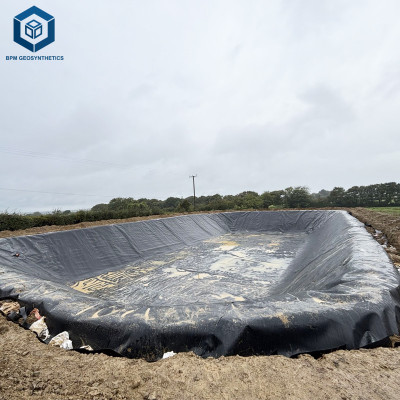
An HDPE liner supplier for Australia mining industry is a specialized manufacturer or distributor providing high-density polyethylene geomembrane liners for mining applications — including heap leach pads, tailings storage facilities, process water ponds, and acid rock drainage containment. These suppliers must meet stringent Australian standards (AS/NZS), demonstrate compliance with environmental regulations, and provide materials capable of withstanding Australia's harsh conditions — high UV exposure, temperature extremes, and aggressive chemicals. For engineering teams, the supplier must offer materials with enhanced UV stability (≥2.5% carbon black), high stress-crack resistance (NCTL ≥ 500 h), and proven performance in mining environments. Procurement managers evaluate an HDPE liner supplier for Australia mining industry based on local presence, technical support capability, and proven project references within the Australian mining sector.
Technical Specifications of HDPE Liner Supplier for Australia Mining Industry
The table below summarizes key parameters that an HDPE liner supplier for Australia mining industry must control.
| Parameter | Typical Value / Control Range | Engineering Importance |
|---|---|---|
| Thickness Tolerance | ± 5% of nominal (ASTM D5994) | Ensures consistent mechanical and barrier properties |
| Density | 0.940 – 0.960 g/cm³ (ASTM D1505) | Ensures dimensional stability and chemical resistance |
| Tensile Yield Strength | ≥ 15 MPa (ASTM D6693) | Prevents deformation under load |
| Puncture Resistance | ≥ 200 N (ASTM D4833) | Protects against sharp objects during installation |
| Stress Crack Resistance (NCTL) | ≥ 500 hours (ASTM D5397) | Critical for long-term performance in harsh environments |
| Carbon Black Content | 2.0 – 3.0% (ASTM D1603) | Ensures UV stability — essential for Australian conditions |
| Oxidative Induction Time (OIT) | ≥ 100 min (ASTM D3895) | Indicates antioxidant robustness |
| UV Stability (5000 h) | ≥ 50% retained tensile strength | Critical for exposed applications |
| AS/NZS Compliance | AS/NZS 4347 (as applicable) | Ensures regulatory compliance |
A qualified HDPE liner supplier for Australia mining industry provides third-party test reports and Australian-specific certification.
Material Structure and Composition
HDPE liner products for the Australian mining industry involve specific material formulations to withstand extreme conditions. The table below describes the typical composition.
| Layer / Component | Material | Function |
|---|---|---|
| Top (exposure) layer | HDPE with 2.5% carbon black + HALS stabilizers | Resists UV degradation in high-sun regions |
| Core / structural layer | High-molecular-weight HDPE (no fillers) | Provides tensile strength and barrier continuity |
| Bottom (subgrade) layer | Textured HDPE (co-extruded) | Enhances friction with subgrade |
| Weldable seam area | Same base resin (non-contaminated) | Ensures strong field seams via thermal welding |
UV stabilization and thermal stability are critical for Australian mining conditions, particularly in regions like the Pilbara and the Outback.
Manufacturing Process of HDPE Liner Supplier for Australia Mining Industry
Production for the Australian mining market follows a six-stage sequence with strict quality controls.
Raw material preparation – Virgin HDPE resin, carbon black masterbatch, and antioxidant packages are precision-weighed and blended.
Extrusion and forming – The blend is melted in a twin-screw extruder (230–250°C) and forced through a flat-sheet die; calender rollers set the precise thickness.
Surface treatment – Textured or smooth finishes are applied via embossing or polishing rolls.
Precision finishing – The sheet passes through cooling baths and edge-trimming stations; widths up to 8 m are achievable.
Quality inspection – In-line and off-line tests include thickness mapping, tensile, puncture, stress-crack, and pinhole detection.
Packaging and labeling – Rolls are wrapped in UV-blocking film, labeled with batch number, and prepared for container shipping.
Each step is critical: the supplier must maintain consistent quality to meet Australian mining specifications and logistics requirements.
Performance Comparison with Alternative Materials
When evaluating an HDPE liner supplier for Australia mining industry, engineers compare material performance and cost. The table below provides a comparison of geomembrane options common in the region.
| Material | Durability (years) | Cost Level | UV Resistance | Installation Complexity | Typical Applications |
|---|---|---|---|---|---|
| HDPE (high-MW, UV-stabilized) | 25–50 | Medium–High | Excellent | Moderate (welding) | Heap leach pads, tailings, water |
| LLDPE | 15–30 | Medium | Good | Moderate | Agricultural, lower-chemical loads |
| PVC (with plasticizers) | 10–20 | Low–Medium | Poor | Low | Not recommended for high-UV regions |
| Reinforced PP | 20–35 | Medium–High | Good | Moderate | High-temperature applications |
HDPE offers the best combination of UV resistance, durability, and performance for Australian mining applications.
Industrial Applications of HDPE Liner Supplier for Australia Mining Industry
An HDPE liner supplier for Australia mining industry serves a wide range of mining sectors:
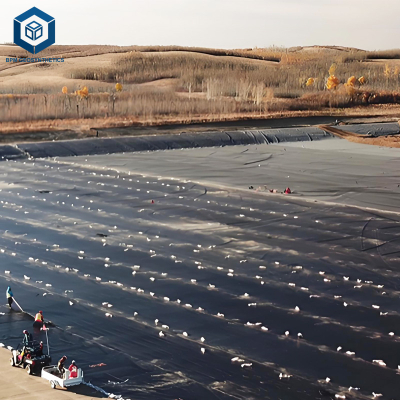
Gold and copper mining: Heap leach pads, process solution ponds.
Iron ore mining: Tailings storage, process water containment.
Lithium and rare earths: Brine ponds and chemical containment.
Coal mining: Sediment ponds, runoff containment.
Uranium mining: Acid rock drainage (ARD) basins.
A major gold mining project in Western Australia used 2.0 mm HDPE liners from a certified supplier, meeting all project specifications and environmental requirements.
Common Industry Problems and Engineering Solutions
Even with reliable suppliers, issues can arise. Below are four common problems and their engineering remedies.
Problem 1: UV degradation during storage
Root cause: Prolonged exposure to sunlight.
Solution: Specify UV-blocking packaging; store indoors or under shade.
Problem 2: Inconsistent quality
Root cause: Inadequate quality control.
Solution: Require third-party testing and factory audits.
Problem 3: Delivery delays
Root cause: Logistics or customs issues.
Solution: Plan shipping with buffer time; use experienced freight forwarder.
Problem 4: Specification misalignment
Root cause: Incomplete project specifications.
Solution: Develop detailed material specifications; review with supplier.
Risk Factors and Prevention Strategies
Engineering risk management for an HDPE liner supplier for Australia mining industry includes five critical areas:
Quality deviations: Prevention: require third-party inspection.
Supply chain disruptions: Prevention: qualify backup suppliers.
Logistics delays: Prevention: plan shipping and customs clearance.
Documentation errors: Prevention: submit complete submittals.
Cost overruns: Prevention: include contingency in budget.
Procurement Guide: How to Choose the Right HDPE Liner Supplier for Australia Mining Industry
Buyers should follow this step‑by‑step checklist when evaluating an HDPE liner supplier for Australia mining industry:
Traffic load evaluation – Assess project volume and technical requirements.
Specification verification – Confirm thickness, UV stability, and chemical resistance.
Certifications – Require ISO 9001, GRI-GM13, and AS/NZS compliance.
Supplier capability – Audit production capacity, lead times, and local presence.
Quality control – Review in-house testing and third-party lab reports.
Sample testing – Request 1 m² samples for independent testing.
Warranty evaluation – Examine warranty covering material defects (≥5 years).
Engineering Case Study
Project: 10 ha gold heap leach pad
Location: Western Australia
Size: 100,000 m² HDPE liner, 2.0 mm thickness
Product specification: UV-stabilized HDPE geomembrane with ASTM/GRI compliance, AS/NZS certified, third-party tested.
Results & benefits: The supplier delivered all material within 8 weeks, with full documentation. The project was completed on schedule, meeting environmental compliance standards for Western Australia.
FAQ Section
High-UV-stabilized HDPE with ≥2.5% carbon black is essential.
AS/NZS compliance, ISO 9001, and GRI-GM13 are commonly required.
Specify ≥2.5% carbon black and request UV test reports (5000 h).
25–50 years with proper UV stabilization.
1.5–2.5 mm, depending on application.
Check supplier registries, project references, and local presence.
FOB, CIF, or CFR, depending on agreement.
Typically 5–10 years, depending on the supplier.
Conduct incoming inspections and third-party testing.
Yes — several local manufacturers supply the Australian market.
Request Technical Support or Quotation
For project-specific engineering assistance, product samples, or detailed technical datasheets from an HDPE liner supplier for Australia mining industry, our technical advisory team is available. We provide:
Customized material selection and procurement planning
Free 1 m² sample panels for independent testing
Full technical specifications and quality assurance guidelines
Direct consultation with manufacturing and procurement engineers
Submit your project parameters through the contact form on our website to receive a detailed engineering proposal within 48 hours.
About the Author
This guide was prepared by senior industry engineers with over 15 years of experience in geomembrane manufacturing, mining infrastructure, and project procurement across Australia, North America, and Asia. Our team has contributed to EPC projects for gold, iron ore, and lithium mining, providing technical due diligence, factory audits, and post-installation performance monitoring. We are not affiliated with any specific brand or platform — our advice is independent and rooted in engineering principles and field failure analysis.