Geomembrane slope anchoring method
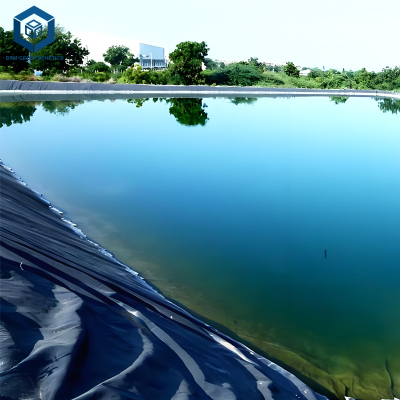
The geomembrane slope anchoring method refers to the engineered technique used to secure geomembrane liners on slopes using anchor trenches, mechanical fixings, or ballast systems. Proper anchoring prevents liner slippage, maintains tensile stability, and ensures long-term containment integrity in environmental and infrastructure projects.
Technical Parameters and Specifications
| Parameter | Typical Range | Engineering Significance |
|---|---|---|
| Geomembrane Thickness | 0.75 – 2.5 mm | Determines puncture resistance and anchoring strength |
| Anchor Trench Depth | 0.5 – 1.0 m | Provides mechanical stability for slope installations |
| Anchor Trench Width | 0.3 – 0.6 m | Ensures sufficient liner embedment |
| Slope Gradient | 1V:2H – 1V:4H | Common design range for containment slopes |
| Pullout Resistance | >10 kN/m | Required to resist sliding forces |
| Seam Strength | ≥90% base material | Maintains structural integrity during anchoring |
Structure and Material Composition
HDPE Geomembrane Layer: Primary impermeable barrier preventing liquid leakage.
Anchor Trench System: Excavated trench at slope crest for liner fixation.
Backfill Material: Compacted soil or concrete used to secure geomembrane in trench.
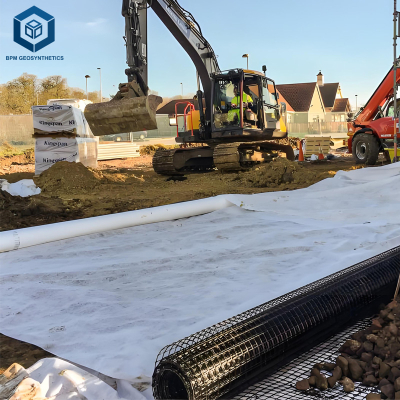
Protective Geotextile Layer: Prevents puncture from subgrade or backfill materials.
Drainage Layer (Optional): Controls hydrostatic pressure behind the liner.
Manufacturing Process
Raw Material Preparation: HDPE resin blended with carbon black and stabilizers.
Sheet Extrusion: Geomembrane produced using flat-die extrusion equipment.
Thickness Calibration: Automated control systems ensure uniform thickness.
Surface Texturing: Optional textured surfaces produced via embossing rollers.
Cooling and Rolling: Controlled cooling prevents internal stress formation.
Quality Inspection: Tensile strength, density, and thickness tested according to ASTM standards.
Industry Comparison
| Liner Material | Anchoring Stability | Typical Application | Durability | Cost Range (USD/m²) |
|---|---|---|---|---|
| HDPE Geomembrane | High | Landfills, mining ponds | 20–30 years | 3 – 8 |
| LLDPE Geomembrane | Moderate | Agricultural ponds | 15–25 years | 4 – 7 |
| PVC Liner | Low | Decorative water features | 10–20 years | 5 – 10 |
| EPDM Rubber | Moderate | Landscape ponds | 20–30 years | 8 – 15 |
Application Scenarios
Landfill containment slopes
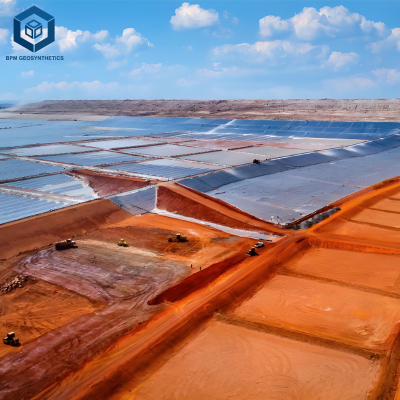
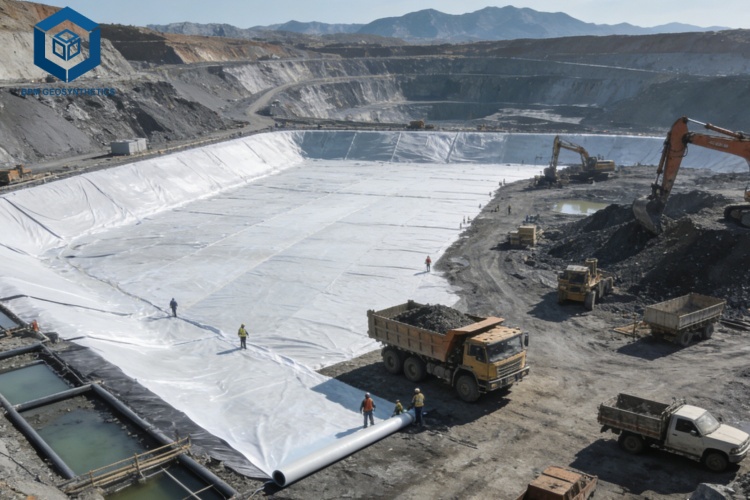
Mining tailings dams and heap leach pads
Industrial wastewater lagoons
Water reservoir slope protection
EPC infrastructure projects requiring slope stabilization
Environmental remediation containment systems
Core Pain Points and Solutions
1. Geomembrane Slippage on Steep Slopes
Solution: Use properly sized anchor trenches combined with friction-enhancing geotextiles.
2. Insufficient Anchoring Strength
Solution: Increase trench depth and compaction quality of backfill materials.
3. Stress Concentration at Crest
Solution: Install reinforcement strips and distribute tensile load across wider anchor zones.
4. Subgrade Instability
Solution: Improve soil compaction and install drainage layers to prevent slope movement.
Risk Warnings and Mitigation
Improper trench dimensions can lead to liner displacement.
Sharp rocks in anchor trenches may puncture geomembranes.
Poor backfill compaction reduces anchoring strength.
Extreme slope angles increase sliding risk.
Environmental exposure during installation may degrade materials.
Procurement and Selection Guide
Confirm geomembrane thickness suitable for slope stress conditions.
Verify compliance with ASTM or ISO geomembrane standards.
Assess supplier experience in landfill and mining projects.
Request technical installation guidelines for slope anchoring.
Obtain samples for field compatibility testing.
Evaluate project logistics including transportation and roll width.
Ensure welding equipment and trained installers are available.
Engineering Case Study
Landfill Slope Liner Installation Project
Project Area: 45,000 m² landfill containment system
Slope Angle: 1V:3H
Material Used: 1.5 mm HDPE geomembrane with geotextile cushion
Anchoring Method: Crest anchor trench (0.8 m deep × 0.5 m wide)
Installation Equipment: Excavators, compaction rollers, hot wedge welders
Outcome: Stable liner system with no slippage after 5 years of operation
FAQ – Geomembrane Slope Anchoring Method
1. What is the purpose of slope anchoring?
It prevents geomembrane liners from sliding or shifting on inclined surfaces.
2. What is the most common anchoring method?
Anchor trenches at the crest of slopes are the most widely used solution.
3. How deep should anchor trenches be?
Typical depths range from 0.5 to 1.0 meters depending on slope load.
4. Can geomembranes be mechanically anchored?
Yes, mechanical fasteners may be used in certain structural applications.
5. Is geotextile necessary under geomembranes?
Often recommended to protect the liner from puncture.
6. What slope angles are safe for geomembranes?
Slopes between 1V:2H and 1V:4H are common in containment projects.
7. How is anchoring strength calculated?
Engineers consider liner weight, friction, slope angle, and environmental loads.
8. Can anchor trenches fail?
Yes, if trench dimensions or compaction are inadequate.
9. What equipment is needed for installation?
Excavators, welding machines, compaction equipment, and inspection tools.
10. How long does a properly anchored liner last?
HDPE geomembrane systems typically perform for 20–30 years.
Request Technical Documentation or Quotation
For distributors, EPC contractors, and engineering consultants seeking reliable geomembrane slope anchoring method solutions, our technical team can provide:
Detailed engineering installation manuals
HDPE geomembrane technical datasheets
Bulk supply quotations for infrastructure projects
Project-specific design and anchoring recommendations
Engineering samples for testing and approval
Author Expertise (E-E-A-T)
This article is written by engineering specialists with more than 15 years of experience in geomembrane manufacturing, environmental containment design, and large-scale infrastructure installation. All recommendations follow internationally recognized engineering practices commonly applied in landfill, mining, and water containment projects.