Geomembrane Field Quality Assurance Checklist | Engineering Guide
Geomembrane field quality assurance checklist is a systematic tool used by QA/QC engineers to verify that HDPE and LLDPE liner installations meet project specifications and industry standards. This engineering guide covers inspection points, testing procedures, and procurement — essential for quality engineers, installation contractors, and project managers.
What is Geomembrane Field Quality Assurance Checklist
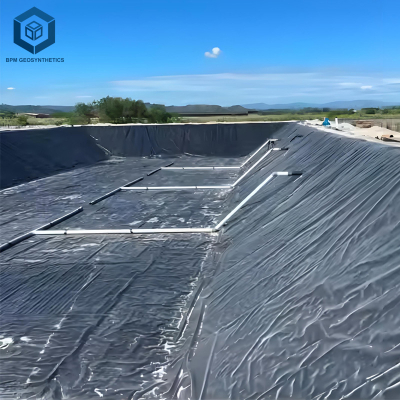
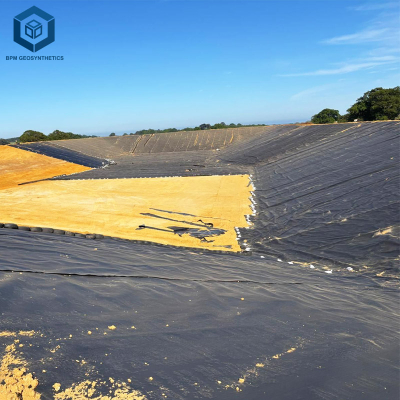
A geomembrane field quality assurance checklist is a comprehensive document that outlines all inspection and testing requirements for geomembrane installation projects. It covers subgrade preparation, material verification, welding parameters, seam testing, and final acceptance criteria. The checklist ensures that every aspect of the installation meets ASTM D4437, GRI-GM19, and project-specific requirements. For engineering teams, the checklist provides a structured approach to quality control, reducing the risk of failures. Procurement managers use the geomembrane field quality assurance checklist to verify that installers and suppliers meet quality standards.
Technical Specifications of Geomembrane Field Quality Assurance Checklist
The table below summarizes key parameters typically included in a geomembrane field quality assurance checklist.
| Parameter | Typical Value / Requirement | Engineering Importance |
|---|---|---|
| Subgrade Compaction | ≥ 95% density | Prevents settlement |
| Panel Overlap | 100 – 150 mm (minimum) | Ensures welding surface |
| Weld Temperature | 350 – 450°C (wedge) | Critical for fusion |
| Weld Speed | 1.5 – 4.5 m/min | Affects quality |
| Peel Strength | ≥ 30 N/mm (ASTM D6392) | Seam quality benchmark |
| Shear Strength | ≥ 30 N/mm (ASTM D6392) | Seam quality benchmark |
| Vacuum Test | 70 kPa, no leaks | Seam integrity |
| Air Pressure Test | ≤ 20% pressure loss | Double-track seam integrity |
A comprehensive geomembrane field quality assurance checklist ensures project quality.
Material Structure and Composition
The checklist covers material verification, including the following components.
| Layer / Component | Material | Function |
|---|---|---|
| Geomembrane liner | HDPE or LLDPE | Primary barrier |
| Geotextile cushion | Nonwoven PP (300–500 g/m²) | Protects liner |
| Weld rod | HDPE (same resin) | Extrusion welding filler |
| Anchor trench | Backfilled with soil or concrete | Secures liner |
Material verification is a key checklist item.
Manufacturing Process of Geomembrane Field Quality Assurance Checklist
The checklist covers each stage of the installation process:
Site preparation – Subgrade compaction and smoothness.
Panel deployment – Layout and overlap verification.
Welding – Temperature, speed, and seam appearance.
Seam testing – Vacuum, air pressure, peel, and shear tests.
Anchoring – Trench depth and backfill.
Final inspection – Visual inspection and documentation.
Each stage is subject to checklist verification.
Performance Comparison with Alternative Materials
When evaluating a geomembrane field quality assurance checklist, engineers compare QA/QC methods. The table below provides a comparison.
| QA/QC Method | Coverage | Cost | Reliability | Typical Application |
|---|---|---|---|---|
| Comprehensive Checklist | 100% of installation | Medium | High | All projects |
| Spot Inspection | Sample-based | Low | Medium | Small projects |
| Third-party CQA | 100% of installation | High | Very High | Large, critical projects |
A comprehensive checklist ensures the highest quality assurance.
Industrial Applications of Geomembrane Field Quality Assurance Checklist
The geomembrane field quality assurance checklist is used across various infrastructure sectors:
Landfills: Base liners, side slopes, and closure caps.
Mining: Heap leach pads, tailings storage.
Water containment: Reservoirs, canals.
Chemical containment: Secondary containment.
Environmental remediation: Capping and containment.
A major landfill project used a detailed checklist to achieve 98% first-pass seam acceptance.
Common Industry Problems and Engineering Solutions
Even with a checklist, issues can arise. Below are four common problems and their engineering remedies.
Problem 1: Incomplete checklist items
Root cause: Oversight or time pressure.
Solution: Use a digital checklist with mandatory fields.
Problem 2: Inconsistent testing
Root cause: Operator variability.
Solution: Standardize testing procedures; use certified operators.
Problem 3: Documentation gaps
Root cause: Poor record-keeping.
Solution: Use standardized forms; store records centrally.
Problem 4: Checklist updates
Root cause: Project changes.
Solution: Review and update checklist as needed.
Risk Factors and Prevention Strategies
Engineering risk management for geomembrane field quality assurance checklist includes five critical areas:
Incomplete inspections: Prevention: use mandatory checklist items.
Inadequate testing: Prevention: specify test frequency.
Documentation errors: Prevention: use standardized forms.
Training gaps: Prevention: provide QA/QC training.
Cost overruns: Prevention: include QA/QC in budget.
Procurement Guide: How to Choose the Right Geomembrane Field Quality Assurance Checklist
Buyers should follow this step‑by‑step checklist when evaluating geomembrane field quality assurance checklist:
Traffic load evaluation – Assess project size and quality requirements.
Specification verification – Confirm checklist items and standards.
Certifications – Require ASTM/ISO compliance.
Supplier capability – Audit QA/QC experience.
Quality control – Review test reports and documentation.
Sample testing – Request a checklist demonstration.
Warranty evaluation – Examine warranty covering QA/QC (≥1 year).
Engineering Case Study
Project: 100,000 m² landfill liner installation
Location: United States
Size: 100,000 m² HDPE geomembrane
Product specification: Comprehensive QA/QC checklist; 100% seam testing.
Results & benefits: 98% first-pass acceptance; zero leaks after 5 years. QA/QC checklist prevented major failures.
FAQ Section
A document listing inspection and testing requirements for liner installation.
Subgrade, materials, welding parameters, seam testing, and anchoring.
Ensures consistent quality and reduces failure risk.
Per project or when specifications change.
QA/QC engineers, inspectors, and contractors.
ASTM D4437, GRI-GM19, and project specifications.
Use standardized forms; store with project records.
Typically 5–10% of installation cost.
Yes — digital tools improve efficiency and traceability.
1–2 years, depending on the contractor.
Request Technical Support or Quotation
For project-specific engineering assistance, QA/QC planning, or checklist development for geomembrane field quality assurance checklist, our technical advisory team is available. We provide:
Customized QA/QC procedures and checklists
Free sample checklists and on-site testing
Full technical specifications and inspection guidelines
Direct consultation with QA/QC and geotechnical engineers
Submit your project parameters through the contact form on our website to receive a detailed engineering proposal within 48 hours.
About the Author
This guide was prepared by senior industry engineers with over 15 years of experience in geomembrane installation, quality assurance, and infrastructure projects across North America, Europe, and Asia. Our team has contributed to EPC projects for landfills, mining, and water containment, providing technical due diligence, factory audits, and post-installation verification. We are not affiliated with any specific brand or platform — our advice is independent and rooted in engineering principles and field failure analysis.