Geomembrane thickness for hazardous waste landfill
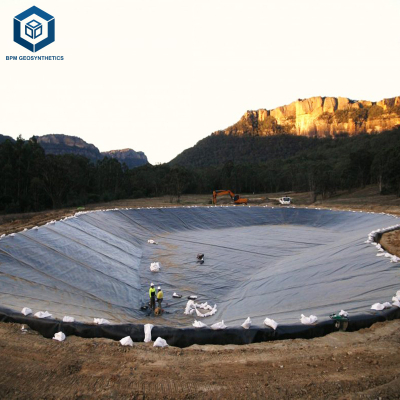
Geomembrane thickness for hazardous waste landfill refers to the engineered selection of polymer liner thickness, typically HDPE, used to ensure long-term containment of toxic leachate. Thickness directly affects puncture resistance, durability, and leakage prevention in high-risk environmental protection systems.
Technical Parameters & Specifications
| Parameter | Typical HDPE Specification |
|---|---|
| Recommended Thickness | 1.5 mm – 2.5 mm (2.0 mm standard) |
| Density | ≥ 0.94 g/cm³ |
| Tensile Strength | ≥ 27 kN/m |
| Puncture Resistance | ≥ 600 N |
| Stress Crack Resistance | ≥ 500 hours |
| Oxidative Induction Time (OIT) | ≥ 100 min |
| Permeability | < 1×10⁻¹³ cm/s |
| Service Life | 25–50 years |
Structure & Material Composition
Primary Barrier: HDPE geomembrane (smooth or textured)
Secondary Barrier: Additional geomembrane layer (double-liner system)
Leak Detection Layer: Geonet or drainage composite
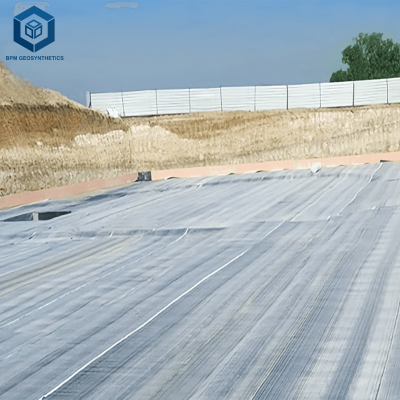
Protection Layer: Nonwoven geotextile (≥500 g/m²)
Subgrade: Compacted clay or GCL (geosynthetic clay liner)
Additives: Carbon black (2–3%), antioxidants
Manufacturing Process
Raw Material Blending: Virgin HDPE resin with stabilizers.
Extrusion: Flat die extrusion to form continuous sheets.
Thickness Calibration: Precision roller system control.
Surface Treatment: Smooth or textured finish as required.
Cooling: Controlled cooling for dimensional stability.
Quality Testing: Mechanical, chemical, and permeability tests.
Roll Packaging: Standard rolls (5–8 m width) for field deployment.
Industry Comparison (Geomembrane Materials)
| Material | Typical Thickness | Chemical Resistance | Suitability for Hazardous Waste |
|---|---|---|---|
| HDPE | 1.5 – 2.5 mm | Excellent | Highly Recommended |
| LLDPE | 1.0 – 2.0 mm | Good | Conditional |
| PVC | 0.75 – 1.5 mm | Moderate | Not Recommended |
| EPDM | 1.0 – 2.0 mm | Good | Limited Use |
Application Scenarios
Environmental Contractors: Hazardous waste landfill base and cap systems.
EPC Companies: Design and construction of containment facilities.
Government Projects: Regulated landfill infrastructure.
Consulting Engineers: Environmental protection system design.
Core Pain Points & Solutions
High Puncture Risk from Waste Materials:
Solution: Use ≥2.0 mm HDPE with high puncture resistance and geotextile protection.Leachate Leakage Risk:
Solution: Implement double-liner system with leak detection layer.Chemical Degradation:
Solution: Select HDPE with high OIT and chemical compatibility certification.Long-Term Durability Requirements:
Solution: Use high-quality resin with proven 25+ year performance.Slope Stability Issues:
Solution: Apply textured geomembrane for side slopes.
Risk Warnings & Mitigation
Insufficient thickness → Increased risk of puncture and leakage.
Poor welding quality → Seam failure and environmental contamination.
Improper subgrade preparation → Stress concentration and liner damage.
Low-quality materials → Reduced lifespan and performance.
Ignoring regulations → Non-compliance and project risk.
Procurement & Selection Guide
Review regulatory requirements (local environmental standards).
Select geomembrane thickness (≥2.0 mm recommended for hazardous waste landfill).
Determine need for double-liner system.
Verify compliance with GRI GM13 or equivalent standards.
Request third-party laboratory test reports.
Evaluate supplier production capacity and experience.
Confirm installation, welding, and QA/QC support.
Engineering Case Study
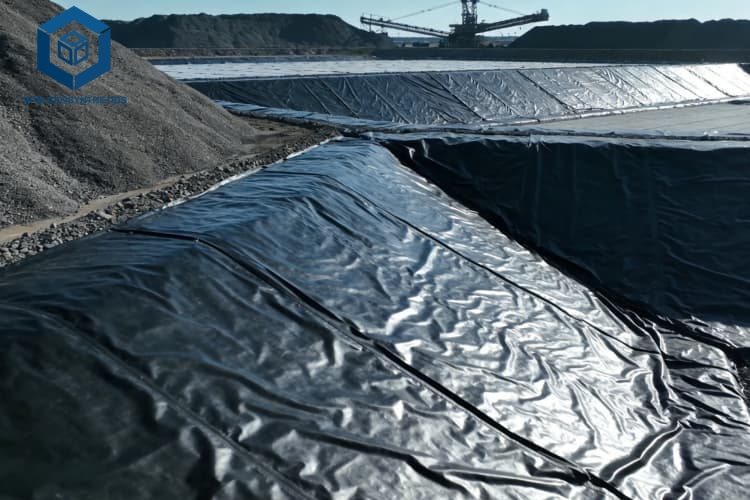
A hazardous waste landfill project (200,000 m²) implemented a double-liner system using 2.0 mm HDPE geomembrane for both primary and secondary barriers. A geonet leak detection layer and 600 g/m² geotextile protection were included. After 8 years of operation, monitoring data confirmed zero leakage and stable liner performance, meeting strict environmental compliance requirements.
FAQ (Frequently Asked Questions)
1. What is the standard geomembrane thickness for hazardous waste landfill?
Typically 2.0 mm HDPE.2. Is 1.5 mm sufficient?
Generally not recommended for high-risk waste.3. Why is HDPE preferred?
Due to high chemical and mechanical resistance.4. Is double liner mandatory?
Required in most regulated projects.5. What affects thickness selection?
Waste type, load, and regulatory standards.6. What is service life?
25–50 years under proper conditions.7. Is geotextile required?
Yes, for puncture protection.8. What welding method is used?
Hot wedge and extrusion welding.9. What standards apply?
GRI GM13 for HDPE geomembranes.10. What is the key risk?
Leakage due to insufficient thickness or poor installation.
Call to Action (CTA)
For hazardous waste landfill geomembrane thickness recommendations, technical datasheets, and project-specific design support, contact our engineering team. We provide samples, compliance documentation, and full technical assistance for environmental containment projects.
E-E-A-T: Authoritative Expertise
This article is developed by geomembrane engineers with over 10 years of experience in landfill containment systems. Our team has supported large-scale hazardous waste projects globally, delivering solutions that meet stringent environmental and engineering standards.