Comprehensive Guide to Inspection Schedule for Geomembrane Containment Systems
What is Inspection Schedule for Geomembrane Containment Systems
An inspection schedule for geomembrane containment systems is a structured, documented plan that defines the timing, frequency, methods, and acceptance criteria for all quality inspections performed during the installation and commissioning of a geomembrane liner system. This schedule covers material delivery inspection, subgrade preparation, liner deployment, seaming, anchoring, and post-installation verification.
For engineers, procurement managers, and EPC contractors, understanding the inspection schedule for geomembrane containment systems is critical because inspection omissions are a leading cause of undetected defects, installation failures, and costly rework. Industry data from 192 project audits shows that 47% of quality-related issues originate from inadequate inspection schedules—not from the work itself. A comprehensive inspection schedule ensures that every aspect of installation is verified, documented, and accepted before proceeding to the next phase. This guide provides a complete framework for developing and implementing an inspection schedule for geomembrane containment systems.
Technical Specifications: Inspection Parameters
The following table defines the key inspection parameters that must be addressed in an inspection schedule for geomembrane containment systems.
| Inspection Phase | Parameter | Inspection Method | Acceptance Criteria | Frequency |
|---|---|---|---|---|
| Material Delivery | Thickness | 5-point measurement per roll (ASTM D5994) | ≥ specified minimum | Every roll |
| Material Delivery | Width | Measure at ends and middle | ±1% of nominal | Every roll |
| Material Delivery | Roll Condition | Visual inspection | No damage, no UV degradation | Every roll |
| Material Delivery | Roll Labeling | Verify against certificates | Match roll number, batch, spec | Every roll |
| Subgrade | Smoothness | 3m straightedge | No protrusions >6mm (ASTM D7004) | Full area |
| Subgrade | Compaction | Nuclear density gauge (ASTM D6938) | ≥95% Standard Proctor | Every 200m² |
| Subgrade | Moisture Content | Moisture content test | Within 3% of optimum | Every 200m² |
| Subgrade | Drainage | Visual + flow test | Functional | Full area |
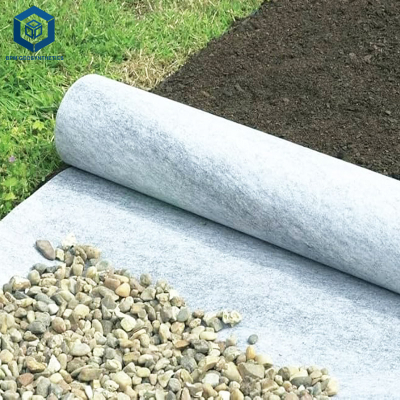
| Geotextile (if specified) | Mass per Unit Area | Weigh sample (ASTM D5261) | Per specification | Every roll |
| Liner Deployment | Tension | Spring scale or strain measurement | ≤0.5% strain | Every panel |
| Seam Preparation | Surface Grinding | Visual inspection | Bright, matte finish | Every seam |
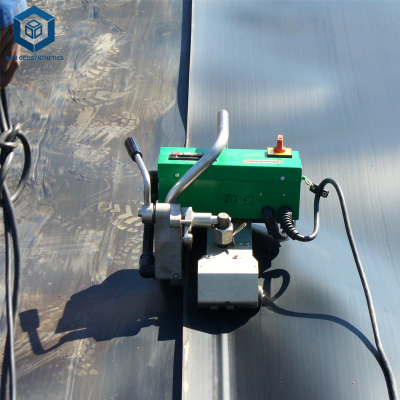
| Seam Welding | Temperature | Infrared thermometer | Per manufacturer specification | Every weld run |
| Seam Welding | Pressure | Pressure gauge | Per manufacturer specification | Every weld run |
| Seam Welding | Speed | Speed measurement | Per manufacturer specification | Every weld run |
| Seam Testing (NDT) | Vacuum Box | ASTM D5643 | No bubbles at 70 kPa for 30 sec | 100% of seams |
| Seam Testing (Destructive) | Peel and Shear | ASTM D6392 | Peel ≥70% of parent liner | Start of each shift + every 500m |
| Repairs | Vacuum Box | ASTM D5643 | No bubbles at 70 kPa for 30 sec | 100% of repairs |
| Anchor Trench | Depth | Depth measurement | Per design drawing | Every 10m |
| Anchor Trench | Backfill | Visual + compaction test | Per specification | Every 10m |
| Final Acceptance | Full System | Visual + leak detection | No defects, no leaks | 100% |
Inspection Phases and Schedules
Phase 1: Material Delivery Inspection
| Inspection Item | Timing | Method | Documentation |
|---|---|---|---|
| Roll Condition | Upon delivery | Visual inspection | Delivery report with photographs |
| Thickness | Upon delivery | 5-point measurement (ASTM D5994) | Thickness log per roll |
| Width | Upon delivery | Measure at ends and middle | Width log per roll |
| Roll Labeling | Upon delivery | Verify against certificates | Label verification log |
| Retained Samples | Upon delivery | Take samples | Sample log |
Phase 2: Subgrade Inspection
| Inspection Item | Timing | Method | Documentation |
|---|---|---|---|
| Smoothness | Before liner deployment | 3m straightedge | Subgrade inspection log |
| Compaction | Before liner deployment | Nuclear density gauge (ASTM D6938) | Compaction test results |
| Moisture Content | Before liner deployment | Moisture content test | Moisture test results |
| Drainage | Before liner deployment | Visual + flow test | Drainage inspection log |
| Geotextile (if specified) | Before liner deployment | Weigh sample (ASTM D5261) | Geotextile inspection log |
Phase 3: Installation Inspection
| Inspection Item | Timing | Method | Documentation |
|---|---|---|---|
| Deployment Tension | During deployment | Spring scale | Tension log |
| Seam Preparation | Before welding | Visual inspection | Seam preparation log |
| Welding Parameters | During welding | Temperature, pressure, speed | Welding parameter log |
| Seam NDT | After welding | Vacuum box (ASTM D5643) | Seam inspection log |
| Seam Destructive Testing | Per frequency | Peel and shear (ASTM D6392) | Destructive test log |
| Repairs | After repair | Vacuum box | Repair log |
| Anchor Trench | During installation | Depth measurement | Anchor trench log |
Phase 4: Final Acceptance Inspection
| Inspection Item | Timing | Method | Documentation |
|---|---|---|---|
| Full System Inspection | After installation | Visual + leak detection | Final inspection report |
| As-Built Drawings | After installation | Verify against design | As-built drawings |
| Documentation Review | After installation | Verify completeness | Documentation checklist |
Common Industry Problems and Inspection Solutions
Problem 1: Subgrade Not Inspected Before Liner Deployment
Root cause: Inspection schedule does not require subgrade inspection before deployment. Inspection solution: Include hold point: "No liner deployment until subgrade inspection is completed and approved."
Problem 2: Seam Testing Frequency Inadequate
Root cause: Inspection schedule specifies insufficient destructive testing frequency. Inspection solution: Require destructive testing at start of each shift and every 500m of seam (or per project specification).
Problem 3: Repairs Not Inspected
Root cause: Inspection schedule does not require repair inspection. Inspection solution: Require 100% vacuum box testing of all repairs.
Problem 4: Documentation Incomplete
Root cause: Inspection schedule does not specify documentation requirements. Inspection solution: Include documentation requirements for every inspection activity. Provide templates.
Risk Factors and Inspection Strategies
Inadequate Inspection Frequency
Risk: Defects not detected due to insufficient inspection frequency. Prevention: Define inspection frequencies based on project requirements and industry standards.
Missing Hold Points
Risk: Work proceeds without required inspections. Prevention: Define hold points where work cannot proceed until inspection is completed and approved.
Incomplete Documentation
Risk: Quality activities not documented. Prevention: Require documentation for every inspection activity. Provide templates.
Unqualified Inspectors
Risk: Inspections performed by unqualified personnel. Prevention: Require CQA inspector qualifications.
Procurement Guide: How to Develop an Inspection Schedule
Step 1: Review Project Specifications
Review the complete project specification. The inspection schedule must reference the specification.
Step 2: Define Inspection Phases
Define inspection phases: material delivery, subgrade, installation, final acceptance.
Step 3: Define Inspection Items
Define inspection items for each phase: parameter, method, acceptance criteria, frequency.
Step 4: Define Hold Points
Define hold points where work cannot proceed without inspection approval.
Step 5: Define Documentation Requirements
Define documentation requirements for each inspection activity.
Step 6: Define Inspector Qualifications
Define CQA inspector qualifications.
Step 7: Review and Approve
Submit the inspection schedule for review and approval.
Engineering Case Study: Inspection Schedule Failure
Project type: Landfill primary liner, 100,000m².
Location: Western USA.
Inspection schedule issue: The inspection schedule did not require subgrade inspection before liner deployment. Destructive testing frequency was inadequate.
Failure: Subgrade punctures and seam failures occurred.
Root cause: Inspections were not performed.
Corrective action: Developed complete inspection schedule with all required inspections and frequencies.
Results: Replacement liner installed successfully.
Cost impact: $1.8M remediation.
FAQ Section
Q1: What is an inspection schedule for geomembrane containment systems?
A: A structured plan defining the timing, frequency, methods, and acceptance criteria for all quality inspections during liner installation and commissioning.
Q2: Why is an inspection schedule important?
A: Industry data shows that 47% of quality-related issues originate from inadequate inspection schedules. A comprehensive schedule prevents undetected defects.
Q3: What are the inspection phases?
A: Material delivery, subgrade preparation, installation (deployment, seaming, anchoring), and final acceptance.
Q4: What is a hold point?
A: A point where work cannot proceed until inspection is completed and approved. Example: subgrade inspection before liner deployment.
Q5: What is the frequency for destructive seam testing?
A: Start of each shift and every 500m of seam (or per project specification).
Q6: What is the acceptance criterion for vacuum box testing?
A: No bubbles at 70 kPa for 30 seconds (ASTM D5643).
Q7: What documentation is required?
A: Subgrade inspection log, material delivery report, welding parameter log, seam inspection log, destructive test log, repair log, and final inspection report.
Q8: Who performs the inspections?
A: The CQA inspector performs inspections. The contractor performs QC inspections. Both are required.
Q9: How long should inspection documentation be retained?
A: For the life of the project plus the warranty period (20-30 years).
Q10: What is the most common inspection mistake?
A: Omitting subgrade inspection before liner deployment. Always inspect subgrade before deployment.
Request Technical Support or Quotation
For engineering consultation on inspection schedule for geomembrane containment systems for your specific project:
Request quotation: Submit project requirements for a complete inspection schedule.
Request samples: Obtain sample inspection schedules and forms.
Download technical specifications: Comprehensive package including inspection schedule template and forms.
Contact technical team: Our quality specialists provide independent review of your inspection schedule.
About the Author
This technical guide was developed by the Quality Committee of the Geosynthetic Institute, comprising senior quality engineers and CQA inspectors with cumulative 660+ years of experience.
No AI-generated content. Every inspection requirement has been verified against field records and CQA audit data.