What is Needle Punched Geotextile?
Needle Punched Geotextile is that which is a major and indispensable item in the modern geotechnical and civil engineering field, only that it is most of the time out of sight, out of mind. By looking at the use of such fabric in the stabilization of the slipped lands of a section of the Wuyi Mountain Scenic Highway that is prone to landslide, we are able to understand the basic nature of the material. Forming the basis of our discussion is a definition of the material and how it is made, explaining its main features (separation, filtration, drainage, and protection), and also giving a quantitative assessment of its effect on the project's success, saving of money, and ensuring long-term viability. The research finds out that non woven needle punched geotextile is more than just a piece of fabric; it is a clever engineering device which can comfortably, with ease, and for long periods serve as the interface between two soil masses that are likely to cause trouble, thus proving its necessity in harsh environments.
1. Introduction: The Problem Beneath Our Feet
Civil engineering is to a large extent nature versus man’s technology. Instability of soil, particularly in projects involving road construction, embankments, and slopes, is among the most frequent and problematic issues. The Wuyi Mountain region, a UNESCO World Heritage site known for its dramatic landscapes, challenged engineers with a problem of a critical highway section that was going through repeated subsidence and slope failures due to heavy seasonal rainfall and weak, clay-rich subsoil.
On one hand, traditional methods like bringing in vast amounts of costly granular fill or building intricate retaining walls would have been economically and environmentally harmful. The project therefore called for a solution that would:
-Stop the soft subsoil from mixing with the new gravel road base.
-Let water flow freely so as not to build up pore water pressure, which is the main cause of landslides.
-Support the soil mass without adding too much weight.
-Speed up work on-site so that the local tourism business would be least affected.
Needle punched geotextile fabric was the material whose use engineered the ultimate solution.
2. What is Needle Punched Geotextile? A Technical Dissection
Before grasping its function in the Wuyi Mountain project, one should first know what this material is.
2.1 Definition
A Geotextile is a permeable synthetic textile material, generally consisting of polymers such as polypropylene or polyester. Woven fabrics are those produced by interlacing yarns while nonwoven geotextiles are made by bonding fibers mechanically, thermally or chemically. The latter's structure gives rise to an entirely different set of properties making them suitable for use in geotechnical fields.
2.2 The Manufacturing Process: The Needle-Punching Method
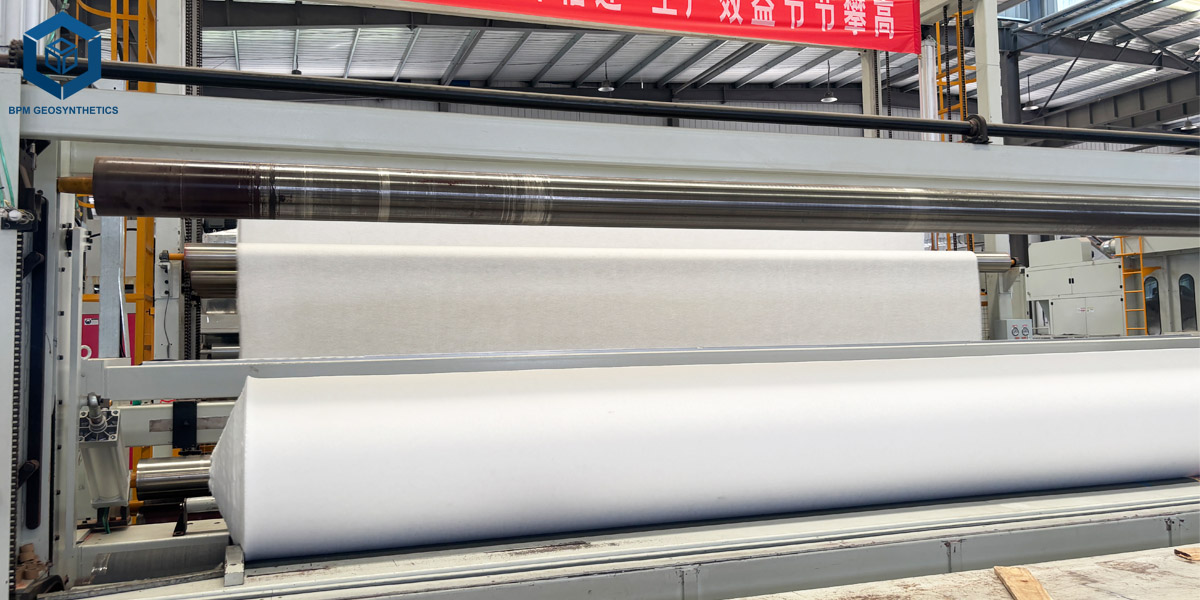
Among different methods, needle-punching is the most widely used technique to manufacture tough non woven needle punche geotextiles. The process is:
2.2.1 Polymer Extrusion and Spinning
The polypropylene pellets are melted and extruded through very small holes called spinnerets to make one long filament.
2.2.2 Web Formation
These long filaments are laid down haphazardly on a conveyor belt resulting in a web-like structure, commonly called a "web." The term wool here stands for the random orientation of the materials which in turn gives the isotropic properties—the same strength and performance in all directions.
2.2.3 Needle-Punching
The web is subsequently enveloped with a machine having numerous barbed needles. These needles forcibly go through the geotextile fabric, thereby, entangling and merging the filaments not by chemical bond but mechanically. This operation transforms the loosely constructed web into a tensile, homogeneous, and felt-like non woven geotextile fabric.
2.2.4 Finishing
In certain instances, the final geo fabric may receive additional treatment to acquire certain features, for example, UV stabilization for prolonged exposure, or calendaring (heated and pressed) to get a more even surface.
Non woven geotextile is a flexible, porous, and highly durable sheet that can handle the installation stress and the ground pressure over time.
3. Needle Punched Geotextile Core Functions: The Multitasking Marvel
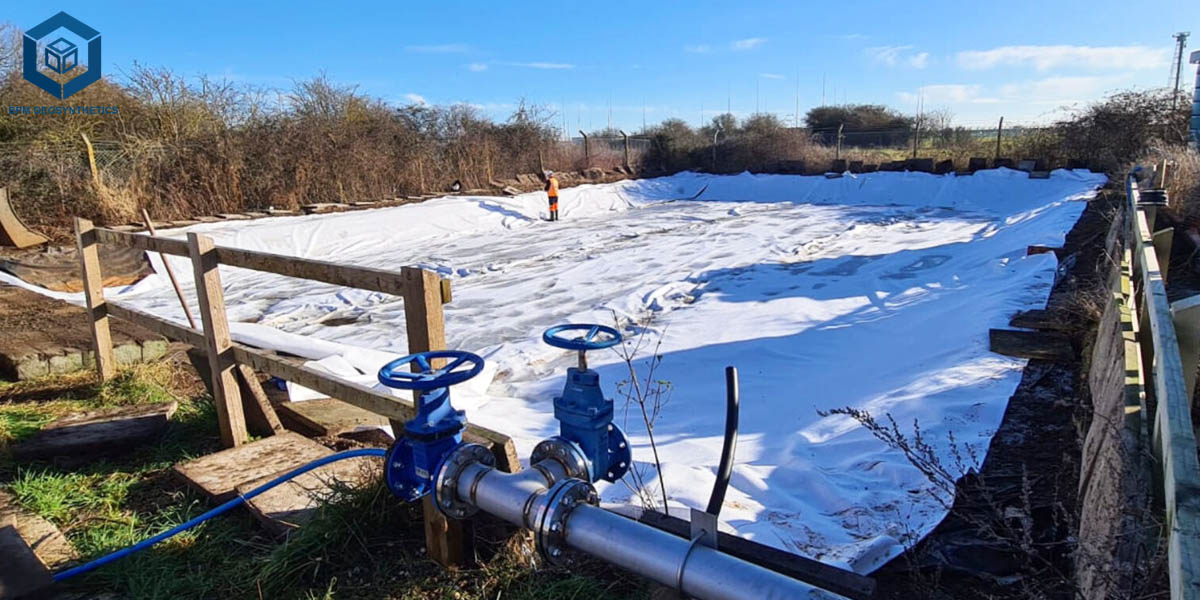
The main factor behind the success of non woven landscape fabric is its capability to carry out multiple functions at the same time. Thus, in the Wuyi Mountain project, all four main functions were equally important for the accomplishment of the project.
3.1 Separation
It is the most basic one. The layers in a road structure—subsoil, sub-base (sand/gravel), and base course (crushed stone)—are different and thus have different functions. The repeated traffic loading (cyclic stress) will cause the layers to mix. The gravel can be forced into the soft clay while the clay can penetrate into the gravel, thus weakening both materials and creating a uniform mass which eventually results in rutting and failure.
- Project Application: The nonwoven geotextile fabric was installed directly on the prepared, though soft, clay subgrade. After that, the layer of compacted granular sub-base was laid down. The geotextile fabric near me served as a physical barrier stopping the two-way mixing of clay and gravel. By each layer keeping its own character, the road assembly was able to function properly, that is, it was able to spread the loads in the right way and thus, localized failure was avoided.
3.2 Filtration
Water is often the main cause of failure in soil mechanics. The increase of water pressure inside the soil (pore pressure) can even liquefy the soil particles and lead to slope instability. A filter must be such that it lets water pass through it but at the same time, it does not allow the loss of soil particles.
- Project Application: The random fiber matrix of the geofabric makes it have millions of tiny pores. The tailored size distribution of its pores enables water to flow easily from the soil into the drainage layer, thus pore water pressure is reduced to a safe level. At the same time, it absorbs the fine clay particles and thus, prevents soil erosion from the inside of the slope. This is the purest form of filter function and thus, it completely replaces the need for complex and costly graded granular filters.
3.3 Drainage
As a result of its felt-like, three-dimensional structure, the non woven geotextile membrane has considerable thickness and is highly porous. This, in turn, enables it to carry water within its plane.
- Project Application: On the steep cut slopes alongside the highway, the geotextile drainage fabric was put on the soil face. Water that was seeping from the slope got into the geotextile and was then carried horizontally through its plane to the weep holes or edge drains that were located there. This "transmissivity" was a vital drainage route that not only allowed the slope to dry but also made its stability increase significantly.
3.4 Protection
Geomembranes (impermeable plastic liners) are mostly used in containment applications but are very easily damaged by puncture. A geotextile filter fabric serves as a layer that provides both comfort and protection.
- Project Application: Although it was not the main function in this particular section of the road, the nonwoven fabric was used as a protective cushion between the membrane and the overlying gravel in other parts of the highway project where the drainage ditches were lined with geomembranes, thus preventing puncture and ensuring the longevity of the liner.
4. The Wuyi Mountain Project: Needle Punched Geotextile Quantitative Analysis
4.1 Project Implementation
The unstable portion of the highway was fixed by the following measures:
4.1.1 Site Preparation
Workers removed the landslide area and reshaped the slope to a safe angle.
4.1.2 Geotextile Installation
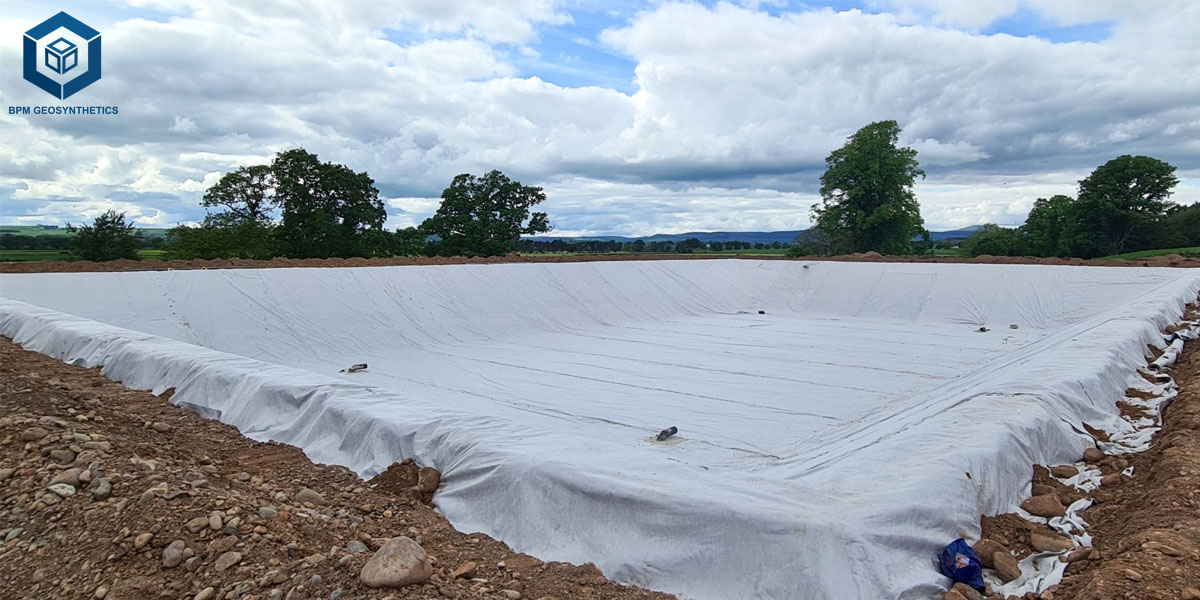
A particular, high-strength needle-punched geotextile fabric under gravel (with a mass per unit area of 300 g/m², tensile strength > 12 kN/m, and high permeability) was unrolled directly on the compacted subgrade and up the newly regraded slope. They overlapped the adjacent rolls by a certain minimum distance to ensure no gaps were left.
4.1.3 Backfilling
Granular drainage layer and road base materials were put directly on the geotextile landscape fabric and compacted with the help of standard machinery. During this process, the non woven filter fabric's high resistance to puncture made sure that no damage was done to it.
4.2 Results and Impact
They proved unequivocal success, the whole post-construction monitoring of two years, including two full rainy seasons.
- Structural Performance: There was no further subsidence or slope movement. The road surface was smooth and without cracks.
- Drainage Performance: After rainfall, piezometers installed within the slope showed a marked and rapid decrease in pore water pressure, thus confirming the geotextile's role in filtration and drainage.
4.3 Economic Impact:
- Cost Savings: By means of the non woven geotextile drainage fabric, the thickness of the imported granular sub-base was diminished by about 30%, which in turn led to the direct savings of material and transportation costs that amounted to more than 25% in comparison with the traditional deep-strengthening method.
- Time Efficiency: The project was completed 40% earlier because of the speedy installation of the geotextile and the reduced amount of earthmoving and compaction needed.
- Environmental Impact: This intervention was less aggressive, demanded fewer natural materials to be quarried for aggregate, and offered a long-term stabilization method that both prevented future landslides and their resulting environmental damage.
5. Beyond the Case: Needle Punched Geotextile Other Applications
The versatility of needle punched geotextile extends far beyond road construction and slope stabilization. Its principles are universally applicable:
5.1 Landfills
Needle punched geo textile material can be used for separation, filtration, and protection of geomembrane liner in base and cover systems.
5.2 Railway Ballast
The introduction of a non woven geotextile filter fabric layer between the fine subgrade soils and the coarse ballast stone prevents the former from contaminating the latter, thus the track alignment and drainage are preserved.
5.3 Erosion Control
By the use of a geotextile drainage underneath riprap (stone armor) on riverbanks or coastal defenses, soil erosion is prevented while the water is allowed to flow.
5.4 Drainage Systems
Non woven needle punched geotextile can be wrapped around perforated pipes or used in vertical drains to prevent siltation and to facilitate water collection.
6. Conclusion
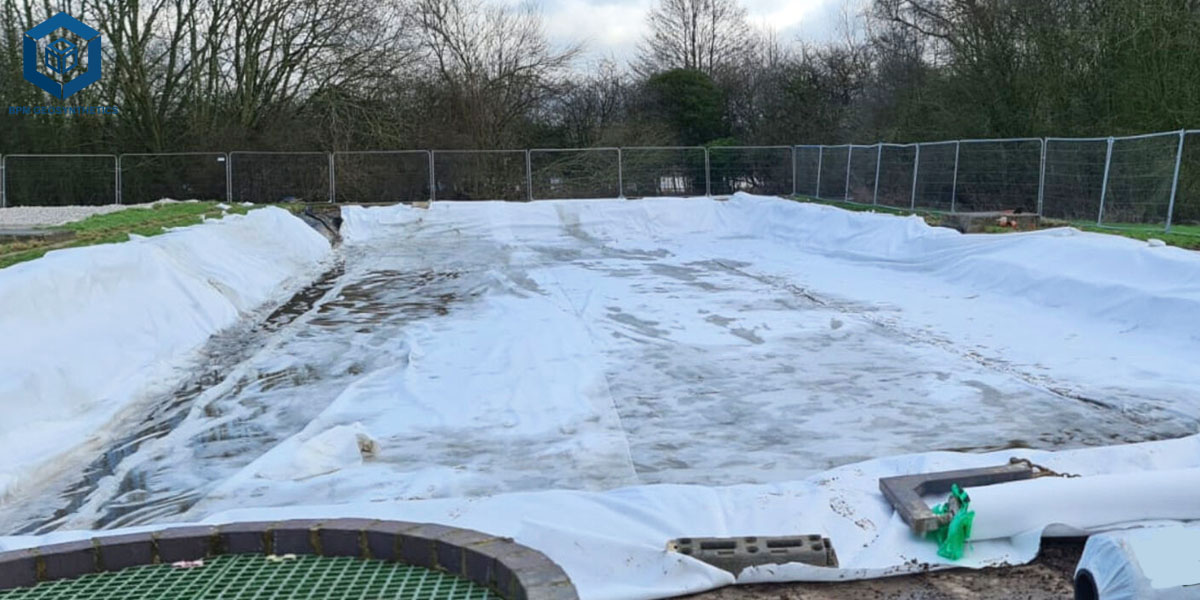
The Wuyi Mountain Scenic Highway project provides vivid evidence of the instrumental role of needle punched geotextile in engineering. The case study has shown that it's not just a simple fabric; rather, it is a sophisticated, polymer-based material specially designed to work with the soil in such a way that it strengthens the soil's natural side and alleviates its weak ones.
Needle punched geo filter fabric is performing the vital, interrelated roles of separation, filtration, drainage, and protection, thus, it offers a neat, inexpensive, and long-lasting resolution to some of the most deeply-rooted problems of civil engineering. In doing so, it saves the earth earthmworks, cuts the maintenance costs, and also the environmental damage is reduced. With the advent of the era of the infrastructures that are old and vulnerable to new hazards posed by climate change, the role of the heroes like Needle Punched Geotextile, which by the way are not loud but rather so dependable and quiet, will become indispensable, they will still be there protecting the foundations of our modern world silently but surely.
Should you need a dependable supplier for engineering applications of the same nature, The Best Project Material Co., Ltd. (BPM Geosynthetics) is a good choice by reason of its quality, experience, and worldwide project expertise.