What are Advantages of Geotextiles in Road Construction?
Geotextiles in Road Construction material has become one of the indispensable materials for civil engineering, construction, and environmental projects mainly due to its superior filtration, separation, and drainage combination capabilities. As a high-performance geosynthetic solution, it stabilizes the soil, prevents clogging, and facilitates water flow in different applications. BPM Geosynthetics as a top manufacturer and supplier offers top-notch geotextiles fabric that are tailored to the world standards and hence are durable and long-lasting. This discussion then unpacks the main benefits of geotextile fabric use.
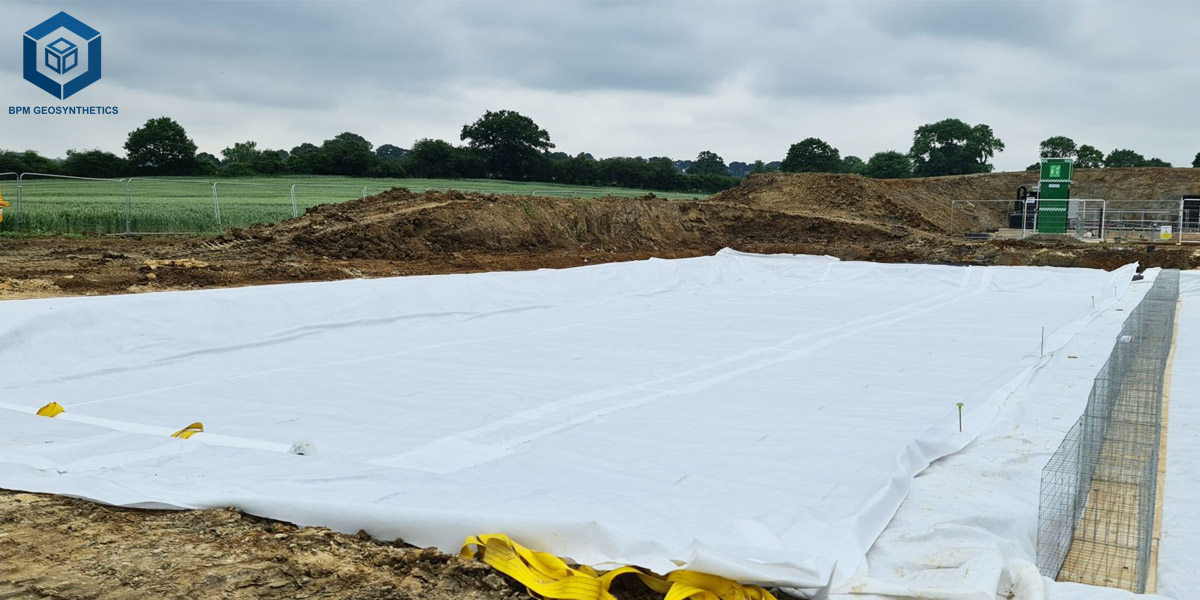
1. Use of Geotextiles in Road Construction
Geotextile fabric is a permeable geosynthetic material that is meant to promote efficient water flow in addition to providing filtration and soil stabilization. Usually, they are composed of polypropylene or polyester, combining durability with high hydraulic conductivity that makes them suitable for drainage systems in civil engineering, construction, and industrial applications. Differentiating from conventional drainage methods, geo fabric by parting soil particles from the drainage media can help prevent clogging of drainage pipes or aggregate layers, thus ensuring long-term performance. These geofabric materials have been extensively spread in landfills, roads, retaining walls, mines, and industrial yards, i.e., areas where water management is crucial.
2. Benefits of Use of Geotextiles in Road Construction
Geotextile filter fabric serve multiple functions such as filtration, isolation, reinforcement, and protection, water permeability but not soil permeability, puncture resistance, and high tensile strength.Specifically:
2.1 Geotextile–Filtration:
Geotextile landscape fabric permits air and water penetration but also it retains soil particles thus maintaining flow. Thus, it facilitates the drainage network's efficiency initiative in construction projects. Furthermore, it is used for soil erosion prevention and ground stabilization. Besides that, non woven filter fabric supports the structural integrity over time. Consequently, it finds application in roads, landfills, and retaining walls. Also, it guarantees that water management systems operate sustainably and reliably.
2.2 Geotextile–Isolation:
Nonwoven geotextile fabric works as an effective separator of different construction materials. It also acts as a barrier to mixing between layers thus preserving their original properties. Consequently, every material possesses the strength and function intended. Additionally, soft soils can be stabilized when used in conjunction with aggregates. Furthermore, non woven landscape fabric enhances the distribution of loads on road bases. This way, project durability is improved over the long run. Also, maintenance of the project can be less costly due to fewer instances of material contamination.
2.3 Geotextile- Reinforcement and Protection:
Geotextile fabric under gravel increases soil stability. Also, it can be used to ensure that landslides and major ground settlements do not occur. Furthermore, the materials perform drainage and filtration functions simultaneously. Besides that, geotextiles isolate and reinforce the soil layers in a very efficient manner. The overall effect of the above-mentioned functions can have a significant impact on reducing the occurrences of road cracks. Therefore, the pavement’s lifespan can be extended significantly. Moreover, it is a practical solution that provides shelter for major infrastructures.
2.4 Geotextile–Water-permeable but not soil-permeable:
Non woven geotextile drainage fabric is capable of letting water pass through it easily. On the other hand, it effectively obstructs soil particles from getting through. Besides that, it is a very good material for the treatment of loose dust piles. Also, non woven geotextile fabric can be used to keep construction site debris at bay. More so, this non woven geotextile filter fabric can be used as an effective means to suppress dust in the air. Thereby greener and healthier site conditions can be achieved. Hence, the geotextile drainage fabric material is able to efficiently serve both environmental and construction-related needs.
2.5 Geotextile– Anti-puncture:
Non woven geotextile can be combined with geomembranes to work more effectively. They make an excellent ant-puncture protective layer when working in tandem. Furthermore, this combination also serves as a shield for the soil beneath us. In addition to this, geo textile material helps to prevent the damage caused by sharp objects. Besides that, this layer helps to keep the geomembrane in perfect condition. The outcome is that more efficient protective measures are implemented. Hence, projects are granted a more enduring environmental protection.
2.6 Geotextile– High tensile strength:
One of the main features of driveway fabric stabilization geotextile fabric is its ability to withstand high tensile forces without deformation. This property has made geotextile stabilization fabric significant in many engineering works such as landscaping, roadbed reinforcement, road maintenance, dam protection, and underground garage drainage.
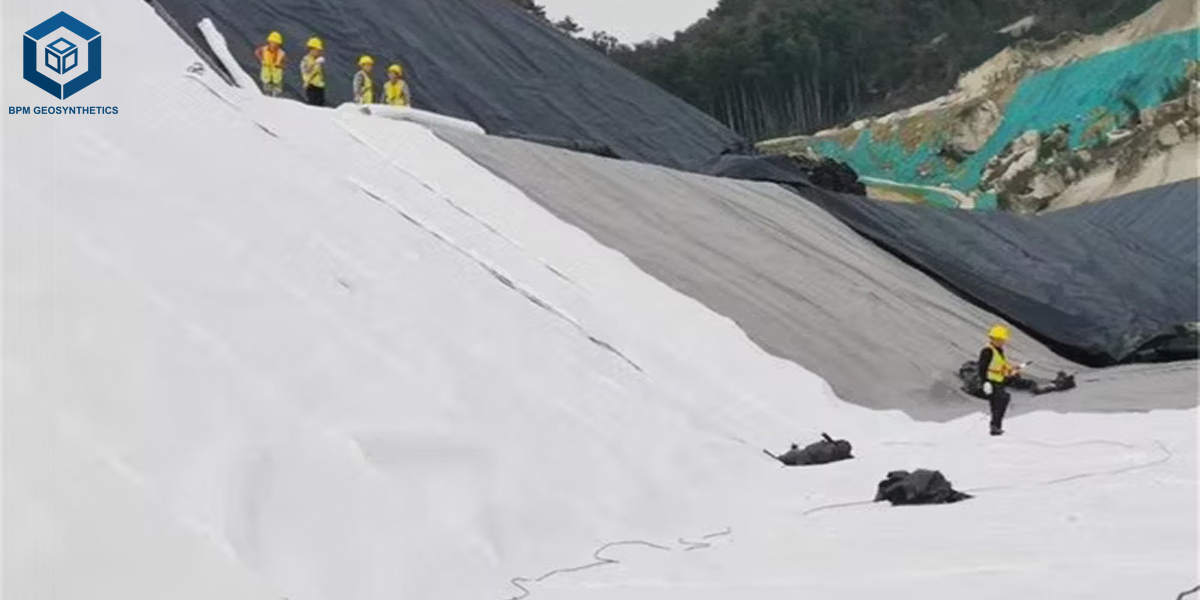
3. What are The Industrial Applications of Geotextiles in Road Construction?
One of the greatest benefits of geotextile road fabric is that they help improve the overall quality of water management, soil stabilization and enhance the structural resilience of buildings in the long term. BPM Geosynthetics, one of the top manufacturers of high-quality geosynthetic materials, provides specially designed drainage geotextiles that can face the toughest industrial challenges. Main Industrial Applications
3.1 Mining & Tailings Management
Mine drainage geotextiles basically serve two functions: Firstly, they help to prevent soil contamination, secondly, they are used for managing the liquid that drips from tailings storage facilities. The very high quality materials from BPM greatly assist heap leach pads filtration thus lowering the risk for the environment.
3.2 Landfill & Waste Containment Systems
The modern landfill is a bit different in that it utilizes a geotextile-geomembrane composite to make the collection of leachate more efficient. BPM’s products are enhancements to the puncture resistance and drainage features of such projects as hazardous waste containment sites.
3.3 Industrial Yard & Port Pavements
The loading of a container terminal involves very heavy loads for which non woven needle punched geotextile is used for subgrade stabilization. The fabrics of BPM’s geosynthetics spread the load thus avoiding the formation of ruts and consequently extending the pavement life even with continuous traffic.
3.4 Oil & Gas Infrastructure
In refinery spill containment basins, geotextiles for drainage purposes help in the separation of hydrocarbons from water and, at the same time, the liners which are impermeable, are protected thus a very important application in which the chemical-resistant materials of BPM are very effective.
3.5 Power Plant & Renewable Energy Projects
To minimize erosion at solar farms and coal ash ponds, both employ the use of geotextiles. The fabrics of BPM’s line that are stabilized against UV radiation are the ones that get the job done at such exposed energy infrastructures.
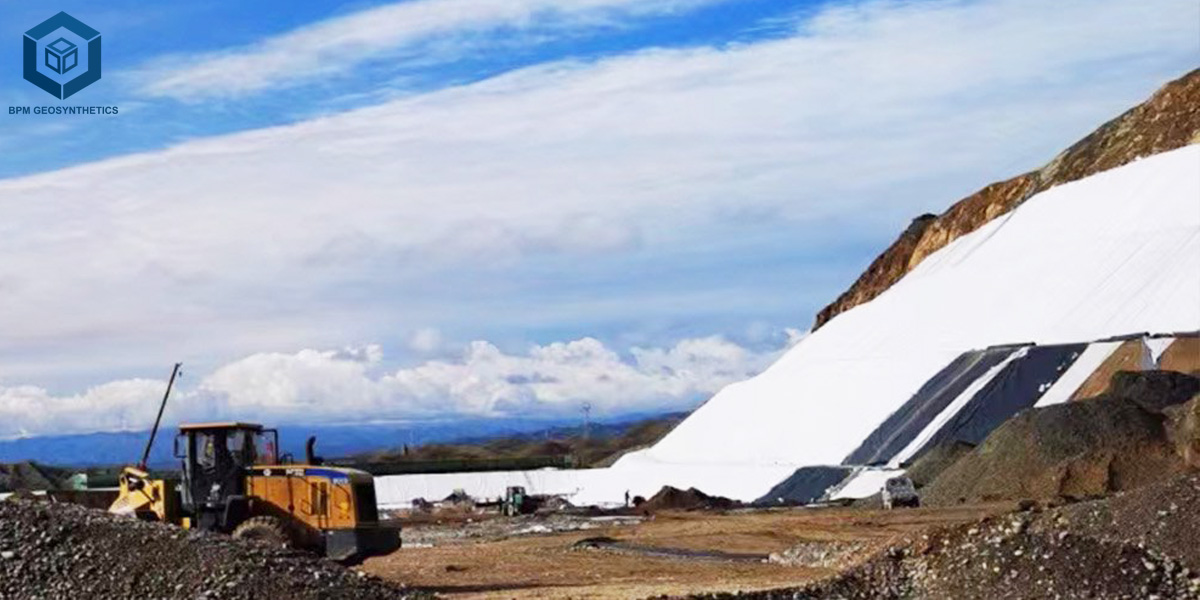
4. How to Choose the Right Geotextiles in Road Construction?
Choosing the suitable geo filter fabric is vital for getting the construction, environmental and industrial work to last long. Use this guide to pick out the right one step by step.
4.1 Determine the Required Function geotextiles serve multiple purposes:
• Filtration – Enables water to flow through and keeps soil particles in place.
• Separation – Different soil layers remain separated,
• Reinforcement – Helps to maintain the stability of soil which is under heavy loads,
• Drainage – Allows water to flow with ease.
BPM Geosynthetics has a whole range of geotextile soil stabilization that perform each function in the best manner which makes them suitable for top applications such as landfill, mining, and road construction.
4.2 Check Material Composition & Durability
• Polypropylene (PP) – Chemical resistant and, therefore, very suitable for industrial waste and water treatment areas.
• Polyester (PET) – High tensile strength as well as dimensional stability, hence it is the perfect fabric for a wearing surface.”
BPM selects the very best resins for polymer production and thus they have UV and chemical resistance that can really withstand extreme conditions.
4.3 Evaluate Permeability & Flow Rate
• AOS (Apparent Opening Size) – Is used to decide the soil retention capability.
• Permittivity – Is the measurement of the efficiency of water flow.
BPM is ready to produce geotextile fabric under pavers of different permeabilities so that the hydraulic conditions of your project can be met perfectly.
4.4 Consider Strength & Puncture Resistance
• Tensile Strength – Necessary for areas where geotextiles are exposed to high levels of stress.
• Puncture Resistance – Important, especially when geotextiles are used together with geomembranes.
BPM has a line of geotextiles that is not only in compliance with ASTM and ISO standards but also provides very high mechanical performance.
4.5 Verify Certifications & Standards Keep the following in mind:
• ASTM, ISO, GRI – For assurance of quality.
• Project-specific requirements – Landfill liner protection, for example.
BPM Geosynthetics have all the certificates of quality and their geo fabric have been tested repeatedly so that the industries in question can use them confidently and other regulated areas can also be guaranteed.
5. What is the Laying Method of Geotextiles in Road Construction?
5.1 Laying preparation
• Foundation treatment: Ensure that the surface soil is level, firm, and free of major bumps when laying nonwoven drainage fabric.
• Material inspection: Check if the Geotextile Fabric is torn or has holes and the material is intact.
5.2 Laying steps
• Positioning and laying: The position and extent of the non woven geo fabric laying should be set according to project requirements.
• Unfolding geotextile: To ensure the correct installation width, unroll the geotextile as necessary.
• Overlap treatment: Adjacent geotextile sheets should have a sufficient overlapping length to guarantee a strong bond.
• Fixing geotextile: Soil filter fabric can be fixed to the ground with the aid of anchors, U-shaped nails, or stone strips to prevent displacement.
5.3 Precautions
• It is best not to lay permeable geotextile fabric in raining area or during high humidity to prevent water moisture from affecting the laying quality.
• Avoid over-stretching the double punched non woven geotextile during laying so that the fabric will not slack and be loose after some time.
• After the laying work is done, a quality inspection is necessary to make sure the needle punched geotextile is undamaged, has no wrinkles, and is securely fastened.
5.4 Storage, transportation and handling of Geotextile
Prior to installation and deployment, geotextile nonwoven fabric rolls must be protected from damage. It is advisable that the rolls are stacked in a flat, dry place with a maximum height of four rolls, and the roll's identity sheet is kept visible. To prevent UV aging, Geotextile rolls should be covered with non-transparent materials. Labels' clarity and information accuracy should be maintained during storage. Geotextile rolls must be safeguarded against damage during transportation (including on-site transportation from the material storage area to the work site).
5.5 Precautions
The laying of polypropylene geotextile should be avoided if it is raining or there is high humidity to prevent the moisture from affecting the quality of the laying. Apart from that, do not over-stretch the geotextile whilst laying to prevent the fabric loosening after some time. A check for quality is also necessary after the laying to ensure that the permeable geotextile is smooth and well-fitted. These practices are very important to guarantee the laying quality of the geotextile and also project safety.
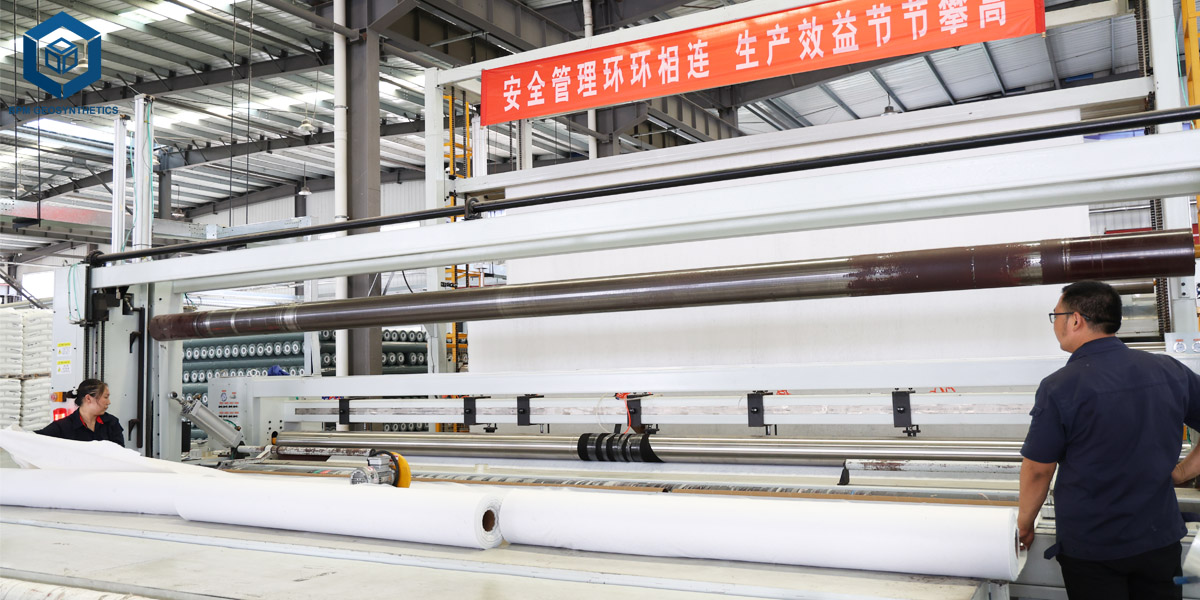
Summary
Geotextile is an excellent geotechnical material for various purpose including subgrades of railway, maintenance of road, sports ground, embankment protection, dam construction, river direction, marine reinforcement, and environmental projects. It is famous for its lightness, low unit cost, and resistance to corrosion thus it can be used for filtering, draining, isolating, and strengthening. As the leading manufacturer, BPM Geosynthetics offers premium-quality geotextiles that adhere to rigorous industry requirements and provide dependable solutions to critical applications in infrastructure, water conservancy, and tunneling. The performance of the product could be fully exerted only if it is properly installed according to the standards. With The Best Project Material Co., Ltd.(BPM Geosynthetics), engineers are able to get hold of durable, engineered solutions that not only increase the longevity but also reduce the costs of civil and industrial projects.