The 6 Best HDPE Textured Geomembrane Review
The decision of choosing the right liner for demanding containment projects in the geosynthetics sector is a major engineering choice. The liners of HDPE textured geomembrane is now widely used for applications that require improved slope stability, greater interface friction, and superior performance on difficult terrains. These liners distinguish themselves from smooth geomembrane liners by having a specially designed surface that offers excellent grip, thus making them essential for landfill covers, steep reservoir slopes, and other high-risk installations. Based on manufacturers' data, independent testing, and other sources in the review, the report presents a ranking of 6 of the best HDPE textured geomembranes available today in the market.
1. What is the Need for HDPE Textured Geomembrane?
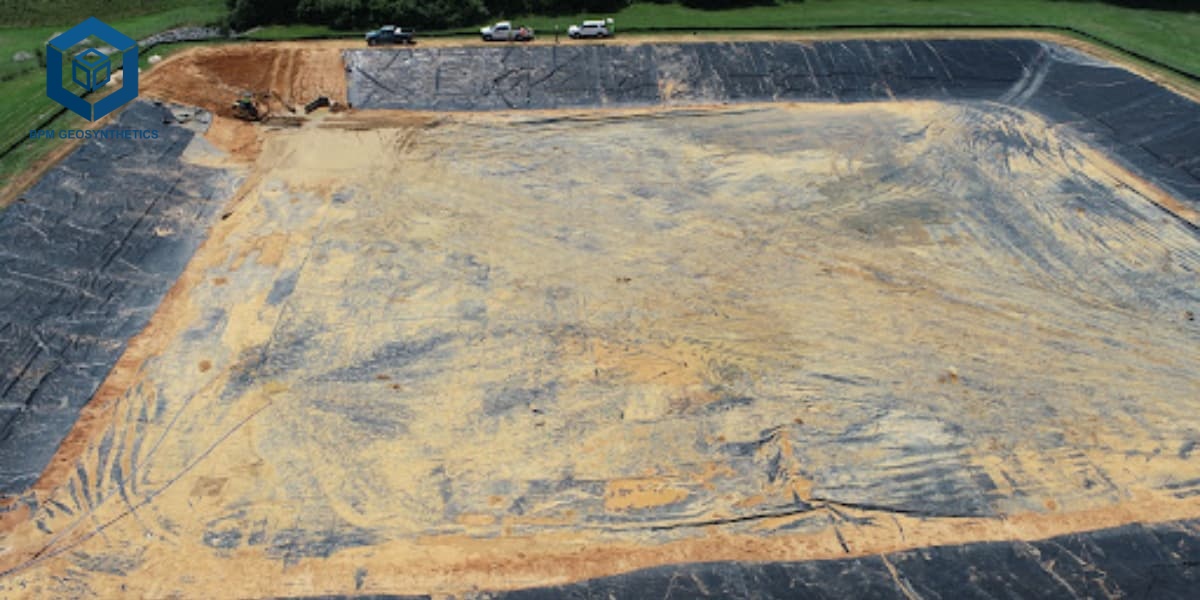
Textured HDPE geomembranes are the answer when ordinary liners fall short. To elaborate further, their main role is to significantly improve the interface shear strength between the geomembrane and surrounding materials such as soil or geotextiles. This is especially important when it comes to preserving the compactness of slopes, where only relying on smooth liners could be risky. Additionally, the rough texture helps to withstand both puncture and tear formation better, during as well as post-installation, along with enhancing the stress distribution over the liner.
2. What Must be Considered While Selecting HDPE Textured Geomembrane?
2.1 Texture Type and Profile
Textures commonly are co-extruded (most common, long-lasting) or impinged. The asperity height (the height of the texture bumps) is a key metric, normally varies from 0.25mm to 0.80mm, which directly affects the frictional performance.
2.2 Interface Shear Strength This is a fundamental performance parameter
Select products which yield higher peak and residual shear strength readings when tested against standard soils (such as sand, clay) under conditions conforming to ASTM D5321.
2.3 Physical and Mechanical Properties
Apart from the above-mentioned aspects it is also important to have a high tensile strength (ASTM D6693), tear resistance (ASTM D1004), and puncture resistance (ASTM D4833). For example, BPM's HDPE variant, a superior line, is manufactured from virgin resin combined with carbon black.
2.4 Chemical and UV Resistance
HDPE naturally has very good chemical resistance at most pH levels. Using 2 to 3% carbon black gives UV protection that a top product can keep 70-80% of its tensile strength even after severe aging tests in the accelerated mode.
3. Best 6 HDPE Textured Geomembrane of 2026
Based on manufacturing quality, field performance, and technical features, our choices come from:
3.1 BPM Geosynthetics HDPE Textured Geomembrane
3.1.1 Category: Premium All-Purpose Textured Liner
- Material: 97.5% virgin HDPE with co-extruded texture
- Thickness:1.0 mm (40 mil) and other gauges
- Tensile Strength: 28 kN/m (MD & TD per ASTM D6693)
- Texture Asperity Height: 0.50 - 0.70 mm
- Key Feature: Superb interface friction not only with geosynthetics and soils, but also textured geomembrane is resistant to chemicals and has ultra-low permeability (\(\leq 10^{-11}\) cm/s) as shown in the review. Its large rolls (up to 8m) cut the number of seams by 20%.
3.1.2 Overview
Besides leveraging the excellent performance of their standard HDPE liner, BPM textured geomembrane features a co-extruded textured surface specially designed for heavy-duty applications. It has been developed to provide stability on slopes, as well as in landfill lining systems where the highest interface shear strength is required, while using premium resins to impart low stress cracking and a long service life thereby making it a cost-effective solution over the project lifecycle.
3.2 GSE HDPE Textured Geomembrane
3.2.1 Category: High-Friction Slope Liner
- Material: Virgin HDPE with impinged surface texture
- Thickness: 1.5 mm (60 mil) standard for heavy-duty use
- Tensile Strength: 40 kN/m
- Key feature: Designed for very steep slope applications, it delivers the highest shear strength values as evident from project case studies.
3.2.2 Overview:
Mechanical interlocking of the aggressive embossing pattern with the overlying and underlying materials is intended by GSE's product which has become a reference for engineers designing containment systems even for highly challenging geometries.
The geo membranes product can also be considered a safe choice for landfill caps and sidewalls, heaps leach pads, and water reservoir in the hilly terrain.
3.3 Agru America HDPE Textured Geomembrane
3.3.1 Category: Fine-Texture Multifunctional Liner
- Material: High-density polyethylene with a micro-textured surface
- Thickness: Range from 0.75mm to 2.5mm
- Key Feature: The micro-textured surface enhances friction but still provides an excellent multi-axial strain capacity, making it possible to conform to subgrade irregularities without causing stress concentrations.
3.3.2 Overview:
Agru's texture is unique, striking a balance between raised friction and preserved flexibility. Consequently, hdpe membrane is ideal not only for sloping surfaces but also for base hdpe geomembrane liners in the situation of subgrade settlement.
Besides, it is highly appreciated for the quality assurance and reproducibility of the product that suit large-scale, environmentally sensitive projects.
3.4 Solmax DuraGrip HDPE Textured Geomembrane
3.4.1 Category: Durable, Chemically Resistant Textured Liner
- Material: Stabilized HDPE resin with co-extruded texture
- Key Feature: Designed for harsh environmental conditions including intense UV and chemical exposure, hdpe geomembrana still maintains excellent frictional performance.
3.4.2 Overview:
Solmax DuraGrip meets the requirements for a very long service life in extreme environments, particularly for mining and industrial waste containment. To ensure it can perform continuously without delaminating, the texture is permanently attached during extrusion.
High density polyethylene geomembrane is intended for operation in an environment that demands its service for many decades without failure.
3.5 NAUE Secutex®-T HDPE Textured Geomembrane
3.5.1 Category:Textured Liner with Integrated Protection
- Material:HDPE with a structured, needle-punched texture.
- Key Feature: This texture is so innovative that it can closely bond with geotextiles and form a high-shear-strength composite system which is best for exposed geomembrane covers or lining systems that require a high interface strength with protective layers.
3.5.2 Overview:
NAUE concentrates on total system efficiency.The Secutex®-T finish completely enhances interaction with non woven geotextiles, resulting in a reinforced composite material.This solution is quite ideal for cases where the geomembrane may be subjected to wind uplift forces or where the presence of a geotextile separation/protection layer is a decisive factor.
3.6 Carthage Mills Textured HDPE Liner
3.6.1 Category: Value-Conscious, Reliable Textured Option
- Material: HDPE with co-extruded textured surface.
- Key Feature: Offers the core benefits of a textured HDPE geomembrane—improved slope stability and puncture resistance—at a highly competitive price point, making it accessible for a wider range of projects.
3.6.2 Overview:
Carthage Mills provides a dependable textured geomembrane for projects where budget is a key consideration but performance cannot be compromised. Geomembrana in hdpe is well-suited for agricultural reservoirs, pond liners on moderate slopes, and other water containment applications where increased friction is needed without the extreme specifications required for landfill or mining.
4. How to Choose the Right HDPE Textured Geomembrane?
Follow this decision framework to select the perfect liner for your project:
4.1 Define the Primary Need
Is geomembrane liner for a steep slope (prioritize highest shear strength), chemical containment (prioritize resin quality and thickness), or general use with improved safety (a balanced, all-purpose textured liner)?
4.2 Review Geotechnical Data
The soil type (sand, clay, silt) of the adjacent layers will determine the required interface shear strength. Consult with your supplier to match texture asperity height to your specific soil conditions.
4.3 Confirm Technical Specifications
Always request and review third-party test data for critical properties: tensile properties, tear resistance, and most importantly, nterface shear strength testing (ASTM D5321) relevant to your project materials.
4.4 Consider Installation Factors
Wider hdpe geo membrane rolls (like BPM's 8m rolls) reduce seaming. Ensure the contractor has experience welding the specific textured product you select, as texture can sometimes require slight adjustments in welding parameters.
Conclusion
For any containment project where slope stability, interface friction, and long-term integrity are non-negotiable, a HDPE textured geomembrane is a wise investment. From the premium, all-round performance of The Best Project Material Co., Ltd.(BPM Geosynthetics)'s textured liner to the specialized slope security of GSE's product, the market offers a solution for every technical and budgetary requirement. By focusing on the data—asperity height, shear strength values, and mechanical properties—you can specify a liner that will provide secure, lasting protection for decades.
I hope this detailed review is helpful for your project planning. If you have a specific application in mind (like a landfill slope, mining leach pad, or water reservoir), I can offer more tailored insights on what to prioritize in your selection.