Retaining Wall Grid
Retaining Wall Grid is a high-strength geosynthetic reinforcement material designed to improve the stability and load-bearing capacity of retaining walls. It reinforces the soil by creating a strong mechanical interlock, reducing lateral movement, minimizing settlement, and extending the service life of retaining wall systems. Widely used in infrastructure, commercial, and residential projects, it provides a reliable and cost-effective solution for long-term soil reinforcement.
High tensile strength for superior soil reinforcement
Excellent creep resistance for long-term stability
Strong soil interlock for improved load distribution
Resistant to chemicals, UV exposure, and environmental aging
Lightweight and easy to install
Available in various tensile strengths and customized specifications
Suitable for retaining walls, slopes, bridge abutments, highways, and embankments
1. Retaining Wall Grid Overview
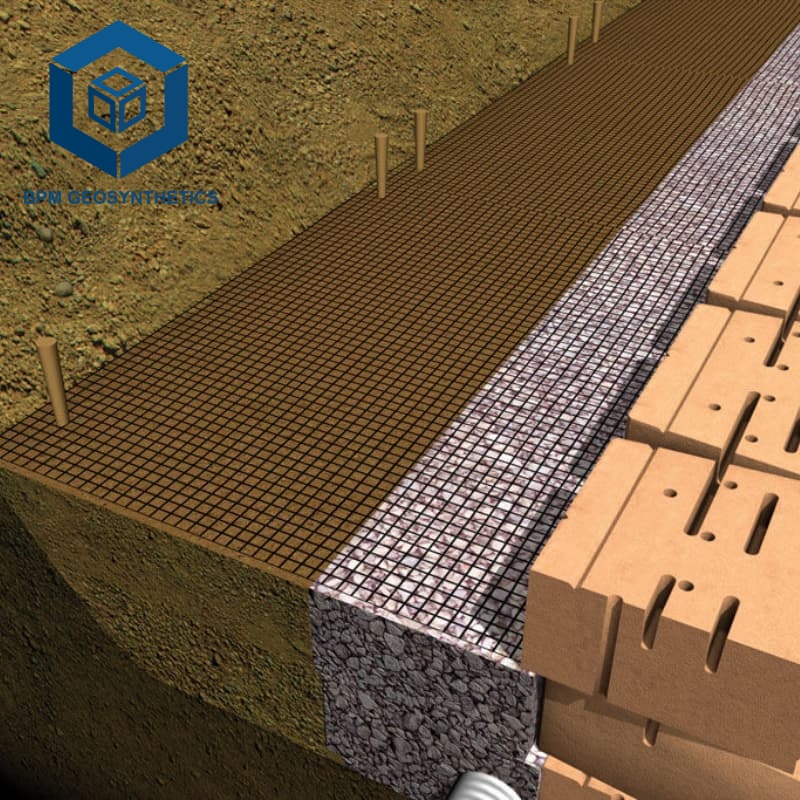
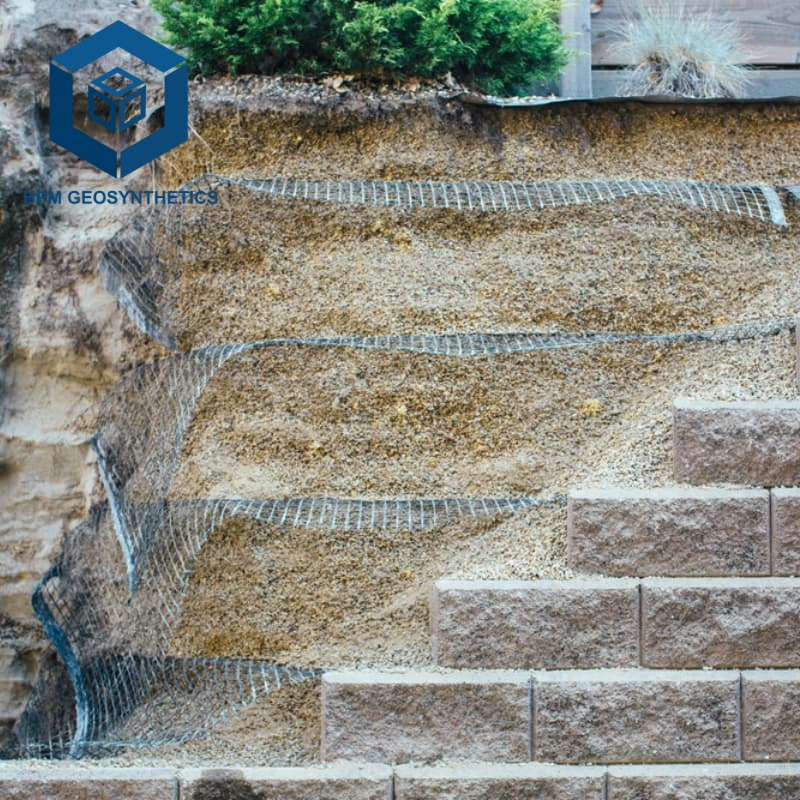
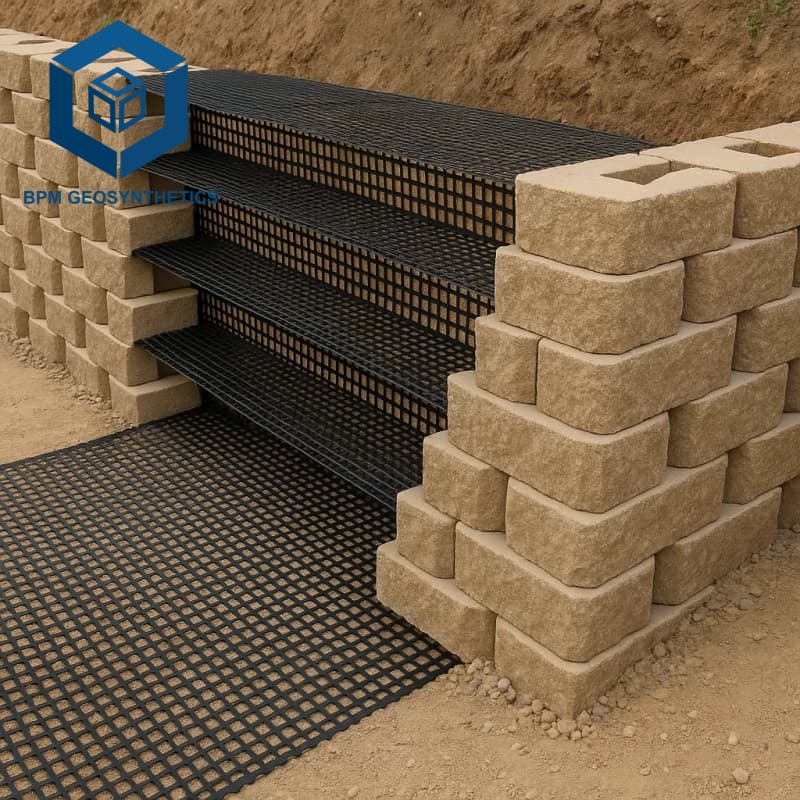
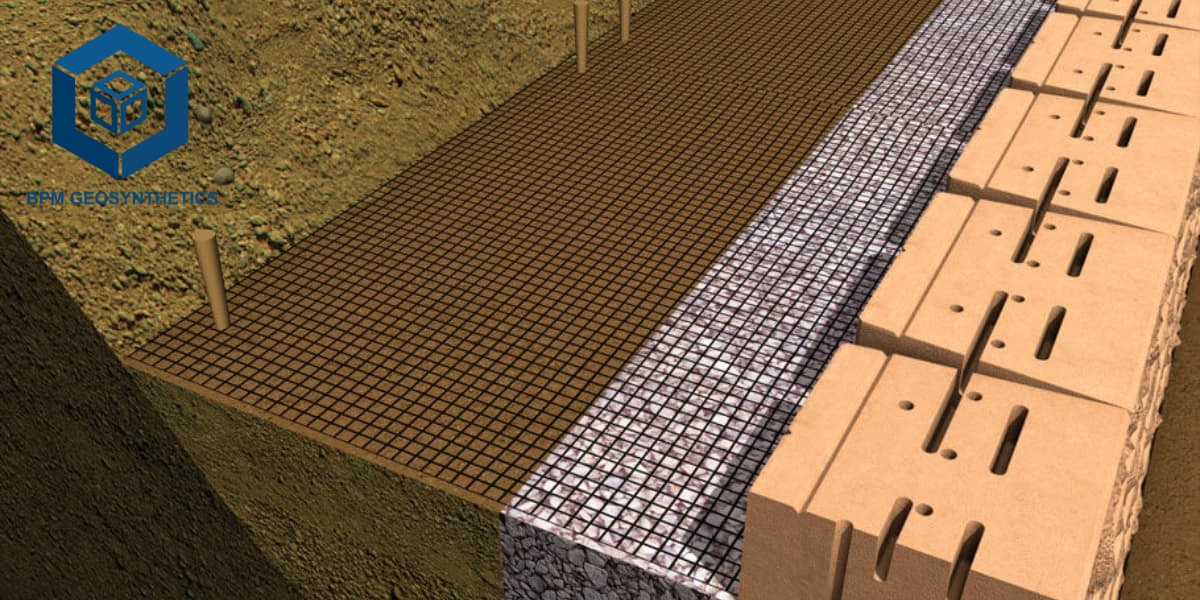
A Retaining Wall Grid is a high-strength geosynthetic reinforcement material designed to improve the stability and load-bearing capacity of retaining walls. It is installed between layers of compacted backfill soil to create a reinforced soil structure that helps prevent wall movement, soil erosion, and slope failure.
In contrast to geogrids used for regular ground stabilization, geogrid retaining wall is tailor-made to support the structures of retaining wall systems. It supplies a higher level of tensile strength and also, excellent resistance to creep over a long time, along with superior interaction with soil. All these help retaining walls to survive the large earth pressure and external loads for many years.
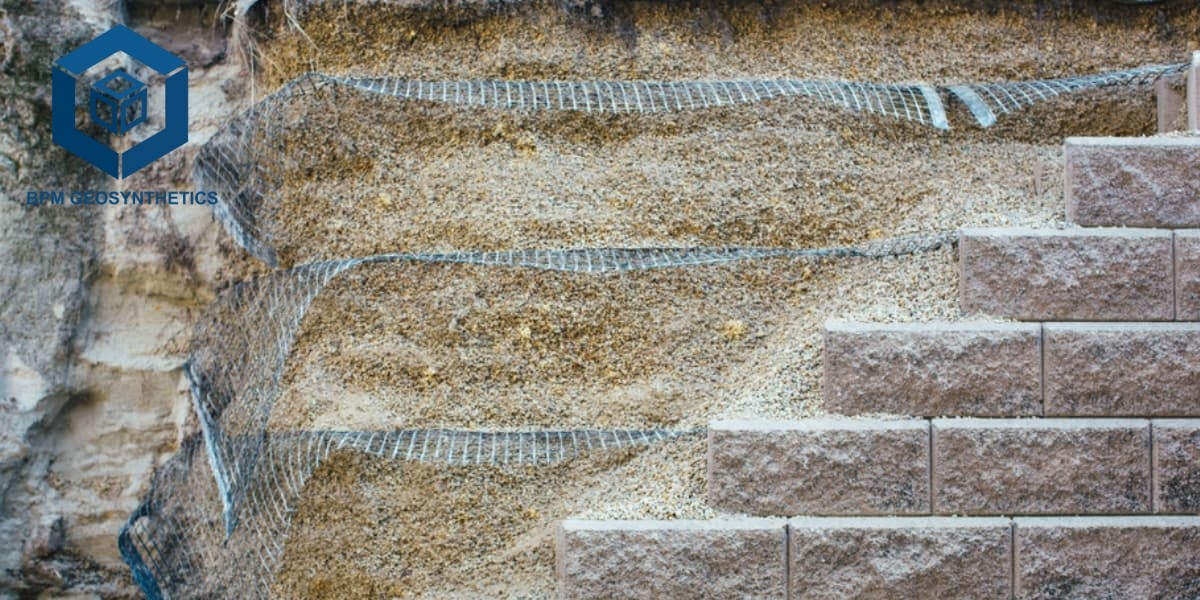
The working principle is simple but highly effective. When the grid is embedded into compacted soil, it interlocks with soil particles, distributing loads over a larger area and creating a stable reinforced mass behind the wall. This significantly reduces lateral pressure, minimizes settlement, and improves the overall structural performance of the retaining wall.
Retaining Wall Grid is extensively applied in highway retaining walls, railway embankments, bridge abutments, commercial developments, industrial facilities, residential landscaping, mining projects, and slope stabilization areas. It can be used with both segmental retaining wall systems and mechanically stabilized earth (MSE) walls.
1.1 Do I Really Have to Get a Retaining Wall Grid?
A Retaining Wall Grid is usually a main reinforcement product if your work means employing soil retention, slope support, or building walls that should remain stable under heavy loads. It acts as a support to prevent deforming, cracking, or even collapsing of the wall, and simultaneously, prolongs the lifespan of the entire structure. In comparison with the old retaining methods, through more efficient wall designs, use of less concrete and excavation, it also leads to reduced construction costs.
Your decision to buy a geogrid mesh should be based on your safety and the reduction of future maintenance expenses, and of course, its long-lasting performance for many years.
2. Benefits of Retaining Wall Grid for Retaining Walls
Retaining walls function by resisting lateral earth pressure and stabilizing slopes over long periods. However, leaving soil unreinforced may cause the walls to buckle, bulge, or crack visibly besides structural devastation as a result of increasing loads and changing ground conditions. Retaining wall geo grid mesh boosts soil-to-wall synergy and therefore ensures that the structure remains firm, that its load-carrying capacity is improved, and that the wall's lifespan is prolonged. Also, it helps with the reduction of construction and maintenance costs. Here are some.
2.1 Avoid the Failure of the Retaining Wall
Traditional backfill soil can move, compact, or lose its capability to bear the lateral earth pressure and heavy loads. Retaining wall with geogrid intervenes in the soil strengthening by forming a durable mechanical entanglement with the soil particles that decreases lateral displacement, stops the wall from deforming, and drastically reduces the chance of the retaining wall to fail.
2.2 Enhance Load-Bearing Capacity
Retaining Wall Grid ensures load is spread evenly throughout the reinforced soil mass so that retaining walls can bear more substantial loads from vehicles, buildings, embankments, and other infrastructure and yet remain structurally stable.
2.3 Improve Long-Term Structural Stability
Without proper reinforcement, retaining walls often face issues of soil settlement, bulging, and cracking over time. Retaining wall geo grid ground grid plays a vital role in limiting soil displacement and alteration, thereby enabling the entire wall system to remain sturdy during its design lifespan.
2.4 Prolong the Life of Retaining Walls
Made of top-quality polymer materials, Retaining Wall Grid features high tensile strength along with very low creep and excels in weathering, chemical, and biological degradation resistance. These characteristics not only help in continuous functioning over the years but also in reducing the maintenance needs.
2.5 Lower Total Construction Costs
Geo grid for retaining wall enables the engineers to remodel retaining walls with less concrete, lesser excavations, thinner walls, and quicker construction time.
At the same time, engineers will be able to come up with designs that are still optimized. All these benefits eventually help in lowering the initial construction price as well as long-term maintenance costs.
2.6 Suit Different Soil and Site Conditions
Soft clay, sand, gravel, engineered fill, unstable ground - Retaining Wall Grid shows good performance even under these diverse soil conditions. This characteristic of the material makes it a good candidate for retaining wall construction projects in residential, commercial, transport, and industrial areas.
2.7 Enhance Construction Efficiency
The lightweight character and simple fitting of gravel geogrid enable to step up a construction procedure that is less complicated and requires less labor, reduced use of equipment, and still the project can be wrapped up faster without compromising the quality.
2.8 Provide Economic Value in the Long Run
The benefits of geogrid material are not confined to initial construction stages only. With enhanced structural safety, service life extension, low maintenance requirement, and overall project cost reduction, it emerges as a trustworthy and economical reinforcement solution that yields excellent value for money in the long haul.
3. Key Advantages of Retaining Wall Grid
Retaining Wall Grid is designed to deliver consistent soil reinforcement even under extreme conditions. Besides developing structural behavior through superior material characteristics, it also lowers construction expenses and decreases upkeep work.
Following are some prominent features of Retaining Wall Grid that make it the first choice for retaining wall and soil reinforcement projects all over the world.
3.1 High Tensile Strength
Retaining wall plastic geogrid has the capacity of the provision of remarkably strong tensile reinforcement to soil to withstand lateral earth pressure.
This brings retaining walls a greater ability to safely and reliably support steeper slopes, heavier structural loads, and more complex engineering applications.
3.2 Low Creep Performance
Geogrid wall has been engineered to be a long-lasting support. As such, it is capable of holding its strength when continuously loaded with very slight creep deformations.
By limiting the loss of strength under load, the reinforced soil system will experience less settlement and larger structural movements are less likely to occur over the lifespan of the retaining wall.
3.3 Excellent Soil Interlock
The shape and size of the mesh openings have been done in such a way that the grid has strong mechanical interlock with the particles of the surrounding soil.
This results in better load transfer, increased soil confinement, and overall greater stability of the reinforced soil system.
3.4 Outstanding Chemical Resistance
The geogrid paving has been found to be very effective when exposed to chemicals harmful to the soil such as acids, alkalis, salts, etc.
It is a perfect choice for projects involving a landfill, a coastal environment, an industrial site, or other chemically aggressive ground conditions.
3.5 Superior UV and Weather Resistance
Retaining Wall Grid is made of first-class polymer materials combined with UV stabilizers. As a result, the product is immune to sunlight, moisture, temperature changes, and weather. In this way, the product is able to provide consistent performance during processing as well as outdoor service.
3.6 Easy Installation
Thanks to its lightweight nature, the product can be transported, handled, and installed very quickly. Not only can a contractor finish reinforcement work more effectively, but also the number of workmen needed is decreased together with the time and amount of the overall construction and use of heavy machines.
3.7 High Durability
Retaining wall hdpe geogrid exhibits remarkable durability against biological attack, rust, and the changes brought about by environmental aging. It can keep its properties unchanged for decades and hence is fit for use in permanent retaining wall structures.
3.8 Cost-Effective Solution
Retaining Wall Grid can be considered a cheap option even for large initiatives, as it increases the efficiency of soil reinforcement, cuts down on the use of materials, reduces the need for maintenance, and prolongs service life.
4. Applications of Retaining Wall Grid
Retaining Wall Grid is used extensively in civil engineering, transportation infrastructure, commercial developments, and environmental projects. Its capability to reinforce soil, enhance structural stability, and increase the load-bearing capacity makes it a perfect solution for various retaining wall applications.
4.1 Highway Retaining Walls
Retaining Wall Grid enhances the performance of highway retaining walls by stabilizing the backfill and lowering the earth pressure from the side. It not only ensures the safety of structures but also supports the movement of heavy vehicles and prevents the settlement of walls and road surfaces.
4.2 Railway Embankments and Slopes
Railway constructions need to remain stable for long periods while being subjected to dynamic loads. Geogrid slope stabilization is a good way to not only fortify the embankments and ancillary structures but also to reduce soil displacement and guarantee uninterrupted railway services.
4.3 Bridge Abutments
Bridge abutments must bear high vertical and horizontal loads. The employment of Retaining Wall Grid in these cases helps by stabilizing the soil behind bridge structures, enhancing the overall stability of the foundation, and mitigating differential settlement issues.
4.4 Industrial Retaining Walls
Besides the regular equipment needs, storage areas and routes around industrial plants also require retaining walls. To meet these varied demands, Retaining Wall Grid increases the strength of soil and its ability to bear loads while at the same time reducing maintenance.
4.5 Port and Coastal Engineering
The environment at seashores and ports is quite reliant on the ability of materials to resist harsh weather and chemically aggressive conditions. Therefore, Retaining Wall Grid is highly recommended for seawalls, port retaining walls, and waterfront infrastructure due to its exceptional durability and corrosion resistance.
4.6 Slope Stabilization Projects
Natural as well as engineering-made slopes are stabilized by Retaining Wall Grid through the enhancement of soil stability and the inhibition of erosion, landslides, and failures of slopes. This product is extensively used by highways, mining sites, and mountainous areas.
4.7 Commercial and Residential Developments
Retaining Wall Grid is used by commercial, residential, and public construction projects to build retaining walls that support roads, parking areas, building platforms, and landscape grading while also being a cost-effective option during construction.
4.8 Landscape Retaining Walls
Garden walls and other landscape retaining walls require both the structural level and the appearance factor. With geogrid retaining wall, you can easily achieve a highly effective soil reinforcement system for the natural environment of gardens and parks as well as for decorative wall systems while at the same time securing stability over time.
5. Selection Guide for Retaining Wall Grid
A wrong choice of Retaining Wall Grid may lead to major tensions on the safety, durability, and feasibility of your retaining wall project. Hence, choosing the right grid is very important considering wall height, soil type, design load, tensile strength needs, and life expectancy as the key factors.
The following are some basic tips to guide you in making
the perfect choice for your particular case.
5.1 Choose According to Retaining Wall Height
The taller the retaining wall the higher the strength requirements. Big or high walls need grids with good tensile capacity as well as long reinforcement lengths. On the other hand, those with less height generally do not call for grids with high strength as the demand on the structure is low.
5.2 Choose According to Soil Conditions
Different soil types interact in different ways with the grid. Sandy and gravelly soils typically have excellent interlocking performance, whereas clay and soft soils commonly require higher-strength grids or other types of reinforcement in order to achieve the desired stability.
5.3 Choose According to Design Loads
Load-bearing capacity requirements vary according to the purpose of the structure. Domestic landscaping projects may only need a slight level of reinforcement, whereas roads, industrial plants, bridge abutments, and heavily trafficked areas usually require high-performance Retaining Wall Grids that are capable of supporting very heavy loads.
5.4 Choose According to Tensile Strength
Geogrid mesh retaining wall come in various tensile strengths for different engineering requirements. Some of the common strengths available are 20 kN/m, 40 kN/m, 60 kN/m, 80 kN/m, and 100 kN/m or more. Deciding on the appropriate tensile strength is a good way to secure the structural safety without incurring unnecessary costs of materials.
5.5 Choose According to Project Service Life
For temporary retaining walls, it is usually only necessary to use the reinforcement products of the standard level, while permanent infrastructure projects require the use of durable grids that are highly resistant to creep and have expected long-term design performance so as to provide dependable service for many years.
5.6 Choose According to Environmental Conditions
Retaining Wall Grids used in coastal areas, industrial zones, landfills, and places where soil has very aggressive chemistry must have excellent chemical, biological, and UV resistance so that the performance is retained for a long time even in harsh environmental conditions.
5.7 Choose According to Installation Requirements
Dimensions of the grid, roll size, flexibility, and ease of handling might be very influential factors on the efficiency of the installation process. Choosing products that correspond to the construction equipment and site conditions helps to lower the labor costs and shorten the time required for the project.
5.8 Consult a Professional Supplier
In case of very complicated retaining wall projects, it is better to get a hold of an experienced manufacturer or supplier who will assist in the choice of product. Sharing project details such as wall height, type of soil, loading conditions, and design drawings will enable the engineer to pick the most suitable retaining wall geo grid and reinforcement solution.
6. Retaining Wall Grid Installation Guide
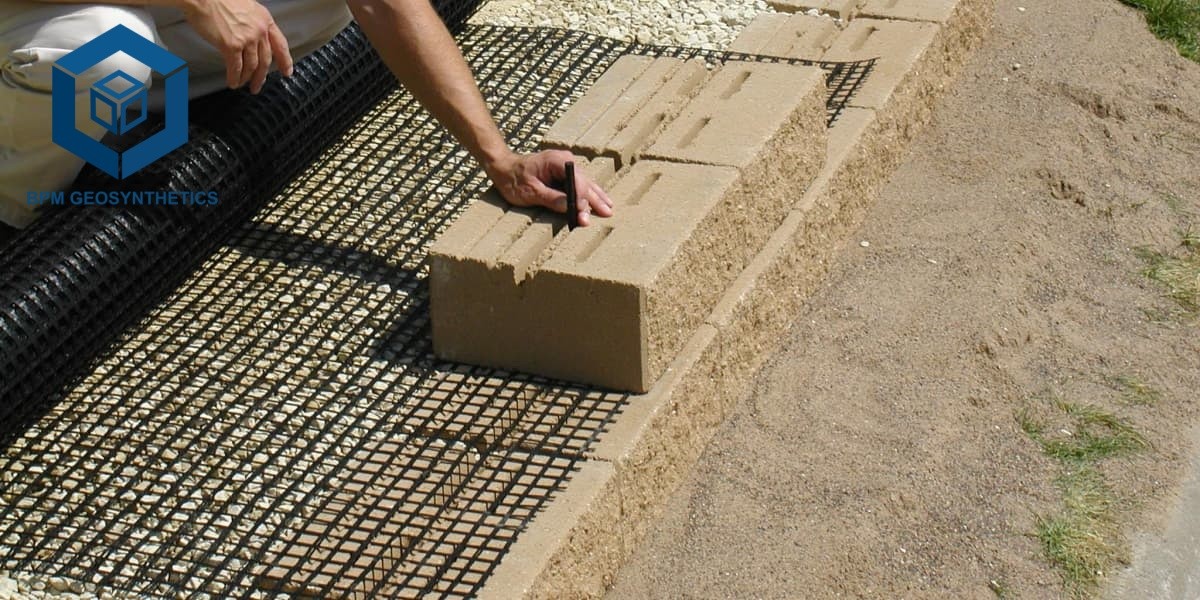
Installing the Retaining Wall Grid correctly is one of the main factors to unlocking the potential of the product. Correct installation aids in soil reinforcement, structural stability, and extended service life of the retaining wall. The following guide highlights the essential steps in the installation process and key best practices to follow in order to meet desired results.
6.1 Site Preparation
Remove all vegetation, rubbish, and unsuitable materials from the area that is going to be used for construction. Digging of the site should be done in accordance with engineering plans and foundation grading must be adequate before installation commences.
6.2 Foundation Preparation and Compaction
Get the subgrade to the required density by leveling and compacting it. A compacted, sound foundation is the main prerequisite for a stable retaining wall and it will limit any settlement afterwards.
6.3 Retaining Wall Construction
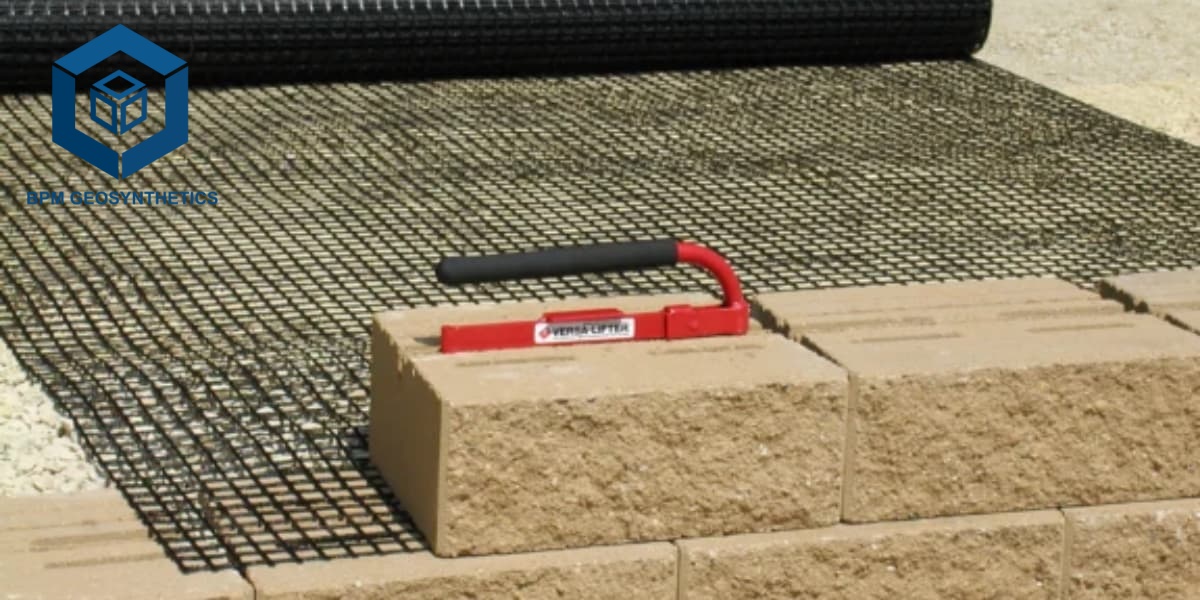
Build the first layer of blocks or facings for the retaining wall in accordance with the design of the project. Make sure the alignment and level are correct before laying in the reinforcement grid.
6.4 Retaining Wall Grid Placement
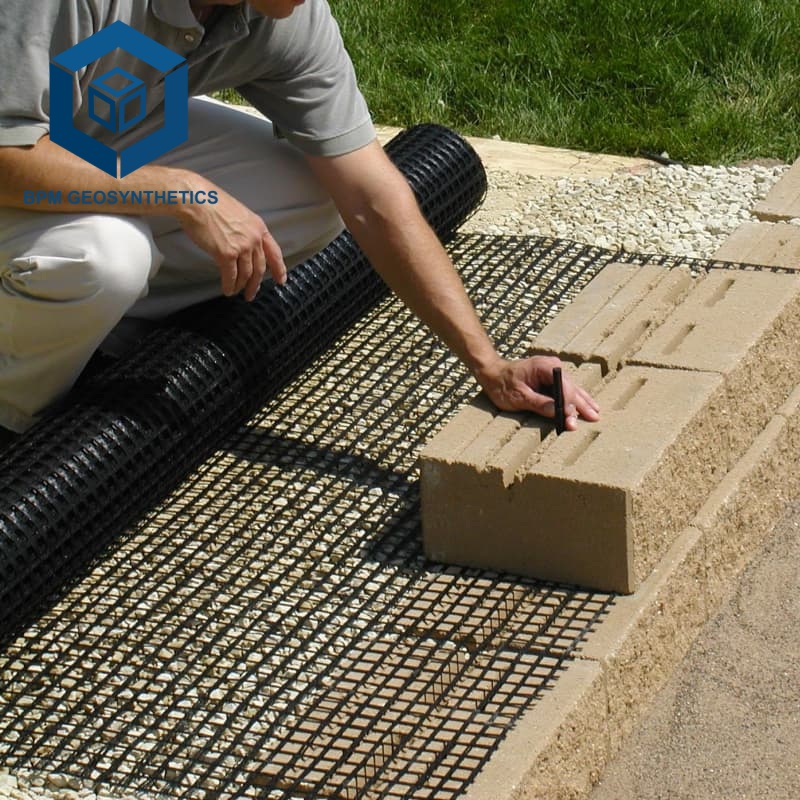
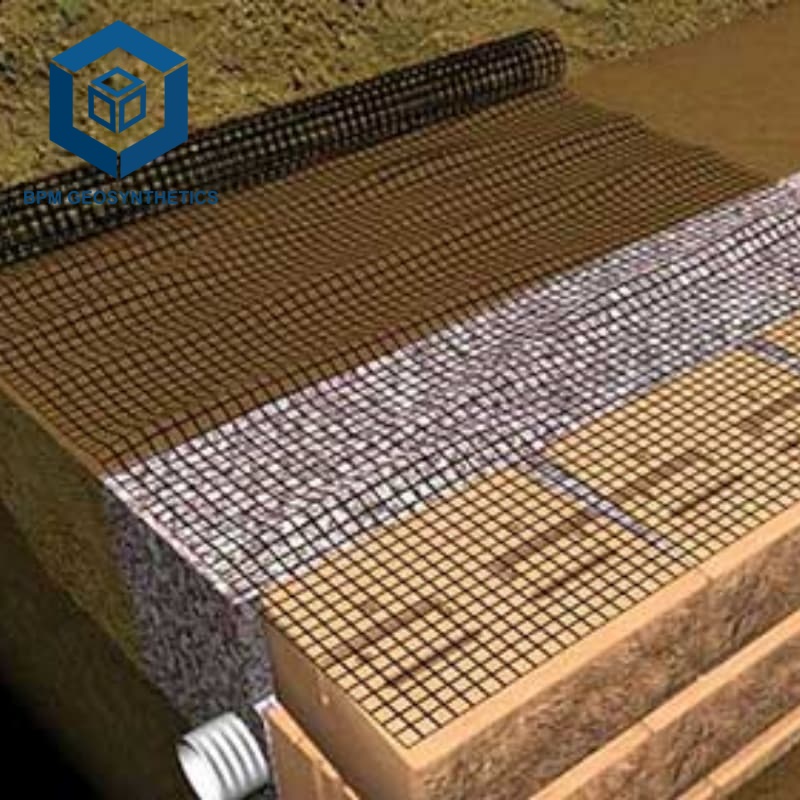
Install the geogrid stabilization such that it forms a right angle with the wall face and extend it to the length needed for reinforcement. Make sure that the grid lies flat, is correctly aligned, and does not have any folds or wrinkles.
6.5 Grid Connection and Anchorage
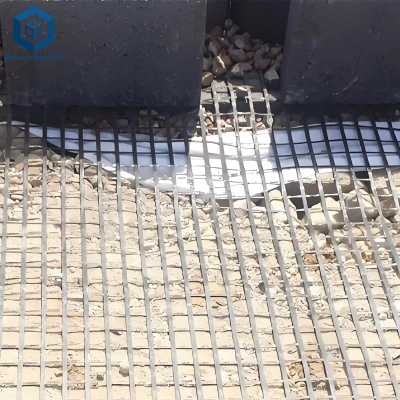
The plastic geogrid mesh should be securely attached either directly to the retaining wall facing or via a connection system as per the specified design requirements. A secure anchorage will not only prevent the grid from moving during backfilling but will also ensure an effective load transfer between the wall and the reinforced soil.
6.6 Backfilling
Intimately backfill the retaining wall geo grid with suitable soil material which is spread in even layers. Make sure to spread the material slowly and cautiously so as not to disturb or injure the reinforcement.
6.7 Layer Compaction
Use a compaction device for each backfill layer installed to densify it until the density called for is obtained. When well compacted, soil-grid interaction is favored, and, in turn, the resultant retaining wall becomes more stable.
6.8 Repeat the Installation Process
The cycle of constructing the wall, positioning the grid, backfilling, and compacting should be carried out repeatedly until the retaining wall is at the height that was planned in the design. Besides, proper alignment and reinforcement spacing should be adhered to all the time during installation.
6.9 Final Inspection
The final retaining wall should be checked for proper grid placement, the wall being straight and true, the degree of compaction and the overall level of construction accurateness. Any noticed deficiencies should be remedied prior to the project being put on service.
6.10 Common Installation Mistakes to Avoid
One should refrain from locating the geo grid ground grid polyethylene on uneven surfaces, the employment of improper backfill materials, inadequate compaction, errors in reinforcement lengths, and the geo grid material being damaged during the construction phase, among others. Compliance with the manufacturer's guidelines and engineering specifications will, however, still ensure maximum reinforcement performance and long-term structural reliability.
7. Frequently Asked Questions About Retaining Wall Grid
The questions below reflect some of the common doubts that engineers, contractors, distributors, and project owners have when it comes to the selection and purchase of Retaining Wall Grid.
Q1. How Long Does Retaining Wall Grid Last?
If it is of high quality and correctly designed, installed, and operated in a good environmental setting, a geogrid ground grid can last a very long time, possibly over 50 to 100 years of service life.
Q2. Can Retaining Wall Grid Be Used for High Retaining Walls?
Retaining Wall Grid can indeed be the answer to your needs if you are planning a medium- or high-retaining wall project. Determining the necessary tensile strength, length of the reinforcement, and spacing based on the height of the wall, the type of soil, and the design loads is a must.
Q3. How Do I Select the Right Tensile Strength?
To buy the correct tensile strength, one has to consider the height of the retaining wall, the backfill type, additional loads due to surcharges, and other related engineering specifications. The most common tensile strengths available range from 20 kN/m up to more than 100 kN/m.
Q4. Is Retaining Wall Grid Suitable for Soft Soil?
Geogrid reinforced earth wall can be used to great effect in the stabilization of soft soil bases, especially if it is combined with the right types of backfill materials and sound engineering design.
Q5. Can Retaining Wall Grid Be Used Together with Geotextile?
Exactly. Geotextile and Retaining Wall Grid are many times combined in retaining wall systems. The geotextile acts as separator and filter, whereas the grid function as soil reinforcer and distributor of loads.
Q6. What Types of Backfill Are Recommended?
Materials such as crushed stone, gravel, or coarse sand that are well-graded and granular, are usually the ones that allow for the best interlocking and hence provide the most efficient reinforcement.
Q7. Can Retaining Wall Grid Be Customized?
Yes, the width, roll length, tensile strength, color, and packaging are often the variables that can be changed so as to better match project or market needs.
Q8. How Is the Required Quantity Calculated?
The required quantity depends on the retaining wall height, reinforcement length, layer spacing, wall length, and project design. Professional suppliers can assist with quantity estimation based on your drawings.
Q9. Is Installation Guidance Available?
Yes. Professional manufacturers typically provide installation manuals, technical documentation, and engineering support to help ensure proper installation and long-term performance.
Q10. What Information Is Needed for a Quotation?
To provide an accurate quotation, it is helpful to share your retaining wall height, wall length, soil conditions, required tensile strength, project location, estimated quantity, and any technical drawings or specifications available.
Request a Free Quote for Your Retaining Wall Project
Choosing the right Retaining Wall Grid is essential for achieving a safe, durable, and cost-effective retaining wall system. If you are unsure which specification best suits your project, our technical team is ready to help.
Simply provide the following project information:
Retaining wall height
Wall length
Soil type
Design load requirements
Required tensile strength (if known)
Project location
Estimated quantity
Based on your project requirements, we can recommend the most suitable Retaining Wall Grid, provide technical support, offer customized solutions, and deliver a competitive quotation to help you complete your project with confidence.
8. Need Help Selecting the Right Retaining Wall Grid?
Choosing the right Retaining Wall Grid is essential for ensuring the safety, durability, and long-term performance of your retaining wall project. If you are unsure which specification best meets your requirements, our engineering team is ready to provide professional recommendations based on your project conditions.
- Simply share the following information with us:
Retaining wall height
Total wall length
Soil type and site conditions
Expected design load
Project location (country)
Design drawings or technical requirements (if available)
- Based on your project details, we can provide:
Professional product selection recommendations
Customized reinforcement solutions
Technical consultation and engineering support
Product samples for evaluation
Competitive factory pricing
Fast quotation and delivery schedules
OEM and customized manufacturing services
Whether your project involves highways, railways, bridge abutments, industrial facilities, commercial developments, or slope stabilization, we are committed to helping you select the most suitable Retaining Wall Grid solution while reducing project costs and ensuring long-term structural performance.
Contact The Best Project Material Co., Ltd.(BPM Geosynthetics) today for expert advice, technical support, and a free quotation for your retaining wall project.