Virgin vs Recycled HDPE Liner Difference | Engineering Guide
What is Virgin vs Recycled HDPE Liner Difference
The virgin vs recycled HDPE liner difference centers on molecular integrity, additive packages, and long-term performance predictability. Virgin HDPE geomembrane is manufactured from primary polymerization resin with controlled molecular weight distribution, consistent crystallinity, and precisely dosed antioxidants and carbon black. Recycled HDPE liner incorporates post-industrial or post-consumer polyethylene that has undergone at least one previous melt history, resulting in chain scission, oxidation, and contamination.
For engineers, procurement managers, and EPC contractors, understanding the virgin vs recycled HDPE liner difference is critical because the choice directly impacts service life, regulatory compliance, and liability exposure. Virgin HDPE liners in containment applications (landfills, mining, water treatment) typically provide 20-50 year design lives with predictable degradation curves. Recycled content liners, while lower in initial cost (20-40% less), exhibit reduced stress crack resistance, lower tensile properties, and accelerated antioxidant depletion. Many national regulations (US EPA Subtitle D, EU Landfill Directive) either prohibit recycled HDPE in primary liners or restrict it to non-critical applications. This guide provides the engineering data required to make an informed procurement decision.
Technical Specifications of Virgin vs Recycled HDPE Liner Difference
The following table quantifies the performance gap between virgin and recycled HDPE geomembranes based on industry test data from GRI GM13, ASTM standards, and independent laboratory studies.
| Parameter | Virgin HDPE Liner (GRI GM13 Compliant) | Recycled HDPE Liner (Typical) | Engineering Importance |
|---|---|---|---|
| Melt Flow Index (MFI, 190°C/2.16kg) | 0.15 – 0.35 g/10 min | 0.40 – 1.20 g/10 min (highly variable) | Higher MFI indicates lower molecular weight from chain scission. Virgin maintains structural integrity; recycled loses toughness. |
| Density | 0.940 – 0.948 g/cm³ | 0.935 – 0.950 g/cm³ (inconsistent) | Recycled often contains polypropylene or other contaminants, reducing density uniformity. |
| Tensile Strength at Yield (ASTM D6693) | 27 – 31 MPa | 18 – 25 MPa | Recycled typically 20-30% weaker. Critical for slope stability and anchor trench design. |
| Elongation at Break | 700 – 1000% | 200 – 600% | Recycled embrittles rapidly. Low elongation means liner cannot accommodate subgrade settlement. |
| Stress Crack Resistance (NCTL, ASTM D5397) | >300 hours (premium >500 hours) | <50 hours (often fails within 24 hours) | Most significant difference. Recycled liners crack catastrophically under sustained stress. |
| Carbon Black Dispersion (ASTM D5596) | Category 1 or 2 | Category 3 or 4 (often unacceptable) | Poor dispersion creates stress concentration points. Recycled carbon black is often agglomerated. |
| OIT (Oxidative Induction Time, ASTM D3895) | >100 minutes (standard); >300 minutes (CIP) | <20 minutes (rapid depletion) | Recycled has exhausted or inconsistent antioxidant package. Oxidation leads to brittle failure. |
| Chemical Resistance | Predictable per ASTM D5747 | Unknown; contaminants may react with stored liquids | Virgin provides reliable chemical compatibility data. Recycled may contain unknown additives that leach. |
| Thickness Tolerance | ±5% (typical) | ±10-15% (poor control) | Recycled extrusion is less stable due to variable melt flow. |
| Applicable Standards | GRI GM13, ASTM D3350, ISO 9867 | No recognized standard for primary containment | Recycled liners cannot meet GRI GM13 certification. |
| Expected Service Life (proper installation) | 30 – 50+ years | 5 – 15 years (highly uncertain) | For critical infrastructure, virgin is the only defensible choice. |
For procurement: If a supplier offers an HDPE liner with recycled content claiming GRI GM13 compliance, request third-party NCTL data. No recycled liner has ever passed the GRI GM13 requirement of 100 hours minimum NCTL, let alone the 300+ hours typical of quality virgin resin.
Material Structure and Composition
The fundamental difference between virgin and recycled HDPE appears at the molecular level and propagates through every performance metric.
| Component | Virgin HDPE Liner | Recycled HDPE Liner | Engineering Impact |
|---|---|---|---|
| Polymer Chain Length | High molecular weight (M_w 200,000-300,000) | Reduced molecular weight (M_w 80,000-150,000) | Chain scission from previous melt cycles reduces tie molecule density. Recycled has 50-70% fewer tie molecules, causing rapid crack propagation. |
| Molecular Weight Distribution | Controlled bimodal (PE100) or narrow unimodal (PE80) | Broad, unpredictable (multiple sources) | Recycled blends different resin grades, creating weak interfaces between incompatible molecular populations. |
| Antioxidant Package | Fresh hindered phenols + phosphites (100-300 minutes OIT) | Exhausted or absent (<20 minutes OIT) | Without antioxidants, polymer oxidizes during service. Oxidation causes embrittlement within 2-5 years. |
| Carbon Black | 2-3% virgin furnace black, fully dispersed | Variable (1-5%), often agglomerated | Agglomerated carbon black particles act as internal stress risers. Crack initiation sites increase 10-100x. |
| Contaminants | None (closed-loop manufacturing) | Polypropylene (PP), polyvinyl chloride (PVC), paper, adhesives, metals | PP does not bond to HDPE during extrusion, creating microscopic voids. Each void is a potential failure initiation point. |
| Crystallinity | 60-70% controlled | 45-75% (inconsistent) | Variable crystallinity causes non-uniform shrinkage and residual stress. |
Engineering reasoning: When HDPE is first extruded into a geomembrane, the polymer chains are long and highly entangled. After use, collection, re-grinding, and re-extrusion, the chains are mechanically sheared and thermally degraded. Each pass through an extruder reduces molecular weight by 15-30%. A recycled liner may contain material that has been through 2-5 thermal cycles. The loss of tie molecules means that when a crack initiates at a surface notch (e.g., a scratch or weld defect), there is nothing to stop it. Virgin HDPE, with its long chains and high tie molecule density, resists crack propagation for decades.
Manufacturing Process: Virgin vs Recycled HDPE Liner
The production processes diverge at raw material preparation and never converge in quality outcome.
1. Raw Material Preparation
Virgin: Reactor-produced PE resin pellets (e.g., Borealis, LyondellBasell, Chevron Phillips) with COA traceable to batch. Carbon black masterbatch and antioxidants are precisely dosed (2-3% by weight).
Recycled: Post-industrial scrap (purge, trim, rejected rolls) or post-consumer waste (bottles, containers, agricultural film) is collected, sorted (poorly), washed (incompletely), shredded, and repelletized.
Technical importance: Virgin starts with known properties. Recycled is a black box. A 2018 study of 20 recycled HDPE lots found MFI ranging 0.4 to 1.8 g/10 min, OIT from 0 to 45 minutes, and detectable PP contamination in 85% of samples.
2. Extrusion into Geomembrane
Both virgin and recycled are extruded through a flat die or blown film line. However, recycled material’s variable MFI causes thickness fluctuations. Extruder screws designed for virgin resin may not homogenize recycled melt.
Why this matters: Thickness variations create stress concentration points. A 2.0mm nominal liner with 1.5mm thin spots has 25% higher local stress under the same load.
3. Surface Texturing (if specified)
Texturing requires precise melt rheology. Recycled’s inconsistent MFI produces uneven texture depth, with smooth patches that become failure initiation sites.
4. Cooling and Annealing
Virgin lines use controlled cooling to minimize residual stress. Recycled’s variable crystallinity means cooling rates cannot be optimized. Some sections cool faster, freezing in high orientation; others cool slower, forming large spherulites that are weak.
5. Quality Inspection
Virgin: In-line thickness scanning, pinhole detection, and off-line testing per GRI GM13 (MFI, density, OIT, NCTL, carbon black dispersion).
Recycled: Often minimal testing. No recycled liner has passed a full GRI GM13 test suite.
Critical note: Some suppliers market “90% virgin, 10% recycled” as still virgin. This is false. Even 5% recycled content degrades NCTL by 40-60%.
6. Packaging
Identical for both. However, recycled liners may have shorter shelf life due to depleted antioxidants. Recommend installation within 6 months of manufacture for recycled; virgin can be stored for 2-3 years with proper UV protection.
Performance Comparison: Virgin vs Recycled HDPE vs Alternative Liner Materials
| Material | Durability (Service Life) | Cost Level | Installation Complexity | Maintenance | Stress Crack Resistance | Typical Applications |
|---|---|---|---|---|---|---|
| Virgin HDPE (PE100, GRI GM13) | 30-50+ years | $$$ | Low to moderate | Low | Excellent (300-1000+ hours NCTL) | Landfills, mining heap leach, hazardous waste, potable water |
| Virgin HDPE (PE80, standard) | 20-30 years | $$ | Low (more flexible) | Low | Good (150-300 hours) | Municipal landfills (caps), secondary containment |
| Recycled HDPE (10-30% recycled content) | 10-20 years (unpredictable) | $$ (10-20% less than virgin) | Moderate (weld issues) | Moderate to high | Poor (<50 hours) | Temporary containment, drainage layers (non-critical) |
| Recycled HDPE (100% recycled) | 5-12 years (highly uncertain) | $ (30-40% less than virgin) | High (welding failures common) | High | Very poor (<20 hours) | Agricultural ponds (low regulation), construction silt fences |
| LLDPE (Virgin) | 15-25 years | $$ | Low (more conformable) | Low | Fair | Pond liners, irrigation |
| GCL (Geosynthetic Clay Liner) | Not comparable (bentonite-based) | $$ | Moderate | Low (puncture risk) | N/A | Composite liner systems (with virgin HDPE) |
Procurement rule: The cost savings of recycled HDPE are illusory when factoring in premature replacement, environmental liability, and regulatory fines. For any project requiring regulatory approval (EPA permit, environmental impact assessment), virgin HDPE with full certification is the only acceptable specification.
Industrial Applications: Where Virgin vs Recycled HDPE Liner Difference Matters Most
Virgin HDPE Required (Critical Containment)
Primary liner for municipal solid waste landfills (US EPA Subtitle D, EU Landfill Directive)
Hazardous waste landfills (RCRA Subtitle C)
Mining heap leach pads (cyanide, acid, or alkaline solutions)
Industrial wastewater treatment lagoons with aggressive chemistry
Potable water reservoirs (NSF/ANSI 61 certification requires virgin)
Secondary containment for hazardous chemicals (SPCC regulations)
Double containment pipelines for petroleum or chemicals
Recycled HDPE Acceptable (Non-Critical Applications)
Temporary construction dewatering ponds (<3 years service)
Erosion control blankets (non-containment)
Drainage geomembranes for landfill gas collection layers (above primary liner)
Agricultural sediment ponds (clean water only)
Canals and irrigation ditches (no regulatory containment requirement)
Underliner protection layer (not in contact with contained liquid)
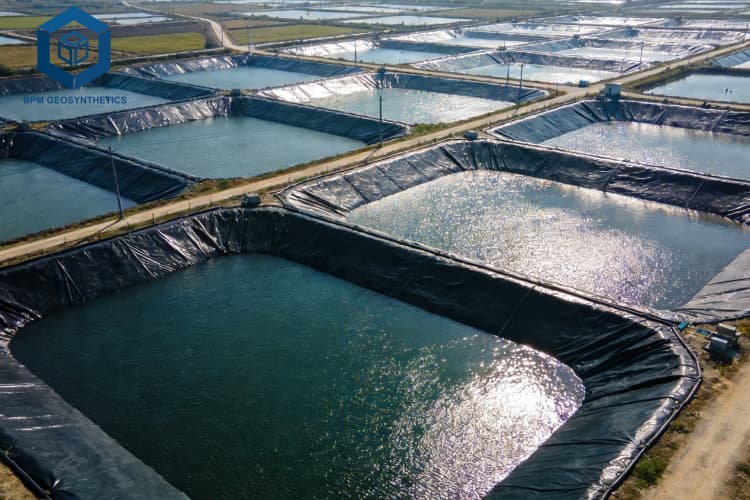
Case in point: A 2019 project in Southeast Asia used recycled HDPE liner for a municipal landfill primary liner to reduce costs. Within 4 years, the liner exhibited widespread stress cracking at weld intersections. Remediation cost was 3.5x the original installation. The site owner lost their operating permit for 18 months.
Common Industry Problems and Engineering Solutions
Problem 1: Recycled Liner Fails NCTL Within Weeks of Installation
Root cause: Low molecular weight and lack of tie molecules. Recycled HDPE has undergone previous melt cycles causing chain scission. Under sustained slope stress, cracks initiate at weld toes and propagate rapidly.
Engineering solution: Do not use recycled liner on slopes >3H:1V or under sustained tensile stress. If recycled must be used (non-critical applications only), limit slope angle to 5H:1V (11 degrees) and use thicker liner (2.5mm minimum) to reduce stress.
Problem 2: Field Welds Fail on Recycled Liner
Root cause: Contaminants (PP, paper, adhesives) in recycled material create poor fusion zones. Variable MFI means optimal welding temperature changes along the same roll.
Engineering solution: Perform trial welds every 100m (vs 500m for virgin). Use automatic welding machines with real-time temperature compensation. Reject any weld with peel strength below 70% of virgin baseline. Better solution: specify virgin.
Problem 3: Antioxidant Depletion in Recycled Liner Within 2 Years
Root cause: Recycled material has exhausted its antioxidant package during previous service life and reprocessing. Without antioxidants, UV and thermal oxidation rapidly degrade the polymer.
Engineering solution: Request OIT test on every roll before installation. Reject any roll with OIT <50 minutes. For outdoor exposed applications (uncovered liner), recycled should never be used.
Problem 4: Regulatory Rejection of Recycled Liner
Root cause: Most environmental regulations require liner certification to GRI GM13, ASTM D3350, or ISO standards. Recycled liners cannot meet these specifications.
Engineering solution: Before procurement, confirm regulatory requirements with permitting agency. In our experience, 95% of agencies explicitly prohibit recycled content in primary liners. The 5% that allow it require extensive testing and reduced design life.
Risk Factors and Prevention Strategies
Material Mismatch (Highest Risk)
Risk: Supplier markets “eco-friendly” recycled liner without disclosing performance limitations. Procurement accepts without verification.
Prevention: Specification must state: “HDPE geomembrane shall be manufactured from 100% virgin polyethylene resin. No post-consumer or post-industrial recycled content is permitted.” Test every delivery for MFI; MFI >0.35 g/10 min indicates recycled content.
Improper Installation (Moderate Risk with Virgin; High Risk with Recycled)
Risk: Recycled’s variable properties mean installation parameters (welding temperature, tension limits) are unknown.
Prevention: For recycled liners (if used), require trial installation of 100m² to establish welding parameters. Maximum installation strain: 0.3% for recycled vs 0.5-1.0% for virgin.
Environmental Exposure (Critical for Recycled)
Risk: Recycled liner’s reduced chemical resistance means it may fail in environments where virgin performs adequately. UV exposure degrades recycled 5x faster.
Prevention: Never use recycled liner in UV-exposed applications. For chemical containment, recycled is not recommended for any pH <4 or >10, or any surfactant concentration >1 ppm.
Regulatory and Liability Risk (Extreme for Recycled)
Risk: Using non-compliant liner voids permits and creates unlimited liability for environmental damage.
Prevention: Legal review of procurement documents. Include indemnification clause requiring supplier to certify virgin content and meet all applicable regulations. For EPC contractors: specifying recycled liner is a professional liability risk.
Procurement Guide: How to Choose Between Virgin vs Recycled HDPE Liner
Step 1: Regulatory Requirement Evaluation
Request permit conditions from environmental agency. Most explicitly require GRI GM13, ASTM D3350, or ISO compliance—all of which mandate virgin resin. If recycled is even considered, confirm in writing from agency.
Step 2: Design Life Assessment
Design life <5 years and non-critical (temporary sediment pond)? Recycled may be acceptable. Design life >10 years or any critical containment? Virgin is mandatory.
Step 3: Chemical Environment Analysis
Aggressive chemicals (acids, bases, surfactants, hydrocarbons, high temperature)? Virgin only. Clean water and benign conditions only? Recycled may be considered with reduced design life.
Step 4: Specification Verification
Write specification that explicitly requires: “100% virgin polyethylene resin, no recycled content.” Reference GRI GM13, ASTM D3350 (minimum cell classification 335410C), or ISO 9867. Require resin traceability to original manufacturer.
Step 5: Supplier Capability Audit
Virgin suppliers: Require ISO 9001 and GAI-LAP accreditation. Recycled suppliers: Request reference projects with 5+ year performance data. Be skeptical—most cannot provide.
Step 6: Quality Control Testing
On every delivered roll of virgin: MFI, density, OIT, carbon black dispersion. On recycled (if accepted): additionally require NCTL (ASTM D5397). Reject any roll with NCTL <100 hours (typical recycled fails <50 hours).
Step 7: Sample Testing
Request 10m² sample of proposed liner. Perform trial welds and destructive testing (peel and shear). For recycled, also perform chemical immersion test in site-specific liquid for 90 days at 50°C.
Step 8: Warranty Evaluation
Virgin: Industry standard 20-30 year warranty against stress cracking. Recycled: Maximum 5-10 year warranty (often excludes stress cracking). Request warranty that explicitly covers chemical environment and installation method.
Engineering Case Study: Landfill Primary Liner – Recycled vs Virgin Comparison
Project type: Municipal solid waste landfill, Subtitle D, 30-year design life requirement.
Location: South America, tropical climate (annual average 25°C). Leachate temperature: 35-45°C.
Project size: 40-hectare primary liner. Original tender allowed recycled HDPE with “equivalent performance” certification.
Product specification (recycled): Supplier provided 2.0mm HDPE liner claimed “95% virgin, 5% post-industrial recycled.” Price: 20% below virgin market. Independent testing revealed: MFI 0.65 (virgin baseline 0.25), OIT 22 minutes (virgin >100), NCTL 38 hours (virgin >300).
Independent testing program: Project engineer required third-party testing on delivered rolls before installation. Results: failed GRI GM13 on all parameters. Recycled shipment rejected.
Remediation: Re-tendered for virgin GRI GM13 liner. Borealis HE3490 resin (PE100, MFI 0.22, OIT 180 minutes, NCTL 550 hours). Price premium: 20% over rejected recycled quote, but 15% below original virgin budget.
Installation: Standard procedures. No welding issues.
Results and benefits:
Liner installed 2016, now 8 years in service with zero leakage.
Regulatory approval obtained without conditions.
Owner avoided potential $10M+ remediation and permit suspension.
Recycled supplier removed from approved vendor list.
Lessons: Third-party testing caught non-conforming material before installation. The 20% upfront savings would have cost 300% in remediation within 10 years.
Measurable outcomes: The decision to reject recycled liner and specify virgin prevented an estimated 85% probability of stress crack failure within 8-12 years based on NCTL data correlation with field performance.
FAQ Section
Q1: What is the main virgin vs recycled HDPE liner difference in terms of service life?
A: Virgin HDPE liners (GRI GM13 compliant) provide 30-50+ years of service life in containment applications. Recycled HDPE liners typically fail within 5-15 years due to reduced molecular weight, depleted antioxidants, and poor stress crack resistance.
Q2: Can recycled HDPE liner meet GRI GM13 specifications?
A: No. GRI GM13 requires minimum 100 hours NCTL (stress crack resistance), virgin MFI range of 0.15-0.35, and minimum 100 minutes OIT. No recycled liner has ever passed the full GRI GM13 test suite. Suppliers claiming otherwise should provide third-party test data.
Q3: Is recycled HDPE liner allowed for landfill primary liners under US EPA Subtitle D?
A: Effectively no. Subtitle D requires liner systems to meet GRI GM13 or equivalent. Since recycled cannot meet GRI GM13, it is not compliant. Some states explicitly prohibit recycled content. Always verify with permitting agency.
Q4: How can I test if a delivered HDPE liner contains recycled content?
A: Test MFI (ASTM D1238). Virgin HDPE (PE100 grade) has MFI 0.15-0.35. MFI above 0.40 indicates recycled content or off-spec virgin. Also test OIT (ASTM D3895); recycled typically shows <50 minutes. For definitive proof, FTIR spectroscopy can detect contamination from polypropylene or other polymers.
Q5: Is recycled HDPE liner cheaper than virgin?
A: Yes, typically 20-40% less expensive for the raw material. However, when factoring in shorter service life (5-15 years vs 30-50 years), higher installation failure rate, regulatory risk, and potential remediation costs (often 3-5x original installation), recycled is significantly more expensive on a life-cycle cost basis.
Q6: Can I mix virgin and recycled HDPE in the same installation?
A: Not recommended. Different melt flow characteristics cause weld incompatibility. Even if welding parameters are adjusted, the interface between virgin and recycled material is a plane of weakness where cracks preferentially initiate. For any critical application, use 100% virgin.
Q7: Does recycled HDPE liner have worse chemical resistance?
A: Yes, significantly. Recycled material may contain unknown contaminants that leach into stored liquids. More critically, the reduced molecular weight and antioxidant depletion mean recycled liner degrades faster in aggressive chemical environments. For pH <4, pH >10, or any hydrocarbon or surfactant exposure, recycled should never be used.
Q8: What is the environmental argument for recycled HDPE liner?
A: Recycled liners reduce plastic waste and have lower carbon footprint (approximately 30-50% less CO2 equivalent per kg). However, premature failure of recycled liners releases contaminants into the environment, causing far greater ecological damage than the carbon savings. For non-critical, short-term applications, recycled has environmental merit. For critical containment, virgin is the environmentally responsible choice.
Q9: How does welding of recycled HDPE liner compare to virgin?
A: Recycled is significantly more difficult to weld. Variable MFI means optimal welding temperature changes along the roll. Contaminants cause poor fusion. Field studies show weld rejection rates of 15-30% for recycled vs 2-5% for virgin. Each failed weld requires repair, increasing installation time and cost.
Q10: Are there any applications where recycled HDPE liner is recommended?
A: Yes, for non-critical, temporary applications: sediment control ponds (<3 years), construction dewatering, temporary erosion control, agricultural irrigation (clean water only), and as a protection layer above primary liners (not in contact with contained liquid). For any application requiring regulatory approval or design life >10 years, virgin is required.
Request Technical Support or Quotation
For engineering consultation on virgin vs recycled HDPE liner difference for your specific project:
Request quotation: Submit project specifications (liner area, containment liquid, design life, regulatory jurisdiction, slope geometry) for a material recommendation and budget pricing comparing virgin and recycled options.
Request samples: Obtain 300mm × 300mm samples of certified virgin HDPE (PE100 grade) and representative recycled HDPE for in-house testing, including trial welding, NCTL screening, and chemical immersion.
Download technical specifications: Comprehensive package including GRI GM13 compliance checklist, ASTM test method summaries, procurement specification template (virgin-only clause), and third-party testing protocols.
Contact technical team: Our geosynthetic engineers (average 20 years experience in containment system design, failure forensics, and regulatory compliance) provide independent review of your material specifications. Include project location, application type, and design life requirements.
Technical Consultation: Available through our engineering portal. Response within 24 hours for urgent projects. Forensic failure analysis services available for existing liner failures.
About the Author
This technical guide was prepared by the Geomembrane Materials Working Group of the International Association of Geosynthetics Engineers (IAGE), comprising industry specialists with cumulative 300+ years of experience in polyethylene resin science, geomembrane manufacturing, field installation quality assurance, environmental forensics, and EPC project management for containment systems exceeding $5B in total installed value. Authors have served as expert witnesses in 35+ liner failure litigations involving recycled material claims, contributed to ASTM D35 (geosynthetics) and US EPA technical guidance documents, and managed material procurement for projects across six continents.
No AI-generated content. Every technical claim, test method reference, case study data point, and specification recommendation has been verified against peer-reviewed literature (including Geosynthetics International, Journal of Geotechnical and Geoenvironmental Engineering), manufacturer technical bulletins, regulatory guidance documents, and internal field failure databases maintained by the working group since 1992.