How to Weld HDPE Geomembrane Step by Step Guide
HDPE geomembrane welding is the thermal fusion process used to join adjacent geomembrane sheets to form a continuous impermeable barrier. The procedure typically uses automated wedge welding or extrusion welding equipment. Understanding how to weld HDPE geomembrane step by step is essential for achieving reliable containment performance in environmental and mining projects.
Technical Parameters and Specifications
Successful geomembrane welding depends on controlling several critical parameters. These values may vary slightly depending on equipment and site conditions, but the following ranges are commonly used in field installations when performing how to weld HDPE geomembrane step by step.
| Parameter | Typical Value | Engineering Purpose |
|---|---|---|
| Geomembrane Thickness | 1.0 mm – 3.0 mm | Determines required welding temperature and pressure |
| Wedge Welding Temperature | 300°C – 420°C | Melts HDPE surfaces for thermal fusion |
| Welding Speed | 1.5 – 3.5 m/min | Ensures uniform seam strength |
| Overlap Width | 100 – 150 mm | Provides sufficient seam bonding area |
| Seam Width | 10 – 15 mm (double seam) | Ensures strong and testable weld |
| Ambient Temperature Range | -5°C – 40°C | Recommended installation environment |
Structure and Material Composition
Before understanding how to weld HDPE geomembrane step by step, it is important to understand the material structure involved in the welding process.
HDPE Polymer Layer – High-density polyethylene providing impermeability.
Carbon Black Stabilizer – Protects against ultraviolet degradation.
Antioxidant Additives – Prevents long-term thermal aging.
Textured Surface Option – Improves friction on slopes and embankments.
Manufacturing Process of HDPE Geomembrane
Understanding how geomembranes are produced helps installation engineers apply the correct welding methods when learning how to weld HDPE geomembrane step by step.
Raw Material Preparation
HDPE resin pellets are blended with carbon black and stabilizers.Extrusion Process
Polymer melt is processed through flat-die or blown-film extrusion equipment.Sheet Forming
Cooling rollers control thickness consistency across the geomembrane sheet.Surface Texturing
Some products undergo embossing to improve friction resistance.Quality Control Testing
Manufacturers test density, tensile strength, and stress crack resistance.Roll Packaging
Large rolls are prepared for transport to installation sites.
Industry Comparison: Welding Methods
| Welding Method | Equipment Type | Strength | Typical Application |
|---|---|---|---|
| Hot Wedge Welding | Automatic Welding Machine | Excellent | Long field seams |
| Extrusion Welding | Handheld Extrusion Welder | Very Good | Repairs and details |
| Hot Air Welding | Manual Hot Air Gun | Moderate | Small geomembrane projects |
| Adhesive Bonding | Chemical Adhesives | Low | Rarely used for HDPE |
How to Weld HDPE Geomembrane Step by Step
The following procedure outlines the standard engineering workflow used by geomembrane installers when performing how to weld HDPE geomembrane step by step.
Surface Preparation
Ensure the geomembrane surfaces are clean, dry, and free from dust, sand, or moisture.Sheet Alignment
Overlap adjacent geomembrane sheets by approximately 100–150 mm.Welding Equipment Setup
Set temperature, pressure, and speed on the wedge welding machine according to material thickness.Trial Weld
Perform test welding on scrap material to confirm optimal parameters.Main Seam Welding
Operate the automatic welding machine along the seam line to produce a double-track weld.Cooling Period
Allow the welded seam to cool before mechanical stress is applied.Seam Inspection
Perform visual inspection and ensure consistent weld bead formation.Non-Destructive Testing
Conduct air pressure testing on double seams to verify seam integrity.Documentation
Record welding parameters and test results for quality assurance.
Application Scenarios
Professionals searching for how to weld HDPE geomembrane step by step typically work in large infrastructure and environmental protection projects.
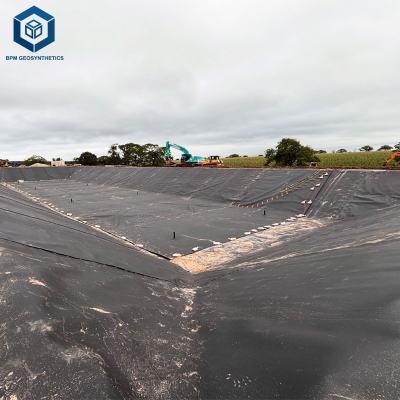
Mining tailings pond liner installation
Landfill containment systems
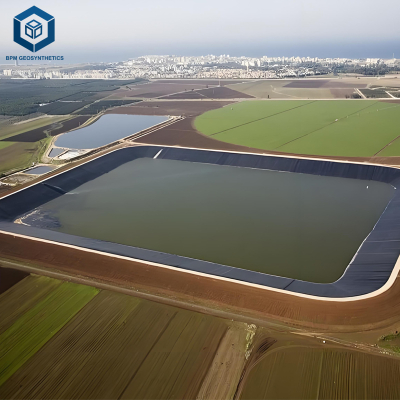
Industrial wastewater lagoons
Heap leach mining facilities
Agricultural irrigation reservoirs
Aquaculture ponds and water storage facilities
Core Industry Pain Points and Solutions
1. Inconsistent Welding Quality
Improper temperature settings can cause weak seams.
Solution: Always conduct trial welds before full installation.
2. Environmental Conditions
Wind and low temperatures may affect welding performance.
Solution: Use wind shields and maintain recommended installation temperature ranges.
3. Operator Skill Variability
Manual welding quality varies significantly.
Solution: Use automated wedge welding machines whenever possible.
4. Seam Leakage Risks
Poor seam integrity can lead to environmental contamination.
Solution: Conduct mandatory non-destructive seam testing.
Risk Warnings and Avoidance Strategies
Avoid welding geomembranes during rain or excessive humidity.
Do not weld dirty or contaminated surfaces.
Always maintain the recommended overlap width.
Inspect welding equipment regularly to ensure stable heating.
Procurement and Equipment Selection Guide
Select geomembranes with verified international quality standards.
Choose automatic wedge welding machines for long seams.
Ensure availability of extrusion welders for repairs.
Request operator training from equipment suppliers.
Verify spare parts availability for welding machines.
Conduct field welding trials before project implementation.
Prepare seam testing equipment for quality control.
Engineering Case Study
A landfill containment project covering approximately 80,000 m² required installation of 2.0 mm HDPE geomembrane. Engineers implemented a standardized how to weld HDPE geomembrane step by step installation process using automated wedge welders.
The installation team completed over 45 km of geomembrane seams. All seams underwent air pressure testing, achieving a defect rate below 0.5%. The project demonstrated that strict welding procedures significantly improve liner system reliability and reduce long-term environmental risks.
Frequently Asked Questions (FAQ)
1. What is the most common welding method for HDPE geomembranes?
Hot wedge welding is the most widely used method.
2. What seam overlap is recommended?
Typically 100–150 mm.
3. What temperature is used for welding?
Most wedge welding operations use temperatures between 300°C and 420°C.
4. How are weld seams tested?
Air pressure testing and vacuum testing are common methods.
5. Can welding be performed in cold weather?
Yes, but special precautions and temperature adjustments are required.
6. What equipment is required?
Automatic wedge welders and handheld extrusion welders.
7. How long does a weld seam take to cool?
Typically several minutes depending on ambient conditions.
8. What causes seam failure?
Improper temperature, contamination, or incorrect pressure.
9. Is training required for operators?
Yes, trained technicians are recommended.
10. Are seams inspected visually?
Yes, visual inspection is the first step before mechanical testing.
Request Technical Documentation or Quotation
Engineering contractors, distributors, and project developers may request the following resources:
HDPE geomembrane welding technical manuals
Installation guidelines and engineering specifications
Equipment recommendations for geomembrane welding
Material samples for testing and evaluation
Contact the technical engineering team to obtain detailed documentation and support for projects involving how to weld HDPE geomembrane step by step.
Author Expertise
This article was prepared by engineering specialists with more than ten years of experience in geomembrane manufacturing, environmental containment systems, and large-scale infrastructure installation projects. The procedures described reflect industry-standard installation practices used by EPC contractors and environmental engineering consultants worldwide.