hdpe geomembrane with geotextile
HDPE geomembrane with geotextile is a composite geosynthetic lining system combining an impermeable high-density polyethylene membrane with a permeable geotextile layer. The system integrates containment, protection, filtration, and separation functions, widely used in environmental, mining, hydraulic, and infrastructure engineering projects.
Technical Parameters and Specifications
HDPE Geomembrane Parameters
Raw material: High-density polyethylene (PE100 or equivalent)
Thickness range: 0.75 mm – 3.0 mm
Density: ≥0.94 g/cm³
Tensile yield strength: ≥15 MPa (ASTM D6693)
Elongation at break: ≥700%
Carbon black content: 2.0–3.0%
Oxidative induction time: ≥100 min (standard OIT)
Hydraulic conductivity: ≤1×10⁻¹³ m/s
Geotextile Parameters
Type: Nonwoven needle-punched / Woven
Polymer: Polypropylene or polyester
Mass per unit area: 200–800 g/m²
Tensile strength: 10–50 kN/m
CBR puncture resistance: 1.5–6.5 kN
Permittivity: 0.5–2.5 s⁻¹
Structure and Material Composition
An HDPE geomembrane with geotextile system is designed as a functional composite rather than a single material.
Layered Structure
Top layer: HDPE geomembrane providing liquid and gas containment
Intermediate interface: Smooth or textured surface to enhance friction
Bottom layer: Geotextile for cushioning, filtration, and subgrade protection
Material Functions
Geomembrane resists chemical attack and UV exposure
Geotextile distributes stress and prevents puncture damage
Combined system improves long-term durability
Manufacturing Process
1. Raw Material Preparation
HDPE resin pellets and geotextile fibers are sourced according to project specifications and stored in controlled environments to prevent contamination.
2. Geomembrane Extrusion
Flat-die or blown-film extrusion lines form continuous HDPE sheets. Critical parameters include melt temperature, extrusion pressure, and thickness uniformity.
3. Geotextile Production
Fibers undergo carding, cross-lapping, and needle punching or weaving to achieve the required mechanical and hydraulic properties.
4. Composite Assembly
Geomembrane and geotextile layers are supplied separately or factory-laminated, depending on project requirements and installation methodology.
5. Quality Control
Finished products undergo tensile, puncture, permeability, and aging tests in accordance with ASTM and ISO standards.
Industry Comparison
| System Type | Containment | Protection | Typical Applications |
|---|---|---|---|
| HDPE Geomembrane with Geotextile | Excellent | High | Landfills, mining, wastewater |
| Single HDPE Geomembrane | Excellent | Limited | Temporary containment |
| Geosynthetic Clay Liner (GCL) | Moderate | Moderate | Secondary liners |
Application Scenarios
Distributors: Integrated lining systems for multiple project types
EPC contractors: Reduced installation risk and simplified procurement
Engineering firms: Predictable performance aligned with design models
Importers and wholesalers: Standardized products with broad market demand
Core Pain Points and Solutions
Puncture risk from subgrade: Mitigated by geotextile cushioning layer
Leakage at liner interfaces: Addressed through compatible composite design
Installation damage: Reduced by increased system robustness
Long-term degradation: Controlled via UV-stabilized HDPE formulations
Risk Warnings and Mitigation Measures
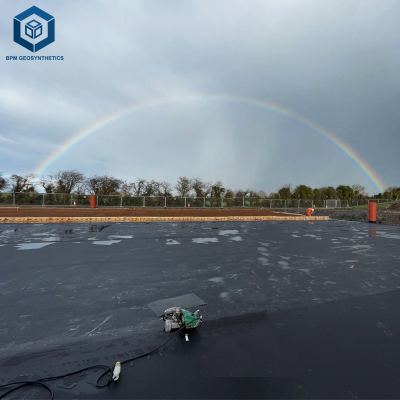
Potential risks include insufficient geotextile mass, low-quality recycled resin, and improper field welding. These risks can be mitigated by specifying minimum standards, requiring factory test reports, and enforcing on-site quality assurance protocols.
Procurement and Selection Guide
Define containment and protection requirements
Select appropriate geomembrane thickness
Specify geotextile type and mass
Confirm compliance with ASTM or ISO standards
Request recent batch test reports
Evaluate supplier production capacity and logistics
Plan installation and quality control procedures
Engineering Application Example
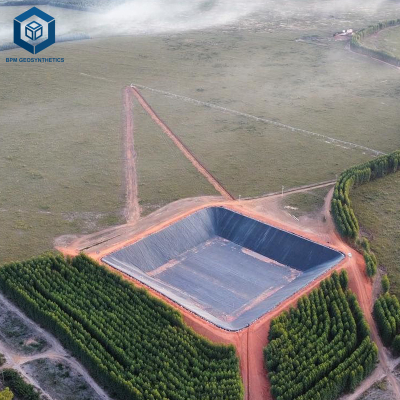
In a mining tailings pond project, a 2.0 mm HDPE geomembrane combined with an 800 g/m² nonwoven geotextile was installed over compacted subgrade. The composite system provided effective seepage control and puncture resistance across a containment area exceeding 120,000 m².
Frequently Asked Questions (FAQ)
Is the geotextile bonded to the geomembrane? It can be supplied bonded or loose.
What geotextile weight is typical? 300–800 g/m² depending on subgrade conditions.
Can recycled HDPE be used? Only if quality and traceability are controlled.
Does the system resist chemicals? HDPE offers broad chemical resistance.
Is UV protection required? Yes, especially for exposed applications.
How are seams tested? Vacuum box, air pressure, or spark testing.
What is the service life? Typically exceeds 30 years under proper conditions.
Can the system handle settlement? Geotextile improves stress distribution.
Are custom roll sizes available? Yes, within equipment limits.
Is third-party testing recommended? Commonly required for public projects.
CTA – Commercial and Technical Requests
For detailed specifications, pricing, project-specific recommendations, or engineering samples of HDPE geomembrane with geotextile systems, procurement and engineering teams may submit formal requests for quotation or technical documentation.
E-E-A-T Author Statement
This content is developed by professionals with experience in geosynthetics manufacturing, quality assurance, and international infrastructure supply, supporting evidence-based decision-making for B2B engineering and procurement stakeholders.